
The Brazilian market has officially entered a new phase of artificial intelligence in 2026. The accelerated advancement of corporate events, the growth of investments in automation and the dispute between technology giants show that AI is no longer just a trend but has become strategic infrastructure within companies.
Brazil has entered a new technological race based on artificial intelligence
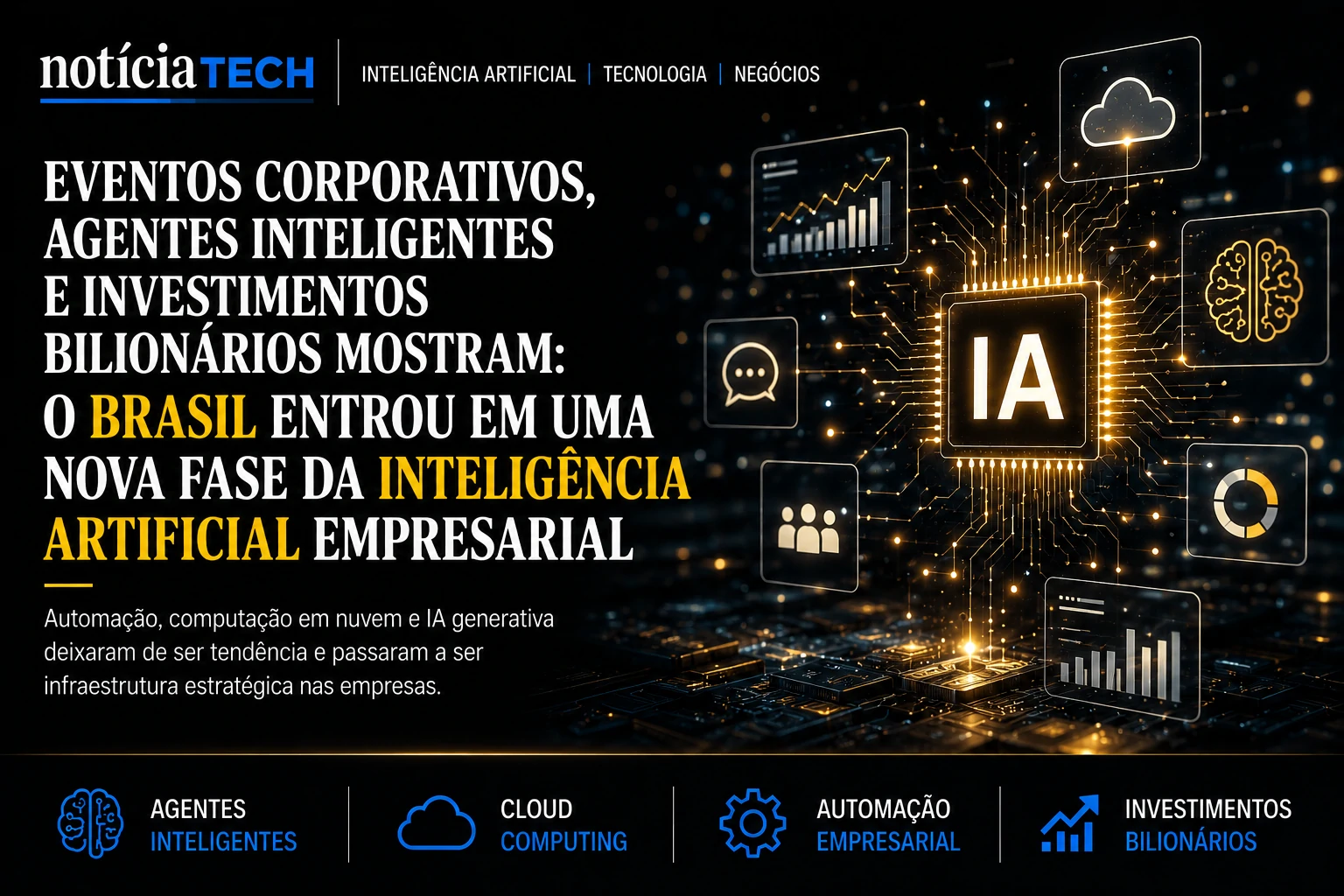
Artificial intelligence has come to occupy a central position in the strategic decisions of Brazilian companies. The increase in investments in automation, cloud computing and intelligent agents shows that organizations from different sectors have begun to accelerate projects aimed at productivity, operational efficiency and digital transformation.
The movement does not just happen in Brazil. Global companies compete for space in a billion-dollar race to dominate the AI-based corporate software market. Enterprise platforms are beginning to integrate intelligent copilots, autonomous agents and systems capable of interpreting context, analyzing data and performing operational tasks in an increasingly independent manner.
In recent months, the growth in the number of corporate events focused on artificial intelligence has become one of the clearest signs of this structural change in the market.
Business conferences, executive forums and innovation meetings began to focus on discussions involving:
- intelligent agents;
- Generative AI;
- business automation;
- digital transformation;
- cloud computing;
- operational productivity;
- data analysis;
- AI-driven marketing;
- technological infrastructure;
- intelligent corporate software.
The scenario also reinforces the perception that companies that delay in accelerating AI adoption may lose competitiveness in the coming years.
Also read: Companies postpone investments in AI and lose competitiveness
At the same time, Brazil is beginning to consolidate itself as one of the most relevant strategic markets in Latin America for the expansion of corporate artificial intelligence.
Growth of corporate events shows maturity of the Brazilian market

The increase in interest in artificial intelligence events shows that the discussion about AI is no longer limited to the technical sector and is now directly affecting strategic areas of companies.
Technology, marketing, sales, operations and innovation executives started looking for practical applications capable of generating:
- cost reduction;
- productivity gain;
- operational automation;
- commercial efficiency;
- scalability;
- process optimization;
- competitive advantage.
Events such as AI Summit, AI Experience, business conferences and forums organized by large media and technology groups have begun to bring together companies interested in accelerating large-scale AI implementation.
Market behavior also changed rapidly.
Previously focused on experimental projects, many companies are now looking to integrate artificial intelligence directly into:
- service;
- internal operations;
- CRM;
- sales;
- marketing;
- document management;
- data analysis;
- relationship with customers.
This acceleration accompanies a broader growth in corporate demand for digital infrastructure in the country.
Notícia Tech has previously shown how Brazil can generate trillion-dollar investments related to cloud computing and artificial intelligence by the end of the decade.
In addition to infrastructure, another important movement began to gain momentum: the race for intelligent agents.
AI agents begin to redefine enterprise software
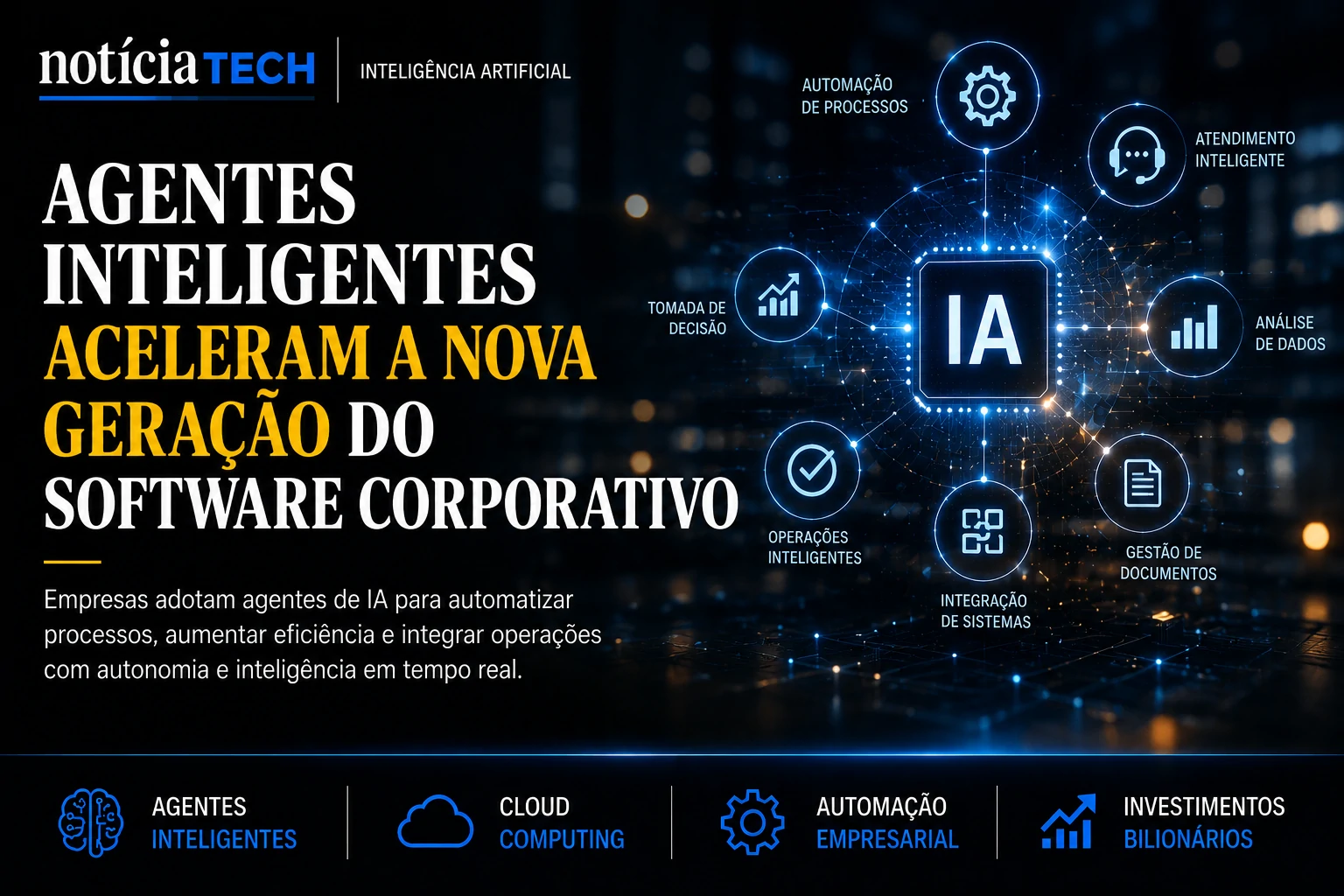
One of the biggest changes in the corporate market involves the advancement of so-called intelligent agents.
Unlike traditional automation, these systems can interpret context, process information, perform operational tasks and interact with users in a more autonomous way.
In practice, companies are starting to use AI to:
- automate service;
- organize internal flows;
- respond to customers;
- generate analyses;
- interpret documents;
- accelerate sales;
- produce content;
- optimize marketing campaigns;
- integrate business operations.
This transformation is rapidly changing the very concept of enterprise software.
ERPs, sales platforms, CRMs and business systems are beginning to incorporate AI directly into the operational structure of companies.
The advancement of this market also increases the dispute between global technology giants.
OpenAI, Anthropic, Google, Microsoft and other companies accelerate investments in the corporate sector while national platforms try to develop their own solutions aimed at the Brazilian market.
The advancement of intelligent agents is also directly connected to the concept of B2A, where companies start to adapt digital structures to be understood not only by people, but also by artificial intelligence.
Also read: B2A: the new frontier of business where companies need to be understood by artificial intelligence
The industrialization of AI can redefine the competitiveness of Brazilian companies
Experts assess that the Brazilian market has entered a new stage of digital transformation.
The difference now is that artificial intelligence is no longer just a complementary tool and has started to occupy a strategic position within companies.
Instead of simple isolated automations, organizations are beginning to structure entire operations based on:
- intelligent agents;
- real-time data analysis;
- process automation;
- corporate copilots;
- operational integration;
- autonomous software;
- AI-based infrastructure.
This scenario also drives the search for qualified professionals.
Areas such as marketing, sales, service, operations and technology began to incorporate artificial intelligence directly into corporate routine, creating a new race for digital training within Brazilian companies.
The accelerated growth of corporate AI events shows that Brazil has officially entered a phase of industrialization of artificial intelligence.
In 2026, AI is no longer just an experimental innovation. It has come to occupy the center of business strategies, corporate competitiveness and the new Brazilian digital economy.
Comentários
Os comentários utilizam autenticação via GitHub para manter um ambiente mais qualificado, seguro e livre de spam.
Entrar ou criar conta no GitHub