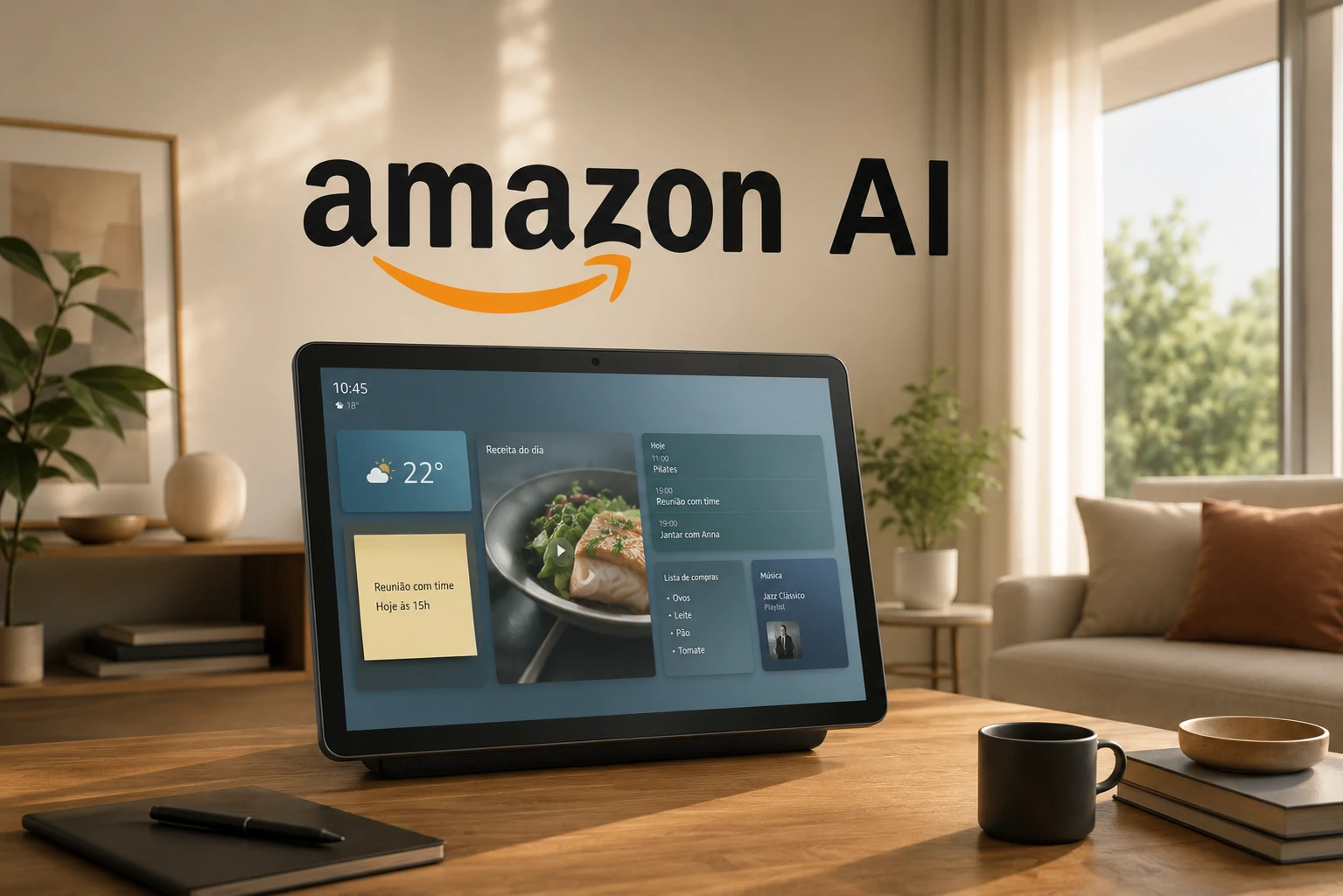
Smart assistants are entering a new phase of competition. Following the rapid rise of ChatGPT, Gemini and Claude, Amazon is accelerating the evolution of Alexa into a generative AI platform capable of performing far more than voice commands. The company’s strategy could reshape the battle to become the primary interface between people, businesses and digital services.
Amazon Wants to Turn Alexa into a True AI Agent

Amazon’s next-generation Alexa aims to deliver greater productivity through generative AI.
The answer is straightforward: Amazon wants Alexa to become much more than a traditional voice assistant.
The company is building a new architecture powered by generative AI, allowing Alexa to understand context, sustain natural conversations and execute complex tasks without relying on rigid voice commands.
Until now, Alexa has primarily focused on controlling smart home devices, playing music, answering basic questions and performing simple automations. That strategy is now evolving significantly.
The Competition Extends Beyond the Smart Home
The evolution of Alexa shows that the AI race is no longer limited to chatbots.
Amazon’s objective is to transform its assistant into a platform capable of managing schedules, conducting research, making purchases, controlling connected services and helping users with both professional and personal activities.
This strategy brings Amazon closer to competitors such as OpenAI, Google and Anthropic, all of which are investing heavily in AI agents that can perform increasingly sophisticated tasks.
For organizations exploring enterprise automation, it’s also worth reading Notícia Tech’s analysis of AI Orchestration:
The AI Battle Is Shifting from Chatbots to Intelligent Assistants
The answer is simple: the market is now competing to control the primary interface between users and artificial intelligence.
Delivering accurate answers is no longer enough.
Technology companies are racing to build platforms capable of completing tasks, connecting multiple applications, understanding user preferences and acting as intelligent digital agents.
This marks a new phase in artificial intelligence, where competitive advantage is no longer determined solely by language models but by the ability to integrate services into a seamless user experience.
What This Means for Consumers and Businesses
For consumers, this translates into more natural conversations and assistants capable of solving complete problems instead of simply answering isolated questions.
For businesses, the trend opens new opportunities in automation, intelligent customer service and enterprise system integration, reducing operational complexity while improving productivity.
The movement reinforces a broader industry trend: artificial intelligence is evolving from a conversational tool into an operational layer embedded across digital products and business services.
Amazon’s Strategy Extends Beyond Alexa and Signals a Broader AI Ambition

Amazon is expanding its artificial intelligence investments to strengthen its position in the next generation of digital assistants.
The answer is clear: the new Alexa is only one part of Amazon’s broader strategy to compete for leadership in generative artificial intelligence.
The company is investing billions of dollars in AI infrastructure, proprietary foundation models and cloud integration to narrow the gap with OpenAI, Google and Anthropic.
AI Is Becoming the Core of Amazon’s Ecosystem
Alexa’s evolution also strengthens Amazon’s broader portfolio.
By connecting the assistant with digital services, smart devices, e-commerce and cloud computing, Amazon is building an ecosystem capable of delivering increasingly personalized experiences across multiple touchpoints.
This reflects a broader market trend in which artificial intelligence is no longer treated as an isolated feature but as the operational layer connecting products, services and enterprise platforms.
A related analysis published by Notícia Tech explores how AI agents are reshaping enterprise automation:
The AI Race Is Entering a New Competitive Phase
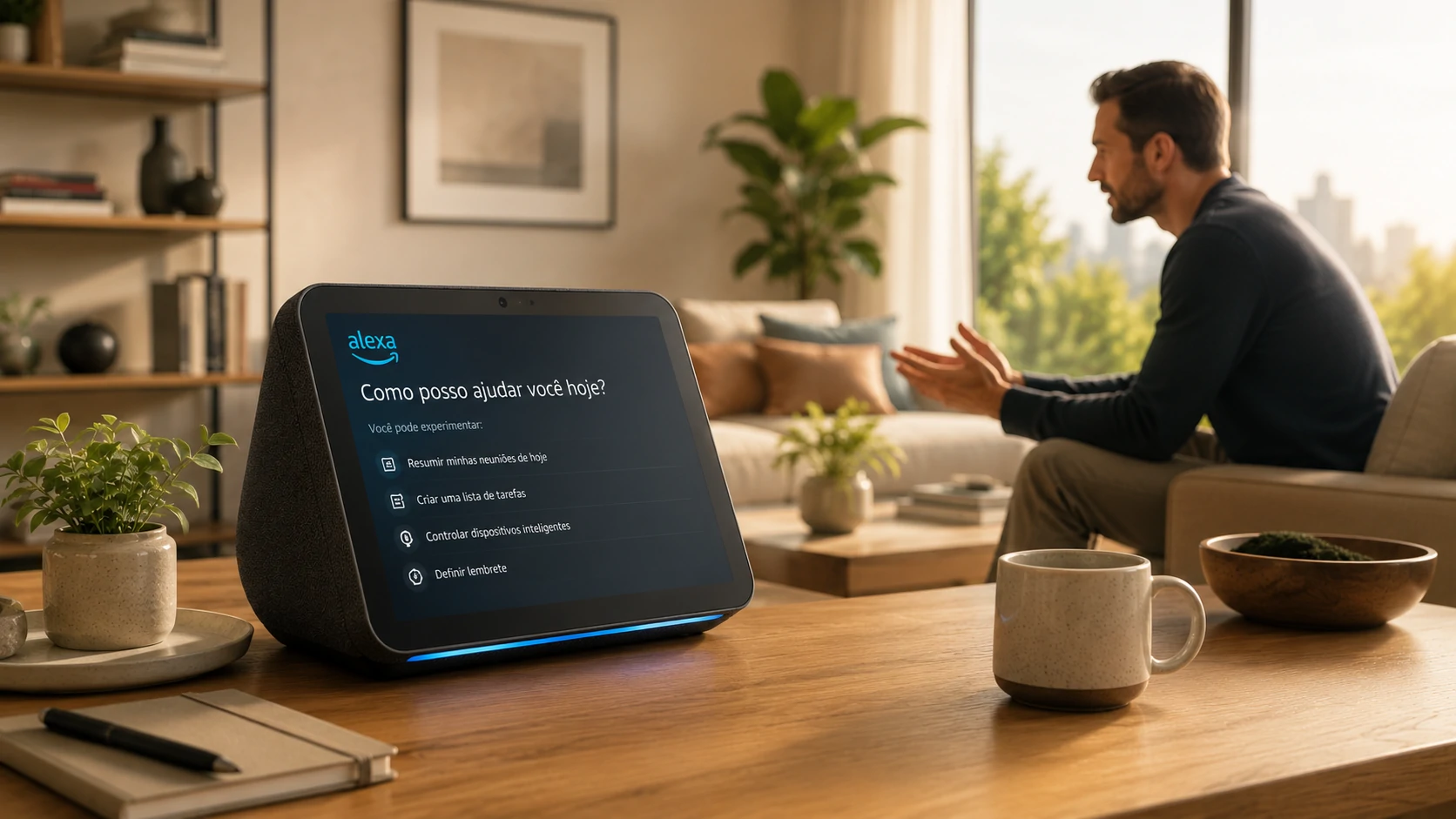
Competition among Amazon, OpenAI, Google and Anthropic is accelerating the evolution of intelligent assistants.
The answer is straightforward: competition is no longer centered only on the quality of language models but on the ability to build complete AI ecosystems.
Companies capable of delivering intelligent assistants that understand context, perform actions and integrate seamlessly with multiple digital platforms will gain a significant competitive advantage over the coming years.
What to Expect Next
Competition among Amazon, OpenAI, Google and Anthropic is expected to accelerate the release of increasingly capable AI assistants for both consumers and enterprises.
Future platforms will likely go far beyond conversational capabilities by managing calendars, automating workflows, coordinating business applications, supporting customer service and acting as intelligent digital agents across corporate environments.
For business leaders and technology professionals, following this evolution will become increasingly important as organizations evaluate new opportunities to improve efficiency, reduce operational costs and accelerate digital transformation.
As artificial intelligence becomes the primary interface between people and digital services, the competition is no longer purely technological. It is becoming a battle to define which companies will shape the next generation of computing. Amazon’s investment in a new AI-powered Alexa demonstrates that the race for intelligent assistants is only beginning, and its outcome could redefine how individuals and businesses interact with technology over the next decade.
Comentários
Os comentários utilizam autenticação via GitHub para manter um ambiente mais qualificado, seguro e livre de spam.
Entrar ou criar conta no GitHub