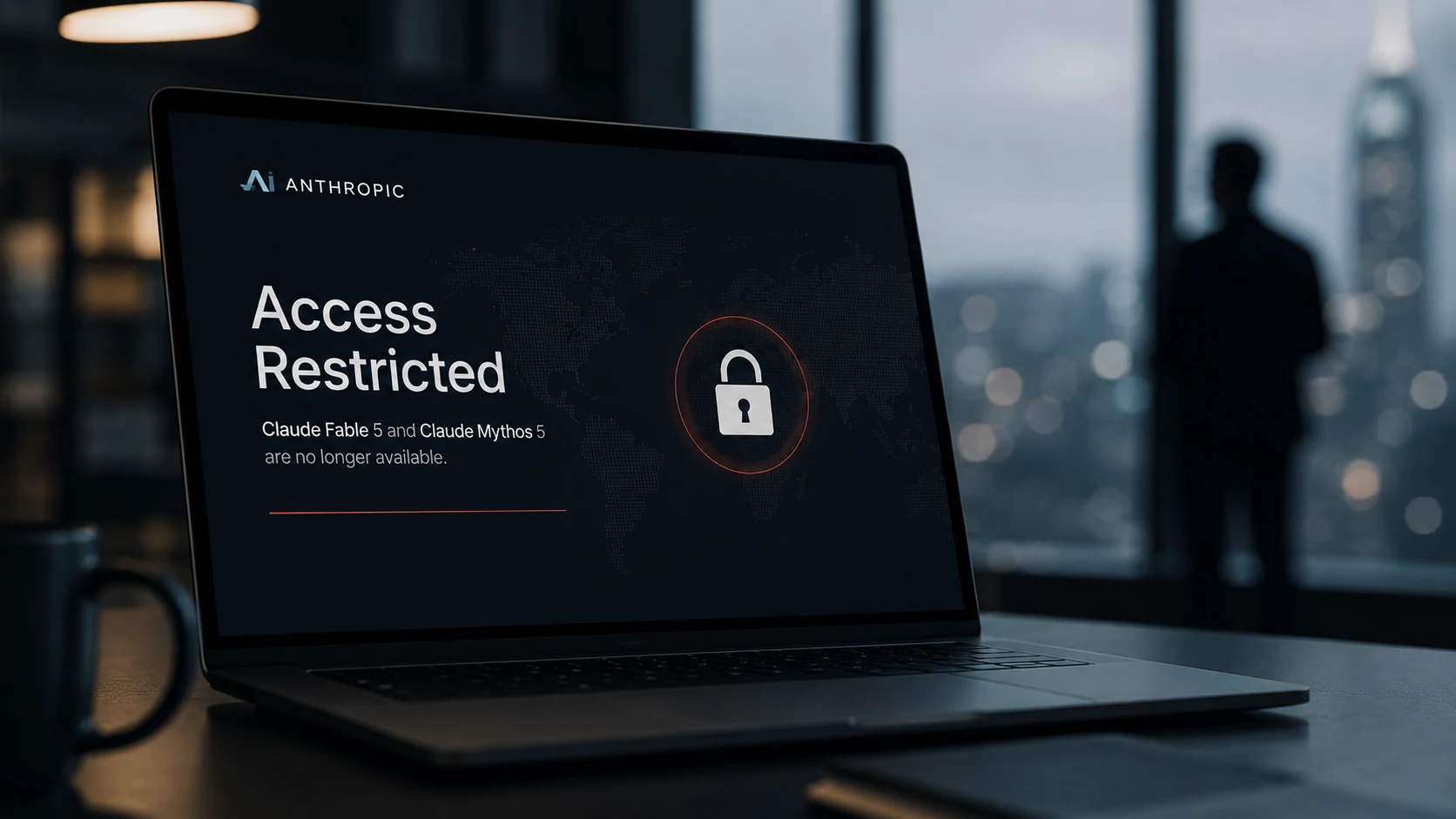
Artificial intelligence has entered a new phase of corporate maturity. The episode involving Anthropic and its most advanced models demonstrates that AI adoption is no longer driven solely by technological innovation. Regulatory geopolitical and operational factors are increasingly influencing the availability of tools that many businesses once considered permanently accessible.
Anthropic Has Restricted Access to Its Most Advanced Models
Anthropic’s decision directly affects Claude Fable 5 and Claude Mythos 5, two of the most advanced AI systems developed by the company.
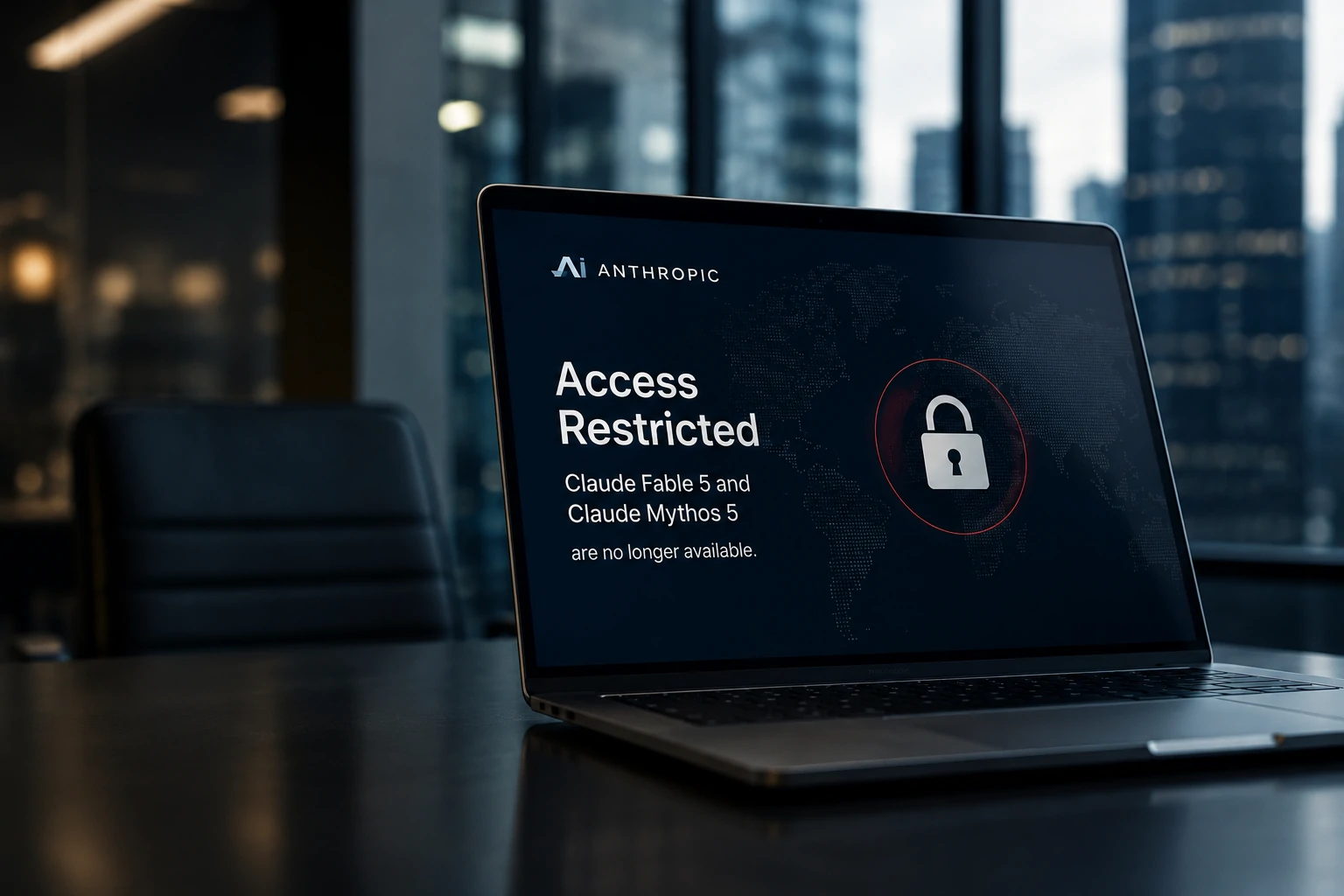
Claude Fable 5 and Claude Mythos 5 are now at the center of a broader discussion about access control and advanced artificial intelligence capabilities.
The move follows measures connected to United States national security policies and has intensified debate about who will have access to the most advanced AI capabilities in the years ahead.
The case has drawn global attention because it involves one of the most influential companies in the current AI race.
What happened to the Claude models?
The affected models represent the most sophisticated layer of the Claude platform.
They are used for complex tasks involving advanced reasoning information analysis enterprise automation and strategic decision support.
The restriction has raised concerns among organizations that rely on these systems for business-critical operations.
Why is this news important?
The significance extends beyond Anthropic itself.
The situation demonstrates that access to advanced AI models can be shaped by factors outside traditional market dynamics including regulatory decisions and national interests.
As a result businesses may need to rethink how they evaluate risks associated with artificial intelligence.
Businesses Are Reassessing Technology Dependence Strategies
The immediate impact is not necessarily technological.
The larger impact is the perception of risk.
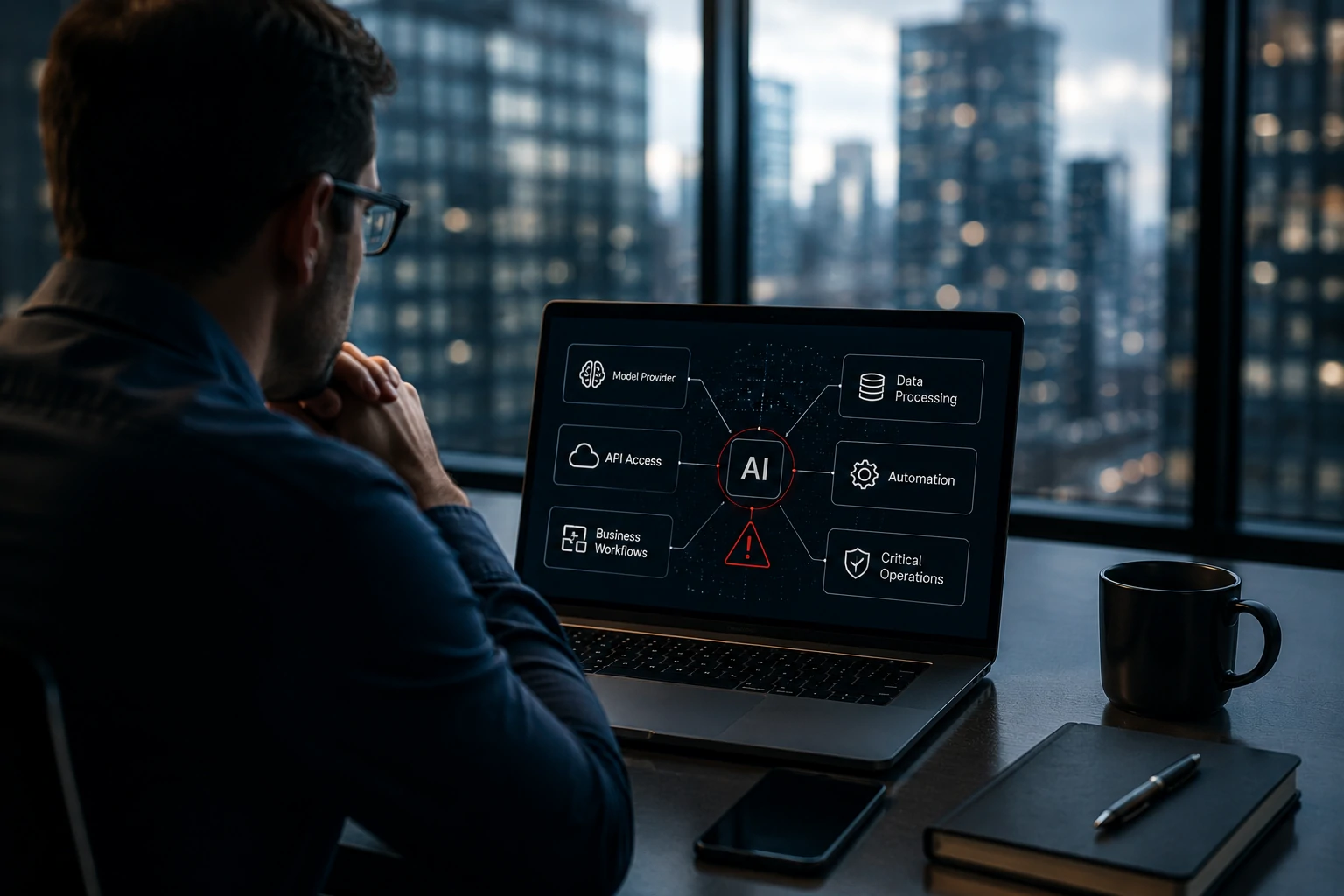
Organizations are taking a closer look at their dependence on specific artificial intelligence providers.
Many companies have built entire operational workflows around APIs provided by major AI laboratories.
When a supplier faces external limitations those organizations may encounter operational challenges that extend well beyond technology.
The risk is no longer purely technical
Historically companies focused on availability costs and performance when evaluating AI providers.
A new variable has now emerged.
Continuity of access.
Organizations are increasingly considering scenarios in which regulatory changes could affect essential AI services.
How are companies responding?
Some organizations are accelerating multi-model strategies.
Others are exploring open-source alternatives or hybrid architectures.
The goal is to reduce vulnerabilities associated with overreliance on a single artificial intelligence provider.
The Anthropic Case Creates an Important Market Precedent
Artificial intelligence is no longer viewed solely as a commercial technology.
It is becoming a strategic asset within national innovation and security policies.

The AI market is entering a new phase where technology regulation and corporate strategy are increasingly interconnected.
This shift is creating closer relationships between governments AI laboratories and major technology companies.
What changes for the AI sector?
The episode suggests that advanced AI models may face greater levels of regulatory oversight in the future.
This does not necessarily mean more restrictions.
However it indicates that the regulatory environment surrounding artificial intelligence is becoming more complex.
Organizations will need to track legal and institutional developments alongside technological progress.
Could the impact reach other AI companies?
Yes.
Although the situation involves Anthropic the market is closely watching potential implications for other leading AI organizations.
These include OpenAI, Google, Meta, and Microsoft, all of which are developing increasingly sophisticated artificial intelligence systems.
The Main Lesson for Businesses Is to Invest in Resilience
Artificial intelligence remains one of the most transformative technologies in the digital economy.
However the Anthropic episode demonstrates that technological maturity must be accompanied by operational maturity.
What should business leaders focus on?
Organizations should evaluate:
- supplier dependence
- AI governance
- operational continuity
- contingency planning
- technology diversification
These factors are becoming nearly as important as model performance itself.
The future of AI will become increasingly strategic
Corporate adoption of artificial intelligence will continue to accelerate.
At the same time the need for strategies capable of managing regulatory geopolitical and operational risks will grow.
The decision involving Claude Fable 5 and Claude Mythos 5 is more than a story about a single company. It serves as an important signal about the future direction of the AI market. As artificial intelligence becomes critical infrastructure for business organizations will need to balance innovation governance and resilience to maintain sustainable competitive advantage in an increasingly complex environment.
Comentários
Os comentários utilizam autenticação via GitHub para manter um ambiente mais qualificado, seguro e livre de spam.
Entrar ou criar conta no GitHub