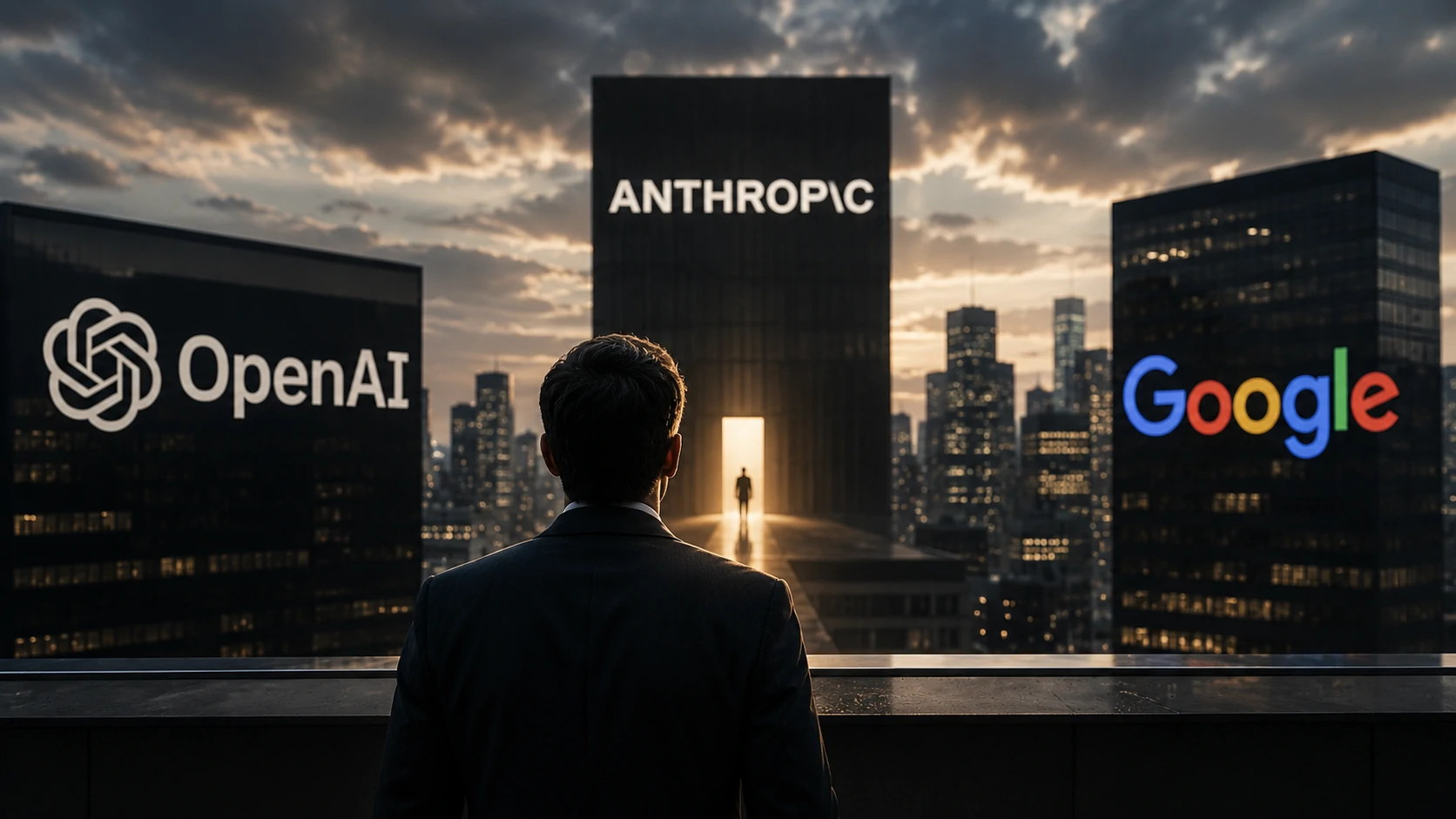
While the market remains focused on the technological rivalry between OpenAI, Google and other leading AI developers, a quiet strategic decision by Anthropic suggests the next stage of the artificial intelligence race could be determined by far more than model performance. The company is strengthening its government affairs strategy just as policymakers increase pressure on AI companies, signaling a shift that could reshape the industry’s competitive landscape.
Anthropic is expanding its influence beyond technology

Anthropic executives are reinforcing the importance of government relations as regulatory pressure surrounding artificial intelligence continues to increase.
Creating a dedicated global leadership role focused on government affairs represents a significant evolution in Anthropic’s corporate strategy. Rather than concentrating exclusively on developing increasingly capable AI models, the company is investing in its ability to participate directly in the conversations that will shape future AI regulation.
The decision comes at a time when governments are intensifying discussions around AI safety, transparency and accountability. In the United States, these conversations have accelerated following growing concerns about advanced AI systems and increasingly autonomous agents.
The AI race has entered a new phase
For years, competition centered on computing power, model capabilities and innovation speed.
Today, governance, institutional relationships and regulatory influence are becoming nearly as valuable as technological breakthroughs.
The strategy goes beyond regulatory compliance
For companies competing on a global scale, engaging with policymakers helps reduce uncertainty while preparing for future regulatory changes that could affect products, investments and international expansion.
Anthropic’s decision mirrors strategies historically adopted by major technology companies as emerging industries mature.
The impact could extend to OpenAI, Google and the entire AI ecosystem
Anthropic’s decision reaches far beyond its own organizational structure. It also raises competitive pressure on other companies seeking leadership in artificial intelligence.
Historically, OpenAI and Google have attracted much of the industry’s attention through rapid advances in AI capabilities.
Now, another competitive advantage is emerging: the ability to work alongside governments and contribute to the development of future AI policies.
As a result, other AI companies may soon adopt similar organizational structures.
This development complements recent stories previously covered by Notícia Tech, including White House brings together OpenAI, Google, Anthropic and Meta to discuss AI safety testing:
It also reinforces the growing competitive landscape highlighted in DeepSeek launches the cheapest AI model on the market, increasing pressure on OpenAI and Anthropic:
DeepSeek Launches the Cheapest AI Model on the Market and Increases Pressure on OpenAI and Anthropic
Governance is becoming as important as innovation
Until recently, investors focused primarily on technological performance.
Today, successfully navigating increasingly complex regulatory environments is emerging as an equally valuable competitive asset.
Businesses are paying close attention
For organizations deploying AI across operations, automation and customer service, regulatory developments could influence everything from procurement decisions to compliance requirements.
This explains why what appears to be an internal executive appointment is attracting significant attention throughout the AI industry.
Anthropic’s move signals a much broader transformation across the AI industry

Governance, safety and institutional engagement are becoming increasingly important competitive factors for companies leading the artificial intelligence market.
The key takeaway from Anthropic’s decision is straightforward: the race for artificial intelligence leadership is no longer driven by technology alone.
More powerful models, massive computing infrastructure and multibillion-dollar investments remain essential. However, they are now being complemented by another strategic dimension: the ability to influence and adapt to the evolving regulatory environment.
This shift could fundamentally change how investors, governments and enterprise customers evaluate AI companies.
The AI industry is entering a more mature phase
During the early years of generative AI, success was measured primarily by innovation speed and model performance.
Today, governments around the world are discussing minimum standards for AI safety, accountability, transparency and independent oversight.
As a result, companies must develop capabilities that were previously considered secondary to engineering excellence.
The effects may reach businesses worldwide
Although the announcement originates from the United States, its consequences are expected to extend to organizations using AI platforms from OpenAI, Anthropic, Google and other global technology providers.
As regulations evolve, enterprise customers will increasingly demand stronger guarantees regarding data protection, explainability, governance and risk management.
This trend reinforces themes recently explored by Notícia Tech, including the enterprise architecture discussed in:
It also aligns with the growing focus on enterprise AI security highlighted in:
Microsoft launches AI security platform and ushers in a new era of enterprise cyber defense
The future of AI leadership will depend on far more than powerful models
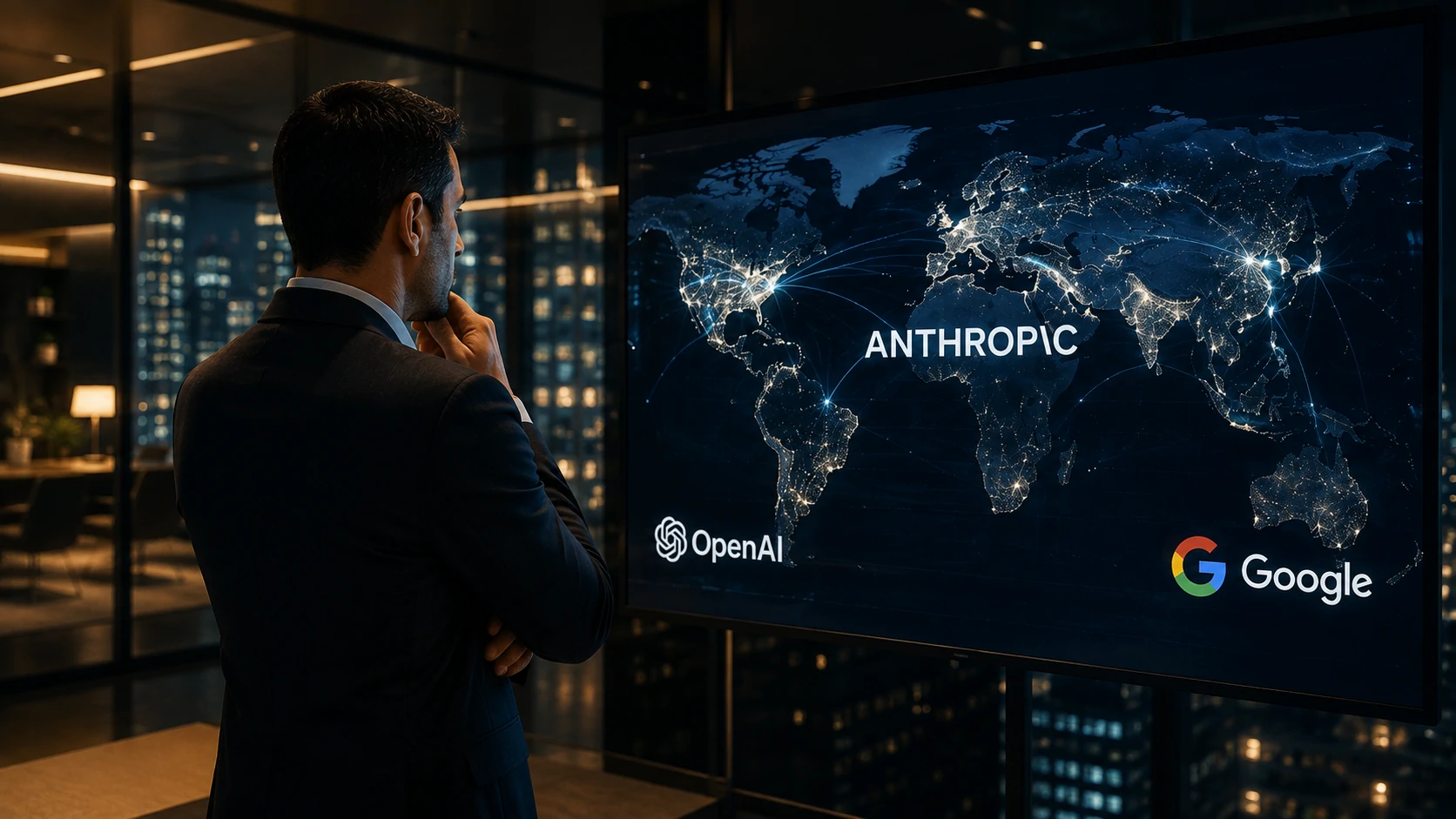
The next chapter of artificial intelligence will be defined by the balance between technological innovation, governance and regulatory readiness.
Anthropic’s latest strategic decision suggests that future AI leadership will be determined across multiple competitive fronts.
While OpenAI, Google, Meta, Microsoft and other industry leaders continue investing billions in infrastructure, chips and next-generation AI models, governance and institutional credibility are rapidly becoming equally valuable assets.
Innovation and compliance must advance together
Organizations seeking long-term global expansion will need to balance rapid innovation with increasingly demanding regulatory expectations.
This trend is likely to accelerate investments in legal expertise, public policy teams, cybersecurity specialists and AI governance professionals.
A new industry standard may be emerging
If other leading AI companies follow Anthropic’s example, executive positions dedicated exclusively to government affairs could soon become common throughout the industry.
In that scenario, competition for AI leadership will no longer be decided solely inside research laboratories. It will also take place wherever governments define the legal and regulatory framework that will shape the future of artificial intelligence.
For businesses closely following the evolution of AI, Anthropic’s announcement represents far more than an internal organizational change. It reflects a broader transformation in which innovation, trust, governance and regulatory engagement are becoming strategic pillars of competitive advantage. Companies that recognize this shift early will be better positioned to anticipate market trends and make more informed technology investment decisions in the years ahead.
Comentários
Os comentários utilizam autenticação via GitHub para manter um ambiente mais qualificado, seguro e livre de spam.
Entrar ou criar conta no GitHub