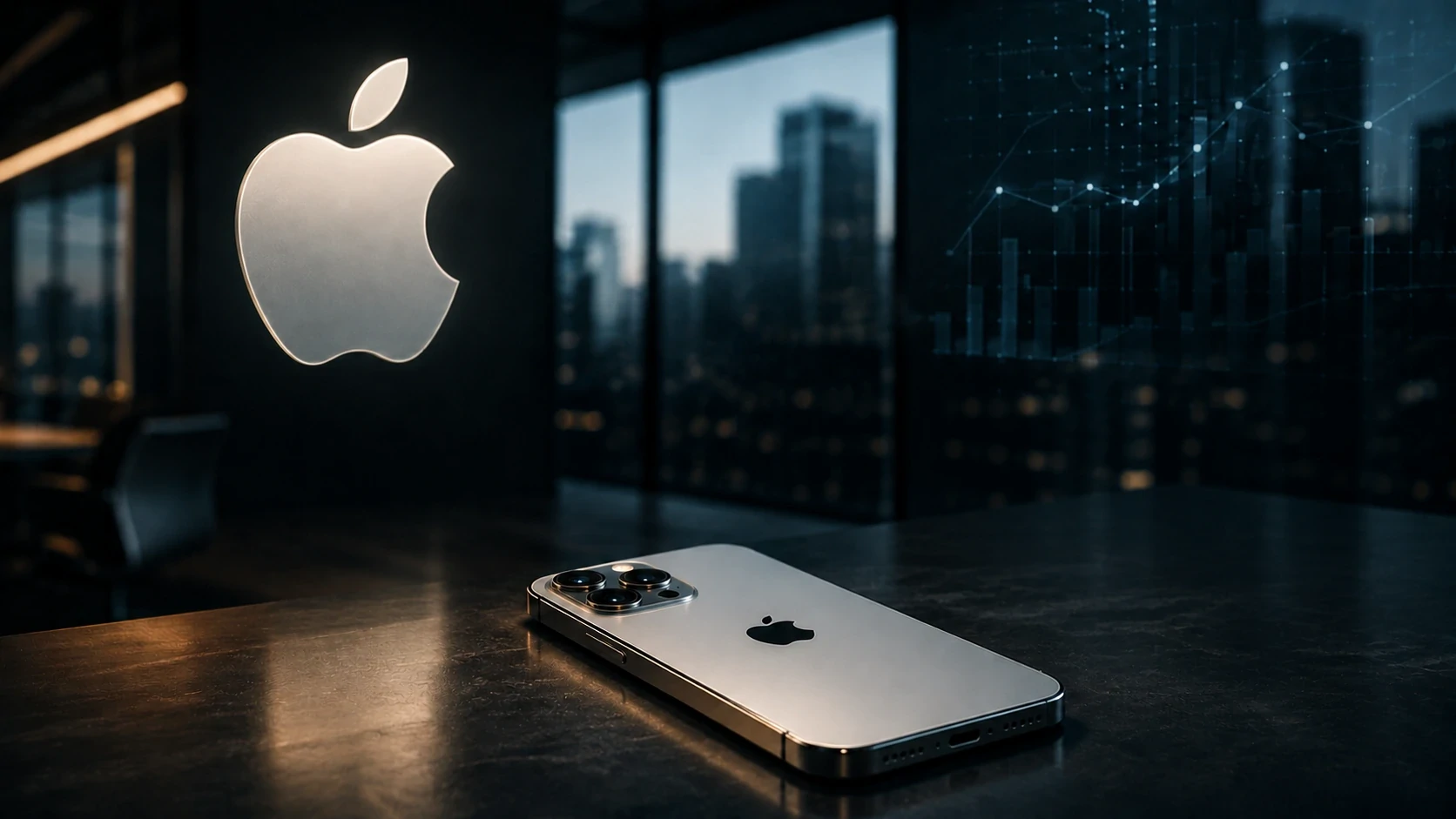
The artificial intelligence race is entering a new phase. After two years dominated by generative models and cloud infrastructure, the market is beginning to focus on another strategic asset: the interface people use to interact with AI. In this environment, Apple has emerged as one of the most closely watched companies in the industry, driven by the possibility of transforming the iPhone into an operational platform for enterprise AI agents.
Apple’s AI Strategy Goes Beyond Adding New Features to the iPhone

Apple’s competitive advantage may lie in the integration of devices, context, and user experience.
Apple’s artificial intelligence strategy is not simply about adding smart capabilities to its operating systems. The company’s broader goal appears to be positioning its ecosystem as a permanent productivity layer.
Its main competitive advantage comes from the combination of hardware, software, and distribution. Unlike competitors that rely primarily on applications or cloud-based services, Apple already has direct access to millions of professionals who use its devices every day.
Why Is the Market Paying Attention?
Industry interest is closely tied to the scale of Apple’s ecosystem.
While many AI platforms are still working to acquire users, Apple can distribute AI capabilities directly to devices that are already deeply embedded in daily business operations.
Why Context May Matter More Than the Model
The next phase of AI may depend less on generating answers and more on understanding context.
Concepts such as digital memory, interaction history, and goal awareness have become increasingly important. This trend aligns with analyses previously published by Notícia Tech, including A próxima guerra da IA pode ser pela sua memória digital and Context Engineering: a nova corrida silenciosa que pode definir quais agentes de IA realmente funcionam nas empresas.
The iPhone Could Evolve Into an Intelligent Enterprise Agent

The smartphone could evolve from an access tool into a digital operator.
The most significant aspect of Apple’s strategy is the possibility of turning the iPhone into an intelligent agent capable of executing tasks, understanding context, and supporting decision-making.
This represents a fundamental shift in the relationship between people and technology.
Instead of opening applications and navigating multiple systems, professionals may increasingly interact directly with goals and outcomes.
What Changes in Practice?
An executive could request a summary of meetings, identify outstanding tasks, and organize priorities without manually reviewing multiple platforms.
In this model, AI becomes the intermediary between the user and software systems.
What Does This Mean for Small Businesses?
Small businesses could achieve meaningful productivity gains without investing heavily in infrastructure.
Potential benefits include:
- automation of administrative tasks;
- information organization;
- task prioritization;
- decision support;
- reduction of repetitive work.
What Does This Mean for Large Enterprises?
Large organizations face a different challenge: too many systems.
In this environment, intelligent agents could serve as a unifying layer capable of connecting enterprise applications and reducing operational complexity.
Apple OpenAI Google and Microsoft Are Competing for the Next Computing Interface
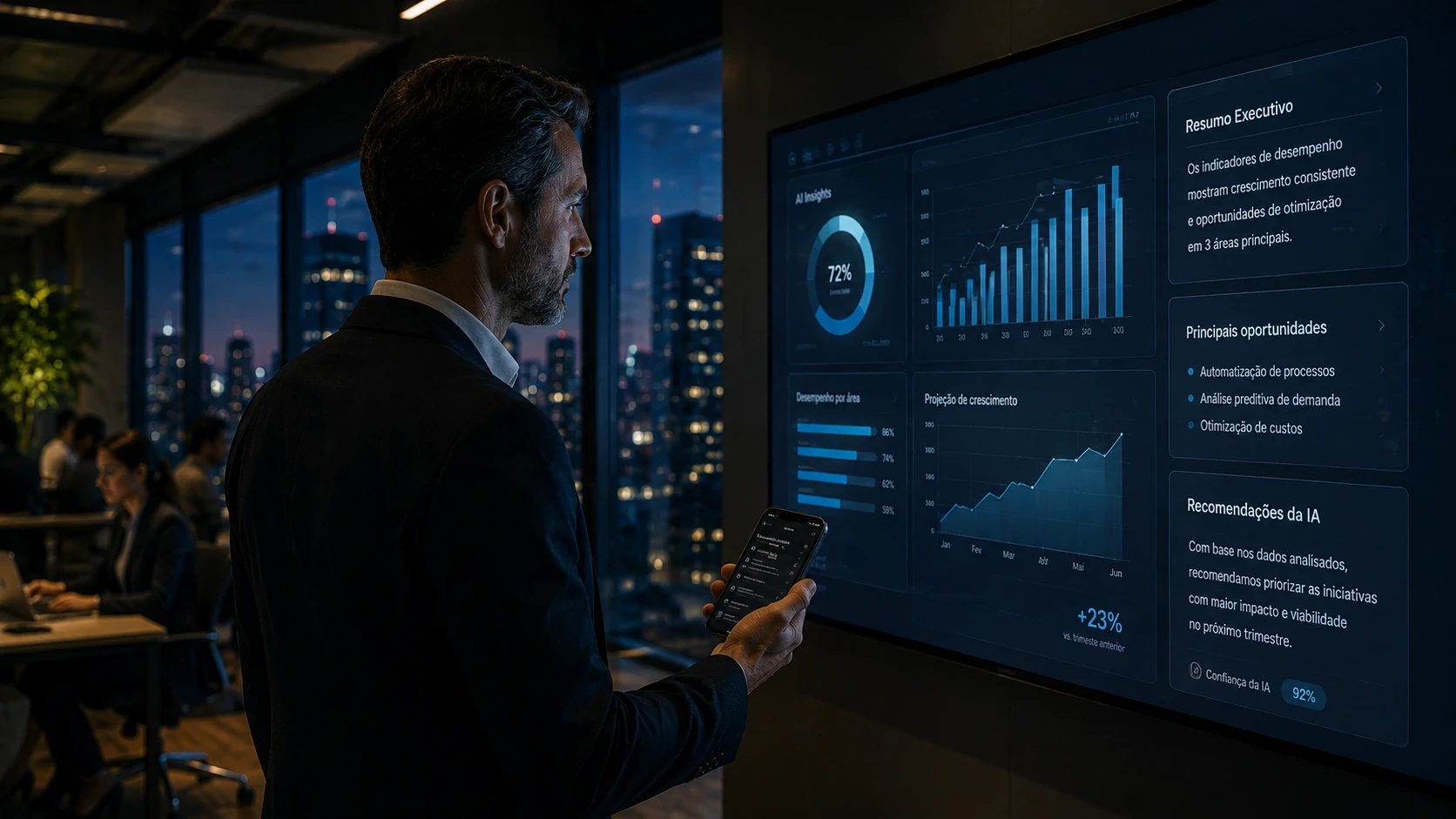
The AI market is shifting from models to user experience.
Today’s competition is no longer just about language models.
Companies such as OpenAI, Google, Microsoft, and Apple are now competing for something even more strategic: the point of interaction between users and intelligent systems.
Whoever controls that interface may influence how people work, search for information, and make decisions.
The Next Battle May Take Place at the Operational Layer
Historically, browsers and smartphones have served as gateways to the internet.
Now, intelligent agents may take over that role.
Instead of manually searching for information, users will increasingly delegate complete tasks to systems capable of taking actions across multiple platforms.
The Shift Is Already Visible Across the Industry
This transformation is evident in the rise of AI-powered browsers, enterprise agents, and intelligent operational platforms.
The trend was explored by Notícia Tech in Google, OpenAI e Perplexity aceleram corrida pelos navegadores com IA e ameaçam a economia tradicional da web and OpenAI e Salesforce aceleram a era do Agentic SaaS e pressionam empresas a repensar seus softwares corporativos.
The Business Impact Could Be Larger Than It Appears
Organizations are actively searching for practical ways to turn artificial intelligence into a competitive advantage.
In this context, Apple’s strategy could accelerate enterprise adoption by reducing barriers related to usability and integration.
Privacy Could Become a Competitive Differentiator
One of the most closely watched aspects of Apple’s approach is how it balances AI capabilities with data protection.
Its focus on local processing and native integration may appeal to industries with strict regulatory requirements, including healthcare, finance, and legal services.
Smartphones May Remain at the Center of Digital Transformation
Over the past several months, many predictions have suggested a future beyond smartphones.
However, another possibility is gaining momentum.
Rather than being replaced, smartphones may become the primary platform for intelligent agents.
That possibility helps explain why Apple’s AI initiatives are being closely monitored by investors, competitors, and business leaders.
More than launching new features, the company may be positioning itself at the center of the next generation of computing. If that vision becomes reality, the iPhone will no longer be just a mobile device. It could become one of the primary gateways to the emerging economy of intelligent agents.
Comentários
Os comentários utilizam autenticação via GitHub para manter um ambiente mais qualificado, seguro e livre de spam.
Entrar ou criar conta no GitHub