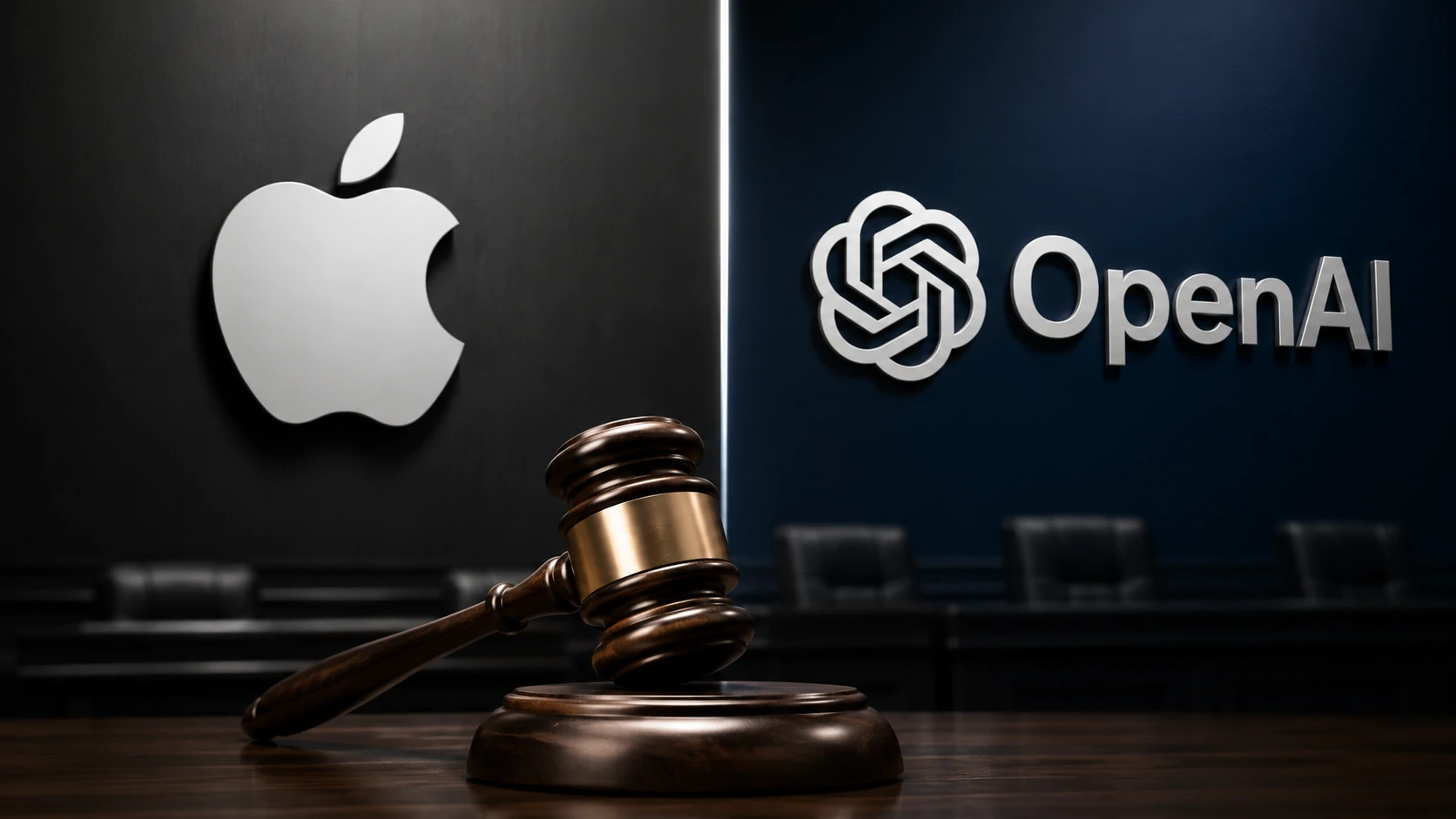
The race for leadership in artificial intelligence is no longer defined solely by model performance or computing infrastructure. The conflict between Apple and OpenAI demonstrates that the industry’s most valuable asset is increasingly the expertise accumulated by the engineers building the next generation of intelligent systems.
The competition for talent is redefining Big Tech’s competitive advantage

Highly specialized engineering teams have become one of the strongest competitive advantages in the artificial intelligence industry.
Over the past several years, companies such as OpenAI, Google, Anthropic, Microsoft and Meta have invested heavily in computing infrastructure, large language models and enterprise AI platforms.
However, the rapid expansion of the AI market has revealed a new bottleneck: professionals capable of developing frontier AI systems remain exceptionally scarce.
Expertise has become a strategic asset
Specialists in foundation model architecture, LLM training, AI safety, inference optimization and autonomous agents possess experience that cannot easily be replicated simply by purchasing additional hardware.
When an organization successfully recruits experienced engineering teams, it dramatically reduces development cycles and accelerates innovation across its AI initiatives.
Competition now extends far beyond AI models
For years, industry discussions focused primarily on comparisons between GPT, Gemini, Claude and Llama.
Today, another competition is taking place behind the scenes, as technology companies compete to recruit the engineers responsible for building those models.
This growing battle for talent helps explain why intellectual property disputes and employee mobility have become increasingly important throughout the AI industry.
The lawsuit highlights new corporate governance challenges

Technology companies are balancing innovation, talent retention and the protection of strategic knowledge.
Regardless of the court’s final decision, the lawsuit underscores a growing concern among major technology companies: how to encourage innovation while protecting highly valuable proprietary knowledge.
Safeguarding institutional expertise has become just as important as protecting patents, algorithms and computing infrastructure.
Companies are likely to strengthen internal governance
Organizations are expected to reinforce confidentiality agreements, talent retention programs and knowledge management practices.
Many will also increase investments in technical documentation, structured knowledge sharing and organizational processes designed to reduce dependence on individual employees.
As artificial intelligence becomes central to long-term business strategy, intellectual property governance will continue to gain importance across the technology sector.
The impact extends beyond Big Tech
Although the dispute involves two industry giants, smaller organizations are closely monitoring its implications.
Companies developing AI-powered products and services may use this case as an opportunity to strengthen internal governance, improve information security and implement more robust strategies for preserving institutional knowledge.
To learn how AI agents are transforming enterprise productivity, read Why ChatGPT Work Marks the Beginning of the AI Agent Era for Enterprise Productivity:
Another related article is What Is AI Orchestration and Why It Is Replacing AI Model Competition in Business, which explains how competitive advantage is shifting from individual AI models toward intelligent orchestration strategies:
The battle for AI specialists could reshape the entire industry
Technology companies increasingly view elite AI teams as strategic assets for maintaining long-term competitive advantage.
The dispute between Apple and OpenAI represents only one chapter in a much broader transformation. The artificial intelligence race is no longer driven exclusively by more powerful models and larger computing infrastructure. It has become an intense competition for highly specialized professionals.
This trend is expected to accelerate investments in employee retention programs, equity-based compensation and internal talent development. At the same time, organizations will likely strengthen intellectual property protection and knowledge management practices to reduce the risks associated with the departure of key personnel.
The cost of talent scarcity will continue to rise
The global supply of experienced AI researchers remains limited while demand continues to expand across every major technology company.
As a result, salaries, signing bonuses, stock-based compensation and executive benefits are expected to increase further, particularly for specialists working on foundation models, autonomous agents, distributed infrastructure and AI safety.
This growing talent gap could widen the competitive distance between major technology companies and smaller organizations seeking to build advanced AI capabilities.
The corporate sector will also feel the impact
Although the lawsuit involves two technology giants, its implications extend far beyond Silicon Valley.
Companies pursuing digital transformation initiatives will need to invest not only in AI platforms but also in strategies that preserve institutional knowledge, reduce dependence on individual experts and strengthen long-term technical succession planning.
In an AI-driven economy, intellectual capital is becoming one of the most valuable competitive assets any organization can possess.
The lawsuit reflects a structural shift in the AI race
For years, leadership in artificial intelligence was measured primarily by the release of increasingly capable foundation models.
Today, that competitive landscape has become considerably more complex.
Competitive advantage is shifting toward knowledge
AI models continue to improve rapidly, and computing infrastructure can be expanded through substantial financial investment.
Highly experienced engineering teams, however, cannot be built overnight.
The institutional expertise accumulated by elite researchers has become a strategic asset capable of accelerating innovation, shortening development cycles and creating sustainable long-term competitive advantages.
Innovation and governance must evolve together
Artificial intelligence will continue advancing at an extraordinary pace, but successful organizations will also require increasingly sophisticated governance frameworks.
Confidentiality, intellectual property protection, talent retention and knowledge management are becoming central components of corporate AI strategy.
For organizations following the evolution of artificial intelligence, the message is clear: technological innovation and corporate governance are becoming inseparable.
Rather than representing only another legal dispute between two major companies, the conflict between Apple and OpenAI may ultimately mark the beginning of a new era in artificial intelligence, where the greatest competitive advantage belongs not only to those building the most advanced AI models, but also to those capable of attracting, developing and retaining the people who create them.
Comentários
Os comentários utilizam autenticação via GitHub para manter um ambiente mais qualificado, seguro e livre de spam.
Entrar ou criar conta no GitHub