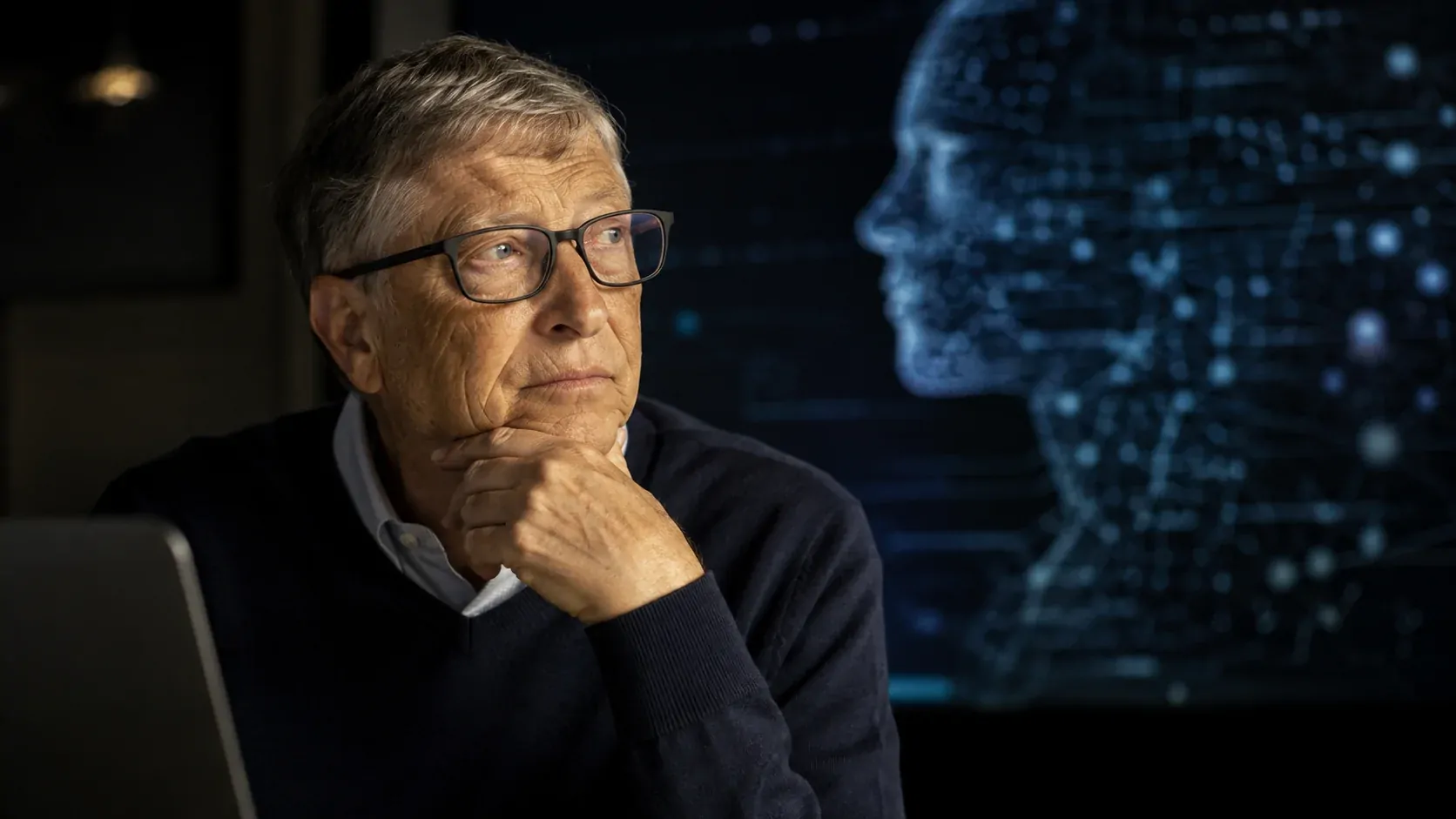
Bill Gates still sees enormous potential in artificial intelligence, but his latest warning shifts the center of the debate: the challenge is no longer just making AI more productive, but managing the economic transition created by automation.
Bill Gates has changed the question about the future of AI
From technology optimist to advocate for caution
Bill Gates published an essay on August 26 of nearly 6,000 words in which he adopted a significantly more concerned tone about the impact of artificial intelligence on jobs, security and society. He said he would like to see the advance of a new technology slow down, something he considers unusual given his career.
This does not mean Gates has turned against AI. His essay recognizes major benefits in areas such as healthcare, science and education. The change is in his assessment that these gains will not happen automatically and need to be accompanied by policies capable of managing the costs of the transition.
Technological progress has moved faster than institutional preparation
Gates’ most important argument is that the speed of technological progress may be exceeding the ability of governments and businesses to reorganize work, taxation and protection mechanisms. In his view, waiting for problems to emerge before responding increases the risk of a disorderly transition.
That is what makes his position relevant to business. For years, the corporate conversation around AI has focused on productivity, cost reduction and new capabilities. Gates is putting another question at the center of the debate: how does a company manage a technology that can reshape the structure of work itself?
The problem is no longer just productivity

The advance of AI is shifting the business conversation from productivity toward workforce restructuring.
Automation could affect more than administrative tasks
The first phase of corporate AI adoption focused largely on digital activities and repetitive tasks. Gates’ warning is that the combination of more capable models and increasingly efficient robots could expand pressure into occupations that have so far appeared less exposed to automation.
This changes the nature of business planning. When a technology moves from being a support tool to partially replacing certain tasks, the investment decision is no longer simply about software. It starts involving organizational structure, training, hiring and the distribution of responsibilities.
The economic transition could become the next major challenge
The central issue is not that every job will disappear. The concern is that some roles could be reduced or transformed faster than workers can move into new occupations. Gates sees this mismatch as an economic problem that cannot be solved simply by telling workers to learn new skills.
For businesses, this creates another layer of planning. AI adoption can increase productivity while simultaneously requiring investment in reskilling, job redesign and transition management. That combination could make the return-on-automation calculation more complex.
Gates’ most controversial proposal is to reserve work for humans
What Human Reserved means
Gates proposed the concept of “Human Reserved” roles, under which certain activities could deliberately remain reserved for people even when AI systems or robots are technically capable of performing them. He points to areas such as healthcare, education and caregiving, where the human dimension may have value beyond efficiency.
The proposal does not simply mean banning AI. In some cases, technology could continue to be used as a support tool while certain responsibilities remain with humans. In others, the protection could be temporary, giving workers in a changing sector more time to transition.
The challenge for businesses is deciding where automation ends
This is where Gates’ proposal moves beyond a technology debate and into the territory of corporate governance. If certain roles are considered too important to be fully automated, businesses would need to deal with different rules, criteria and responsibilities.
There is still no universal definition of which jobs should fall into this category. The debate itself raises difficult questions: who decides, what criteria should be used, and how can companies be prevented from circumventing the rules?
Gates also wants to change the economic incentives behind automation
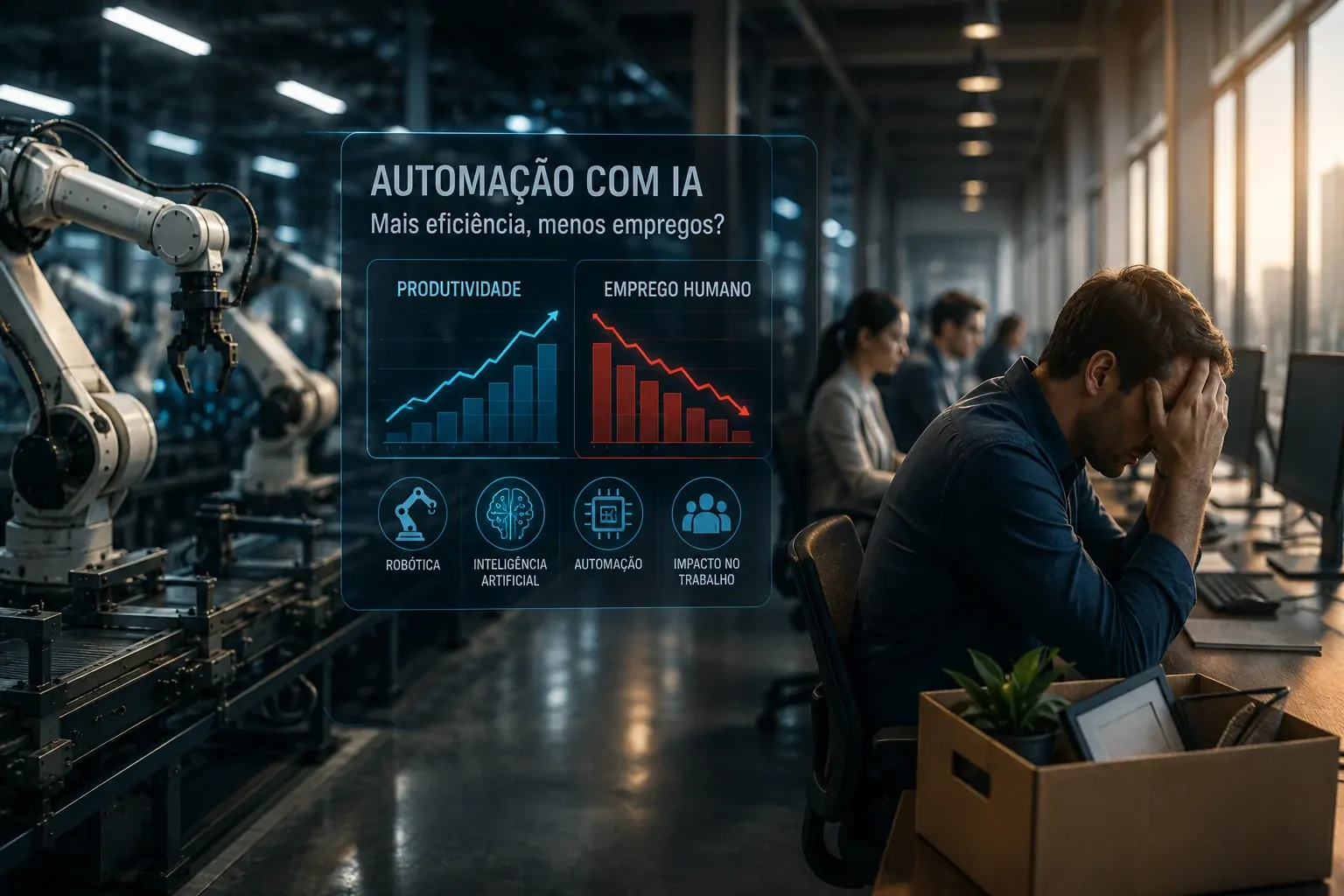
Bill Gates argues that the current tax system can create different incentives for hiring people and investing in machines.
Why he is talking about taxing robots and AI tokens
Gates is also calling for changes to taxation. His argument is that when a company hires a person, it pays payroll-related taxes, while purchasing a robot can receive different tax treatment. In his view, this structure can create an additional incentive to replace human labor with machines.
His proposal is to introduce some form of tax on robots and AI tokens, partially slowing the pace of replacement while creating resources to fund retraining and social safety nets. Gates acknowledges that such a system would need to be designed carefully so that beneficial uses of AI are not unnecessarily penalized.
The potential impact on corporate strategy
If such a policy were adopted, the economic cost of automation would change. AI investments would no longer be evaluated solely on labor savings and could also include tax costs associated with the use of the technology.
That does not mean the proposal is close to becoming law. It is a public policy idea presented by Gates. But its existence matters because it raises an issue businesses will need to watch: the regulatory environment could begin treating automation and human labor differently than it does today.
Gates’ AI debate has already crossed U.S. borders
The conversation with Xi Jinping
The shift in Gates’ position has also taken on an international dimension. Bill Gates plans to discuss global AI policies with Chinese President Xi Jinping during a possible meeting on a trip to China expected in November, according to Reuters. Gates argues that the United States and China should work together on mechanisms to reduce risks associated with potentially dangerous AI models.
Among the issues Gates has raised is monitoring the ability of AI systems to create dangerous molecules and facilitate biological attacks. That expands the debate beyond jobs and productivity, placing security and international AI governance in the same conversation.
The precedent for AI governance
Gates’ concern is that certain risks may not be manageable by a single company or country. If advanced AI systems are capable of producing effects that cross borders, purely national rules may not be enough.
There is still no international agreement that matches the vision Gates is proposing. For now, the debate is about whether advanced AI governance should receive the same level of attention as other technologies capable of creating systemic impacts.
What this discussion changes for businesses

The next stage of AI adoption may require businesses to make decisions about people, processes and governance beyond simply choosing the right tools.
Productivity will no longer be the only metric
For businesses, the main consequence of Bill Gates’ new position is not an immediate need to adopt or abandon a particular technology. It is the expansion of the variables that need to be included in strategic planning.
A company that evaluates automation solely through productivity gains may overlook transition costs, regulatory changes, new skill requirements and roles that will continue to depend on human judgment. The AI debate is therefore moving closer to strategic workforce planning.
This discussion is already appearing across different parts of the market.
The next battle could be over the limits of automation
The advance of AI will continue to pressure companies to decide where to automate, where to augment employees and where to preserve human involvement. That boundary will not be determined solely by the technical capabilities of models, but also by cost, risk, regulation and the value assigned to human work.
This is where Gates’ warning becomes important. The business question is no longer simply “What can AI do?” but also “What should a company allow AI to do?”
This shift in perspective is happening as AI infrastructure and capabilities continue to advance. The race to build models and enterprise applications shows that AI is becoming increasingly structural to business operations, including the expansion of agentic search discussed by Mistral for complex documents: the next generation of AI agents is beginning to take on more complex enterprise tasks.
Bill Gates’ essay does not provide a definitive solution to this transition. Instead, it presents a problem that businesses, governments and workers are still trying to understand. The difference is that the discussion is now moving beyond the promise of productivity and into the more difficult territory of how the gains from automation are distributed, who bears its costs and which limits society is willing to establish.
For businesses, following this shift could become just as important as tracking the evolution of AI models themselves. The technology will continue to advance. The strategic question will be how to incorporate that progress without turning short-term efficiency into a larger long-term problem.
Comentários
Os comentários utilizam autenticação via GitHub para manter um ambiente mais qualificado, seguro e livre de spam.
Entrar ou criar conta no GitHub