The global race for Artificial Intelligence has entered a new phase. After months of competing primarily on model performance, the industry’s attention is rapidly shifting toward operational efficiency and deployment costs. DeepSeek’s latest strategy suggests that pricing may soon become one of the most influential factors shaping enterprise AI adoption.
DeepSeek shifts the AI race by focusing on lower costs
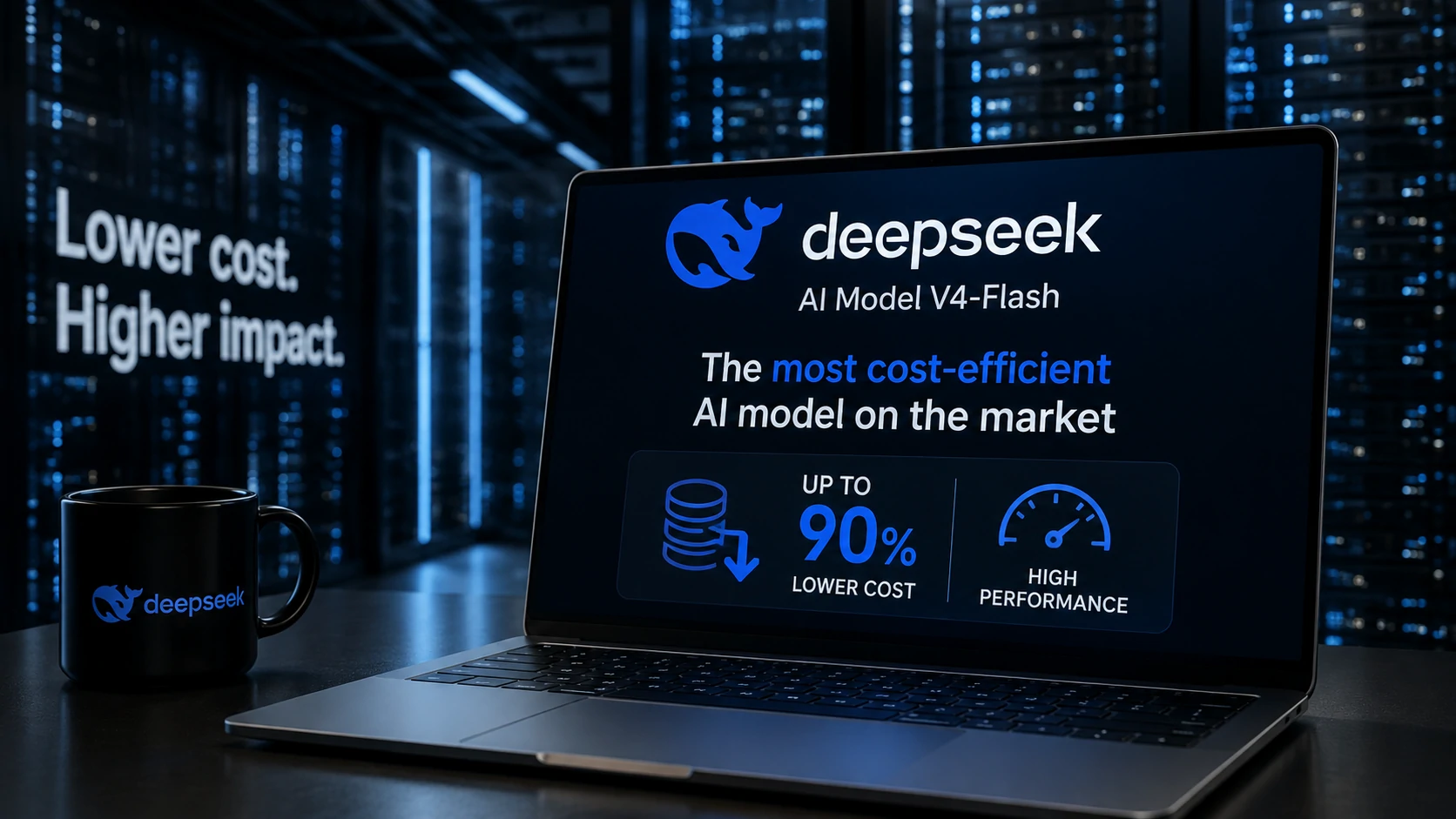
DeepSeek’s latest model expands competition among the world’s leading artificial intelligence developers.
DeepSeek has introduced a new large language model that, according to recent industry analysis, delivers the lowest operating cost among today’s leading commercial AI models.
Rather than representing just another technical upgrade, the announcement reflects a broader strategic shift in how organizations may evaluate AI vendors over the coming years. Until recently, competition largely centered on reasoning ability, coding performance, and content generation quality.
Now, operational cost is becoming a critical decision-making factor for enterprise AI investments.
Pricing becomes a competitive advantage
Over the past two years, companies such as OpenAI, Anthropic, and Google have primarily competed by improving model capabilities and introducing more advanced features.
DeepSeek is taking a different approach by offering competitive performance while significantly lowering operating expenses for organizations deploying AI applications at scale.
Businesses are looking beyond model quality
Large enterprise AI projects process millions of requests every day.
At that scale, even small differences in pricing per million tokens can translate into millions of dollars in annual savings.
As a result, procurement decisions may increasingly favor models that provide the best balance between performance and operational efficiency rather than raw benchmark leadership alone.
The impact could extend to OpenAI, Anthropic, and Google
Artificial intelligence is becoming a competition driven not only by innovation but also by economic efficiency.
Aggressive pricing strategies have the potential to reshape competition among the world’s largest AI laboratories.
Over recent months, companies including OpenAI, Anthropic, Google, Meta, and Mistral AI have all intensified their efforts to capture a larger share of the enterprise AI market.
DeepSeek’s latest announcement introduces another important variable into that competition: economic efficiency.
Pressure grows on premium AI models
Today’s leading AI models often require substantial infrastructure and operational investments.
If lower-cost alternatives continue delivering sufficiently strong real-world performance, organizations may begin reassessing long-term vendor strategies.
That pressure could encourage established AI providers to reduce prices, improve efficiency, or accelerate the release of next-generation models.
Competition is no longer purely about technology
The AI industry increasingly resembles the evolution of the cloud computing market.
Innovation remains essential, but scalability, infrastructure efficiency, and total cost of ownership are becoming equally important purchasing criteria for enterprise customers.
This trend also reinforces broader enterprise AI architecture strategies discussed in our guide to Enterprise AI Architecture and our analysis of Mistral AI’s enterprise strategy against OpenAI.
Businesses could reduce AI costs without sacrificing performance
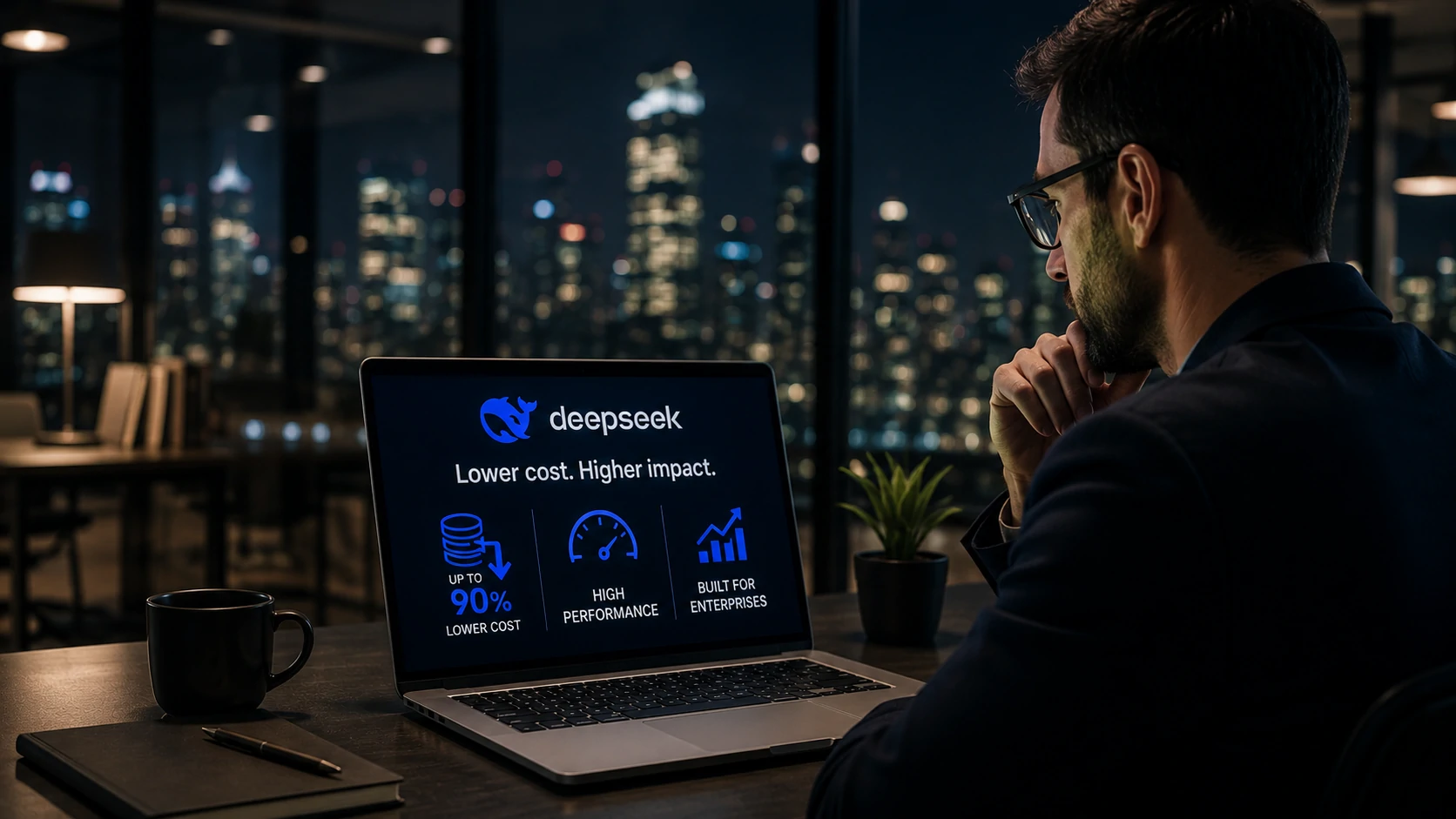
Growing competition among leading AI laboratories could benefit organizations looking to scale artificial intelligence projects with lower operational costs.
The arrival of more affordable AI models could accelerate the adoption of Artificial Intelligence across organizations that previously viewed cost as a major barrier.
Mid-sized businesses, startups, and software development teams may soon have broader access to enterprise-grade language models for virtual assistants, workflow automation, software development, and knowledge management without relying exclusively on the most expensive providers.
As competition increases, enterprise AI adoption is likely to become even more accessible.
The enterprise AI market is entering a new stage
During the early years of generative AI, the primary objective was proving that language models could perform increasingly sophisticated tasks.
That conversation is beginning to change.
Business leaders are now asking a different question: which model delivers the best balance between performance, deployment speed, operational cost, and long-term scalability?
This evolution closely mirrors what happened in the cloud computing industry, where purchasing decisions gradually shifted from raw performance alone to overall efficiency and total cost of ownership.
Greater competition could accelerate innovation
The more competitive the market becomes, the faster innovation tends to move.
If DeepSeek’s pricing strategy gains traction among enterprise customers, competitors such as OpenAI, Anthropic, Google, and Meta may respond with lower prices, new commercial offerings, or next-generation AI models designed to maintain their competitive position.
For organizations deploying AI at scale, increased competition could significantly reduce operating expenses while expanding access to advanced capabilities.
What comes next in the competition among leading AI laboratories
The next stage of the AI race is likely to be defined not only by intelligence and benchmark performance but also by operational efficiency, infrastructure optimization, and return on investment.
Over the coming months, businesses will closely monitor new model releases, pricing adjustments, enterprise licensing strategies, and infrastructure improvements introduced by the world’s largest AI developers.
Enterprise AI competition is becoming more balanced
Organizations that previously relied on only one or two AI vendors may increasingly diversify their technology strategies.
This creates greater flexibility, reduces vendor dependency, and encourages continuous innovation across the entire AI ecosystem.
At the same time, AI providers will need to demonstrate not only technical excellence but also sustainable economic value for enterprise customers.
Pricing may become the industry’s next major differentiator
If DeepSeek’s strategy proves successful in real-world deployments, the AI market could evolve much like cloud computing did over the past decade, where operational efficiency became just as important as technological leadership.
For business leaders, that means more vendor choices, stronger negotiating power, and a gradual reduction in the overall cost of deploying enterprise-grade Artificial Intelligence solutions.
How OpenAI, Anthropic, Google, Meta, and other major AI developers respond to this pricing pressure may ultimately determine who leads the next phase of enterprise AI adoption.
Related articles
If you’re following the evolution of enterprise artificial intelligence, these articles provide additional context:
- OpenAI enters the hardware race with next-generation ChatGPT devices
- OpenAI and Anthropic face new European Union AI regulations
- Which AI is Best for Businesses in 2026? ChatGPT, Claude, Gemini, Grok, and Mistral Compared
Comentários
Os comentários utilizam autenticação via GitHub para manter um ambiente mais qualificado, seguro e livre de spam.
Entrar ou criar conta no GitHub