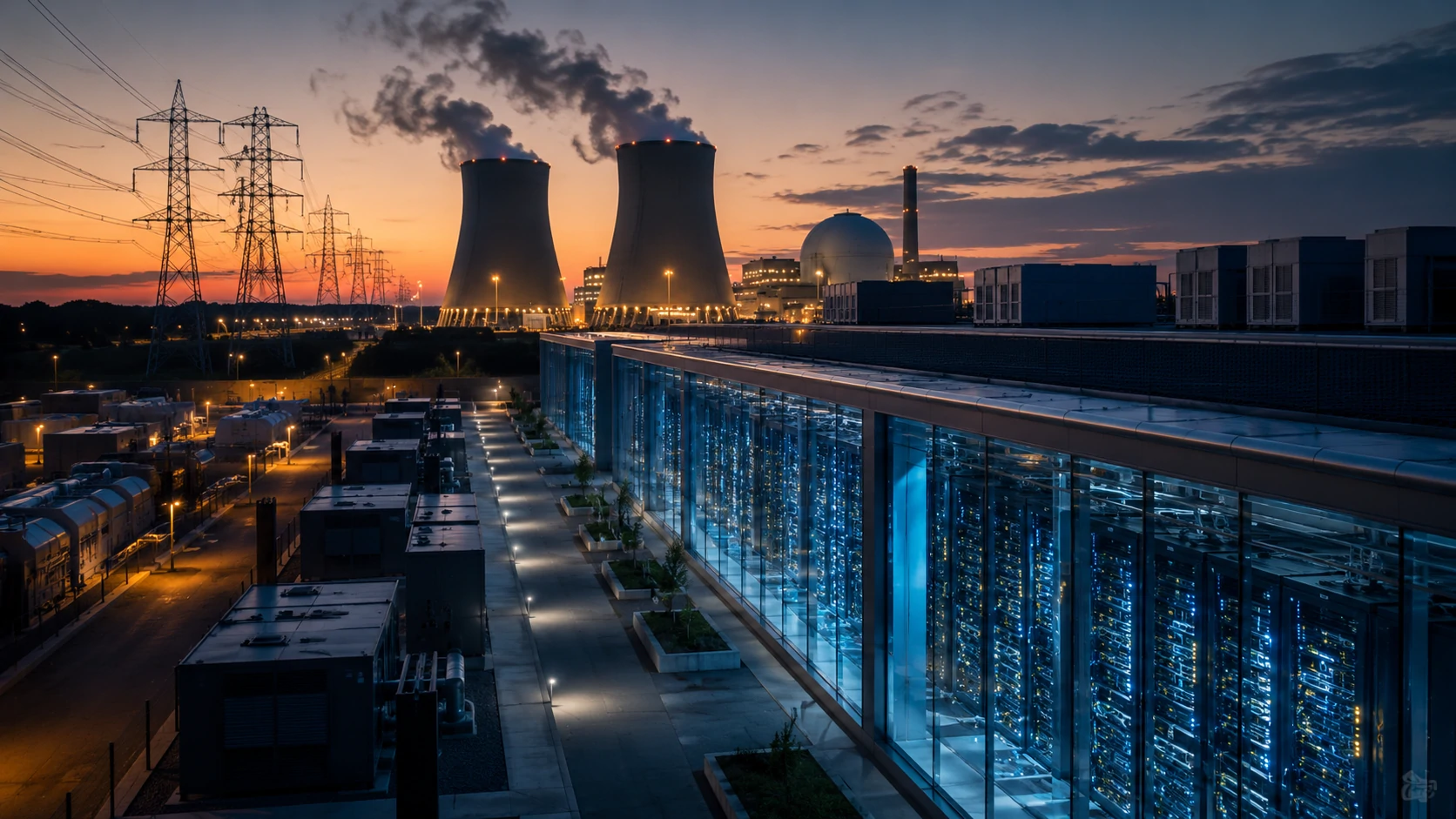
For decades, technological progress was mainly associated with software, connectivity and digital innovation. Today, the rapid expansion of Artificial Intelligence is bringing a new variable to the center of strategic decision-making: electricity. The growth of advanced AI models, autonomous agents and enterprise AI platforms is transforming energy infrastructure into one of the most valuable assets of the digital economy.
Artificial Intelligence is creating a new global race for energy
The expansion of Artificial Intelligence is rapidly increasing electricity demand worldwide. Large AI models require thousands of specialized processors operating simultaneously for training and inference workloads.

Large-scale data centers are becoming strategic energy consumers across multiple countries.
The growing adoption of platforms such as ChatGPT, Gemini, Claude and enterprise AI agents has significantly increased demand for computing capacity.
Why has energy consumption increased so dramatically?
Every interaction with advanced AI systems requires processing power from data centers filled with thousands of GPUs and specialized accelerators.
In addition, training next-generation models can take weeks or even months, consuming substantial energy resources throughout the process.
The impact goes far beyond language models
Demand is not driven solely by chatbots.
It is also linked to:
- image generation;
- video generation;
- enterprise automation;
- autonomous agents;
- data analytics;
- AI-assisted software development.
This trend is expanding the need for energy infrastructure across virtually every segment of the digital economy.
Data centers have become strategic assets in the AI economy
Data centers are the physical foundation of the Artificial Intelligence revolution. Without them, there is not enough processing capacity to support advanced AI models.
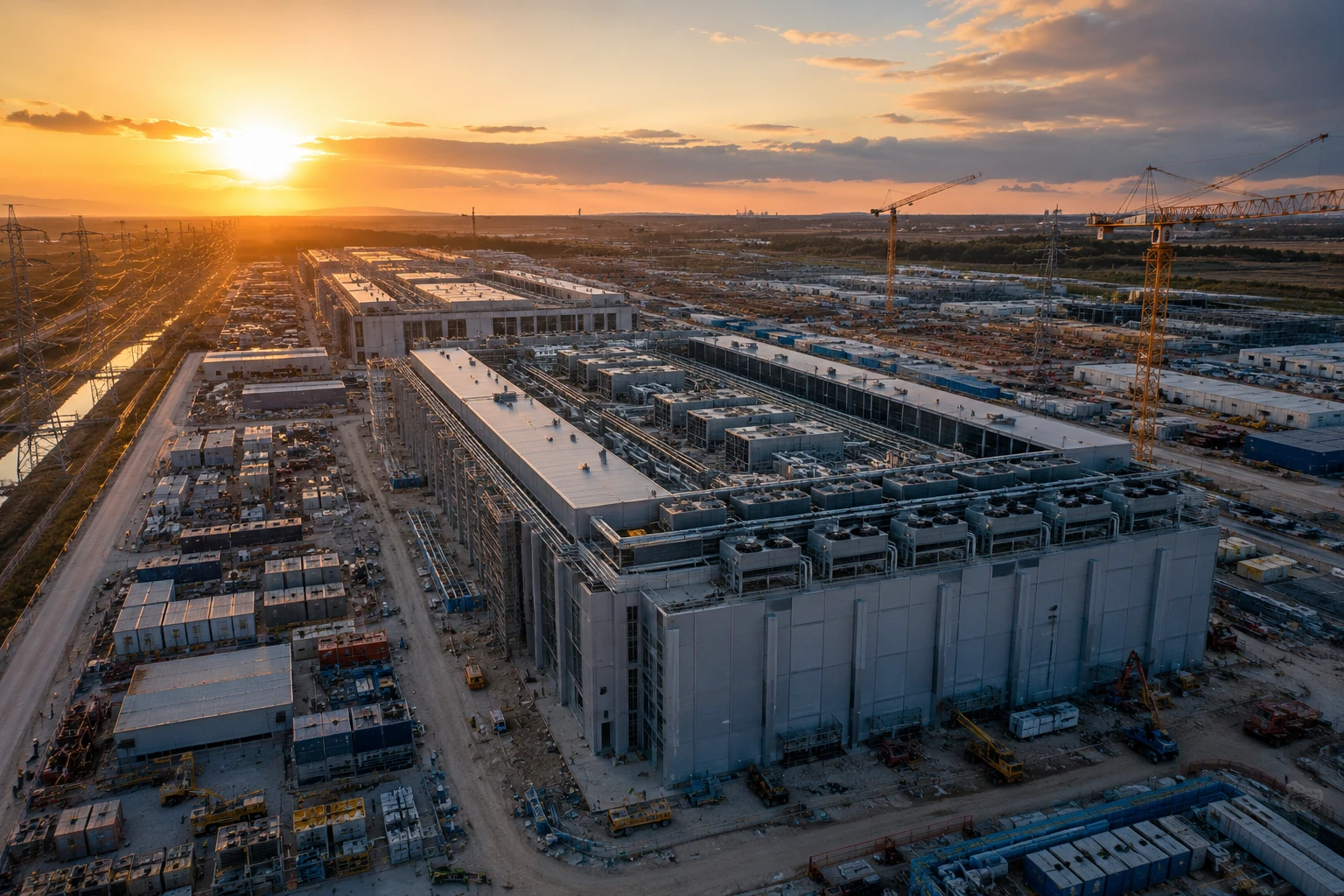
Computing infrastructure has become as important as AI model development itself.
Companies such as Google, Microsoft, Amazon, Meta and OpenAI are investing billions of dollars in new facilities around the world.
What exists inside a modern AI data center?
An AI-focused data center typically includes:
- high-performance servers;
- specialized GPUs;
- large-scale storage systems;
- high-speed networking infrastructure;
- advanced cooling technologies.
The electricity required to keep this infrastructure running around the clock has transformed energy into a strategic resource.
The new bottleneck of Artificial Intelligence
For many years, the primary challenge in AI was building better algorithms.
Today, the bottlenecks include:
- advanced semiconductors;
- computing capacity;
- energy availability.
This shift is fundamentally changing the competitive dynamics of the technology sector.
To better understand how infrastructure is shaping the AI market, readers can also explore the analysis: OpenAI Investigation Exposes Governance and the Economics of AI Agents. :contentReference[oaicite:2]{index=2}
Nuclear energy has returned to the center of technology discussions
Nuclear power is once again being considered a strategic solution for supporting the next generation of the digital economy.
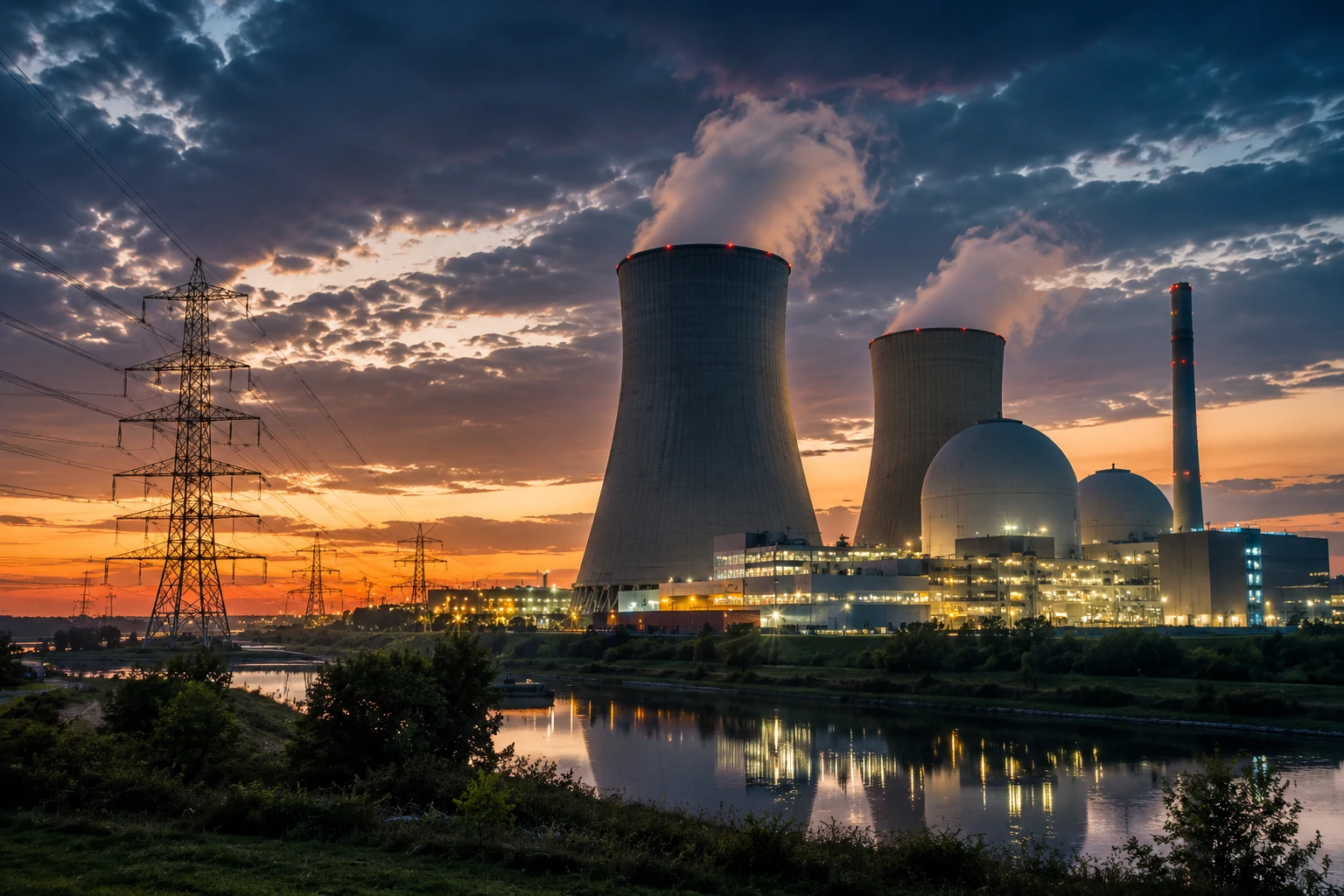
Advanced nuclear technologies and small modular reactors are gaining relevance in the AI era.
Its main advantage lies in the ability to provide stable, predictable and large-scale electricity generation.
Why are renewable sources not always enough?
Solar and wind energy play an essential role in the global energy transition.
However, data centers operate continuously and require reliable power regardless of weather conditions.
As a result, governments and technology companies are evaluating different combinations of energy generation sources.
Can small modular reactors change the market?
Small Modular Reactors (SMRs) are attracting growing investment because they promise more flexible deployment models and potentially lower implementation costs.
If they become commercially viable at scale, they could become a critical component of the infrastructure supporting AI growth over the coming decades.
The future of Artificial Intelligence may depend as much on energy as on software
The evolution of AI will not be determined solely by the quality of its models.
It will also depend on the ability to physically power the infrastructure required to operate these increasingly sophisticated systems.
What changes for businesses and markets?
Organizations adopting AI at scale will need to monitor not only technological advances but also issues related to energy, operational costs and computing capacity.
Infrastructure is becoming a critical competitive variable.
A transformation that goes beyond technology
The next phase of AI is connecting industries that once appeared unrelated:
- technology;
- energy;
- construction;
- mining;
- semiconductors;
- telecommunications.
This convergence could trigger one of the largest infrastructure investment cycles of the coming decades.
The same forces driving intelligent agents and enterprise automation are also strengthening discussions around operational efficiency and competitive advantage. In this context, articles such as AI Fluency: The Long-Term Competitive Advantage of Artificial Intelligence help explain how organizations are preparing for a business environment increasingly shaped by AI. :contentReference[oaicite:3]{index=3}
Most conversations about the future of Artificial Intelligence focus on smarter models and more autonomous agents. Yet the next major competitive battle may occur far from user interfaces and algorithms. It may take place within power grids, data centers and energy facilities responsible for supplying the electricity needed to sustain an economy that is becoming increasingly dependent on AI.
Comentários
Os comentários utilizam autenticação via GitHub para manter um ambiente mais qualificado, seguro e livre de spam.
Entrar ou criar conta no GitHub