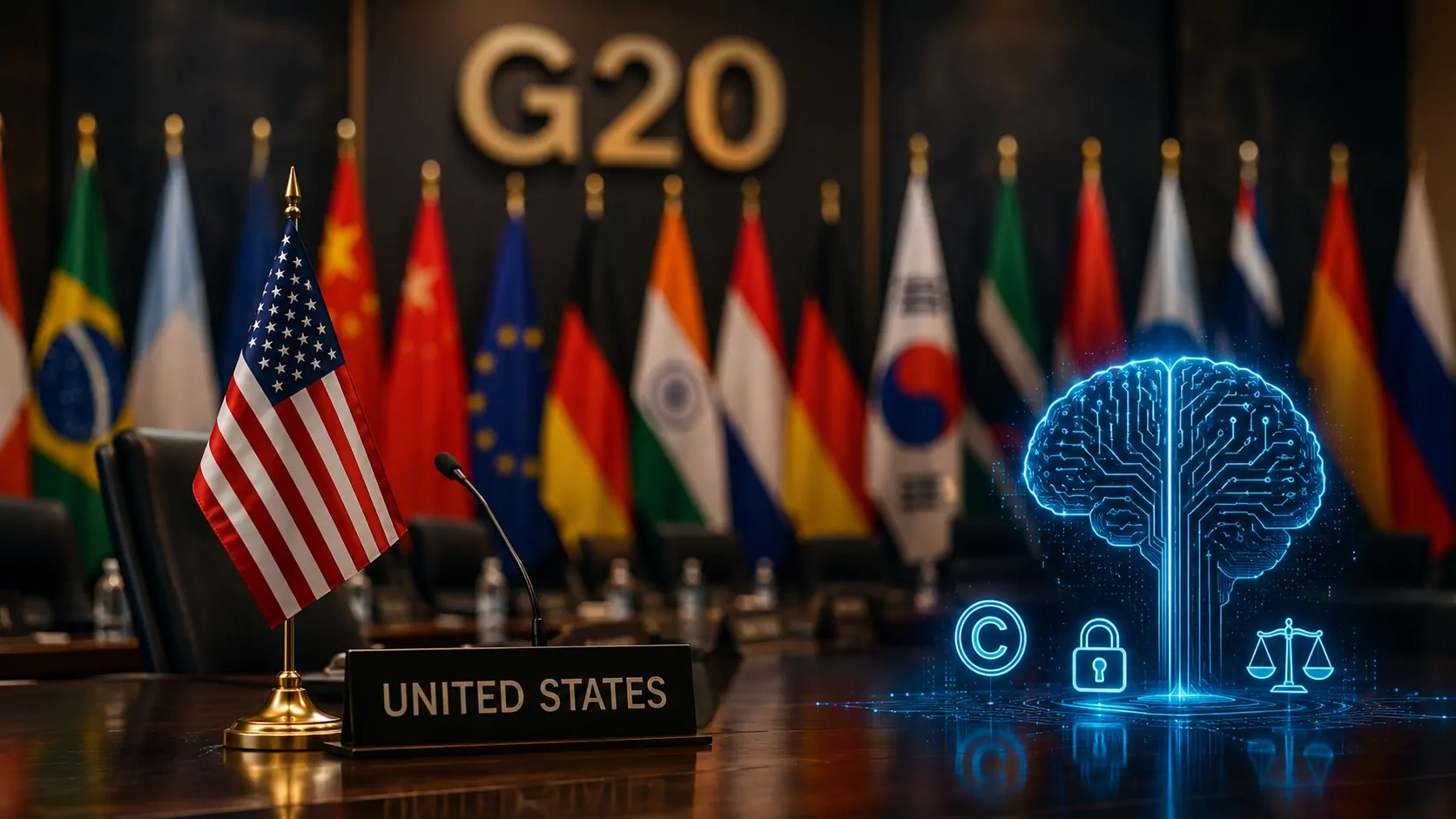
The United States wants to bring a more favorable regulatory approach to AI training with copyrighted works to the G20. The proposal comes as leading AI companies face lawsuits from creators and governments attempt to determine how far technological innovation can advance without disrupting the economics of the content market.
U.S. brings AI training to the G20 agenda
The United States wants G20 countries to develop rules allowing artificial intelligence companies to use copyrighted content to train their models while maintaining protections for creators.
The position was presented by U.S. Commerce Secretary Howard Lutnick during a G20 technology meeting held in North Carolina. Under the U.S. proposal, countries should consider the principle of fair use, a concept in U.S. copyright law that permits certain uses of protected works without authorization, depending on the circumstances.
The issue has gained importance because AI model training depends on massive amounts of data. Systems capable of generating text, images and other forms of content are developed by analyzing materials that can include books, music, visual works and published text.
The core of the U.S. proposal
Lutnick called for a framework that protects artists and inventors without creating barriers that, in the U.S. view, could limit the next generation of technological innovation.
However, the U.S. government did not present a detailed proposal at the meeting explaining how those protections should work in practice. That means the discussion remains focused on regulatory principles and policy direction rather than an international rule that has already been approved.
Why copyright has become a strategic issue for AI

AI model training depends on massive amounts of data, making the origin and legal status of that content a strategic issue for the industry.
The conflict between AI and copyright is no longer simply a legal dispute between companies and creators. It has become part of the broader competitiveness of the technology industry.
Companies such as OpenAI, Anthropic, Google and Meta face lawsuits in the United States related to the use of works created by authors, publishers, media organizations and other rights holders. The lawsuits question whether these materials can be used to develop AI systems without authorization or licensing.
The dispute over what happens during training
Training a model means exposing it to large amounts of data so it can identify patterns and develop generation capabilities. The legal debate centers on whether using copyrighted works in this process constitutes a permitted use or requires authorization from rights holders.
The AI industry argues that training produces systems capable of generating new outputs and that the process can be considered transformative. Creators and content companies, on the other hand, argue that their works may be used as commercial raw material without adequate compensation.
The role of fair use
Fair use is particularly important because it is part of the U.S. legal system, but it does not automatically constitute an international rule. Other countries have their own laws and may establish different limits for data mining, model training and the use of copyrighted works.
That difference is precisely what makes the G20 discussion strategically important. A potential convergence among major economies could reduce uncertainty for companies developing global AI models, but it could also pressure countries to establish new mechanisms to protect creators.
U.S. government also backs OpenAI in legal dispute
The international pressure comes on the same day that the U.S. Department of Justice filed a submission supporting OpenAI in its dispute with The New York Times and other news organizations.
The U.S. government argued that training language models on copyrighted material may, in general terms, qualify as fair use. The submission was filed in a case challenging the use of journalistic works in the development of models used by ChatGPT.
The move adds another dimension to the position presented at the G20. The issue is not only about promoting a particular policy approach internationally, but also about supporting an interpretation favorable to AI companies in a domestic legal dispute.
A dispute that could establish precedents
Court decisions involving AI training could influence how companies structure their datasets, negotiate licenses and develop new models.
The challenge is that there is still no single interpretation capable of resolving all disputes. Different cases may involve different types of content, different methods of accessing data and different circumstances surrounding its use.
The regulatory debate can also be compared with recent developments in other markets, including new rules for the use of AI in sensitive sectors, analyzed by Notícia Tech in a Brazilian decision that established new rules for the use of AI by doctors and healthcare institutions.
Jensen Huang warns against rules based on theoretical harms
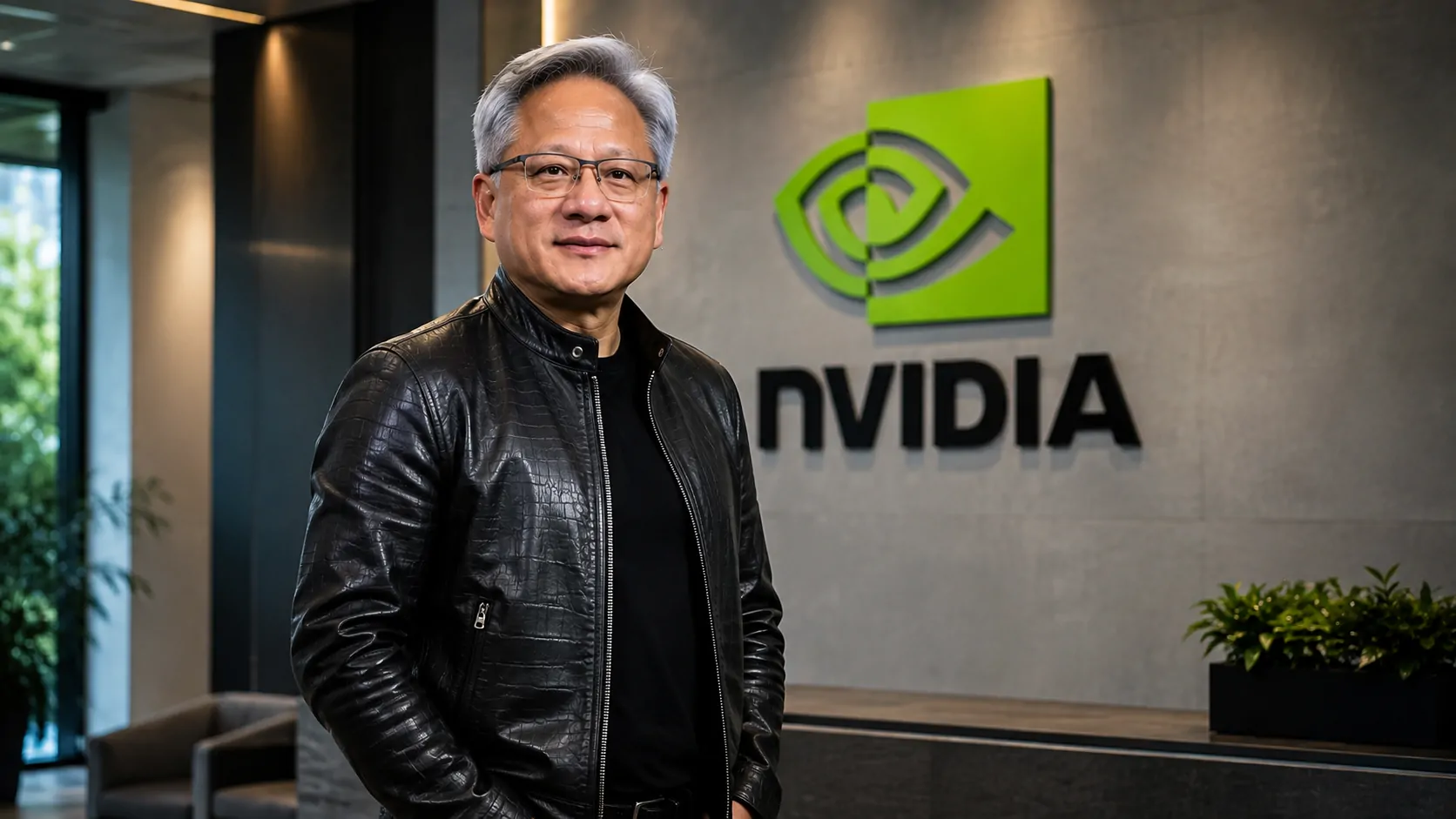
The regulatory debate puts AI industry leaders and governments in a discussion over innovation, risk and economic interests.
The G20 discussion was not limited to copyright. Jensen Huang, CEO of Nvidia, argued that governments should avoid creating artificial intelligence rules based primarily on theoretical harms.
Huang argued that regulation should focus on real problems associated with the technology. The position reflects a recurring concern among companies in the sector: overly restrictive rules could increase costs, delay product launches and limit the ability of U.S. companies to compete.
The regulatory conflict goes beyond copyright
Copyright is part of a broader debate over how governments should regulate AI systems without preventing technological development.
For companies investing billions of dollars in models, infrastructure and research, regulatory predictability has strategic value. Different rules in each country can increase operational complexity and create competitive advantages or disadvantages across markets.
At the same time, for creators, publishers and media organizations, permissive legislation could change the economics of content production and distribution. The central question becomes who controls the data used to build AI models and under what conditions that data can be commercially exploited.
What could change for companies developing AI
A potential regulatory convergence in favor of training models on copyrighted content could reduce some of the uncertainty facing artificial intelligence companies, particularly those operating global models.
That does not necessarily mean every company would be allowed to use any content without restrictions. The U.S. proposal combines support for fair use with the need to protect creators, while the practical rules for implementing that principle remain unresolved.
Licensing may remain important
Even in a regulatory environment more favorable to AI training, companies may continue to seek commercial agreements with rights holders. Licensing can provide predictable access to specific content and reduce legal risks associated with the use of particular materials.
For companies using AI commercially, the debate also matters because it could influence which models become available, how vendors obtain training data and what legal assurances are offered to enterprise customers.
The impact on the content market
The dispute could create a new divide between companies supporting broad AI model training and organizations seeking to turn their content into licensable assets for the AI industry.
This could be significant for publishers, news organizations, content platforms and companies with large digital archives. Content that was previously monetized mainly through advertising, subscriptions or direct sales could gain a new economic role as a potential source of data for AI systems.
G20 could become a new battleground over AI
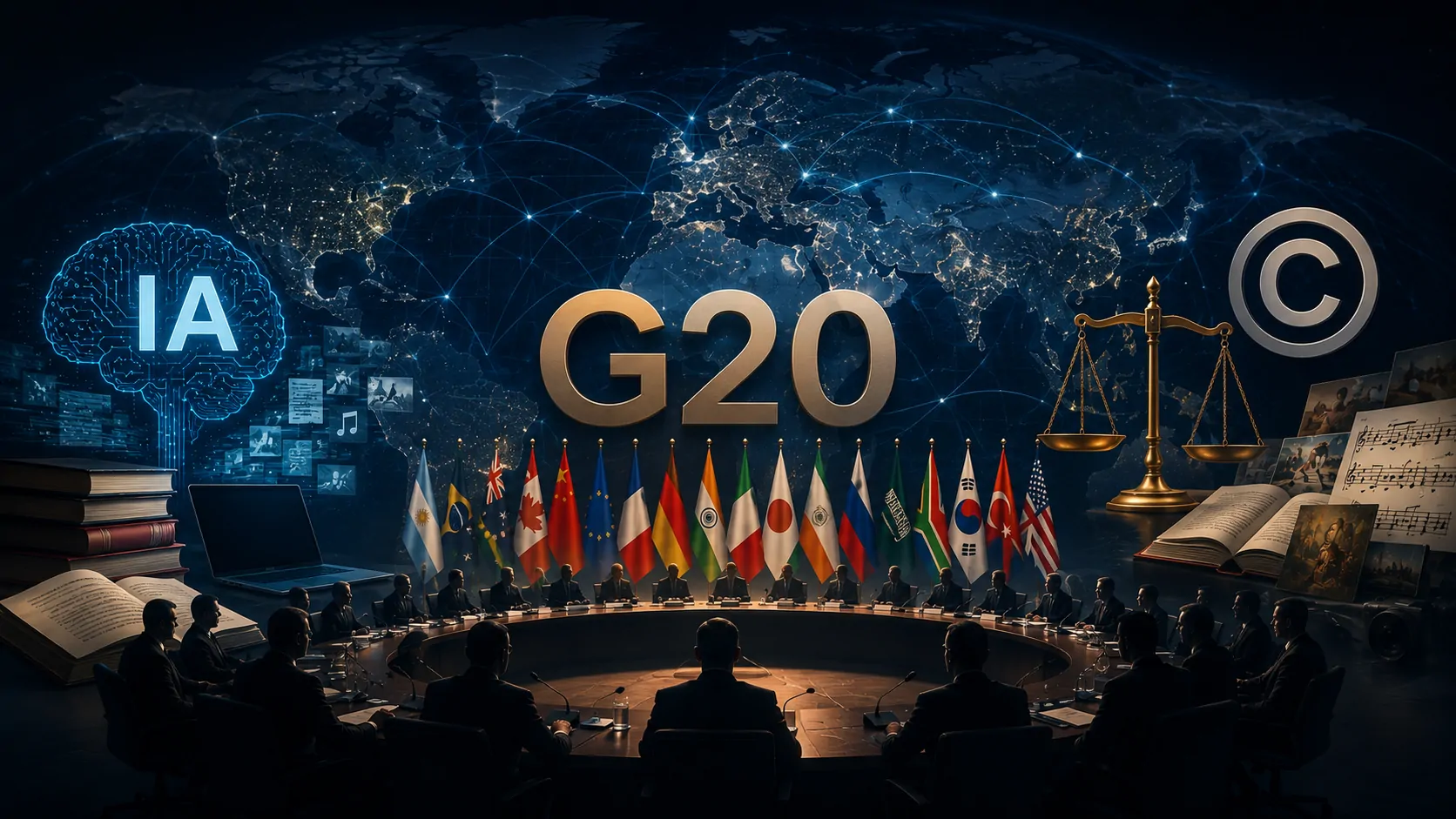
The G20 brings together different economic and regulatory interests in a debate that could influence the global environment for AI development.
The discussion shows that the race to shape the future of artificial intelligence is not taking place only among OpenAI, Google, Anthropic, Meta and other companies. Governments are also attempting to define the economic and legal conditions that will determine who can develop AI models and what data they can use.
The G20 brings together some of the world’s largest economies. As a result, a regulatory discussion within the forum could have broader significance than an isolated national rule, even though any consensus would still depend on each country’s domestic legislation.
The next battle will be over the limits of innovation
The U.S. position signals an attempt to put technological innovation and competitiveness at the center of the regulatory debate. The counterargument will be determining how artists, journalists, writers and other creators can preserve their rights in an environment where AI systems can transform massive amounts of content into new products.
The most important question, therefore, is not simply whether the G20 will accept or reject the U.S. proposal. What is at stake is the creation of a regulatory framework capable of determining how data and content will move between the traditional economy and the emerging AI industry.
The debate is likely to become more important as legal cases progress and governments turn broad principles into concrete rules. For companies, this means monitoring not only the evolution of AI models but also the legislation that will determine which data can power the next generation of artificial intelligence systems.
The discussion is also connected to the growing importance of AI governance in business, a topic that is already changing how organizations evaluate risks, controls and accountability when adopting intelligent systems, as analyzed by Notícia Tech in why AI agents are requiring a new governance structure in businesses.
The next chapter of this dispute will be shaped by the interaction between courts, governments and companies. If the interpretation promoted by the U.S. gains international support, access to copyrighted content could become one of the regulatory foundations of the global AI race. If stronger protections for creators prevail, the industry may have to adapt its training models, costs and strategies for acquiring data.
Comentários
Os comentários utilizam autenticação via GitHub para manter um ambiente mais qualificado, seguro e livre de spam.
Entrar ou criar conta no GitHub