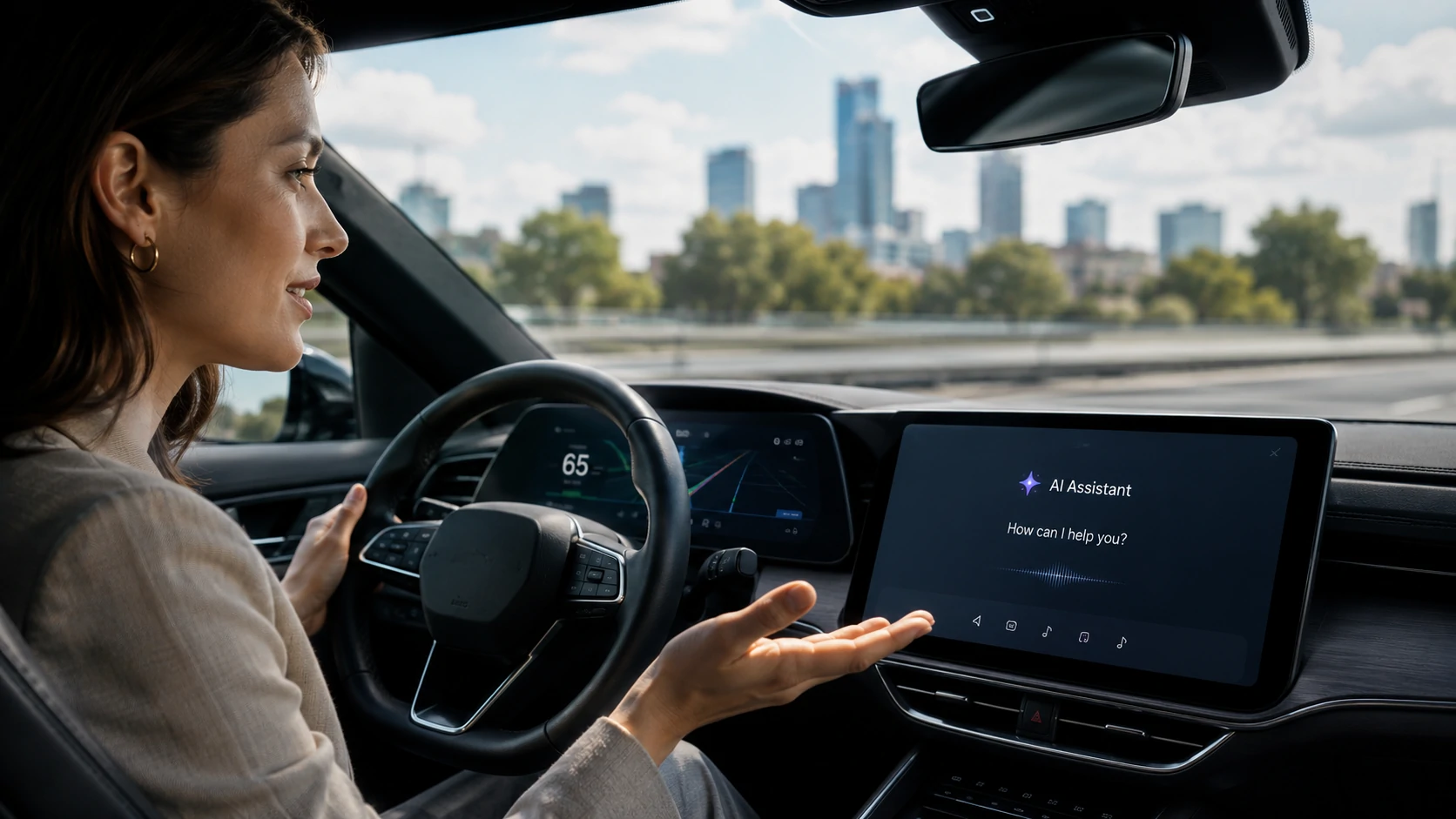
Cars are rapidly evolving from transportation tools into intelligent connected platforms. The arrival of Google Gemini and ChatGPT in the automotive sector represents a strategic shift that brings vehicles closer to the conversational experiences already found in smartphones, computers, and digital assistants. For manufacturers, businesses, and consumers alike, this marks the beginning of a new era of AI-powered mobility.
Embedded artificial intelligence is turning cars into intelligent assistants
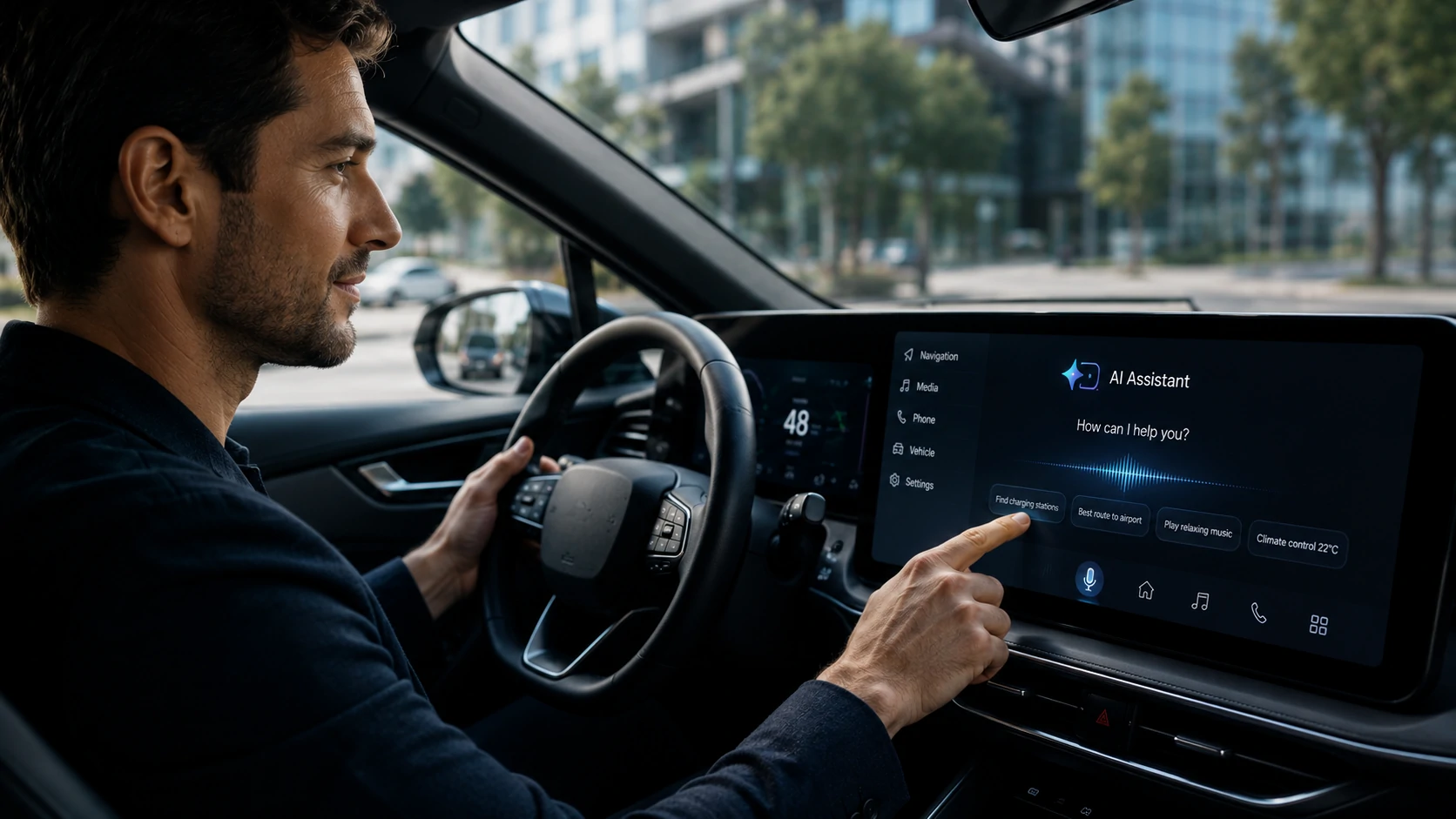
Generative AI models are becoming a core element of the connected driving experience.
Recent developments show that Google Gemini and ChatGPT are becoming part of the architecture behind software-defined vehicles. Instead of relying exclusively on menus, buttons, and predefined voice commands, drivers can interact naturally with their vehicles using everyday language.
This evolution brings the automotive experience closer to the intelligent interactions already available across personal devices. Rather than responding only to predefined instructions, vehicles can understand context, intent, and user preferences.
For the automotive industry, this represents a structural transformation. Software is becoming the primary platform for innovation, while artificial intelligence expands personalization and integration across digital services.
Natural conversations replace rigid commands
Instead of memorizing specific phrases, drivers can simply ask for what they need in natural language.
Examples include:
- requesting the fastest route;
- locating charging stations or fuel stations;
- controlling climate and entertainment systems;
- summarizing incoming messages;
- receiving contextual information about destinations.
This conversational approach reduces distractions while making vehicle features easier and safer to use.
Vehicles are beginning to understand context
The biggest difference between traditional voice assistants and generative AI lies in contextual understanding.
By considering location, preferences, previous interactions, and user intent, AI delivers more relevant responses throughout the journey.
This evolution reflects a broader trend already visible across enterprise artificial intelligence, including the rise of AI agents explored by Notícia Tech in:
Google launches Gemini Spark and accelerates the race for AI agents in the enterprise market
The automotive industry is accelerating the shift toward software-defined vehicles
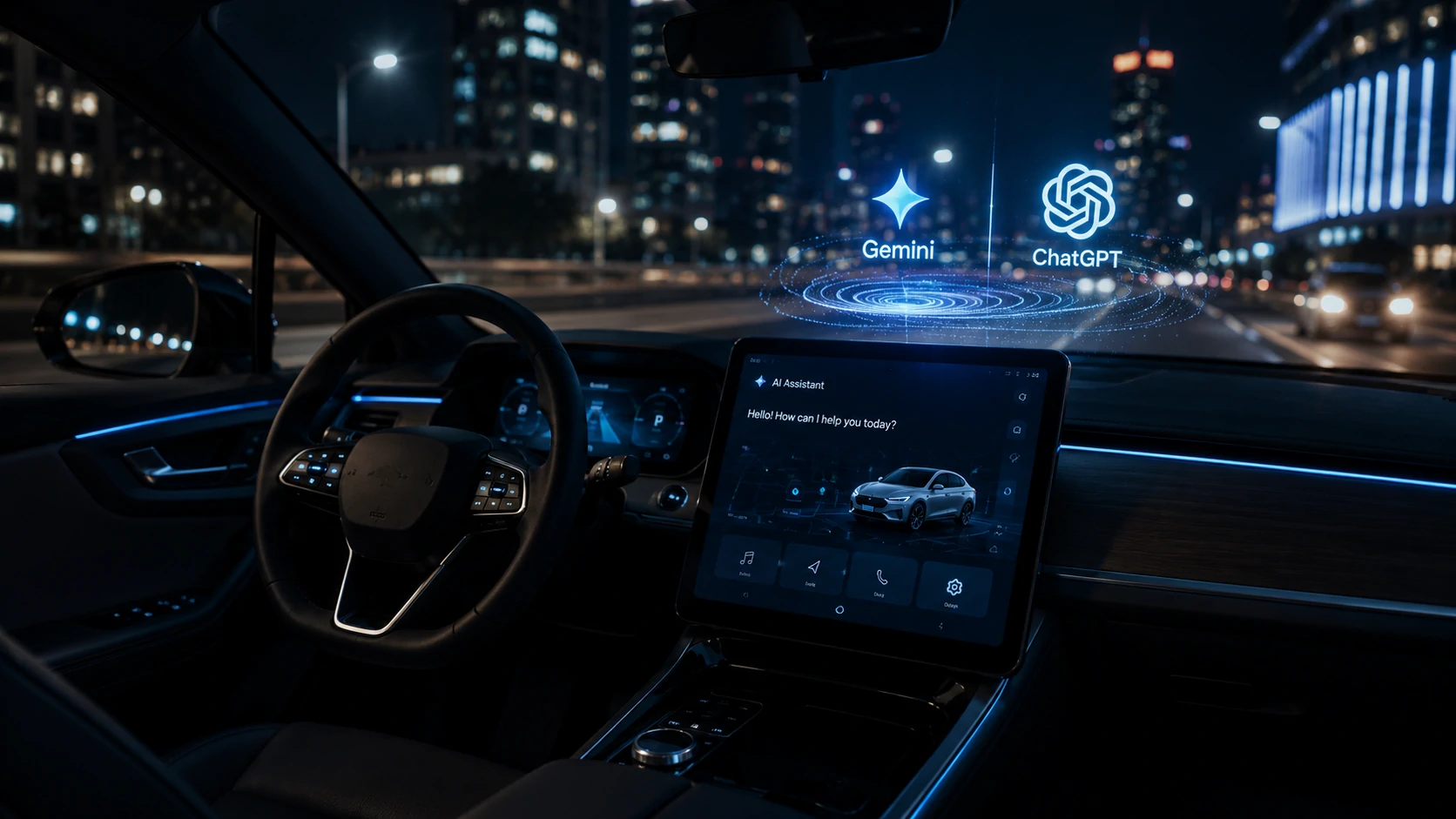
Automakers increasingly view artificial intelligence as a competitive advantage for the next generation of connected vehicles.
The adoption of Gemini, ChatGPT, and other generative AI technologies shows that competition among automakers will no longer be defined only by horsepower, driving range, or design.
Digital experiences are becoming a decisive factor in purchasing decisions and long-term customer loyalty.
As a result, manufacturers are investing heavily in platforms capable of receiving continuous software updates, adding new intelligent features, and integrating advanced AI services throughout a vehicle’s lifecycle.
AI increases the value of connected vehicles
Modern embedded AI systems can provide predictive maintenance, intelligent diagnostics, personalized recommendations, and seamless integration with calendars, enterprise applications, and mobile devices.
This creates new recurring revenue opportunities through subscription-based digital services while extending customer engagement long after the initial vehicle purchase.
Fleet operators can also leverage these capabilities to improve operational efficiency, reduce maintenance costs, and deliver a better experience for professional drivers.
Intelligent mobility strengthens digital ecosystems
Embedded AI is also bringing the automotive industry closer to the broader ecosystem of intelligent software platforms.
Technologies such as AI agent integration, contextual reasoning, and communication between enterprise systems are becoming fundamental for truly connected vehicles.
This trend closely aligns with another topic covered by Notícia Tech, explaining how modern architectures are enabling seamless integration between AI-powered applications:
How to implement MCP in enterprises and integrate AI agents at scale
Embedded artificial intelligence creates new opportunities for businesses
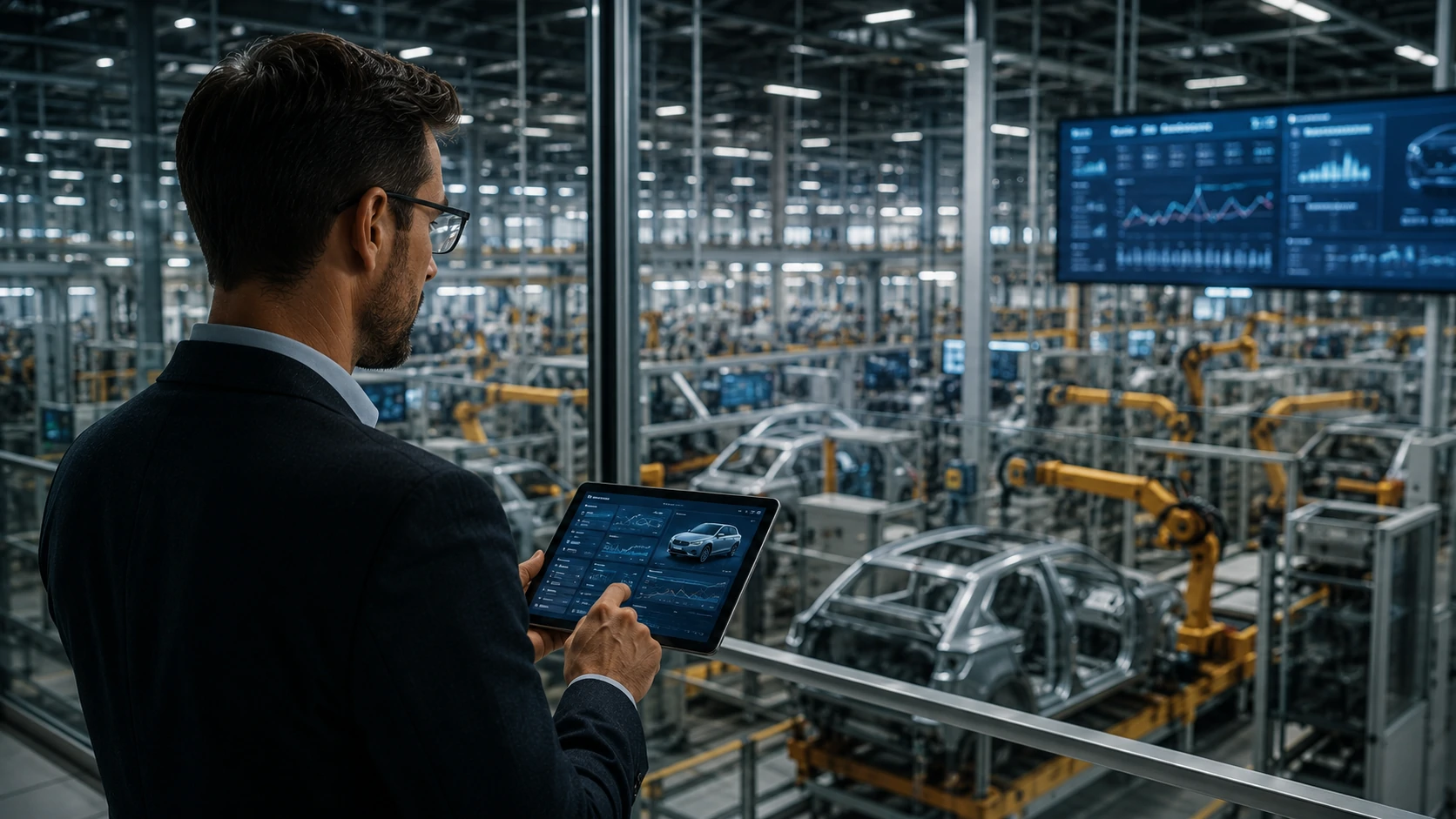
Beyond enhancing the driving experience, embedded AI opens the door to new business models and digital services.
The arrival of Google Gemini and ChatGPT in connected vehicles also represents a significant opportunity for software companies, fleet operators, and organizations that depend on transportation as part of their daily operations.
Artificial intelligence is moving beyond being a driver interface and becoming an operational layer capable of improving efficiency, reducing costs, and supporting real-time decision-making.
As vehicles become increasingly connected, manufacturers and enterprises will be able to leverage real-time data to continuously improve services through over-the-air software updates.
Corporate fleets gain operational efficiency
Organizations managing large fleets can use AI to monitor operational performance, predict maintenance requirements, and provide intelligent support for drivers.
Among the most promising applications are:
- predictive vehicle maintenance;
- intelligent route planning;
- reduced fuel or energy consumption;
- automated driver assistance;
- operational performance analysis.
Together, these capabilities improve fleet availability while reducing operating costs.
Integration between enterprise platforms becomes essential
The growth of embedded AI also increases the importance of seamless integration across enterprise systems.
Connected vehicles will exchange information with logistics platforms, ERP systems, CRM software, and intelligent assistants, creating automated workflows that eliminate repetitive manual tasks.
This trend closely follows the broader evolution of intelligent automation explored by Notícia Tech in:
Another closely related topic is the growing adoption of AI-powered automation platforms discussed in:
n8n vs Zapier: Which AI automation platform is better for businesses in 2026?
The race for AI-powered vehicles is only beginning
The first announcements involving Google Gemini, ChatGPT, and intelligent vehicles demonstrate that embedded artificial intelligence is becoming one of the automotive industry’s most important competitive differentiators.
Rather than simply adding another virtual assistant to the dashboard, manufacturers are transforming vehicles into intelligent software platforms capable of understanding context, learning user preferences, and connecting seamlessly with digital ecosystems.
Software is becoming the defining value of the vehicle
For decades, performance, design, and driving comfort determined how vehicles competed in the market.
Today, the digital experience is becoming just as important.
Continuous software updates, AI ecosystem integration, and subscription-based digital services are expected to play a growing role in how consumers evaluate modern vehicles.
This transition brings the automotive industry closer to the technology sector, where software innovation continuously enhances products long after they reach customers.
The future of mobility will be increasingly intelligent
The arrival of generative AI inside vehicles signals that the next generation of automobiles will be built around artificial intelligence rather than traditional onboard software alone.
For consumers, this means safer, smarter, and more personalized driving experiences.
For manufacturers, it creates a new race centered on software innovation, AI capabilities, and recurring digital revenue.
For businesses, it unlocks new opportunities to integrate connected vehicles into broader automation, productivity, and digital transformation strategies.
As Google, OpenAI, and other AI leaders continue investing in next-generation intelligent systems, vehicles are steadily evolving from transportation tools into connected digital platforms that will become an integral part of both everyday life and enterprise operations.
Comentários
Os comentários utilizam autenticação via GitHub para manter um ambiente mais qualificado, seguro e livre de spam.
Entrar ou criar conta no GitHub