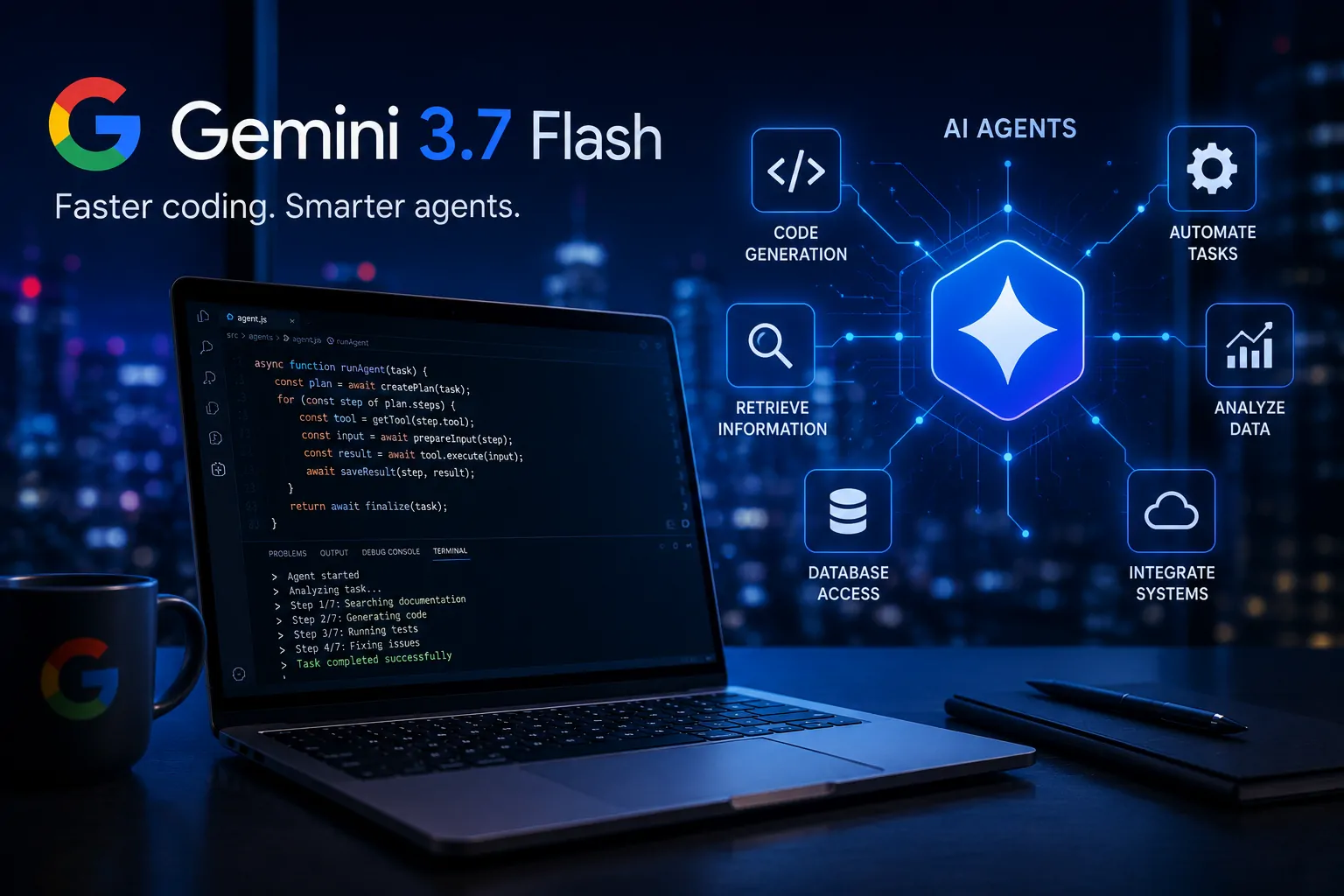
Google has just added a new piece to a race that is changing shape. With Gemini 3.7 Flash, the company is not simply trying to build a better AI that talks to users. It is strengthening its position in the race for models that can code, use tools and participate in the execution of business tasks.
Google launches Gemini 3.7 Flash with a focus on coding and AI agents
Google launched Gemini 3.7 Flash on August 13, 2026, presenting the new model as an option focused on coding, software development and AI agent workflows. The move puts Google back at the center of a competition involving OpenAI and Anthropic.
The shift matters because artificial intelligence is moving beyond simple question-and-answer interfaces. AI models are increasingly being integrated into systems that can execute tasks, use tools and work through multiple stages of a process.
In this new environment, the model is no longer just the component that generates an answer. It becomes the engine behind systems that can perform digital work.
What Gemini 3.7 Flash is designed to do
Gemini 3.7 Flash was developed for tasks where speed and execution capabilities need to work together. Google is positioning the model around areas such as programming, application development and tasks performed by AI agents.
An LLM, or Large Language Model, is an AI model trained to understand instructions and generate text, code and other forms of content. When that model is connected to tools and execution rules, it can become part of an agent.
In practice, this means a request does not necessarily have to end with an answer. A system can interpret a problem, write code, use a tool, evaluate the result and continue working through the task.
Why the launch is happening now
The timing is not accidental. The AI industry is moving into a phase in which the value of a model increasingly depends on its ability to participate in real-world work processes.
That helps explain why AI Agents appears among the concepts gaining traction in Notícia Tech’s daily report, with growth of 26.23%, while Enterprise AI recorded growth of 18.84%.
Gemini 3.7 Flash enters precisely at this intersection: a model positioned for frequent use and designed for tasks that can become part of digital business workflows.
Gemini 3.7 Flash puts Google in the race for AI’s operational layer
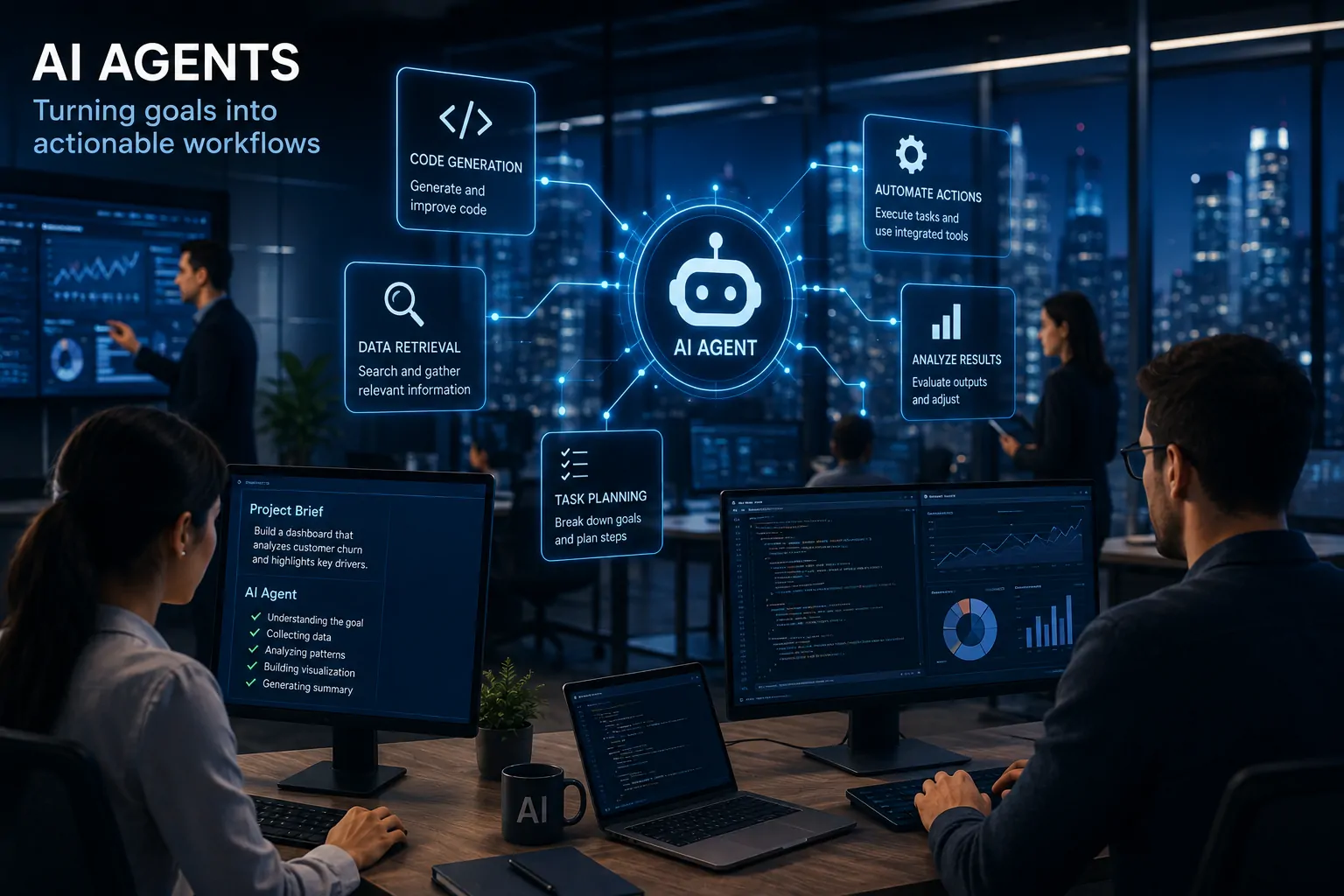
Gemini 3.7 Flash expands Google’s focus toward systems capable of combining AI models, code, tools and task execution.
Gemini 3.7 Flash matters because it puts Google into the race for a more strategic layer of artificial intelligence: the execution of digital work. The competition is no longer limited to which model produces the best answer. It increasingly involves which platform can perform more tasks reliably.
That shift brings AI closer to the enterprise environment. A company can use a model to generate code, analyze information or operate tools, but the real productivity gain appears when those capabilities are connected to a process that needs to be executed repeatedly.
This is where agents become important. They turn a language model into part of a system that can perform digital tasks, creating a bridge between artificial intelligence and business processes.
The competition is no longer just about chatbots
During the first phase of generative AI, the competition was easy to see in chatbots. ChatGPT, Gemini and Claude competed primarily on response quality, reasoning capabilities and the overall conversational experience.
Now, the competitive frontier is moving toward applications that execute tasks. A model needs to understand an instruction, determine which steps are required and, when authorized, use tools to reach an outcome.
This transformation also explains why the market is closely watching every move from OpenAI, Anthropic and Google. The company that succeeds in turning its model into a reliable platform for digital work could secure a much deeper position inside businesses.
Notícia Tech has already been tracking this broader shift, including how AI agents are moving beyond assistants and becoming part of enterprise workflows.
Why companies are watching this new layer
For a business, there is an important difference between using AI to answer a question and using AI to execute a sequence of tasks.
An employee might ask a chatbot to write a programming function. In an agent-based system, the goal could be broader: analyze a request, modify the code, run tests, identify problems and prepare the result for human review.
This does not mean agents can automatically replace professionals or operate without supervision. It means a larger share of digital work can potentially be converted into partially automated processes.
That evolution could have a particularly strong impact on technology, operations, customer service and software development, where many digital tasks can be broken down into defined steps.
Model speed can matter as much as raw intelligence
Gemini 3.7 Flash also highlights an important shift in how businesses may evaluate AI models: for agents, speed and efficiency can be just as important as maximum reasoning capability.
An agent may make several model calls during a single task. If it needs to retrieve information, generate code, check results and perform additional actions, the system can make far more operations than a user simply asking a chatbot a question.
This process is known as inference. It is the stage in which a trained model uses its parameters to generate an output from an input.
Why agents change the importance of cost
In an enterprise application, small differences in speed and cost can become significant when an operation is repeated thousands of times.
An extremely powerful model may be appropriate for complex decisions, but it may be unnecessary for every step of an automation. In many cases, companies may prefer models capable of handling specific tasks quickly and at a predictable cost.
That is why the Flash positioning matters. The goal is not necessarily to replace every higher-capability model, but to offer an option suited to workloads that require many operations.
Google is positioning Gemini 3.7 Flash in this space, combining coding and agent-task capabilities with an approach designed for frequent use.
What changes for developers
For developers, the launch expands the number of options available for building agent-based applications.
The choice, however, should not depend on benchmarks alone. In a real system, factors such as latency, cost, reliability, instruction following, tool use and API integration also matter.
That combination may be more important than an isolated benchmark score. A model that delivers excellent responses but takes too long or costs too much to handle thousands of operations may be less attractive for an enterprise application.
That is why Gemini 3.7 Flash should be viewed not simply as another Gemini release, but as part of Google’s attempt to compete for the infrastructure that will power the next generation of AI agents.
Gemini 3.7 Flash could change how businesses use AI agents
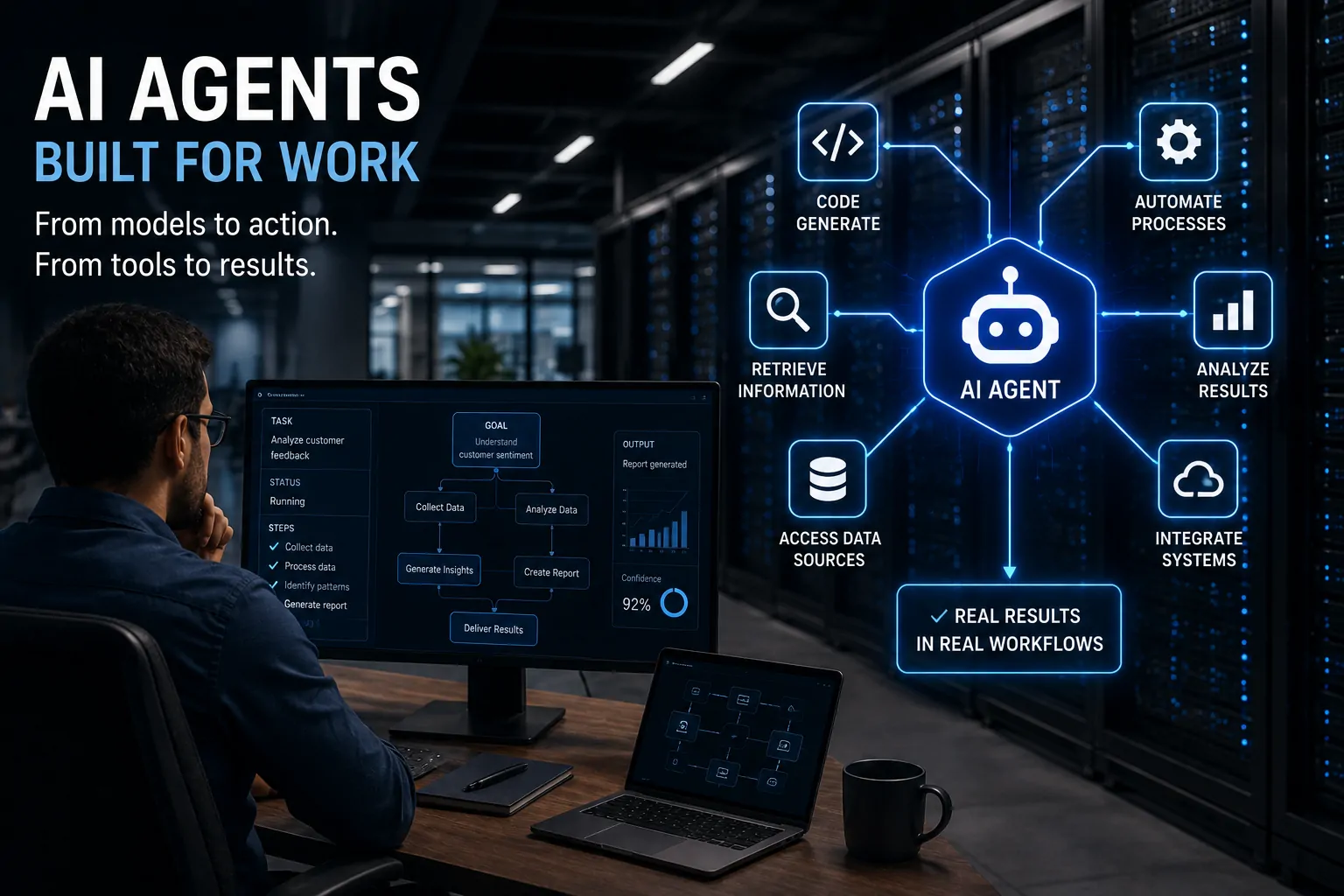
AI agents can turn language models into systems capable of participating directly in business processes.
The most important consequence of the launch may appear outside chatbots themselves. If agents can execute tasks with sufficient speed, accuracy and controlled costs, companies could begin delegating increasingly larger portions of digital workflows to artificial intelligence.
That does not mean simply giving a chatbot permission to work on its own. An agent needs access to tools, information and systems, while following rules established by the organization. The greater its autonomy, the greater the need for oversight.
For businesses, the question is therefore shifting from which AI gives the best answer to a more strategic one: which model can reliably perform work inside the operation?
From AI assistant to process operator
A traditional AI assistant depends on a relatively simple interaction. The user makes a request, receives an answer and decides what happens next.
An agent can receive a broader objective and divide the work into multiple steps. It can retrieve information, use a tool, generate code, check a result and continue the task.
This difference could change productivity for teams that perform repetitive work across digital systems.
In software development, for example, an agent can participate in different stages of programming. In operations, it can organize information and interact with tools. In customer service, it can retrieve information from internal systems before producing a response.
The potential gain comes from connecting several actions into one workflow.
Greater autonomy also creates greater risks
The more autonomy an agent receives, the greater the impact of a mistake.
A chatbot that produces an incorrect answer can usually be corrected before anything happens. An agent connected to enterprise systems could, depending on its permissions, modify information, execute commands or trigger processes.
That is why enterprise adoption does not depend only on model quality.
Companies will also need to define permissions, activity logs, operating limits, approval mechanisms and audit procedures. AI can execute more tasks, but organizations must clearly determine what each system is authorized to do.
This is one reason the race for AI agents is likely to be accompanied by a parallel race for security and governance.
Google, OpenAI and Anthropic are entering a race that could define the next phase of AI
The Gemini 3.7 Flash launch increases competitive pressure because Google is targeting one of the most important areas of the next generation of artificial intelligence: turning models into systems capable of performing tasks.
OpenAI, Anthropic and Google are approaching this market from different positions. OpenAI has a strong presence in generative AI and AI applications, Anthropic has gained significant traction among developers and businesses, while Google combines its models with a broad technology infrastructure and an extensive ecosystem of products and cloud services.
The competition, therefore, will not be decided solely by which model achieves the highest score on a benchmark.
The advantage may come from the ecosystem
An AI model does not operate in isolation inside an enterprise application.
It needs to communicate with software, databases, APIs and other tools. An API, or Application Programming Interface, allows different software systems to exchange information and commands automatically.
The easier it is to connect a model to those tools, the easier it becomes to turn AI into part of a real business process.
This favors companies with broad technology ecosystems. Google can combine its models with cloud and enterprise services. Microsoft has a similar advantage through its business software portfolio. OpenAI and Anthropic are also expanding their developer platforms.
The result is a competition that increasingly involves not only the model itself, but the entire infrastructure surrounding it.
Why this matters to businesses already using AI
For companies that already use ChatGPT, Claude or Gemini, the growth of AI agents could gradually change how AI tools are selected and purchased.
Instead of choosing a single chatbot for employees, an organization may combine different models according to the task.
One model could handle complex reasoning. Another could perform fast and repetitive operations. A third could be selected for coding or analysis.
This possibility increases the importance of AI architectures capable of combining different components.
Businesses that want to understand this shift in greater depth can also explore Enterprise AI architecture: the complete guide to MCP, RAG, AI agents, workflows, copilots and APIs, which provides broader context on how these components fit together.
The next battlefield will be turning AI agents into work infrastructure
The growth of AI agents could transform artificial intelligence from an isolated tool into a layer integrated into enterprise work infrastructure.
The Gemini 3.7 Flash launch points to a broader trend: artificial intelligence is moving deeper into business processes.
Over the coming months, competition is likely to focus increasingly on the ability to turn models into useful, reliable and economically viable agents.
This could lead to an important change in the relationship between businesses and software. Instead of relying exclusively on traditional applications to perform tasks, organizations could use agents to operate across multiple tools and systems.
What could happen over the next few months
The first likely consequence is an increase in the number of AI agents being tested by businesses.
Developers will have more models to compare, while companies will be able to evaluate which tasks actually generate a return when automated.
The second consequence will be greater pressure on price and performance. If several providers offer models capable of performing similar tasks, speed and operating costs will become increasingly important criteria.
The third will be deeper integration.
Agents need access to tools to become genuinely useful. As a result, protocols, APIs and standards for communication between models and software are likely to become even more important.
The market could move toward architectures in which several models work together rather than a single AI attempting to handle every task.
Companies will have to learn how to work with agents
This also changes the role of professionals.
The trend is not simply about eliminating human participation. It is about shifting part of the work toward supervision, objective definition, result validation and system control.
Professionals who know how to structure processes for agents may gain an advantage because they will understand not only how to interact with AI, but how to transform a task into an executable workflow.
For businesses, this means that technology adoption will depend on people and processes as much as on the model selected.
The race could become much bigger than Google versus OpenAI
The launch does not settle the competition. It shows that the competition is entering a new phase.
Google, OpenAI and Anthropic will continue improving their models, but other companies can also compete for parts of this infrastructure, from developer tools to automation platforms and specialized systems.
For users, that is likely to mean more choices.
For developers, more alternatives for building applications.
For businesses, an opportunity to automate processes that previously required human intervention at every stage, but also a new responsibility: deciding where AI autonomy actually makes sense.
Gemini 3.7 Flash therefore arrives as more than another update to the Gemini family. It represents Google’s attempt to secure a meaningful position in the next stage of artificial intelligence: turning models into agents capable of performing work.
If that strategy succeeds, the defining AI competition over the coming months may no longer be about who has the most popular chatbot. It may be about who can put reliable AI agents inside businesses.
Comentários
Os comentários utilizam autenticação via GitHub para manter um ambiente mais qualificado, seguro e livre de spam.
Entrar ou criar conta no GitHub