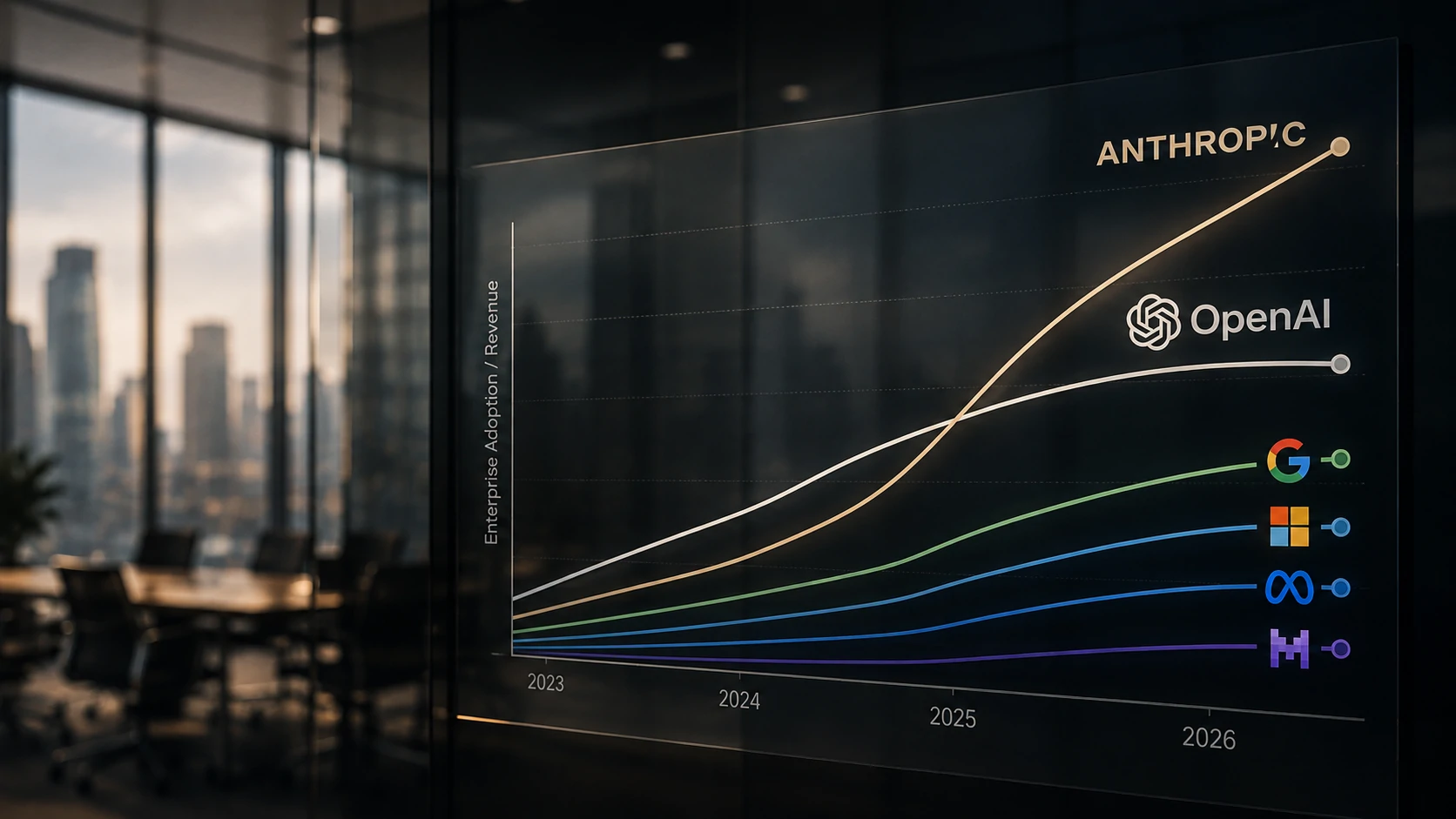
After nearly three years of OpenAI dominating the artificial intelligence landscape, the market is beginning to show signs of a significant shift. Anthropic’s rapid growth among enterprises and developers has raised a question that once seemed unlikely: is AI leadership changing hands? More than a technological rivalry, this battle could reshape billion-dollar investments, enterprise strategies and the future of generative AI.
AI leadership is no longer defined by popularity alone

Businesses are increasingly evaluating AI platforms based on performance, reliability and long-term value rather than brand recognition alone.
For years, OpenAI maintained its leadership thanks to the enormous success of ChatGPT, which accelerated the global adoption of artificial intelligence at an unprecedented pace.
Over the past several months, however, the competitive landscape has begun to evolve. Anthropic has significantly expanded its enterprise footprint, attracting organizations looking for AI systems that deliver more predictable performance in mission-critical environments.
This does not necessarily mean that OpenAI has lost its relevance. Instead, the market has started measuring leadership differently. Beyond user numbers, investors and enterprise customers now pay closer attention to recurring revenue, enterprise adoption and long-term customer retention.
Enterprise AI has become the industry’s primary battleground
Large enterprise contracts have become more valuable than millions of free consumer accounts.
Organizations integrating AI into business operations increasingly prioritize stability, governance, security and predictable outputs—areas where Anthropic has built a strong reputation.
Brand recognition alone is no longer enough
OpenAI remains the most recognizable name in artificial intelligence.
However, competition has shifted away from consumer popularity toward enterprise adoption, where multi-million-dollar contracts increasingly determine which company will shape the next generation of AI.
As previously discussed in Notícia Tech’s analysis of How ChatGPT Work Is Changing Enterprise Software, enterprise customers have become the primary strategic target for the world’s largest AI developers.
Anthropic’s rise signals that the AI race has entered a new phase

Businesses are shifting their priorities from raw model performance to security, governance and long-term productivity.
The short answer is straightforward: Anthropic is no longer just an alternative to ChatGPT. It has become one of OpenAI’s strongest competitors in the race for the most valuable enterprise customers.
While OpenAI continues to accelerate product development across its AI ecosystem, Anthropic has focused on winning organizations that rely on artificial intelligence for software development, customer support, document analysis and enterprise automation.
That strategy is beginning to reshape the competitive balance of the AI industry.
Enterprise priorities are changing
Corporate buyers evaluate AI platforms differently from everyday consumers.
Instead of focusing only on benchmark performance, enterprises increasingly consider factors such as:
- reliability;
- security and compliance;
- ease of integration;
- operational costs;
- predictable outputs;
- governance capabilities.
These priorities have helped Claude gain momentum among organizations deploying AI at scale.
The competition extends far beyond OpenAI and Anthropic
Although much of the attention is centered on these two companies, the broader AI race remains highly competitive.
Google, Microsoft, Meta, Mistral AI, xAI and several emerging AI companies continue investing billions of dollars to secure a larger share of one of the fastest-growing technology markets.
For businesses, this competition is largely positive. More vendors mean more specialized models, faster innovation and stronger incentives to improve enterprise capabilities.
Readers interested in how these enterprise AI systems are evolving can also explore Notícia Tech’s guide on Enterprise AI Architecture: MCP, RAG, AI Agents, Workflows, Copilots and APIs.
What this rivalry means for businesses and the future of artificial intelligence
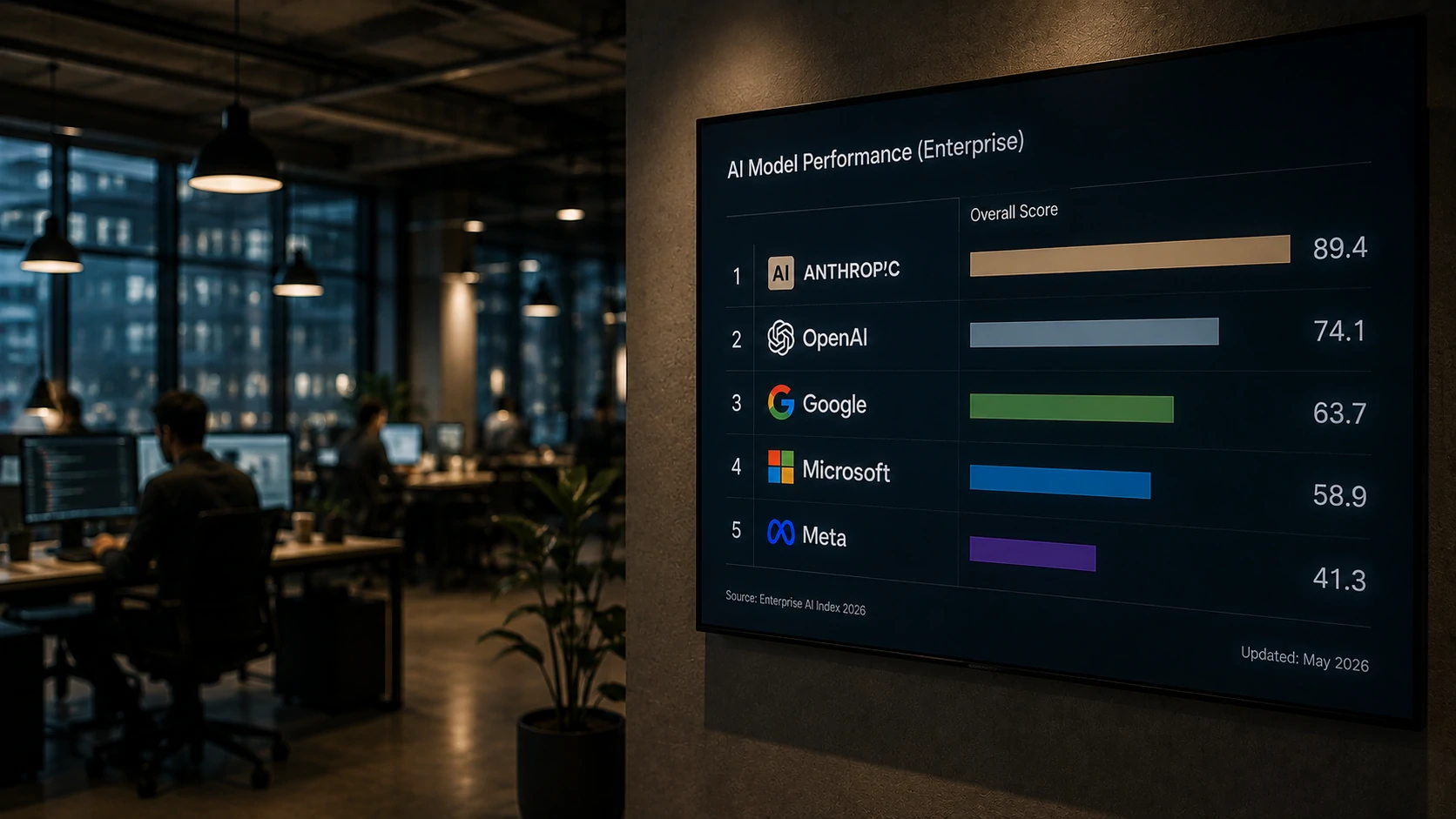
Organizations are increasingly selecting AI platforms based on long-term business strategy rather than market popularity.
The most important takeaway is simple: leadership in artificial intelligence is no longer permanent.
The industry is entering a stage similar to what happened during the rise of cloud computing, when multiple providers became dominant in different market segments instead of a single company controlling the entire ecosystem.
Innovation is likely to accelerate
As major AI companies compete for the same enterprise customers, pressure continues to grow for faster product releases, lower operational costs and increasingly capable AI models.
For organizations, this means access to more powerful technologies in shorter development cycles.
Competition is also driving the creation of specialized AI solutions for industries such as healthcare, finance, manufacturing, education and customer service.
Leadership could change several times in the coming years
The artificial intelligence market is still in its early stages.
New foundation models, regulatory developments, infrastructure investments and strategic partnerships could once again reshape the competitive landscape over the next few years.
For that reason, identifying today’s market leader is becoming less important than understanding which companies can consistently transform technological innovation into sustainable competitive advantage.
From this perspective, the rivalry between OpenAI and Anthropic represents only one chapter in a much larger story—one in which execution, enterprise trust and continuous innovation may ultimately matter more than popularity alone.
For business leaders, investors and technology professionals, following these developments is no longer simply about keeping up with AI news. It has become a strategic necessity that may influence investment decisions, operational efficiency and long-term competitiveness.
Comentários
Os comentários utilizam autenticação via GitHub para manter um ambiente mais qualificado, seguro e livre de spam.
Entrar ou criar conta no GitHub