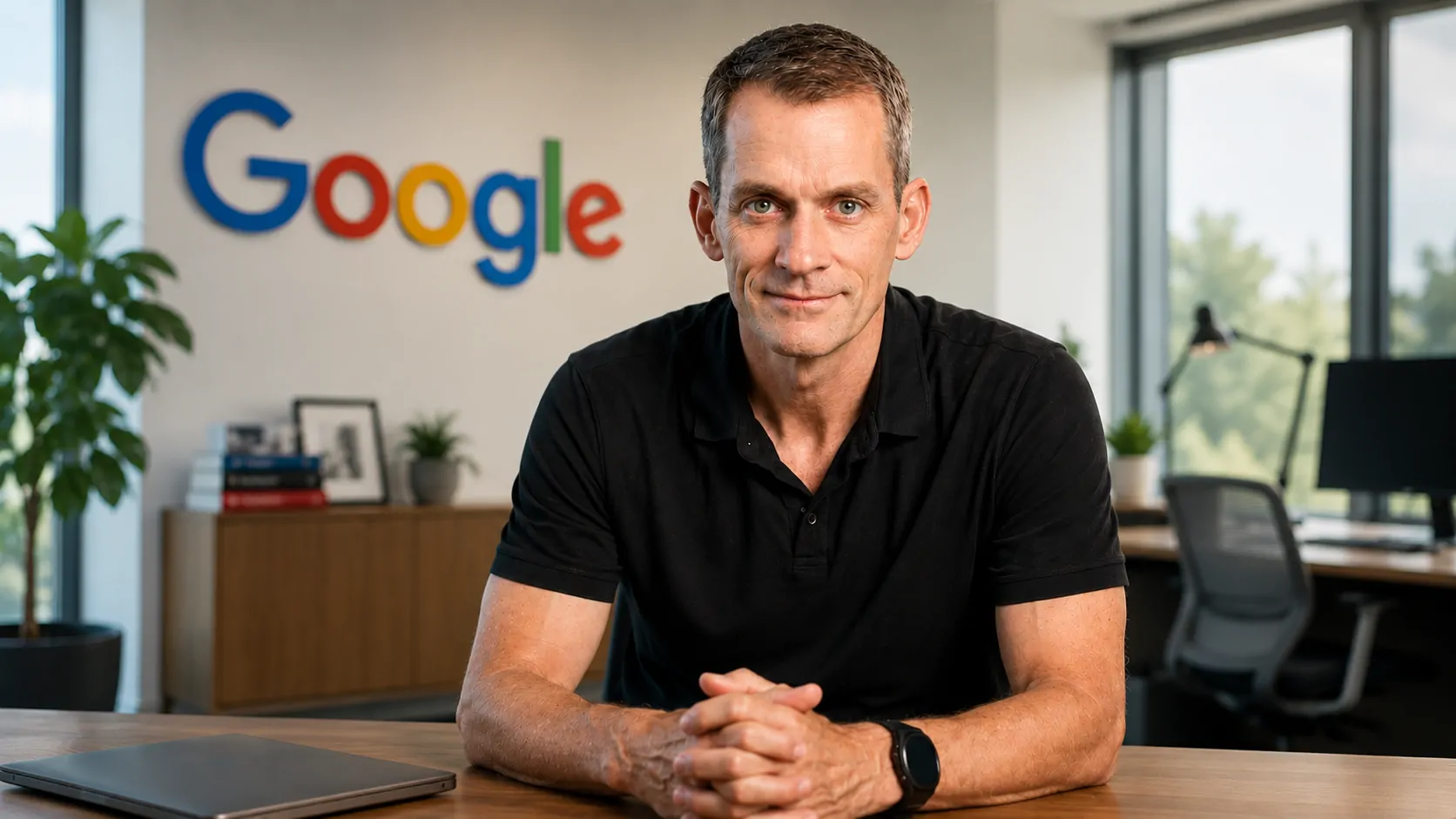
Jeff Dean spent nearly 27 years helping build some of Google’s most important technologies. Now, one of the company’s most influential technical leaders is betting on a more ambitious idea: using artificial intelligence to automate the process of scientific and technological discovery itself.
Jeff Dean leaves Google after nearly 27 years
Jeff Dean left Google after nearly 27 years to found Discovery Loop, a new company focused on using artificial intelligence to accelerate research in machine learning, science and engineering.
Dean joined Google in 1999 and built one of the most influential technical careers in the company’s history. During that time, he contributed to the development of Google’s foundational infrastructure and played an important role in the evolution of its artificial intelligence research.
His departure came alongside Sanjay Ghemawat, Dean’s longtime collaborator, as well as Oriol Vinyals and Quoc Le. The four researchers and engineers now form Discovery Loop’s founding team.
The move is notable not only because several highly experienced researchers and executives are leaving Google, but also because of what they plan to build next.
Dean is not leaving Google to create another AI company focused on chatbots or productivity tools. The new company’s proposal targets a different layer: automating the process used to discover new solutions.
Discovery Loop wants to automate the discovery cycle
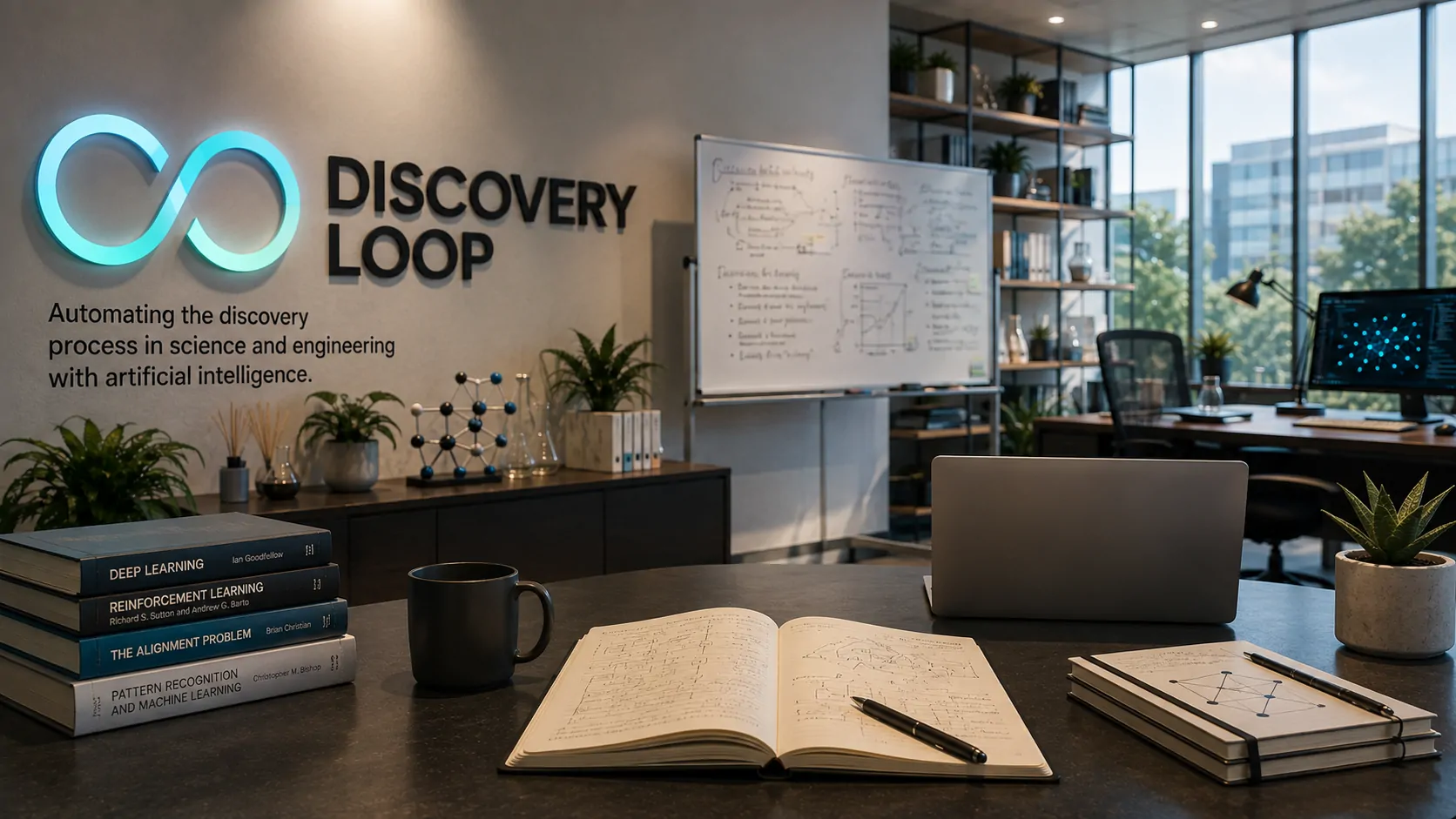
Jeff Dean and Discovery Loop’s co-founders want to use artificial intelligence to automate parts of the experimental process.
The core idea behind Discovery Loop is to automate the experimental cycle used in research and engineering.
In a traditional process, researchers formulate a hypothesis, design an experiment, run the tests, analyze the results and use those findings to determine the next step.
The company wants to place AI systems inside that cycle.
In practice, this means using artificial intelligence to help propose experiments, run them, evaluate the results and determine which paths should be investigated next.
Discovery Loop says it initially plans to focus on machine learning, while its broader vision includes applications across science and engineering.
The company also plans to explore running large numbers of experiments in parallel. The goal is to address one of the major limitations of traditional research: the speed at which humans can formulate, execute and evaluate new hypotheses.
The proposal represents an important shift in the role assigned to AI.
Instead of functioning solely as a tool used by researchers, the system would participate in a continuous sequence of experimentation and learning.
What changes when AI starts testing its own hypotheses
The key difference in this approach is not simply the use of more advanced models.
The change is about shortening the interval between hypothesis, experiment, result and new hypothesis.
In traditional research, each cycle can require researchers, engineers, computing infrastructure and time for analysis. If part of this process can be automated, a team could test far more possibilities before deciding which paths deserve additional human investment.
This also changes the discussion around AI system autonomy.
Notícia Tech has already examined how AI agents can create new responsibility problems for businesses when they take autonomous actions. In Discovery Loop’s case, autonomy appears in a different context: systems capable of running and evaluating experiments as part of a research process.
The distinction is strategic.
In conventional business automation, the goal is usually to complete a task faster or at a lower cost. Discovery Loop’s proposal goes further: to produce new knowledge through successive cycles of experimentation.
There is still not enough evidence to conclude that this model will work at scale or independently produce meaningful scientific discoveries.
But the direction is significant.
If the approach works, AI could move beyond being a tool that accelerates researchers’ work and become infrastructure for expanding the number of hypotheses that can be tested.
Google loses talent but remains connected to the new company

Jeff Dean left Google, but Alphabet remains connected to the new company as an investor and infrastructure partner.
Dean’s departure also needs to be viewed within Google’s broader strategy.
After nearly three decades at the company, Dean accumulated deep expertise in infrastructure, distributed systems, machine learning and artificial intelligence research. His departure represents the transfer of technical experience built during one of the most significant technological transformations in Google’s history.
At the same time, Alphabet has not completely distanced itself from the new venture.
The company is a founding investor in Discovery Loop, while Google provides computing infrastructure for the project.
That creates an unusual relationship.
Google is losing one of its most prominent technical figures while remaining economically and technologically connected to the company he is building.
The move also comes as Google continues to adjust its artificial intelligence leadership while facing intense competition from companies such as OpenAI and Anthropic.
For that reason, the development should not be viewed simply as an individual career decision.
It also shows how top AI researchers can pursue new ways of working outside the traditional structure of major technology companies while continuing to rely on capital and infrastructure provided by the same ecosystem they helped build.
The bet could change the strategic value of AI research
Discovery Loop also raises a broader question for the market: could controlling the ability to discover and develop new technologies faster become as important as having the most capable AI model?
That shift helps explain why artificial intelligence is beginning to change how technology companies themselves are valued. Notícia Tech has already examined how AI is changing the value of technology companies, and Discovery Loop’s proposal adds another dimension to that transformation.
A company capable of automating important parts of research and development could reduce the time required to test new architectures, methods and solutions.
That could have a direct impact on industries where research and development are central to competitive advantage.
Technology companies could use systems like these to accelerate the development of their own models. Chipmakers could test new architectures. Pharmaceutical companies could explore hypotheses in drug discovery. Research laboratories could increase the number of experiments performed during specific stages of development.
But there is an important difference between automating experiments and automating discoveries.
A system can run thousands of tests and still produce little value if it cannot formulate useful hypotheses, correctly interpret the results or identify which paths represent meaningful advances.
That distinction will determine Discovery Loop’s potential.
The company is not simply trying to make experiments run faster. Its ambition is to build systems capable of participating in a process that turns experimental results into new research directions.
Jeff Dean is betting on a new way to do science
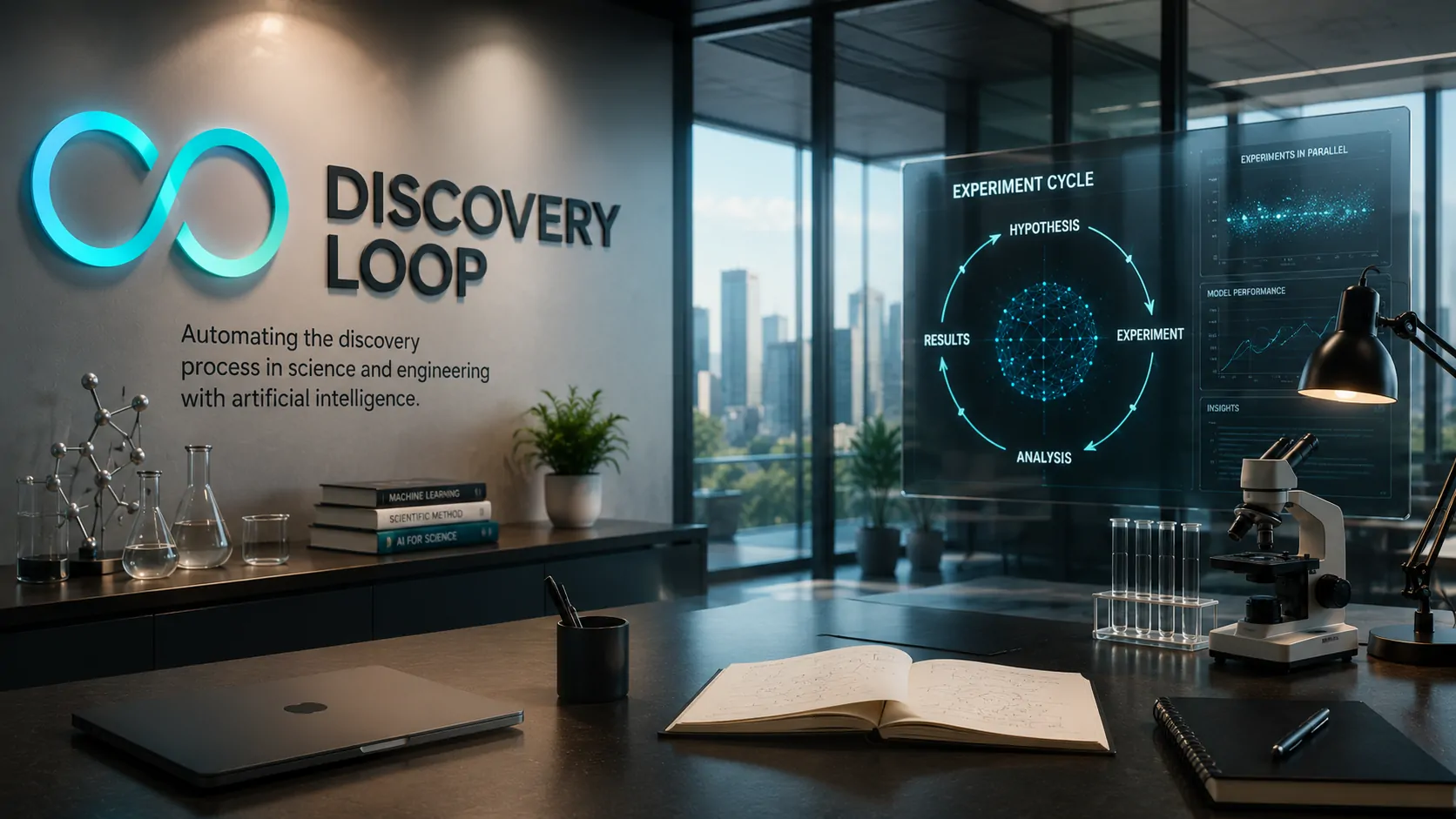
Jeff Dean’s departure marks the end of one of the longest and most influential careers inside Google, but the most important part of the move is the company he chose to build.
Discovery Loop is not being created simply to compete for chatbot users or market share in the traditional language model race.
Its bet is on a deeper layer of artificial intelligence: automating the experimental process that turns hypotheses into results.
If the approach works, it could significantly increase the number of experiments researchers and engineers can conduct within a given period.
The potential impact also goes beyond productivity.
Greater experimental capacity could change the speed at which new technologies are developed, particularly in fields where research cycles are long and depend on large numbers of tests.
There are still important questions.
Will these systems be able to formulate genuinely useful experiments? Will they be able to interpret complex results without constant supervision? How will experimental errors be identified? And who will be responsible when an AI system decides which experiment should be run next?
Those questions will be critical in determining whether Discovery Loop is simply another company founded by former Google veterans or the beginning of a broader change in how scientific research is organized.
The most important point is that Jeff Dean has chosen to bet precisely on this frontier.
For nearly 27 years, he helped build systems that allowed Google to process information at unprecedented scale. Now, his new company is attempting to apply a similar logic to the discovery process itself: dramatically increasing the number of possibilities that can be explored and accelerating the path between a hypothesis and what it may reveal.
Comentários
Os comentários utilizam autenticação via GitHub para manter um ambiente mais qualificado, seguro e livre de spam.
Entrar ou criar conta no GitHub