
The artificial intelligence market has entered a new phase. After two years dominated by competition among large language models, the industry’s biggest players are beginning to demonstrate that the real competitive advantage may lie elsewhere: talent, infrastructure, and operational execution. Meta’s recent moves offer a clear picture of this transformation.
Meta’s New Strategy Goes Beyond AI Models
Meta is signaling that the next stage of the artificial intelligence race will be defined by the ability to execute at scale rather than simply by model quality.

Infrastructure investments have become just as important as the artificial intelligence models themselves.
In recent months, the company led by Mark Zuckerberg has accelerated infrastructure investments, reorganized internal teams, and expanded its search for AI specialists.
The Focus Has Shifted From Research to Execution
During the first wave of generative AI, companies such as OpenAI, Google, and Anthropic focused on building increasingly powerful models.
Now, the competition is shifting toward the ability to transform those models into widely adopted platforms.
This transition is strategic because language models are becoming more accessible, while data, infrastructure, and talent remain scarce resources.
The Growing Importance of Infrastructure
Training and operating advanced AI systems requires billions of dollars in investment.
Data centers, specialized chips, energy consumption, and computing capacity have become increasingly significant barriers to entry.
This trend has already been reflected in recent industry developments, including Anthropic’s infrastructure expansion and the global race to build new AI computing facilities.
To better understand this trend, see the analysis below:
Anthropic expands AI infrastructure with multi-billion-dollar investment
Alexandr Wang’s Arrival Highlights Meta’s Priorities
The growing relationship between Meta and Alexandr Wang, founder of Scale AI, shows that the competition for talent has become just as important as the technological race itself.
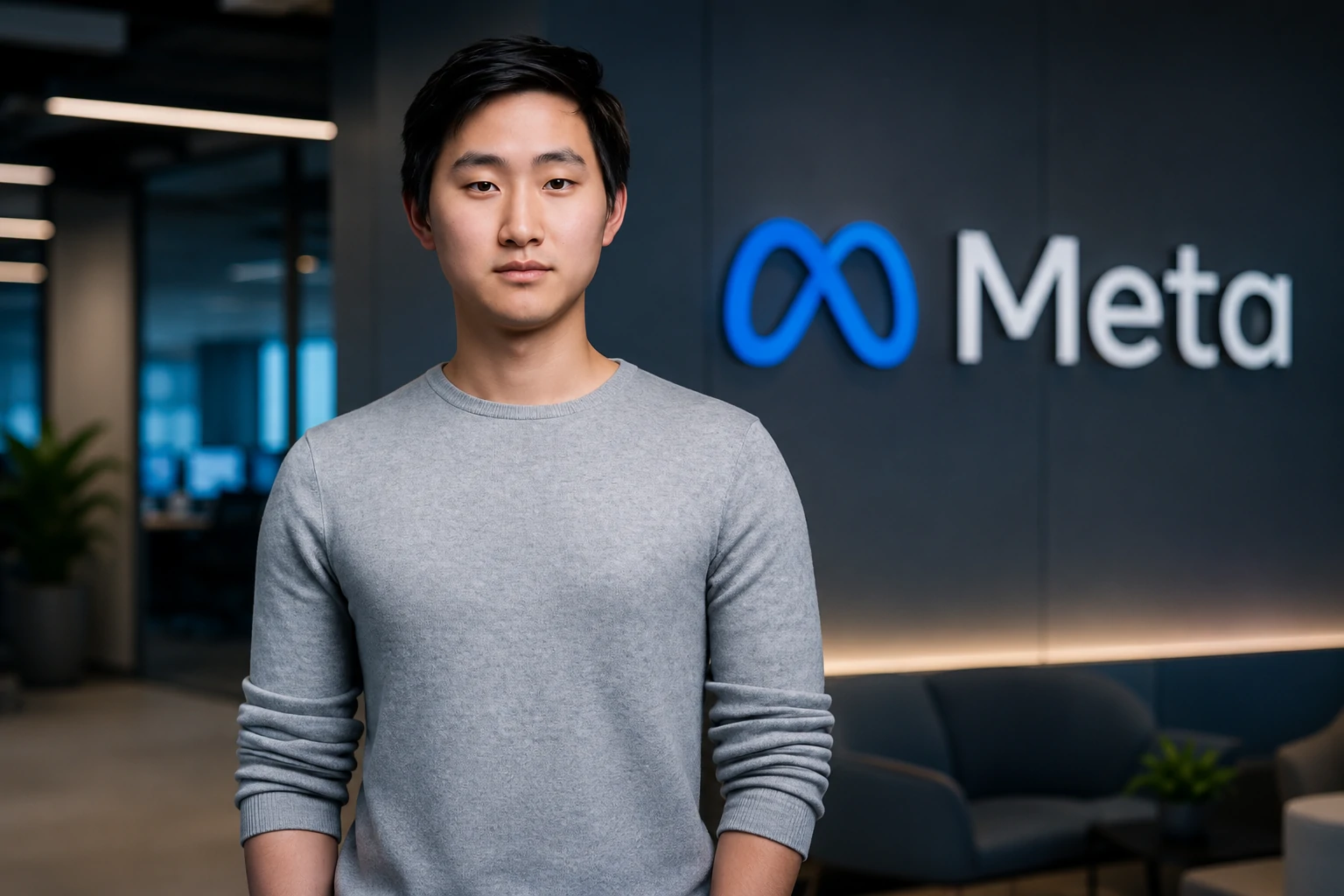
Alexandr Wang is the founder and former CEO of Scale AI, a company specializing in data infrastructure and services for training advanced artificial intelligence models. Widely regarded as one of the most influential entrepreneurs in the new wave of AI, Wang gained prominence by turning Scale AI into a strategic partner for major technology companies and large-scale AI initiatives. His growing ties with Meta highlight the increasing importance of talent, data, and infrastructure in the race to build the next generation of AI systems.
Scale AI has established a strategic position within the artificial intelligence ecosystem by providing data preparation, evaluation systems, and support for advanced model training.
Why Talent Has Become a Strategic Asset
Historically, major technology companies acquired products and technologies.
Today, many are increasingly seeking expertise, teams, and execution capabilities.
Professionals capable of leading large-scale AI initiatives have become extraordinarily valuable assets.
The shift resembles previous talent wars in the software industry, but on a much larger scale.
The Value of Data Continues to Increase
Even as AI models become more powerful, data quality remains essential.
The ability to evaluate outputs, build benchmarks, and improve training processes has become a key competitive advantage.
As a result, companies focused on data infrastructure now occupy a strategic position within the AI value chain.
The Impact on Businesses Adopting Artificial Intelligence
Meta’s reorganization affects more than its direct competitors. It also influences companies adopting AI across their operations.

Businesses are accelerating the adoption of intelligent agents to improve automation and productivity.
Competition among technology giants is likely to accelerate the arrival of new enterprise AI solutions.
More AI Agents in the Enterprise Environment
The clearest trend is the rapid expansion of intelligent agents.
These systems are moving beyond conversational assistance and increasingly performing tasks, integrating systems, and automating workflows.
This trend is already visible across multiple initiatives throughout the market.
One example is the growing adoption of protocols such as MCP to connect AI agents with enterprise tools:
How MCP Works and Why It Is Becoming Essential for AI Agents
Automation Is Entering a New Phase
The first wave of AI helped professionals generate content, summarize documents, and retrieve information.
The next phase focuses on automating entire business processes.
This includes customer service, internal operations, analytics, sales, and support functions.
For companies worldwide, this transition could deliver significant productivity gains over the coming years.
What This Competition Reveals About the Future of Artificial Intelligence
The main message behind Meta’s recent moves is that the AI race is maturing.
The discussion is no longer solely about which model provides the best answers.
Competitive Advantage Has Become More Complex
Success now depends on a combination of factors:
- computing infrastructure;
- energy availability;
- specialized talent;
- high-quality data;
- enterprise integration;
- distribution capabilities.
Companies that dominate only one of these areas may struggle to remain competitive.
The Era of Superintelligence Requires Scale
The pursuit of increasingly advanced AI systems is driving industry costs higher.
At the same time, it is creating opportunities for companies that can provide critical components within the AI value chain.
As a result, investors, executives, and technology leaders are paying attention not only to model launches but also to acquisitions, talent recruitment, and infrastructure investments.
Meta’s reorganization suggests that the next phase of artificial intelligence may be less about standalone algorithms and more about building complete ecosystems. Organizations capable of combining talent, infrastructure, data, and execution capabilities will have the strongest chance of leading what has become one of the most strategically important industries in the digital economy.
Comentários
Os comentários utilizam autenticação via GitHub para manter um ambiente mais qualificado, seguro e livre de spam.
Entrar ou criar conta no GitHub