
Enterprise artificial intelligence is entering a new phase. Rather than relying on a single large language model, technology companies are increasingly building platforms capable of selecting different AI models based on cost, performance and business requirements. Microsoft’s reported plans for Copilot illustrate this transition and could reshape how organizations deploy AI across their operations.
Microsoft considers reducing ChatGPT and Claude dependence in Copilot: what it means for businesses
Microsoft’s strategy goes far beyond replacing a single AI model
Microsoft’s reported evaluation of a Chinese AI model for Microsoft Copilot should not be interpreted simply as replacing ChatGPT or Claude. Instead, it reflects a broader strategic shift toward turning Copilot into a platform capable of orchestrating multiple Artificial Intelligence models depending on the business scenario.
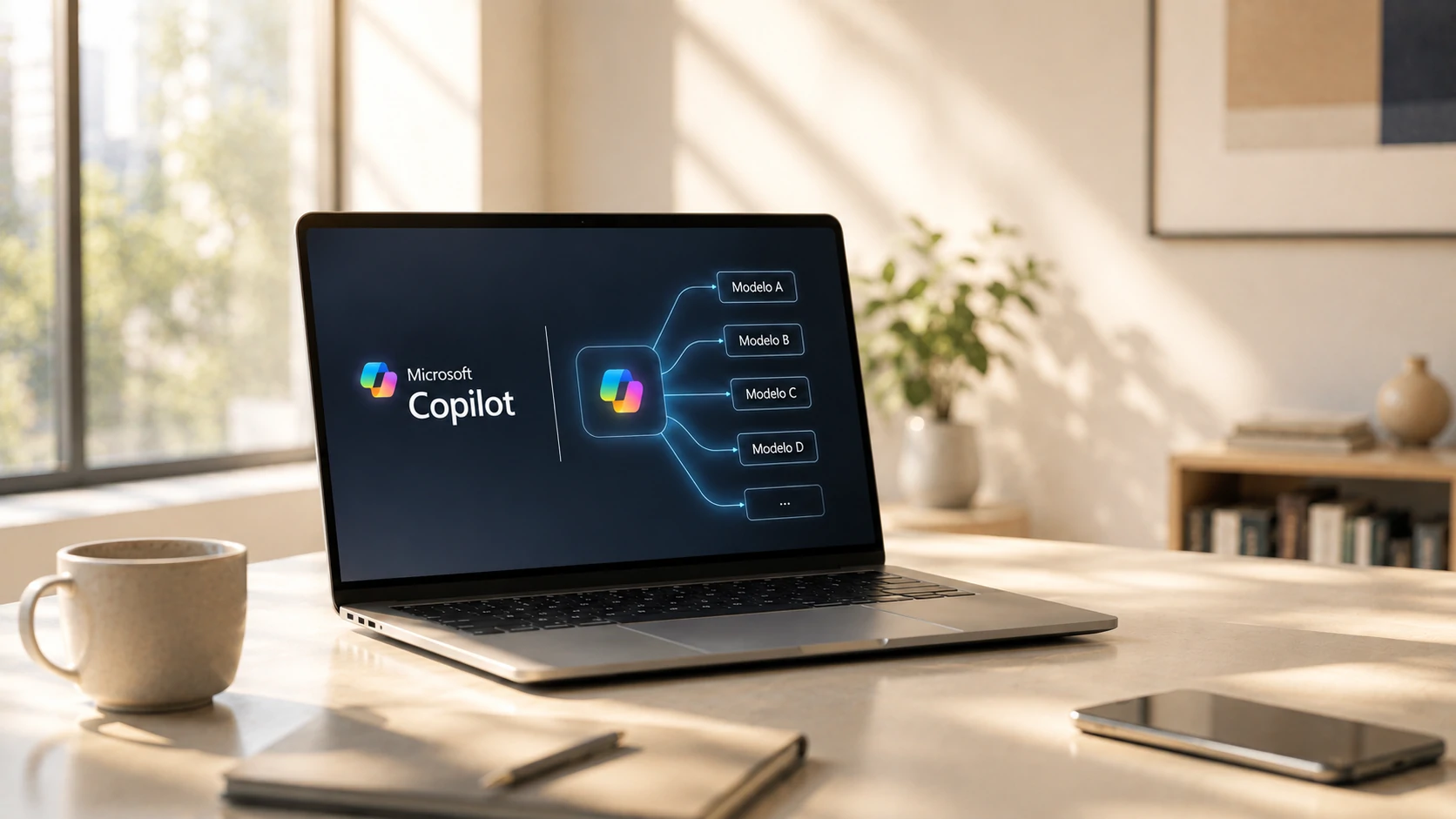
Supporting multiple AI models could make Copilot significantly more flexible for organizations with different operational requirements.
Today, competitive advantage is no longer determined solely by owning the most capable large language model. Increasingly, success depends on selecting the AI system that delivers the best balance between performance, operating cost, security and response quality for each specific workload.
What could be driving this strategy?
Industry analysts point to several possible motivations behind Microsoft’s move:
- reducing inference costs;
- lowering dependence on a single AI provider;
- strengthening negotiating power with strategic partners;
- adapting to regional regulations and market requirements;
- accelerating innovation by integrating the most suitable model for each task.
A diversified AI architecture also helps reduce business risk if pricing, licensing or model availability changes over time.
Why does this matter for enterprises?
Organizations using Microsoft 365 Copilot may ultimately benefit from improved efficiency without necessarily knowing which AI model is processing each request.
From a business perspective, the relevant question is no longer which model powers Copilot, but rather which model delivers the best outcome for a specific business process.
This reflects a growing trend across enterprise software, where multiple AI models operate behind a unified platform, allowing organizations to optimize quality, cost and operational resilience simultaneously.
Copilot could usher in a new enterprise AI architecture
Enterprise software is increasingly moving toward multi-model AI platforms. Rather than depending exclusively on one AI vendor, organizations are expected to combine specialized models optimized for different workloads.

Organizations are increasingly adopting platforms capable of automatically selecting the most appropriate AI model for each business task.
This architecture enables companies to balance performance, operational cost and governance far more effectively than relying on a single large language model.
The era of the single AI provider may be ending
Over the past two years, many organizations built their AI strategies around one dominant model provider.
That approach is beginning to change.
Companies now seek greater technological resilience by distributing AI workloads across multiple vendors instead of concentrating critical business processes in a single ecosystem.
This strategy also accelerates innovation, since new AI models can be integrated whenever they offer measurable improvements in performance or cost efficiency.
What this means for the enterprise market
If Microsoft moves forward with this strategy, other enterprise software providers are likely to follow.
Future AI platforms may compete less on the brand behind an individual model and more on measurable business outcomes such as productivity, governance, reliability and operational efficiency.
For a deeper understanding of open enterprise AI architectures, read:
Another related analysis explains why governance is becoming essential as organizations deploy multiple AI agents across business operations:
Microsoft’s decision could accelerate the global AI competition
Microsoft’s strategy also increases competitive pressure on companies such as OpenAI, Anthropic, Google, Meta, Mistral AI, and emerging Chinese AI developers. The competition is no longer centered solely on building the most capable language model. Instead, it is shifting toward operational efficiency, cost optimization and seamless enterprise integration.

Leading technology companies are moving toward AI ecosystems capable of orchestrating multiple models for different business scenarios.
This evolution reflects the natural maturity of enterprise AI. Just as organizations already rely on multiple cloud providers, databases and cybersecurity platforms, they are likely to adopt multiple Artificial Intelligence models within a unified enterprise ecosystem.
Enterprises will prioritize performance over brand recognition
For technology leaders, the most significant change will be the freedom to select the AI model that best fits each business process.
Some workloads require advanced reasoning capabilities.
Others prioritize lower inference costs, faster response times or compliance with industry-specific regulations.
As a result, purchasing decisions will increasingly focus on measurable business outcomes such as productivity, operational efficiency and return on investment rather than the reputation of a single AI vendor.
The impact will extend beyond the United States
Although many of these developments originate in the United States and Asia, platforms such as Microsoft 365 Copilot serve organizations around the world.
Businesses in Europe, Latin America and other global markets are therefore likely to benefit from improvements in performance, cost efficiency and enterprise functionality as Microsoft’s multi-model strategy evolves.
At the same time, IT departments will need stronger governance, auditing and security frameworks to manage increasingly sophisticated AI environments.
As discussed in Notícia Tech’s guide to AI Governance, sustainable enterprise AI adoption depends as much on governance as on technological capability.
The future of enterprise AI will be defined by platform orchestration
The strongest message behind Microsoft’s reported strategy is that the next phase of enterprise artificial intelligence will not be won simply by building the most powerful language model.
Competitive advantage will increasingly belong to companies capable of orchestrating multiple AI models through secure, flexible and highly integrated enterprise platforms.
What should business leaders monitor?
Technology executives should closely watch several developments over the coming months:
- Microsoft’s evolving Copilot roadmap;
- integration of additional enterprise AI models;
- pricing and operational cost changes;
- governance and regulatory requirements;
- measurable impacts on productivity and business automation.
These factors could directly influence enterprise technology investment strategies over the next several years.
The competition is shifting from models to platforms
Artificial intelligence is entering a new stage of maturity.
Rather than focusing on whether ChatGPT, Claude or another individual model performs best, organizations are beginning to evaluate which platform delivers the most effective business outcomes.
Companies that invest in interoperability, open architectures and multi-model ecosystems are likely to gain greater flexibility as AI technology continues to evolve.
If this direction continues, competitive differentiation will depend less on exclusive access to a single model and more on delivering the most adaptable, efficient and enterprise-ready AI platform.
More than a potential reduction in dependence on ChatGPT or Claude, Microsoft’s strategy signals a structural transformation in enterprise AI. Productivity, platform flexibility and intelligent orchestration are becoming the defining characteristics of the next generation of corporate artificial intelligence.
Is Microsoft removing ChatGPT from Copilot?
No. There is currently no official confirmation that ChatGPT will be removed from Copilot. Reports indicate that Microsoft is evaluating the integration of additional AI models rather than replacing existing ones.
Why would a company use multiple AI models?
Different AI models excel at different tasks. A multi-model architecture enables organizations to automatically select the most suitable model for each workload while balancing performance, security and operational costs.
Will businesses outside the United States be affected?
Yes. Since Microsoft 365 Copilot is available globally, changes to its AI architecture are expected to benefit organizations worldwide through improved capabilities and greater operational efficiency.
Will ChatGPT disappear from Copilot?
Not necessarily. The most likely scenario is that multiple AI models will coexist within Copilot, giving enterprise customers greater flexibility while reducing reliance on a single provider.
What is the biggest long-term trend?
Enterprise software is moving toward AI platforms capable of orchestrating multiple language models. Instead of depending on a single AI provider, organizations will increasingly rely on platforms that automatically select the most effective model for each business process.
Comentários
Os comentários utilizam autenticação via GitHub para manter um ambiente mais qualificado, seguro e livre de spam.
Entrar ou criar conta no GitHub