
Over the past two years, the artificial intelligence race has largely revolved around models such as ChatGPT, Claude, and Gemini. That competition is now entering a new phase. Competitive advantage is shifting away from the models themselves and toward the ability to transform them into real business solutions. Microsoft intends to lead exactly that transition.
Microsoft’s decision to launch a new company dedicated exclusively to implementing enterprise artificial intelligence projects, backed by an estimated $2.5 billion investment, represents a significant strategic shift for the technology giant. Rather than competing solely to build the world’s most advanced AI model, Microsoft is positioning itself to lead the enterprise AI transformation.
The announcement reinforces a broader trend emerging throughout 2026: businesses are moving beyond experimentation with generative AI and focusing instead on execution, integration and measurable return on investment.
Microsoft Wants to Lead Enterprise AI Implementation, Not Just Build AI Models
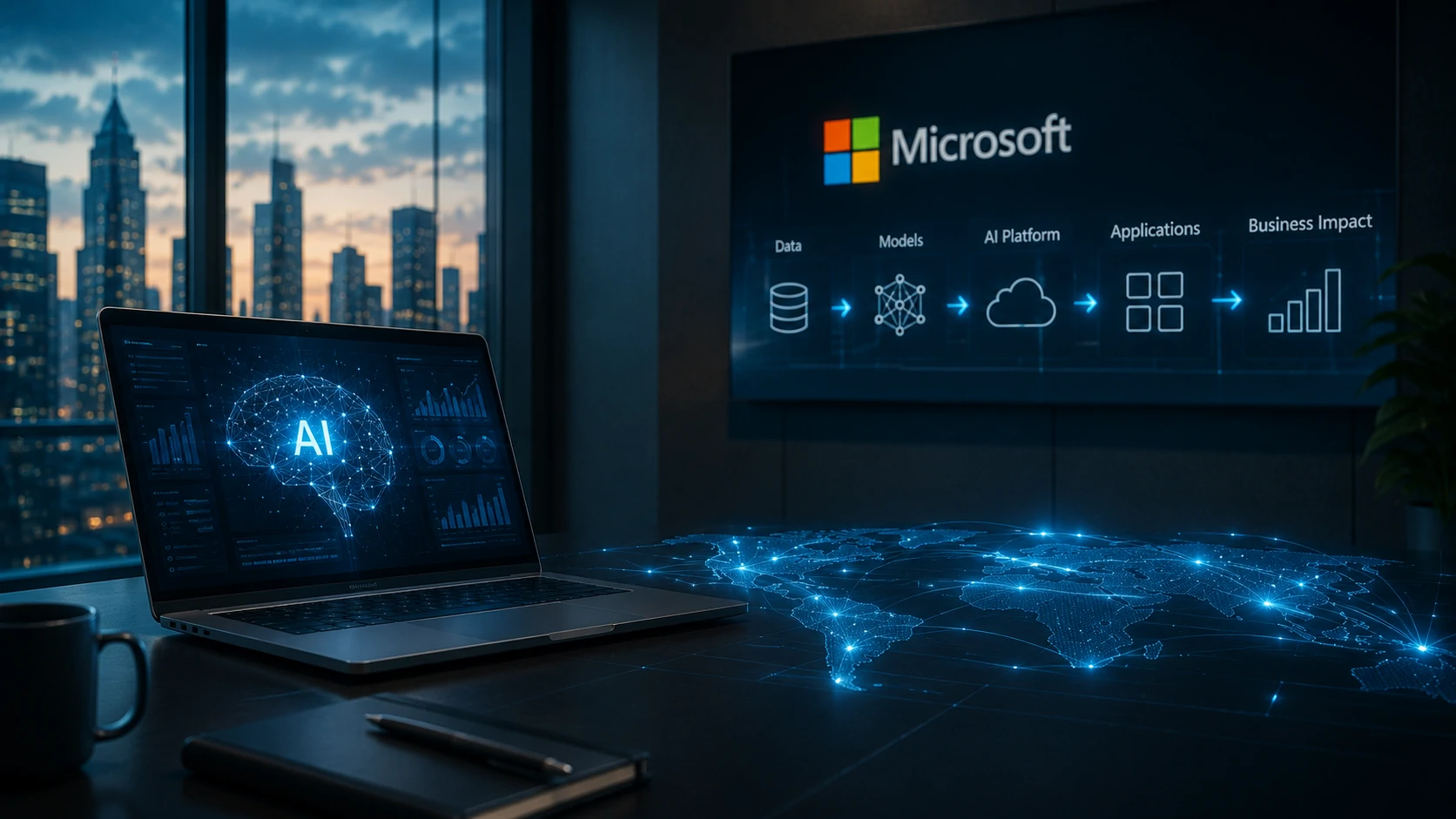
Microsoft’s new organization is designed to accelerate enterprise AI projects by combining implementation, integration and measurable business outcomes.
The initiative demonstrates Microsoft’s ambition to occupy a different position within the artificial intelligence ecosystem. Instead of acting only as the provider of Azure infrastructure or as OpenAI’s primary strategic partner, the company is expanding into comprehensive AI implementation services.
This approach moves Microsoft closer to the role traditionally played by large technology consulting firms, while maintaining a unique competitive advantage through direct access to cloud infrastructure, productivity platforms and AI technologies already embedded across enterprise environments.
The Competitive Focus Is Moving Beyond AI Models
During the first wave of generative AI, most attention centered on rapid improvements in large language models. However, many organizations soon realized that simply having access to the best AI model did not automatically generate business value.
The greatest challenges quickly shifted toward system integration, data security, governance, employee training and adapting existing business processes.
This evolution reinforces concepts previously explored by Notícia Tech regarding the importance of AI Fluency for organizations seeking to unlock the full potential of artificial intelligence.
Enterprise Deployment Is Becoming More Valuable Than Experimentation
Microsoft’s latest strategy highlights how the next phase of artificial intelligence will be defined by the ability to transform pilot projects into sustainable business operations.
Organizations capable of integrating AI into their daily workflows are expected to achieve significant productivity gains, while those remaining in the experimentation stage may gradually lose competitive ground.
The Enterprise AI Era Has Officially Begun
Artificial intelligence is no longer viewed solely as an individual productivity tool. It is increasingly becoming a core component of long-term corporate strategy.
Leading organizations are integrating multiple AI models and platforms into their strategic business infrastructure.
Microsoft’s announcement comes as other technology leaders expand their own enterprise AI initiatives. OpenAI continues strengthening its enterprise offerings, Anthropic is expanding across major cloud platforms, while companies such as Google, Amazon, and Oracle continue investing heavily in AI infrastructure.
Instead of relying on a single foundation model, many organizations are adopting multi-model architectures, selecting different AI systems depending on the specific business use case.
Dependence on a Single AI Provider Is Declining
One of the defining trends of 2026 is the gradual shift away from relying exclusively on a single AI provider.
Depending on the application, organizations may choose ChatGPT for customer service, Claude for document analysis and smaller specialized models for internal workflow automation, improving flexibility while optimizing costs.
This trend complements concepts previously discussed by Notícia Tech regarding the evolution of AI Process Automation, where multiple AI technologies work together to automate enterprise operations.
Microsoft Is Shifting the AI Competition from Models to Enterprise Services

The next competitive advantage in artificial intelligence will come from integrating AI, enterprise data and business processes into a unified operational strategy.
Microsoft’s new organization reflects a broader transformation taking place across the technology industry. Artificial intelligence is increasingly becoming a strategic business service rather than simply another software product.
For enterprises, this means that AI initiatives will require robust architectures, governance frameworks, integration with legacy systems, cybersecurity standards and clear return-on-investment metrics. Choosing the right AI model remains important, but it is no longer the only factor that determines success.
Small and Mid-Sized Businesses Will Also Benefit
Although Microsoft’s initiative is initially focused on large enterprises, its long-term impact is likely to extend well beyond Fortune 500 organizations.
Historically, enterprise technologies introduced by Microsoft eventually become integrated into products such as Microsoft 365, Copilot and Azure, making advanced capabilities progressively more accessible to small and medium-sized businesses.
This trend could significantly accelerate enterprise AI adoption by allowing organizations of every size to leverage technologies that were once available only to major corporations.
The Next Challenge Is Turning AI Into Competitive Advantage
Enterprise AI is entering a much more mature stage.
Over the next several years, competitive differentiation will no longer depend simply on having access to ChatGPT, Claude, Gemini, or any other advanced AI model. Instead, organizations will compete based on how effectively they integrate these technologies into their business operations.
Companies that establish a well-defined AI strategy are likely to improve productivity, reduce operational costs and strengthen their long-term capacity for innovation.
What Microsoft’s Strategy Means for Businesses
Perhaps the most significant implication of Microsoft’s announcement is that artificial intelligence implementation is beginning to resemble traditional digital transformation initiatives.
Deploying AI is no longer about purchasing a software subscription. Organizations increasingly need governance policies, high-quality data, secure infrastructure, cross-platform integration and continuous workforce training to maximize business value.
Competition Is Becoming Operational Rather Than Technological
Only a short time ago, the industry’s primary question was which company had developed the most capable AI model.
That discussion is rapidly evolving.
The new competitive question is: which organization can implement artificial intelligence faster, more securely and with greater measurable business impact?
This shift favors technology providers capable of delivering complete enterprise solutions that combine infrastructure, consulting, implementation and long-term operational support.
The Future of AI Will Be Decided Inside Businesses
Artificial intelligence has entered a new stage of maturity.
Model innovation will continue to drive technological progress, but long-term market leadership will increasingly depend on how successfully organizations embed AI into everyday business operations.
Microsoft’s latest move reinforces a broader industry reality: the next winners in artificial intelligence will not necessarily be those that build the most advanced models, but those that enable millions of organizations to transform AI into measurable productivity, innovation and sustainable competitive advantage.
Comentários
Os comentários utilizam autenticação via GitHub para manter um ambiente mais qualificado, seguro e livre de spam.
Entrar ou criar conta no GitHub