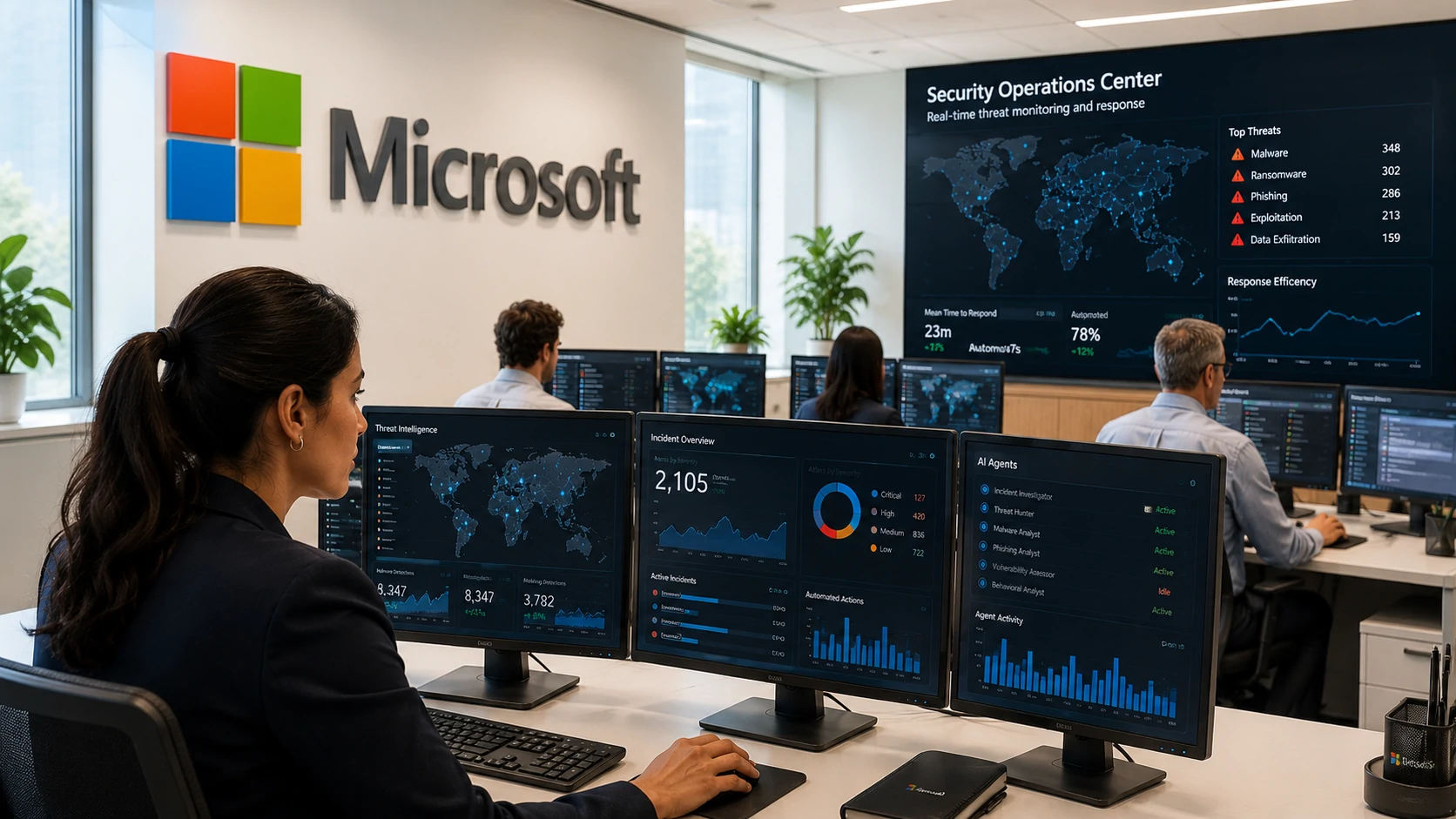
The race for Artificial Intelligence is no longer focused solely on generative models. Cybersecurity has become the next major battlefield. By introducing a new AI agent-powered security platform, Microsoft is signaling that the future of enterprise cyber defense will be increasingly autonomous, intelligent and deeply integrated into business operations.
Microsoft wants AI agents to become digital security analysts
Organizations are facing an unprecedented increase in cyberattacks while security teams struggle to process the overwhelming number of alerts generated every day. Microsoft’s answer is to deploy specialized AI agents capable of handling a significant portion of this operational workload.
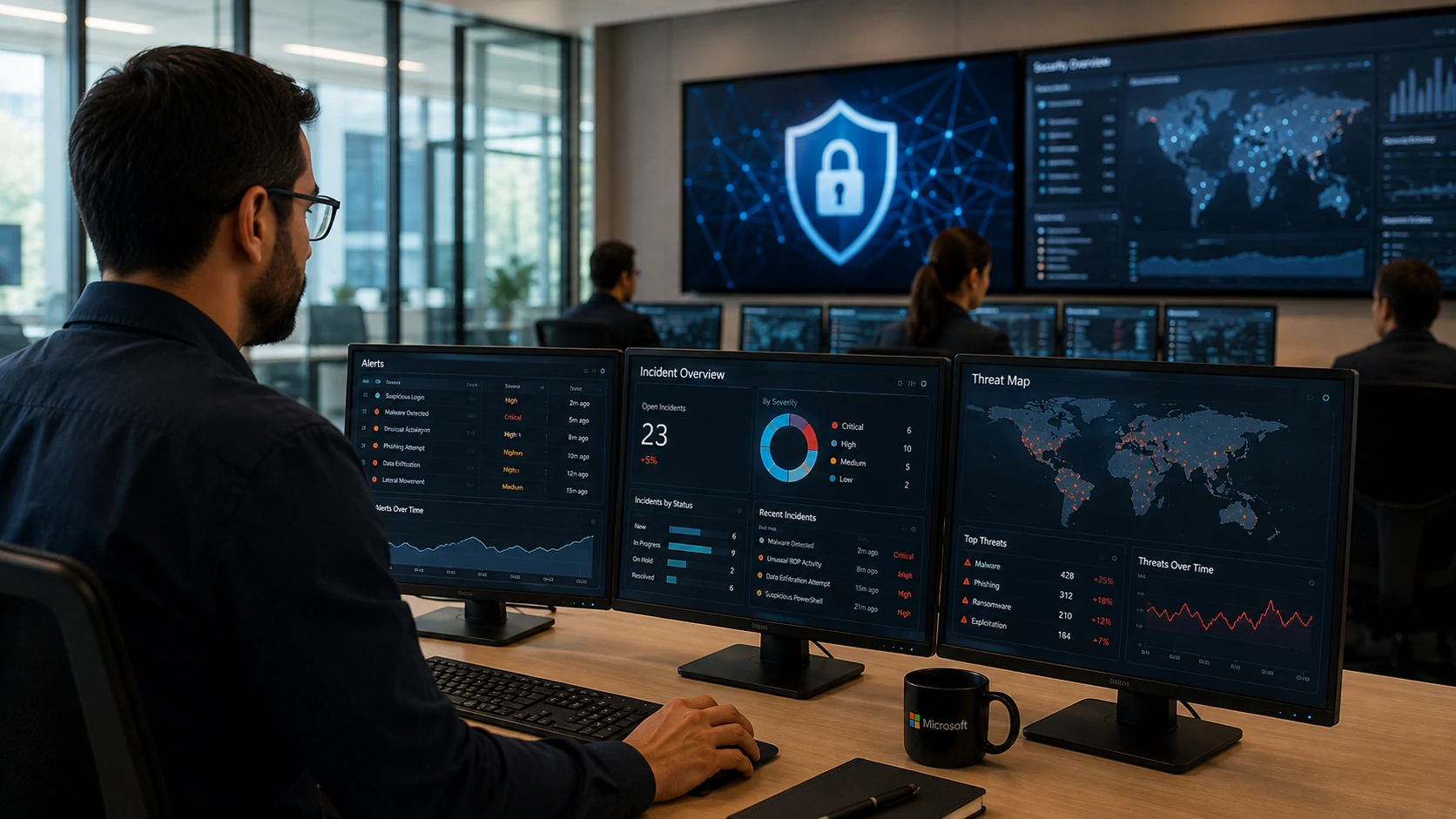
Intelligent AI agents continuously analyze security events to reduce incident response times.
These AI agents are designed to process enormous volumes of telemetry, identify suspicious patterns and automatically launch investigations before a human analyst even begins reviewing an incident.
AI moves beyond detection into autonomous action
The real innovation is not simply analyzing security data.
AI agents can correlate information across multiple security platforms, prioritize high-risk alerts and recommend containment measures much faster than traditional rule-based workflows.
Security Operations Centers are entering a new phase
Modern Security Operations Centers (SOCs) are evolving beyond reactive monitoring.
With intelligent agents working around the clock, cybersecurity professionals can dedicate more time to strategic decision-making, advanced threat hunting and responding to complex security incidents.
This evolution aligns with a broader trend previously explored by Notícia Tech regarding the growing importance of AI security in enterprise environments.
What Is AI Security and Why It Will Become a Business Priority in the Coming Years
Automation is becoming the new competitive advantage
Organizations can no longer scale cybersecurity simply by hiring more analysts. Intelligent automation has become an operational necessity.
Organizations that can shorten the time between detecting and responding to cyberattacks typically reduce financial losses, operational disruption and regulatory risk.
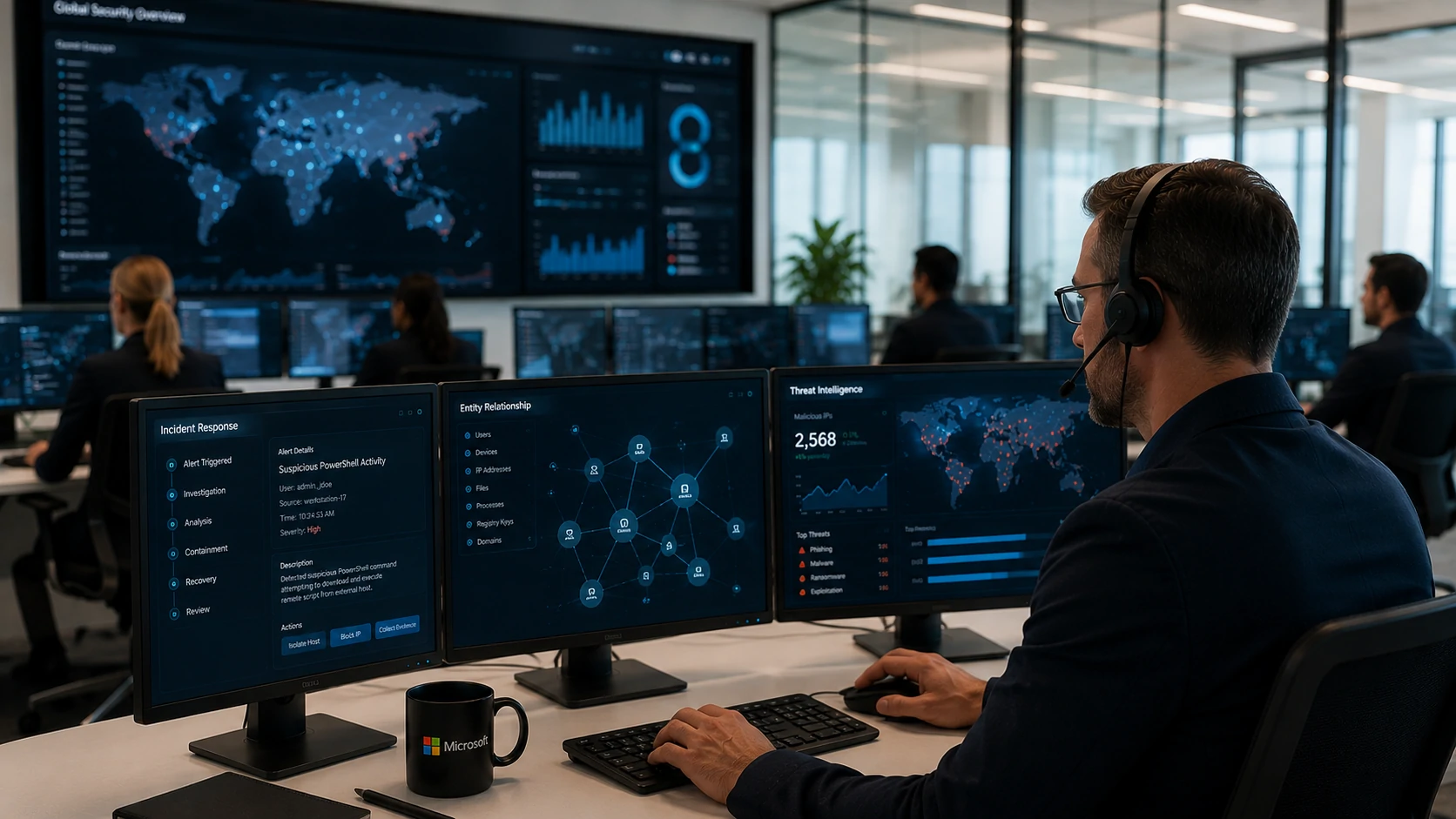
AI agents handle repetitive cybersecurity tasks while human experts focus on strategic decision-making.
Microsoft’s new platform follows this direction by combining automation, threat intelligence and contextual analysis into a unified enterprise security strategy.
Fewer alerts, more actionable intelligence
One of the biggest challenges facing modern Security Operations Centers is alert fatigue.
Security analysts receive thousands of notifications every day, yet only a small percentage require immediate attention.
AI agents automatically correlate related events, eliminate false positives and prioritize the incidents that deserve human investigation.
Security must evolve as quickly as AI
As businesses deploy copilots, autonomous AI agents and intelligent workflows, their attack surface continues to expand.
This makes enterprise AI architecture increasingly important for protecting distributed environments and maintaining governance across AI systems.
Enterprise AI Architecture: How MCP, RAG, APIs, AI Agents, Workflows and Copilots Work Together
The AI leadership race has expanded into cybersecurity
AI-powered security is rapidly becoming the next competitive battleground among the world’s largest technology companies.
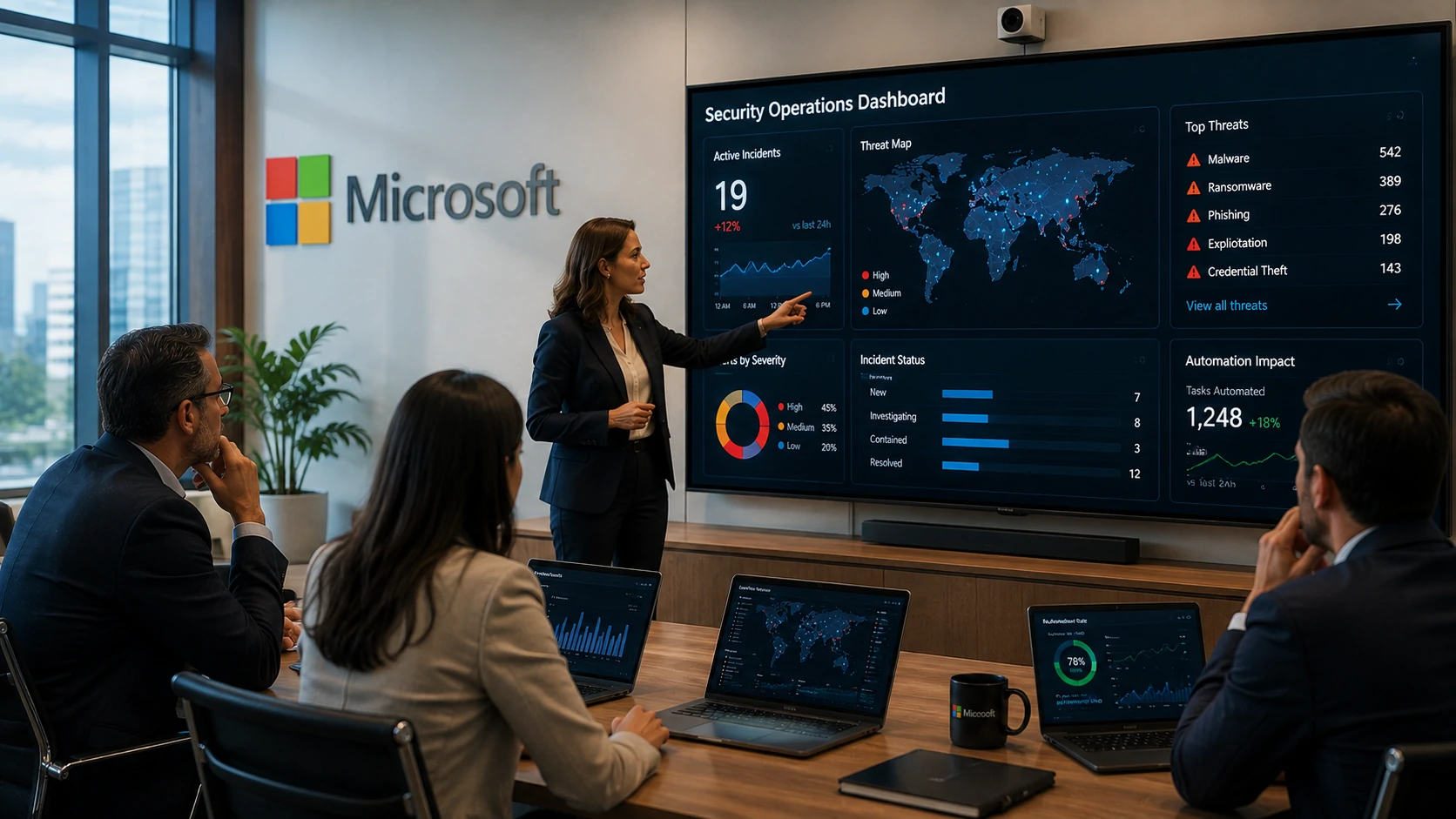
The next stage of AI competition will focus on platforms capable of protecting enterprise environments through intelligent autonomous agents.
Alongside Microsoft, companies including Google, Cisco, CrowdStrike, Palo Alto Networks and other cybersecurity vendors are embedding Artificial Intelligence into their security portfolios.
The ecosystem is becoming the real competitive advantage
Success will depend on far more than building powerful AI models.
Technology vendors capable of integrating identity management, cloud infrastructure, endpoint protection, security monitoring and AI agents into a unified ecosystem will deliver significantly greater value to enterprise customers.
This is precisely where Microsoft holds a strategic advantage by connecting its AI-powered security platform with the enterprise ecosystem already used by millions of organizations worldwide.
The future belongs to specialized AI agents
Rather than relying on a single AI model, enterprise security is moving toward multiple specialized agents working collaboratively.
This approach closely mirrors the evolution of AI Orchestration, where different AI agents coordinate tasks to solve increasingly complex business problems.
The concept is explored in greater depth by Notícia Tech here:
What Is AI Orchestration and Why It Will Become Essential for Businesses Using AI Agents
Microsoft’s announcement offers a glimpse into the future of enterprise cybersecurity
AI agent-based security represents a structural transformation in how organizations will defend themselves against increasingly sophisticated cyber threats.
Rather than simply automating repetitive tasks, these platforms understand context, correlate information across multiple systems and accelerate investigations almost in real time.
Human experts will remain responsible for strategic and high-risk decisions, but Artificial Intelligence is expected to assume an expanding role in operational security workflows.
For organizations investing heavily in Artificial Intelligence, cloud computing and enterprise automation, Microsoft’s latest strategy demonstrates that protecting AI models, business data and autonomous agents will become just as important as developing new AI capabilities. The next stage of the AI race will not be defined solely by model performance, but by the level of trust, resilience and security companies can deliver to enterprise customers.
Comentários
Os comentários utilizam autenticação via GitHub para manter um ambiente mais qualificado, seguro e livre de spam.
Entrar ou criar conta no GitHub