Over the past few years, competition among artificial intelligence companies has largely focused on chatbots and large language models. That is beginning to change as the next frontier shifts toward factories, logistics hubs and intelligent robots capable of operating in the physical world.
Mistral brings artificial intelligence to industrial robotics
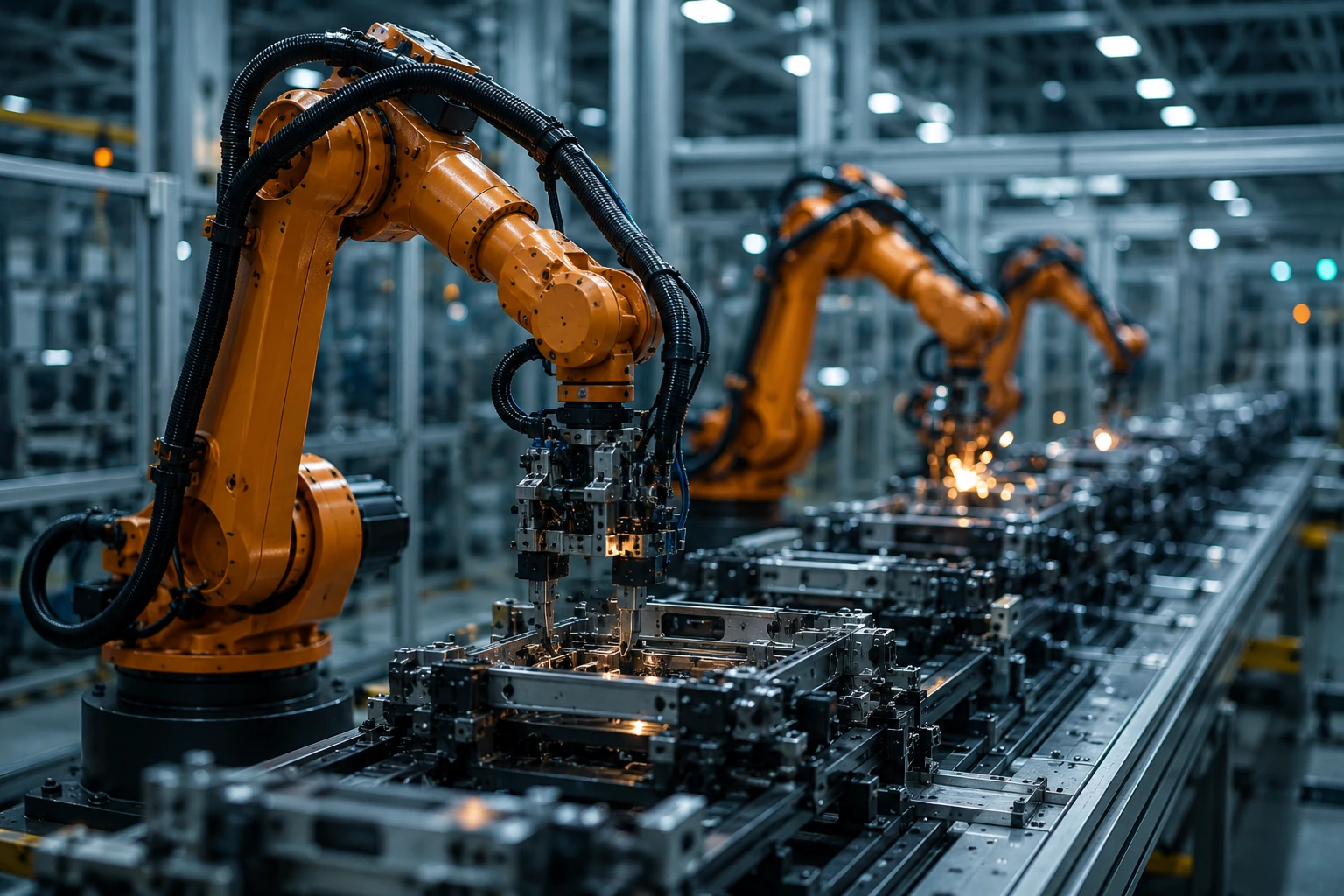
Intelligent robots are becoming the next major battleground in the global AI race.
Mistral AI has unveiled its first robotics-focused AI model, marking a significant strategic shift for the French company. Previously recognized for developing large language models that compete with OpenAI, Anthropic and Google, the company is now expanding into physical artificial intelligence applications.
The announcement follows Mistral’s acquisition of startup Emmi AI, which specializes in AI models for robotic control and industrial automation. The acquisition positions the company within the rapidly emerging Physical AI market, where intelligent systems are designed to interact directly with real-world environments.
The move represents more than a product launch. It signals that the next stage of the artificial intelligence race may take place inside factories, warehouses and production facilities, where robots increasingly perform complex operational tasks with greater autonomy.
From generative AI to Physical AI
While traditional AI models generate text, images and software code, Physical AI combines perception, reasoning and movement to allow machines to understand their surroundings and act accordingly.
A rapidly expanding enterprise market
Industry analysts increasingly view intelligent robotics as one of the fastest-growing segments of enterprise AI, driven by demand for higher productivity, lower operating costs and greater manufacturing flexibility.
Competition for industrial automation enters a new phase
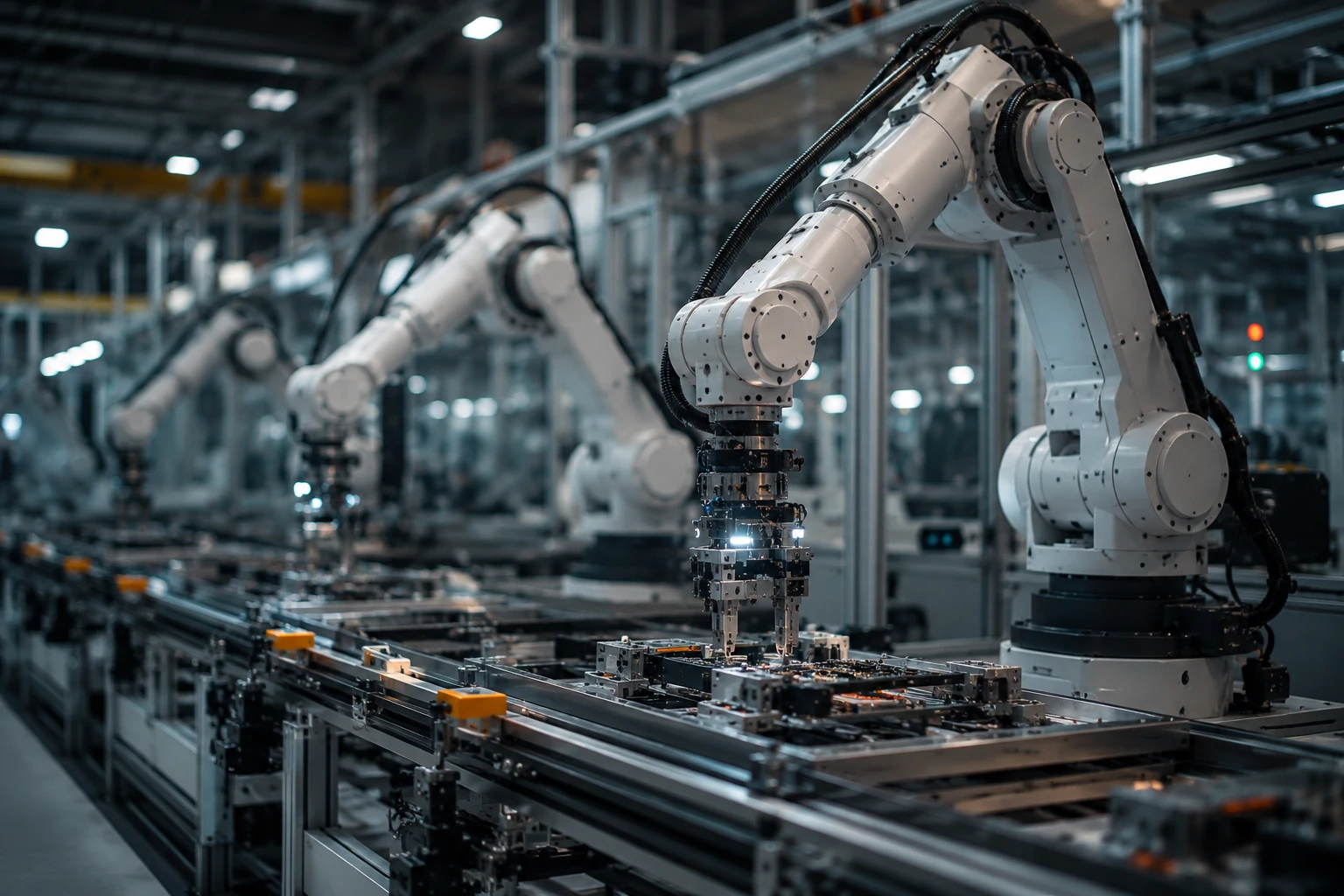
Enterprise automation is evolving beyond software toward intelligent physical systems.
Mistral’s entry into robotics reinforces a broader industry trend. The world’s leading artificial intelligence companies are no longer competing solely on language models. They are now investing in complete automation ecosystems capable of connecting AI with physical operations.
This strategy places Mistral alongside initiatives led by companies such as NVIDIA, which continues investing heavily in robotics infrastructure, while also expanding indirect competition with OpenAI and Google, both of which are developing increasingly capable AI agents.
In practice, the value of AI is expanding beyond content generation toward real-world execution, allowing intelligent software to control equipment, machines and industrial workflows.
Readers interested in Mistral’s broader infrastructure strategy can also explore:
The rise of intelligent AI agents also provides important context for understanding why autonomous decision-making is becoming increasingly valuable for enterprise operations:
How AI-powered robotics could transform businesses
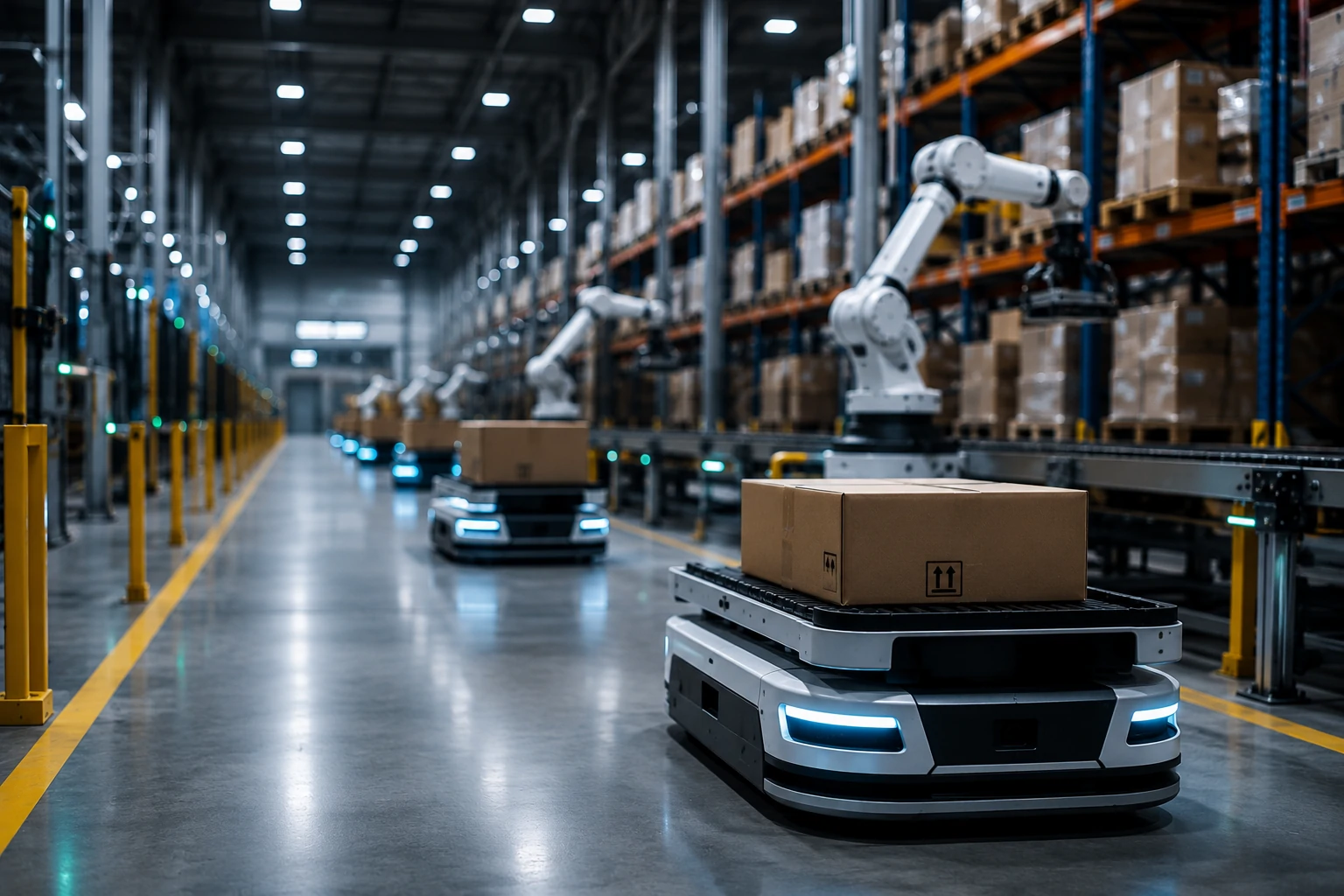
Intelligent robots are expected to improve efficiency, reduce waste and work alongside human employees.
AI-powered robotics has the potential to transform industrial operations by combining perception, decision-making and automation into a single intelligent platform. Unlike traditional robots that simply repeat pre-programmed movements, modern AI-driven systems can interpret changes in their environment and adapt their behavior accordingly.
This capability makes the technology especially valuable across manufacturing, logistics, mining, energy and agriculture, where operational conditions frequently change and real-time decisions are essential.
By embedding advanced AI models directly into robotic systems, businesses can reduce deployment time for new production tasks, improve operational quality and create more flexible manufacturing environments.
Enterprise applications are already emerging
Several practical use cases are beginning to gain traction across industries, including:
- automated equipment inspection;
- intelligent product sorting in distribution centers;
- AI-assisted manufacturing and assembly;
- autonomous material handling;
- computer vision-based quality control.
These examples demonstrate how artificial intelligence is evolving from a business support tool into a technology capable of executing core operational activities.
The competitive advantage is no longer just better AI models
Over the coming years, market leadership is likely to depend on how effectively companies integrate artificial intelligence, robotics, sensors and computing infrastructure into a unified operational platform capable of making decisions and executing tasks autonomously.
Enterprise AI is entering the era of Physical AI
Mistral’s expansion into robotics reinforces that competition in artificial intelligence is entering a new phase. Instead of focusing exclusively on building the most capable chatbot, leading AI companies are now racing to automate complete real-world business processes.
This shift also expands the role of AI agents. Today they already perform digital tasks such as generating reports, analyzing data and supporting business decisions. The next step is enabling those same intelligent systems to control machines capable of interacting directly with the physical environment.
For business leaders, this represents an important strategic change. Selecting an AI platform will no longer depend solely on model quality or subscription costs. Increasingly, companies will evaluate how well AI solutions integrate with industrial infrastructure, robotics platforms and enterprise automation systems.
The convergence of Artificial Intelligence, robotics and industrial automation is likely to define the next stage of digital transformation. Organizations that begin preparing today will be better positioned to reduce implementation barriers and capture the productivity gains enabled by the next generation of intelligent machines.
Comentários
Os comentários utilizam autenticação via GitHub para manter um ambiente mais qualificado, seguro e livre de spam.
Entrar ou criar conta no GitHub