
After transforming the technology industry, artificial intelligence is entering a new phase. Competition between OpenAI, Anthropic and other AI developers is no longer defined only by model performance, but also by the ability to raise billions of dollars to finance the next generation of global AI infrastructure.
The race for capital markets shows AI has entered its enterprise era
Artificial intelligence companies are evolving from fast-growing startups into global technology enterprises.
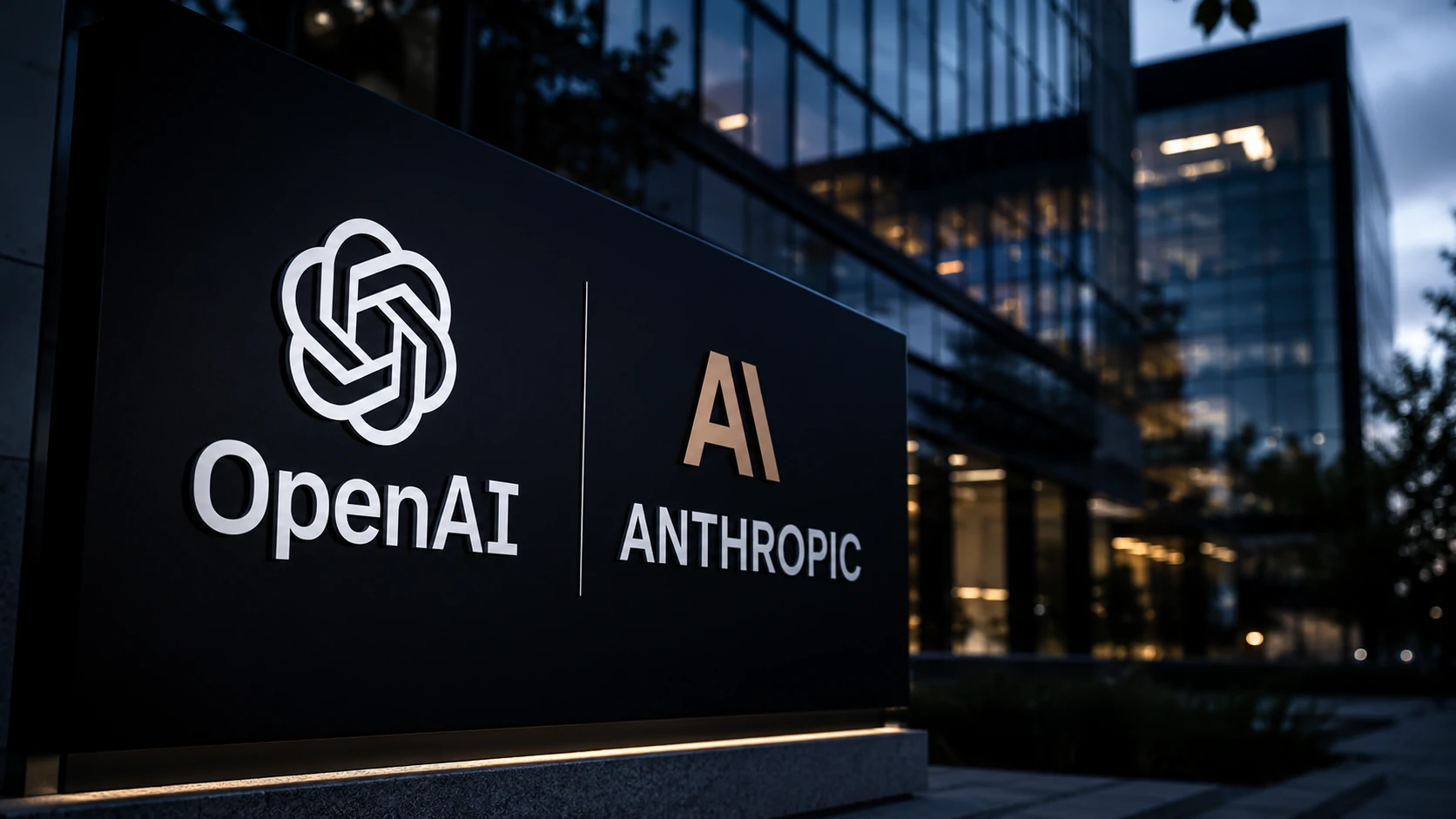
OpenAI and Anthropic are entering a new stage of expansion fueled by multi-billion-dollar investments.
This transformation is happening because developing frontier AI models requires unprecedented levels of investment in research, infrastructure and computing capacity.
The possibility of an OpenAI IPO, combined with similar expectations surrounding Anthropic and other companies in the sector, suggests that leadership in artificial intelligence will increasingly depend on continuous access to financial capital.
AI development has become significantly more expensive
Just a few years ago, relatively small research teams could achieve major breakthroughs using limited computing infrastructure.
Today, the landscape is entirely different.
Training state-of-the-art AI models requires thousands of GPUs, massive electricity consumption, hyperscale data centers and multidisciplinary engineering teams operating around the world.
Infrastructure is now part of the competitive advantage
Competitive differentiation is no longer limited to launching a better AI model.
Companies must build complete ecosystems capable of serving millions of users and enterprise customers while maintaining performance, security and global availability.
Multi-billion-dollar investment is becoming a strategic advantage
Financial strength has become one of the industry’s most valuable strategic assets.

Computing infrastructure has become one of the strongest competitive advantages in the artificial intelligence industry.
Companies such as OpenAI, Anthropic, Google, Microsoft and Meta continue competing for access to the latest GPUs produced by NVIDIA while simultaneously expanding their cloud infrastructure.
The greater the available computing capacity, the faster these organizations can develop new models, reduce training time and deliver enterprise AI solutions at scale.
Data centers have become strategic assets
Specialized AI data centers now represent a competitive advantage comparable to factories during previous industrial revolutions.
Their capacity determines how many models can be trained, how many customers can be served simultaneously and how quickly innovation can reach the market.
Operating costs continue to rise
Beyond hardware acquisition, AI companies must invest heavily in electricity, cooling systems, networking, storage and highly specialized engineering talent.
This economic reality explains why continuous access to new sources of capital has become a strategic priority for the entire industry.
To better understand how enterprise AI capabilities are evolving, read our article about AI Fluency:
Enterprise customers are looking for stronger AI providers
Organizations adopting artificial intelligence for mission-critical operations are also adapting to this new reality.

Enterprise customers increasingly value AI providers capable of sustaining long-term investment.
For large organizations, selecting an AI platform is no longer purely a technology decision.
It now involves evaluating factors such as:
- financial stability;
- continuous innovation;
- corporate governance;
- international expansion;
- enterprise-grade support.
The more financially stable an AI provider is, the lower the risk of service disruption, strategic shifts or reduced investment in future product development.
Trust becomes a competitive advantage
Organizations developing enterprise AI solutions must demonstrate that they have the financial resources to continue improving their models for many years.
As a result, governance, financial strength and long-term planning are becoming just as important as technological innovation.
Businesses prioritize long-term continuity
Enterprise AI projects often require extensive system integration, employee training and operational transformation.
For this reason, organizations increasingly prefer technology partners capable of delivering long-term stability while continuously evolving their AI platforms.
This trend is closely connected to the growing importance of AI governance within organizations. Learn more in our complete guide:
The next AI race will be won beyond the research lab
The race for leadership in artificial intelligence will continue to be driven by technological innovation, but the next generation of winners is unlikely to be determined solely by the quality of their models.
Competitive advantage is increasingly defined by the combination of research capabilities, computing infrastructure, access to capital, corporate governance and global expansion.
While new AI models continue to emerge, investors are paying close attention to another critical question: which companies will have the financial strength to fund the next decade of artificial intelligence innovation?
For enterprise decision-makers, this shift reinforces that selecting an AI platform should involve far more than benchmark performance. Long-term financial stability, strategic vision and continuous innovation are becoming equally important evaluation criteria.
The coming years are expected to establish a new phase for the AI industry, where competition moves beyond algorithms and increasingly revolves around complete ecosystems that combine technology, infrastructure, capital and enterprise execution.
Comentários
Os comentários utilizam autenticação via GitHub para manter um ambiente mais qualificado, seguro e livre de spam.
Entrar ou criar conta no GitHub