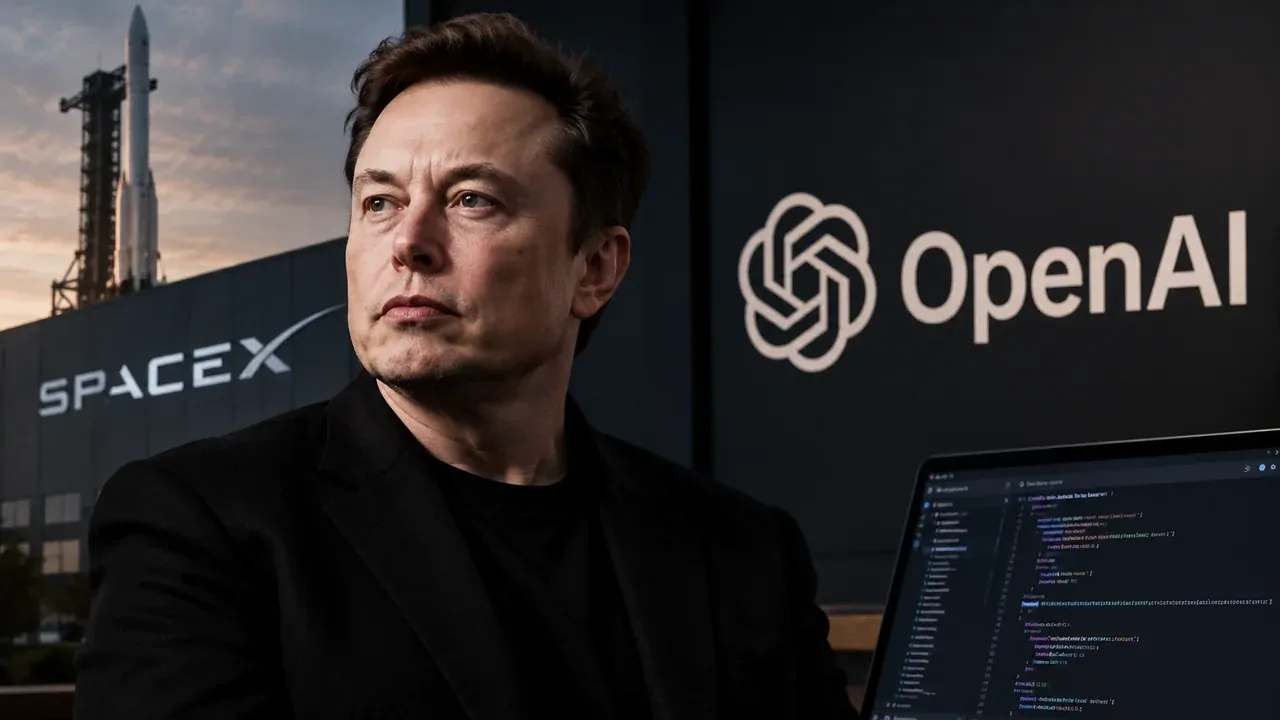
Cursor, an AI-powered coding tool, is expected to lose access to OpenAI models after its acquisition by SpaceX, Elon Musk’s company. The case goes beyond a dispute between two companies and raises a strategic question for businesses building products on top of third-party AI models.
What Happened Between OpenAI, Cursor and SpaceX
OpenAI has decided to end its model supply agreement with Cursor, an AI-powered coding platform that recently came under the control of SpaceX. The company said it plans to disable access to its models on November 12, 2026, giving Cursor time to reorganize its model offering.
Cursor is a tool used by developers to write, modify, review and work with software code using artificial intelligence. Rather than functioning as a traditional code editor, the platform uses AI models to participate in different stages of software development.
The decision gained another dimension after SpaceX, the company led by Elon Musk, completed its acquisition of Cursor. A relationship that could previously be viewed mainly as a commercial arrangement between a model provider and a software company now involves businesses with their own interests in the artificial intelligence market.
The Change Does Not Mean Cursor Will Disappear
Cursor is not an artificial intelligence model. It is a development platform that can use models from different providers to deliver AI-powered coding features.
For that reason, OpenAI’s decision does not mean that the service itself will stop operating. The immediate impact is the removal of OpenAI models from the platform after the announced deadline.
The more important question is how much a company can depend on external technology when that technology becomes a critical component of its product.
Why the Acquisition Changed the Relationship
Before the acquisition, the relationship between OpenAI and Cursor could mainly be interpreted as a commercial arrangement between a model provider and a company using that technology in its product.
With SpaceX entering the picture, the situation gained a strategic dimension. Cursor’s new owner also has interests in computing infrastructure and the development of artificial intelligence technologies.
OpenAI has linked its decision to contractual concerns and compliance with its terms of service. The case therefore should not be reduced simply to a personal dispute between Sam Altman and Elon Musk.
Why Cursor Matters to the AI Industry
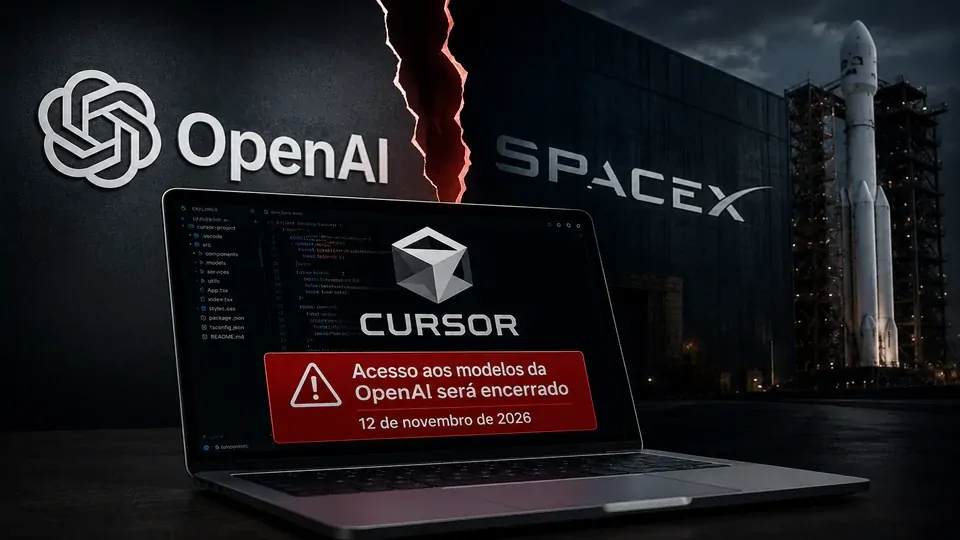
Cursor operates as an application layer that turns AI models into practical tools for software developers.
Cursor occupies a strategic position because it turns artificial intelligence models into a tool directly used by developers. Instead of interacting with AI only through a chatbot, users can incorporate it into the process of creating and maintaining software.
This means the platform depends on a combination of models, infrastructure and user experience. The value of the product is not determined solely by the model it uses, but also by how that technology is integrated into developers’ daily workflows.
The case also helps explain why application platforms can become important parts of the AI value chain. They control the user experience even when part of the underlying intelligence comes from external providers.
The Model Is Only One Part of the Product
A company can use models from OpenAI, Anthropic or Google without having to build its own foundation model. This strategy lowers the barrier to entry and allows businesses to launch sophisticated AI products more quickly.
The problem emerges when an application becomes excessively dependent on a single technology. A change in pricing, contractual terms, usage policies or availability can force a company to modify an important part of its product.
That is why the Cursor decision matters. The platform itself can continue to operate, but one of the technologies contributing to its experience will have to be replaced or reorganized.
The Dispute Also Involves Infrastructure
SpaceX’s acquisition of Cursor adds another layer to the story. The buyer has access to large-scale computing infrastructure and has shown growing interest in artificial intelligence.
This creates the possibility of a more vertically integrated structure in which infrastructure, models and applications become increasingly connected within the same ecosystem.
OpenAI is also seeking greater control over its infrastructure. Its move to develop its own AI chip shows how competition is no longer centered only on model quality, but also on the computing capacity required to run those models.
SpaceX’s Acquisition Changes the Strategic Calculation
The acquisition of Cursor by SpaceX can be interpreted as part of a broader technology trend: companies are seeking control over more layers of the artificial intelligence value chain.
During the first phase of the generative AI race, much of the competitive advantage was concentrated in foundation models. Today, infrastructure, chips, computing capacity, applications and distribution are also becoming strategic assets.
For Cursor, the acquisition represents an important change because its platform is now closer to a company with significant infrastructure capabilities and its own interests in AI development.
Control Over Distribution Is Becoming More Important
A company that controls only the model depends on other businesses to bring its technology to end users. A company that controls the application has a more direct relationship with consumers or enterprise customers.
When both layers belong to the same group, the potential for tighter integration between technology and distribution increases.
That is one reason why the Cursor acquisition matters. SpaceX now controls a platform used by developers and directly connected to the software development ecosystem built around artificial intelligence.
Vertical Integration Could Reshape Competition
Vertical integration can provide advantages in cost, performance and integration. A company with access to its own computing infrastructure may have greater freedom to experiment with models and AI services.
But there is also a market risk. The more critical layers of the AI stack become concentrated within large technology groups, the more strategic the competition for access to essential technologies becomes.
The OpenAI and Cursor case illustrates this tension. A model provider may decide that certain commercial relationships are no longer strategic after a customer comes under the control of a competitor.
The Risk for Companies That Depend on AI APIs
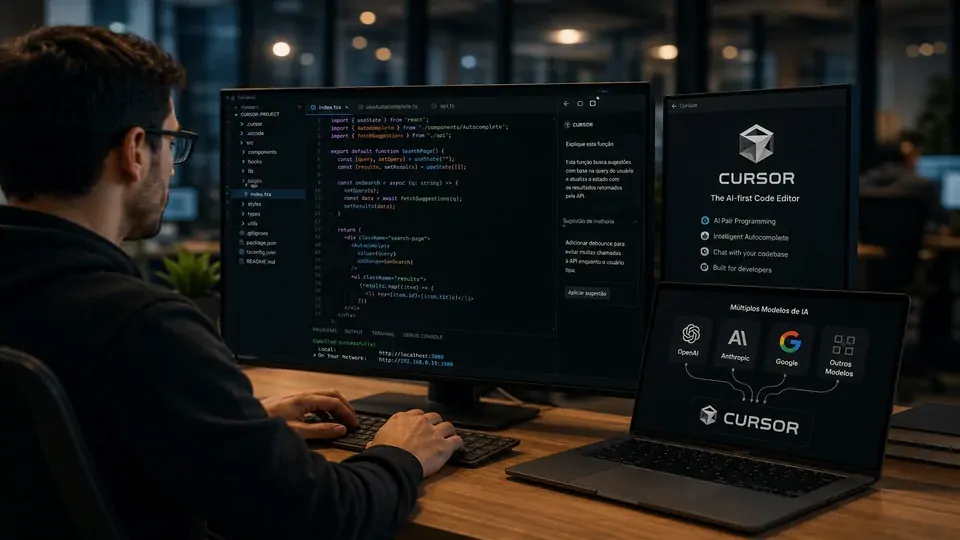
Companies that depend on AI APIs need to consider the risk of becoming overly tied to a single model provider.
For companies incorporating artificial intelligence into their own products, the episode offers a more important lesson than the dispute between OpenAI and SpaceX.
An AI API can look like a technical tool during product development. Over time, however, it can become a critical dependency for the operation of the business.
The issue becomes particularly important when artificial intelligence stops being a complementary feature and starts performing essential functions inside business processes.
The AI Provider Is Also an Operational Risk
When choosing a model, companies typically evaluate price, speed, response quality and technical capabilities. These factors remain important, but they are not enough to determine the resilience of an AI architecture.
Businesses also need to consider availability, contractual conditions, usage policies, pricing changes and the possibility of replacing a provider.
The Cursor case demonstrates why companies that depend on external models should be able to answer a simple question: What happens to my product if I lose access to my primary AI provider?
Diversification Can Reduce Dependency
One possible strategy is to use multiple model providers when the product architecture allows it. That does not necessarily mean using several models for every feature.
A company can maintain a primary provider while designing its architecture so that alternative models can be introduced when necessary.
This concern becomes even more important as AI agents begin performing tasks directly inside businesses. The growing security risks surrounding AI systems, highlighted by warnings from OpenAI, Anthropic and Microsoft about the rise of AI attacks, reinforce the idea that technology dependency and security should be evaluated as part of the same strategy.
What Changes for Cursor and Its Users
The most immediate consequence of OpenAI’s decision will be the removal of its models from Cursor after the announced deadline.
Until then, the platform has time to adjust its architecture and increase its use of other technologies. For users, the main issue will be understanding which models remain available and whether performance, pricing or the overall experience changes.
The situation could also affect how developers perceive coding platforms that provide access to multiple AI models. The ability to switch providers may become a competitive advantage as software development becomes increasingly dependent on artificial intelligence.
Cursor Could Gain More Independence
There is a potential positive consequence for the platform. By reducing its dependence on OpenAI models, Cursor could expand its ability to work with different providers.
That could give the company more freedom to select specific models for different tasks. A platform could use one technology for code generation and another for analysis, review or reasoning.
Such an architecture could also increase Cursor’s negotiating power when dealing with model providers.
But Replacing a Model Is Not Simple
Replacing an AI model is not necessarily like replacing a conventional software component.
Different models have different behaviors, capabilities, context limits, response speeds and output patterns. A change can require testing, prompt adjustments, quality evaluation and changes to the user experience.
For that reason, the real impact of OpenAI’s decision will depend on how Cursor manages the transition and which alternatives become available to its users.
The Dispute Reveals a New Layer of AI Competition
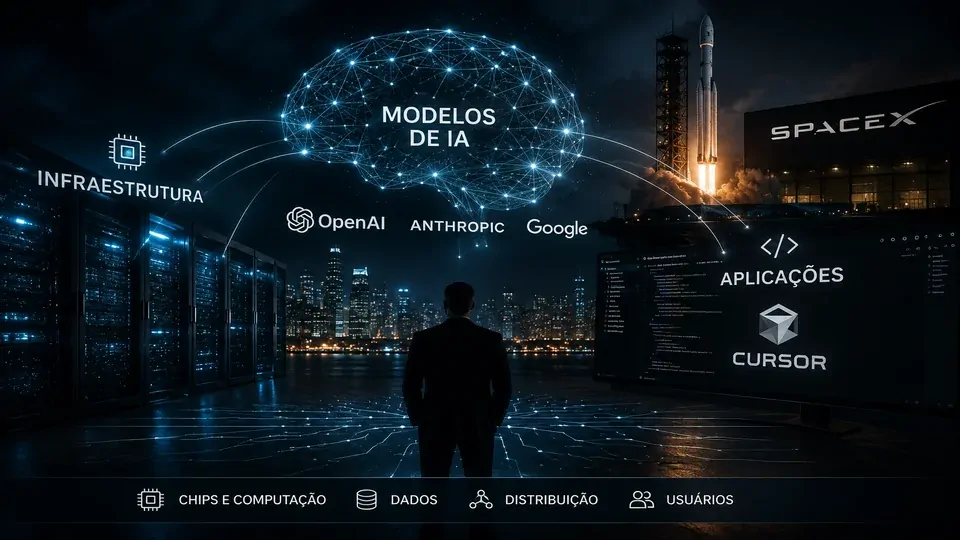
The conflict between OpenAI and Cursor shows how models, infrastructure and applications are becoming increasingly interconnected in the AI competition.
The case involving OpenAI, Cursor and SpaceX shows that the next phase of artificial intelligence competition may be less about who has the best model and more about who controls the complete chain that brings AI to users.
Models remain fundamental, but infrastructure, chips, applications, distribution and customer relationships have also become strategic assets.
For companies using AI in their products, the main lesson is to avoid turning a technology dependency into a single point of failure.
What Companies Should Watch
The case suggests at least four areas that businesses should consider when building products based on AI:
- Diversification: evaluate more than one provider when technically feasible.
- Portability: avoid architectures that are excessively dependent on a single model.
- Contracts: review usage conditions, changes and termination provisions.
- Continuity: define in advance what happens if a provider stops making a specific model available.
None of these measures completely eliminates dependence on external providers. They can, however, reduce the impact of an unexpected change.
The Dispute Could Foreshadow a Broader Shift
It is still too early to say that the OpenAI and Cursor case represents a new rule for the entire industry. The announced termination is tied to specific circumstances involving contracts and a change in corporate ownership.
But the episode highlights a trend worth watching: as artificial intelligence becomes business infrastructure, the company providing the model gains influence over a critical part of its customers’ products.
For the market, the question raised by the dispute is larger than the future of Cursor. It is whether companies building products on third-party models will be prepared to change providers when a commercial, technological or corporate relationship changes direction.
Comentários
Os comentários utilizam autenticação via GitHub para manter um ambiente mais qualificado, seguro e livre de spam.
Entrar ou criar conta no GitHub