
The artificial intelligence market has entered a new chapter. The discussion is no longer limited to which model delivers the best answers. Instead, the competition is increasingly focused on who will control the technological foundation powering the next generation of enterprise AI applications.
The battle between open and closed AI has a new turning point
The world’s leading AI companies are changing the focus of the competition. Instead of debating raw benchmark performance alone, the conversation now revolves around how open artificial intelligence should be and what that decision means for governments, enterprises and software developers.
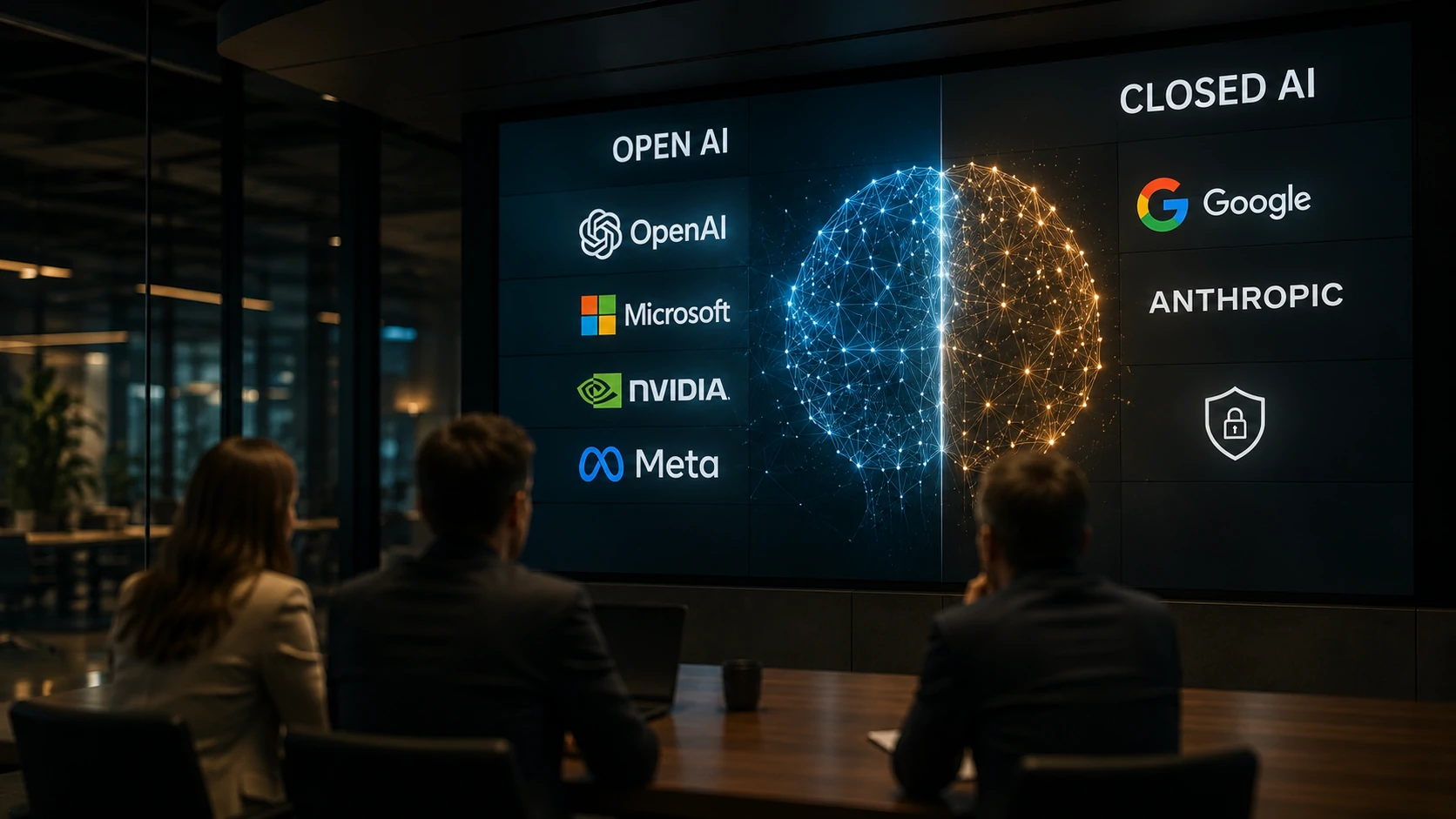
Open-weight models are expanding competition while giving organizations more deployment options.
In this evolving landscape, OpenAI, Microsoft, Nvidia and Meta have publicly supported regulatory frameworks that encourage the development of open-weight AI models, which many organizations see as more flexible for research, innovation and enterprise adoption.
What changed in OpenAI’s strategy?
The shift is particularly noteworthy because OpenAI has long been associated with highly capable proprietary AI models.
Today, however, the company’s messaging increasingly highlights the importance of avoiding regulations that could unintentionally slow innovation around open-weight models and reduce industry competitiveness.
The move also reflects the rapid growth of the open AI ecosystem, fueled by companies such as Meta, Mistral AI and a growing number of independent research initiatives.
Why does this matter?
The discussion has expanded far beyond technology itself.
It now includes global competitiveness, digital sovereignty, AI infrastructure and the ability of businesses to innovate over the coming decade.
This trend aligns with broader developments already reshaping enterprise AI, including intelligent agents, AI orchestration and next-generation generative AI platforms.
To better understand how these technologies fit together inside modern organizations, read Notícia Tech’s complete guide to enterprise AI architecture:
Open-weight models could accelerate enterprise AI adoption
Open-weight AI models offer organizations greater deployment flexibility, enabling them to customize models, maintain infrastructure control and integrate artificial intelligence directly into internal systems.
This capability is especially attractive for industries that manage highly sensitive information, including finance, healthcare, manufacturing and government.

Organizations are increasingly seeking greater autonomy over their AI infrastructure.
Greater control for enterprises
By adopting open-weight models, businesses can reduce dependence on external providers while tailoring AI systems to their own knowledge bases, compliance requirements and security policies.
This evolution complements the growing adoption of RAG, MCP and multi-agent AI architectures, which are becoming foundational components of modern enterprise AI ecosystems.
Another example of this transformation can be seen in the rise of ChatGPT Work, illustrating how artificial intelligence is gradually replacing traditional enterprise software across multiple business functions:
ChatGPT Work is changing enterprise software as businesses move beyond traditional applications
Competition is likely to intensify
As more organizations release powerful AI models, competition among vendors is expected to increase significantly.
Greater competition typically drives innovation, lowers adoption costs and expands access to advanced artificial intelligence for small and medium-sized businesses.
At the same time, organizations will face growing pressure to strengthen AI governance, cybersecurity and model selection processes before deploying AI in mission-critical environments.
Google and Anthropic Are Taking a Different Path
While part of the AI industry is advocating for more open models, Google and Anthropic continue to follow a more cautious strategy. Both companies prioritize proprietary AI models and stricter safeguards to reduce security risks, prevent misuse and protect intellectual property.
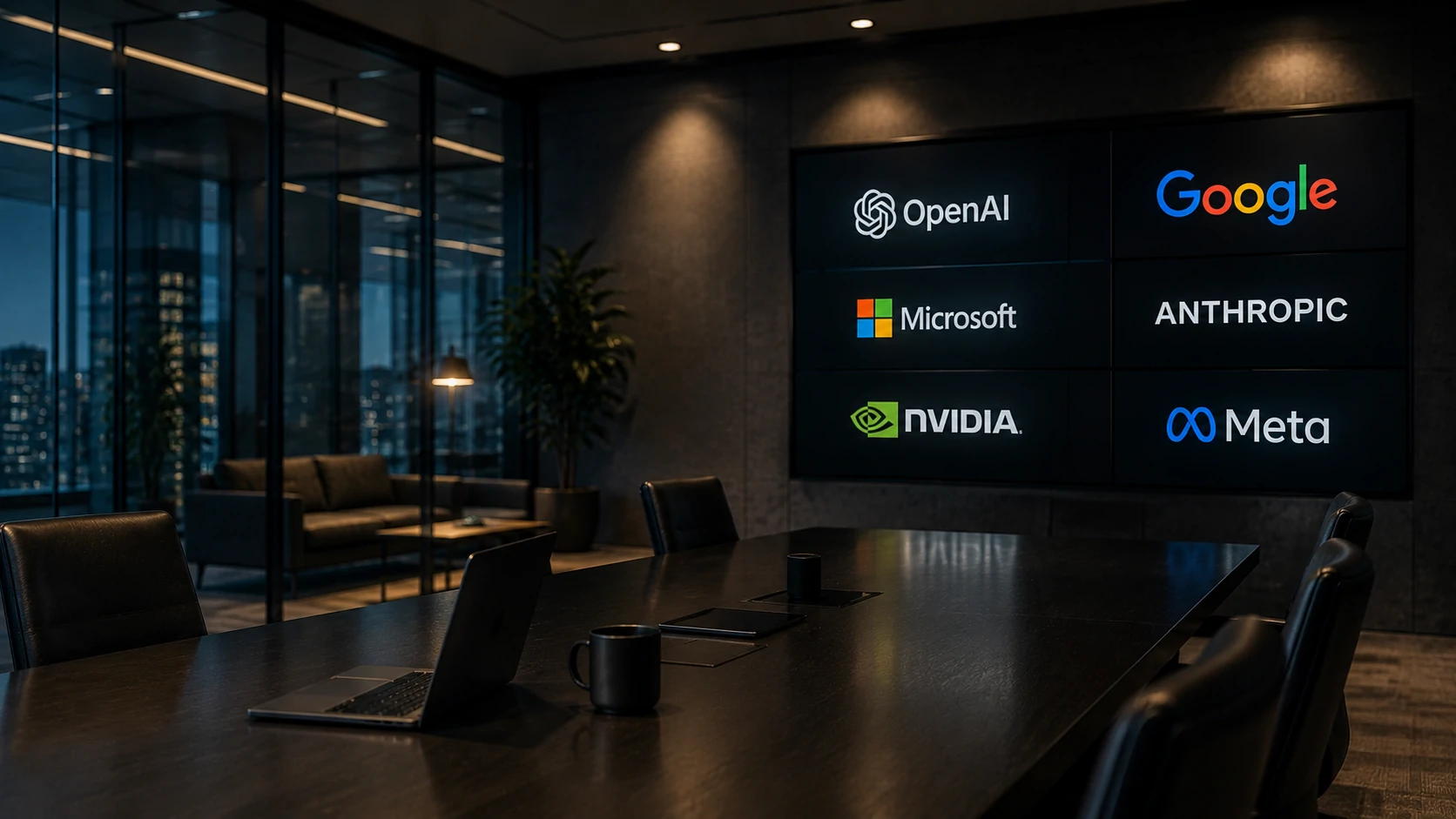
The industry’s diverging strategies demonstrate that the race for AI leadership extends far beyond model performance.
Security versus innovation
Supporters of open-weight AI argue that broader access accelerates research, lowers barriers for startups and encourages healthy competition across the technology ecosystem.
Companies favoring closed models, however, believe that tighter control helps reduce malicious use, improves safety mechanisms and protects the enormous investments required to develop frontier AI systems.
In reality, these approaches are likely to coexist.
Different industries, governments and enterprises will continue choosing the level of openness that best matches their regulatory requirements, security standards and business objectives.
What this means for businesses
For organizations adopting artificial intelligence, the most significant consequence is an expanding range of deployment options.
Companies seeking greater infrastructure control, enhanced privacy and deeper customization may increasingly favor open-weight models running within their own environments.
Businesses prioritizing rapid implementation, managed services and commercial support will likely continue relying on proprietary AI platforms offered by major technology providers.
As competition intensifies, enterprises of every size should benefit from faster innovation, broader software ecosystems and more competitive pricing across the artificial intelligence market.
A new chapter in the AI race
The debate between open and closed artificial intelligence has evolved into much more than a technical discussion.
It is now influencing investment strategies, international regulation, enterprise technology roadmaps and the long-term competitive balance of the global AI industry.
Rather than asking whether ChatGPT, Gemini, Claude or another model performs slightly better on benchmarks, business leaders increasingly need to evaluate governance, deployment flexibility, infrastructure ownership, cybersecurity and long-term operational costs.
Over the next several years, competitive advantage will likely depend less on selecting a single AI model and more on building an enterprise architecture capable of integrating multiple AI technologies efficiently, securely and at scale.
That is precisely why the evolving positions of OpenAI, Microsoft, Nvidia, Meta, Google and Anthropic represent one of the most significant developments in artificial intelligence today.
The competition is no longer centered solely on producing the smartest chatbot. It is becoming a race to build the infrastructure that will power the next generation of enterprise software, intelligent automation and the global digital economy.
Comentários
Os comentários utilizam autenticação via GitHub para manter um ambiente mais qualificado, seguro e livre de spam.
Entrar ou criar conta no GitHub