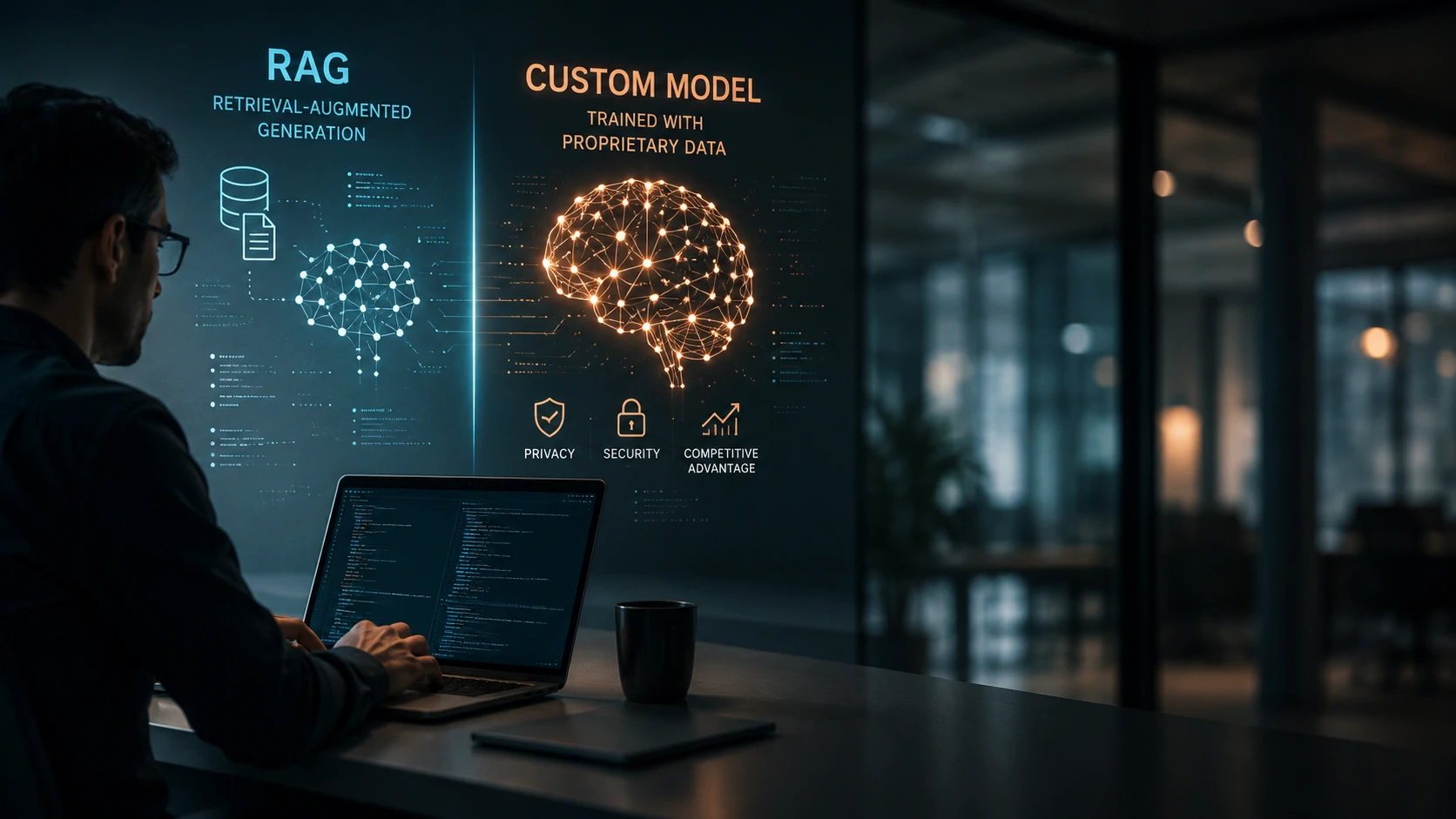
During the first years of generative artificial intelligence, Retrieval-Augmented Generation (RAG) quickly became the standard approach for connecting large language models to enterprise knowledge. Today, however, the market is entering a new phase. Mature organizations are beginning to evaluate hybrid AI architectures that combine information retrieval, fine-tuning and specialized models to improve accuracy, reduce operational costs and better protect strategic business knowledge.
Retrieval-Augmented Generation (RAG) transformed enterprise AI adoption by allowing language models to access internal knowledge without requiring complete retraining. For most organizations, this approach remains extremely efficient.
As enterprise AI matures, however, companies are discovering that retrieving documents alone is not always enough. Organizations with massive proprietary datasets, complex workflows and highly specialized terminology are increasingly investing in customized models capable of delivering deeper contextual understanding.
Rather than replacing RAG, this trend represents the next evolution of enterprise AI architecture, where multiple technologies work together to solve increasingly sophisticated business problems.
Why RAG Remains the Best Choice for Most Businesses
For the vast majority of organizations, RAG continues to be the fastest and most cost-effective way to connect AI systems with corporate knowledge.
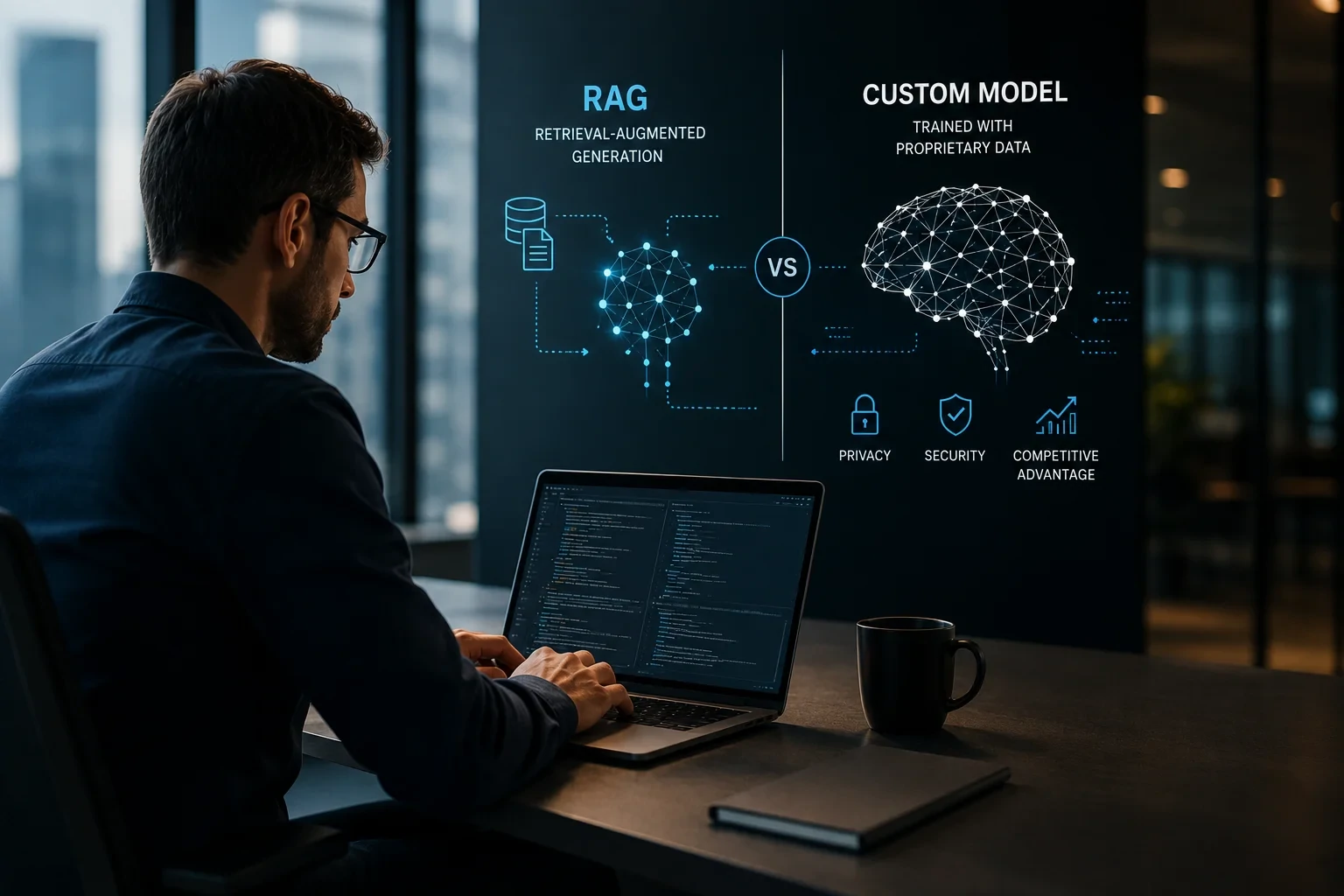
RAG-based architectures remain one of the fastest and most economical ways to make enterprise knowledge available to AI applications.
Instead of storing every piece of knowledge inside the model itself, RAG retrieves relevant information from enterprise databases and documentation during inference, significantly reducing hallucinations while keeping responses current.
How RAG Works in Practice
Rather than embedding all enterprise knowledge into the model through retraining, RAG searches vector databases, internal documentation, company policies and knowledge repositories before generating an answer.
This architecture provides several important advantages:
- Near real-time knowledge updates.
- Lower implementation costs.
- Reduced computational requirements.
- Easier integration with new enterprise data sources.
- Minimal need for expensive retraining.
Because of these benefits, RAG remains the preferred architecture for enterprise chatbots, internal assistants, intelligent search systems and customer support platforms.
To better understand how this architecture works, read our complete guide:
Where RAG Begins to Reach Its Limits
Despite its strengths, some organizations have discovered that document retrieval alone cannot solve every enterprise AI challenge.
Industries such as healthcare, financial services, manufacturing, energy and scientific research often require models capable of understanding highly specialized internal knowledge that cannot always be extracted from documents during inference.
In these situations, organizations benefit from AI systems that learn recurring patterns, proprietary terminology and complex business relationships directly from enterprise data.
This is where customized models begin to demonstrate significant value.
When Custom-Trained Models Make More Sense
Custom-trained AI models become increasingly valuable when an organization’s competitive advantage depends on knowledge that extends far beyond its document repositories.

Leading organizations are beginning to combine RAG, fine-tuning and specialized AI models to build more accurate enterprise applications.
Major AI infrastructure providers are increasingly promoting hybrid architectures designed specifically for digitally mature organizations.
Organizations with Highly Specialized Knowledge
Many enterprises accumulate decades of operational expertise that cannot easily be reproduced through document retrieval alone.
Examples include:
- Operational history.
- Internal procedures.
- Regulatory decision-making.
- Industry-specific workflows.
- Proprietary technical documentation.
- Business-specific terminology.
When this institutional knowledge becomes part of model training or fine-tuning, AI systems gain a much deeper understanding of the organization’s domain, resulting in more accurate and context-aware responses.
Privacy and Competitive Advantage
Data privacy is another major driver behind this trend.
Organizations handling sensitive information increasingly prefer AI architectures that keep processing inside secure enterprise environments, reducing exposure of strategic knowledge.
At the same time, specialized models can lower operational costs in high-volume production environments while outperforming general-purpose models in repetitive, domain-specific tasks.
This evolution also aligns with the growing adoption of the Model Context Protocol (MCP), which simplifies the integration of AI agents, enterprise software and structured data sources.
To learn more about this technology, read:
How to Combine RAG, Fine-Tuning and Custom Models in a Single AI Architecture
For most organizations, the smartest strategy is not to replace Retrieval-Augmented Generation (RAG), but to integrate it with complementary AI technologies.
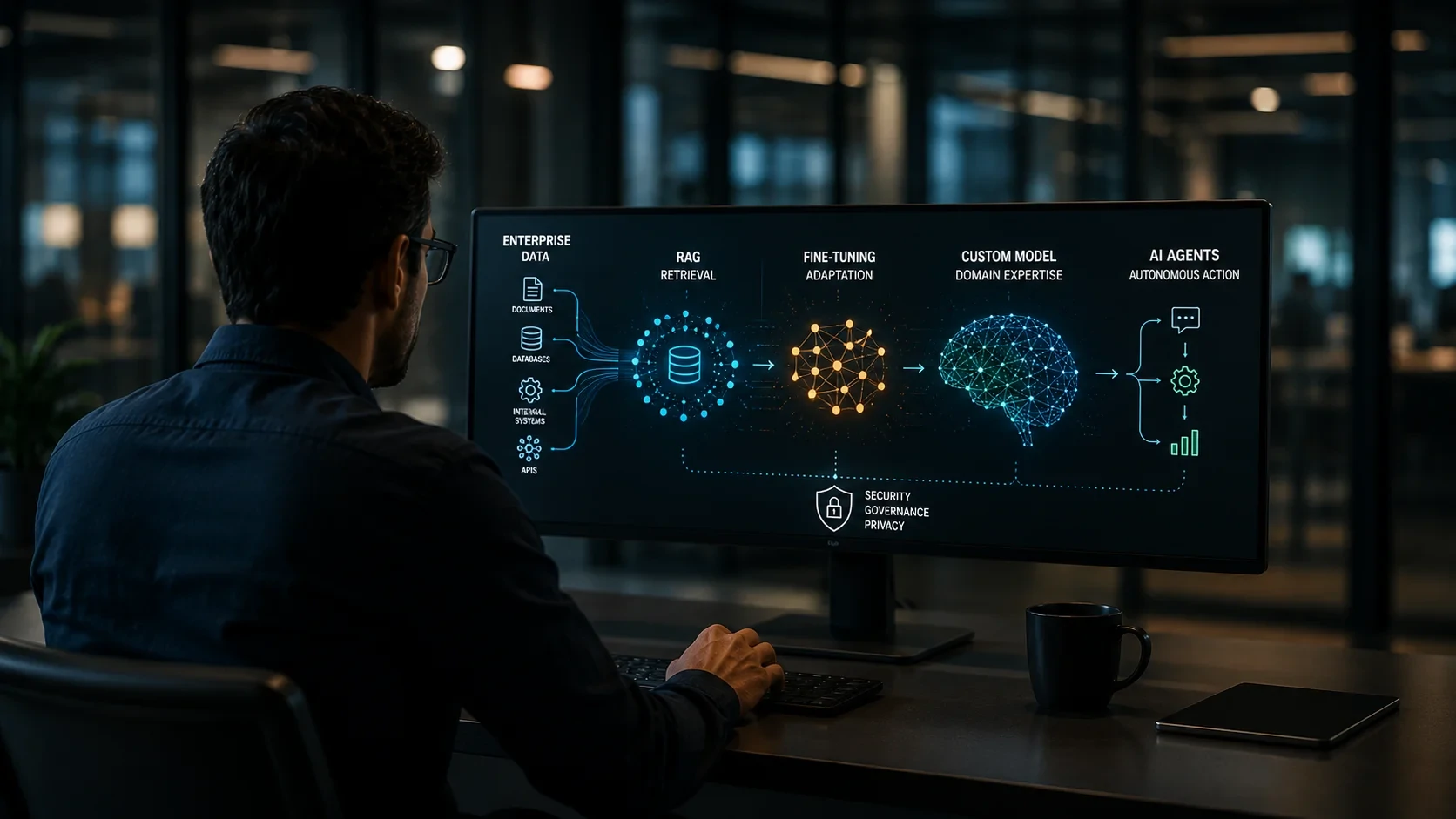
Hybrid AI architectures combine RAG, specialized models and AI agents to deliver greater accuracy, security and scalability for enterprise applications.
In recent months, leading AI vendors have increasingly promoted modular enterprise architectures, where each technology solves a specific business challenge instead of attempting to solve every problem with a single model.
The Role of Each Technology
A modern enterprise AI stack typically distributes responsibilities across several components:
- RAG for retrieving up-to-date enterprise knowledge.
- Fine-tuning to adapt model behavior to company-specific tasks.
- Custom-trained models for highly specialized expertise.
- AI agents to execute workflows and automate business processes.
- Model Context Protocol (MCP) to connect enterprise systems, applications and structured data.
Rather than competing with one another, these technologies complement each other, allowing organizations to build more resilient and scalable AI platforms.
This evolution also reflects the rapid rise of AI Agents, which increasingly rely on multiple contextual sources to complete complex workflows autonomously.
To better understand this transformation, read our complete guide:
https://noticiatech.com.br/en/artificial-intelligence/what-is-agentic-ai-complete-guide-ai-agents/
What Does This Mean for Small and Medium-Sized Businesses?
Not every organization needs to invest in training its own foundation model.
For many companies, outstanding results can already be achieved by combining:
- Foundation models.
- Retrieval-Augmented Generation.
- Intelligent automation.
- AI agents.
- API-based integrations.
Large enterprises, however—particularly those operating in highly regulated industries or managing extensive proprietary knowledge—are increasingly finding that specialized models provide measurable competitive advantages.
Ultimately, the decision is becoming less about technology itself and more about long-term business strategy.
The Future of Enterprise AI Will Be Defined by Data Quality
The biggest shift in enterprise AI is not the decline of RAG, but the growing recognition that proprietary business data has become one of the most valuable strategic assets an organization can own.
For years, competitive advantage centered on gaining access to the most powerful language models.
Today, companies are realizing that long-term differentiation depends on the quality of their own data, accumulated institutional knowledge and their ability to transform that information into operational intelligence.
Organizations capable of organizing their data, implementing effective governance and combining multiple AI architectures will be significantly better positioned to develop intelligent systems that are more accurate, secure and scalable.
Over the next several years, the conversation is likely to move beyond the question of “RAG or custom models?” toward a more strategic discussion:
Which combination of AI technologies delivers the greatest business value for each specific use case?
That shift marks the next stage of enterprise AI maturity, where infrastructure, governance, proprietary knowledge and data quality become just as important as the language models themselves.
Will RAG disappear?
No. Retrieval-Augmented Generation remains one of the most effective architectures for connecting large language models with up-to-date enterprise knowledge. The trend is not replacement but integration with complementary AI technologies.
What is the difference between RAG and fine-tuning?
RAG retrieves relevant information during inference, while fine-tuning modifies a model’s behavior by training it on additional domain-specific datasets. Each approach solves a different problem and they are often used together.
Does every company need a custom-trained AI model?
No. For many organizations, combining commercial foundation models with RAG and intelligent automation already provides an excellent return on investment. Custom models become worthwhile primarily when businesses possess large volumes of proprietary knowledge, strict compliance requirements or highly specialized workflows.
What is a hybrid AI architecture?
A hybrid AI architecture combines technologies such as RAG, fine-tuning, custom models, AI agents and Model Context Protocol (MCP) to address different enterprise requirements within a unified AI ecosystem.
What is the future of enterprise AI?
Enterprise AI is moving toward flexible architectures that combine information retrieval, specialized training, autonomous AI agents and enterprise integrations. Rather than selecting a single “best” model, organizations will increasingly focus on building intelligent ecosystems that maximize the value of their proprietary data.
Comentários
Os comentários utilizam autenticação via GitHub para manter um ambiente mais qualificado, seguro e livre de spam.
Entrar ou criar conta no GitHub