
The OpenAI CEO acknowledged that he still uses his computer in a way he considers outdated, even though he has access to tools capable of automating part of those tasks. The episode shows that the biggest obstacle to automation may have less to do with technology’s capabilities and more to do with the difficulty of changing established work habits.
Sam Altman admits he still works the way he did 20 years ago
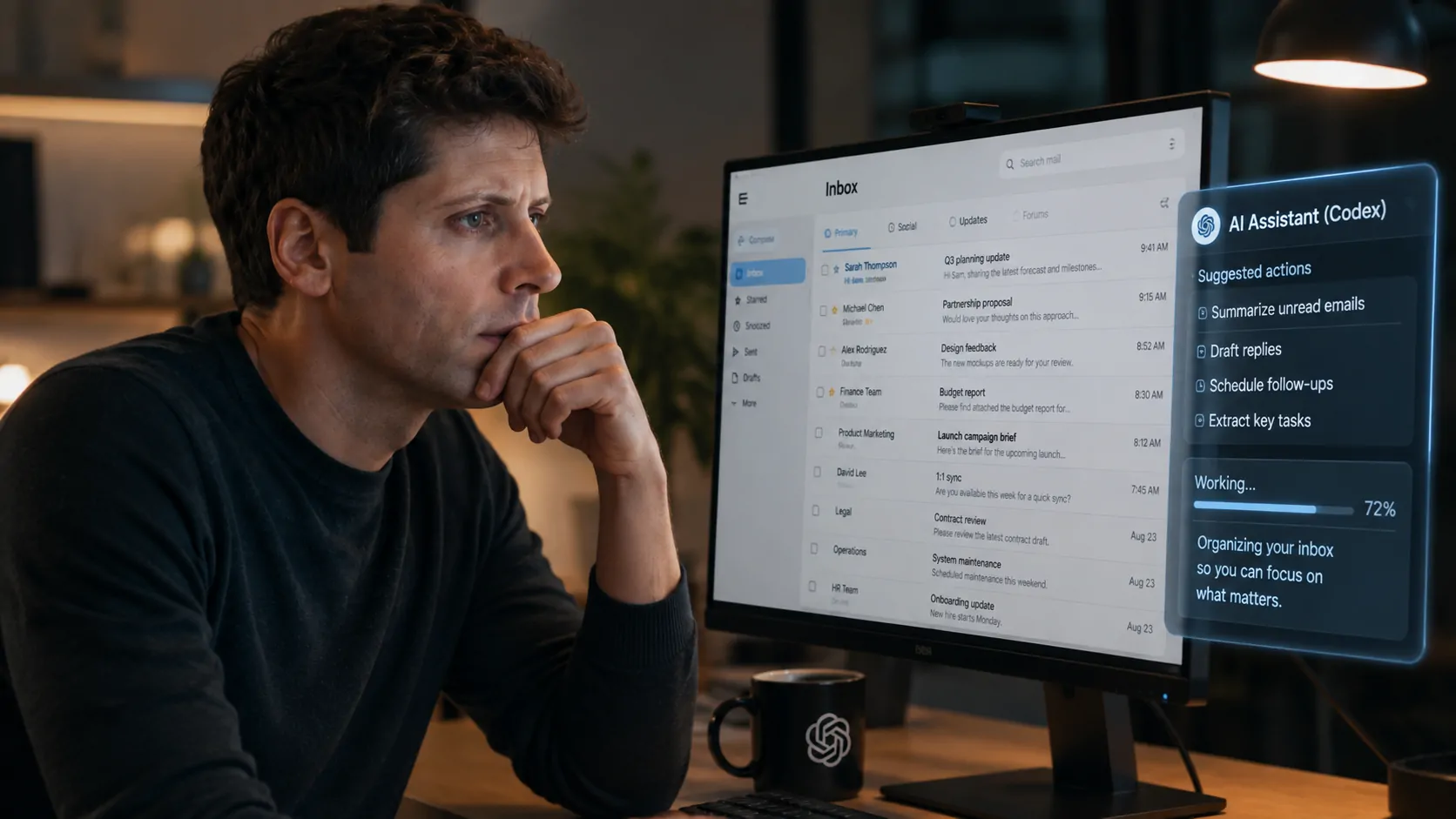
Sam Altman admitted that he still checks email manually and performs other repetitive computer tasks despite having access to Codex, an OpenAI tool capable of carrying out tasks directly on a computer. The statement came during a conversation with David Senra published on August 23.
Altman described the behavior as one of his biggest psychological inconsistencies. According to him, he still clicks between applications, copies information, works through his inbox and maintains a to-do list in much the same way he did before today’s tools became available.
The most interesting part is not that the OpenAI CEO still answers emails manually. It is that he recognizes there is a more efficient way to perform these tasks and still falls back on the old process.
The statement carries particular weight because Altman leads the company trying to change the way people work with computers. The contrast between what the technology can already do and the behavior that remains reveals a broader problem for AI adoption.
The habit turns manual work into a feeling of productivity
The contrast between a traditional email workflow and automation illustrates how difficult it can be to abandon processes that have been associated with productivity for years.
The main obstacle identified by Altman is behavioral: manual tasks can continue to feel like productive work even after they are no longer the most efficient way to achieve a result.
He explained that something embedded in his own perception of work associates activities such as going through email, organizing tasks and moving information between applications with the feeling of being productive. The contradiction is that he says he does not particularly enjoy the process when asked about it directly.
This helps explain why introducing an AI tool does not necessarily produce an immediate change in behavior. A user can recognize that a task could be automated and still perform it manually because the old process has already become part of the routine.
For businesses, that distinction matters. Buying an AI tool is a technology decision. Getting employees to abandon established processes and reorganize the way they work is a much more complex operational decision.
Having AI that can perform tasks does not mean people will use it
The case of Sam Altman also highlights an important difference between technological capability and real-world adoption. Codex can perform tasks on a computer, but that does not mean its user will automatically rebuild their entire routine around it.
Altman said he could use the tool to handle a pile of emails, pending tasks and other routine activities. Even while recognizing that possibility, he continues to perform some of those activities through the traditional process.
This situation can be described as an intermediate stage of adoption. The worker has not abandoned the conventional computer workflow, but already has tools capable of performing some parts of the job differently.
That coexistence between two models is precisely what makes the transition more difficult. The old process remains available, familiar and predictable. The new process requires users to determine when to delegate a task to AI, how to supervise the result and how to reorganize the rest of the workflow.
Altman’s own assessment is that this transformation needs to happen gradually. He also said better products could make the transition more natural by reducing the effort required to change deeply established habits.
The automation problem may be inside the workflow
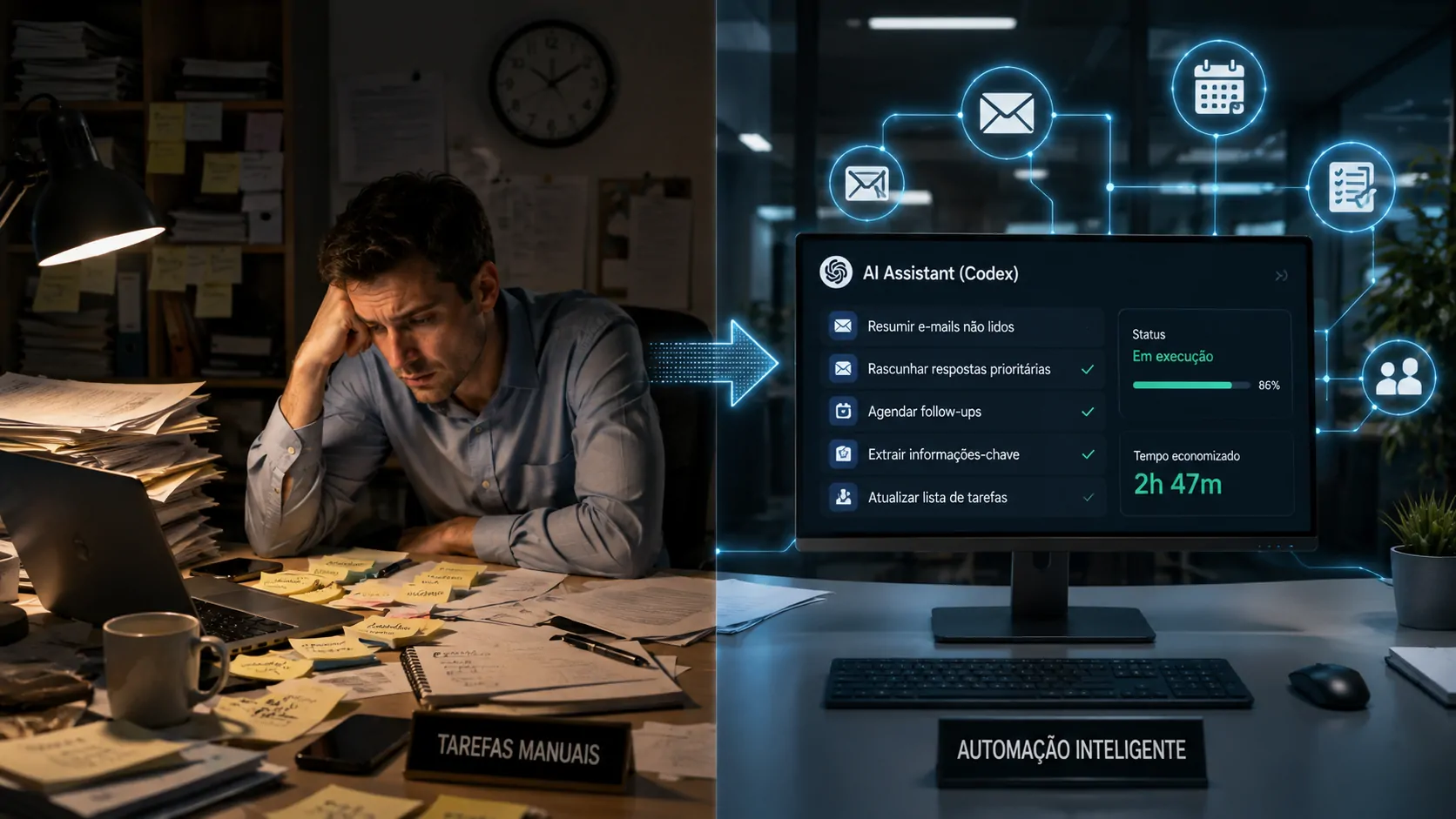
Companies can have access to advanced AI tools and still maintain old processes when the technology is not integrated into the actual workflow.
Altman’s experience suggests that the next stage of automation depends on integrating AI into workflows, not simply making tools available.
That changes the question businesses should be asking. Instead of simply asking which AI tool to buy, companies need to identify which parts of their work still depend on manual actions and how those steps could be redesigned.
The difference is significant. A company can provide employees with an AI assistant while still requiring them to copy information between systems, track tasks manually and switch between multiple applications. In that scenario, the technology exists, but the process remains essentially unchanged.
Notícia Tech has already been following this shift in its coverage of AI integration into corporate environments. One previous article examined how ChatGPT can work with files and business information, reducing the distance between AI and the data teams use every day. ChatGPT Can Now Act on Google Drive and Change AI’s Role in Business
The more important evolution may therefore happen when AI stops being an additional window on a computer and becomes part of the operational process itself.
Businesses may face the same dilemma as Sam Altman
Altman’s experience does not prove that businesses will resist automation, but it highlights a concrete obstacle managers need to consider: behavioral change can move more slowly than technological progress.
In corporate environments, the problem can appear in many forms. Employees may continue producing reports manually because they are accustomed to the process even when AI can prepare a first draft. Teams may continue transferring information between systems because the procedure has become part of their routine. Managers may continue measuring productivity by the amount of activity completed even when some of those tasks could be delegated to AI agents.
The issue becomes even more important as AI moves from a tool that simply answers questions toward systems capable of taking action. Notícia Tech has already covered AI agents and corporate accountability, showing how the discussion is moving from simple content generation toward autonomous task execution. AI Agents Are Creating a New Problem for Businesses: Who Is Responsible for Their Actions?
The challenge, then, is no longer simply teaching people how to use a tool. Companies need to redesign processes to determine which activities should remain with humans, which can be delegated to AI and which require human oversight.
That shift also changes the definition of productivity. Making more clicks, answering more messages or filling out more fields does not necessarily mean creating more value.
AI’s next barrier may be changing the way people work
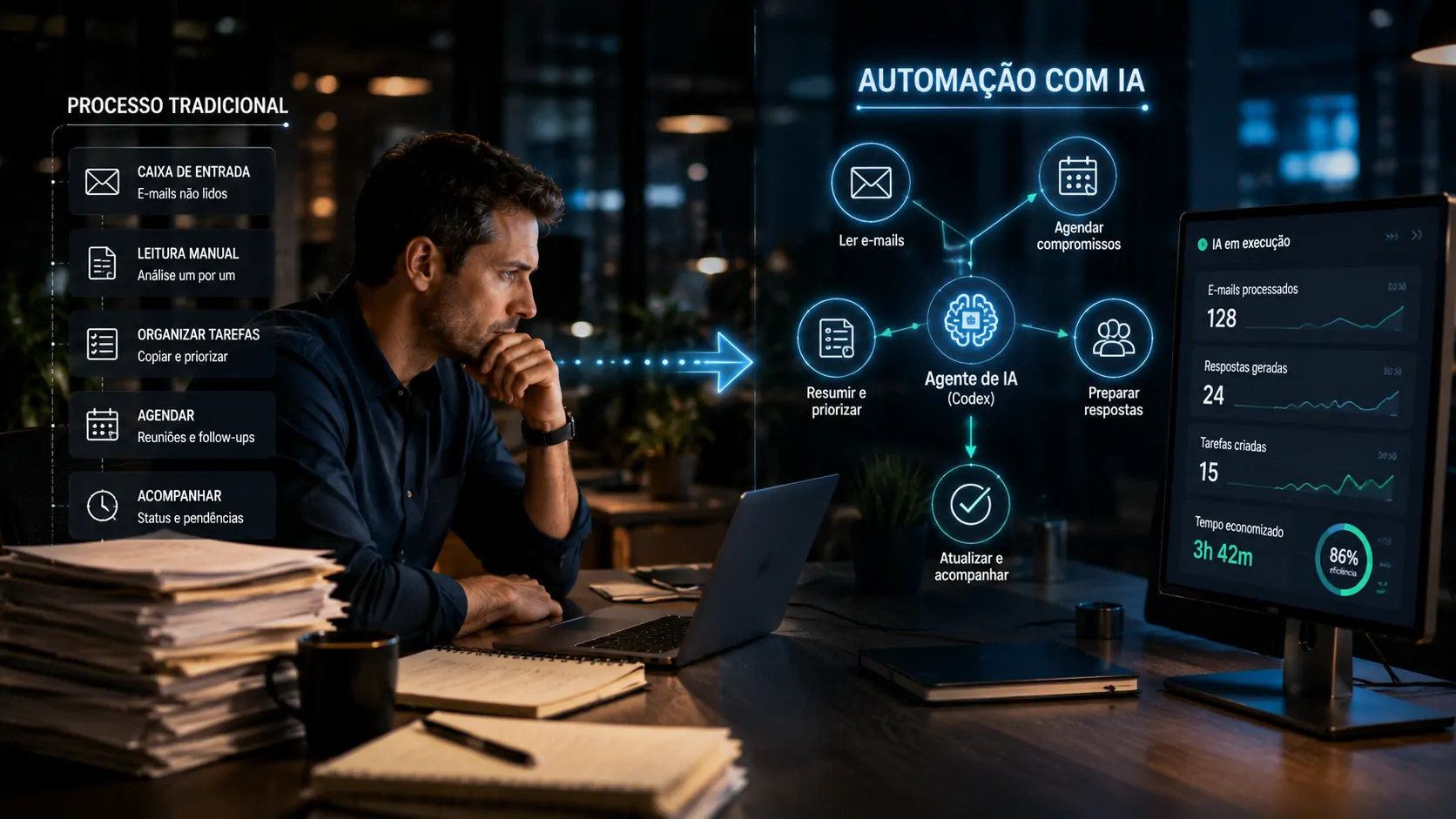
The next stage of automation depends on the combination of AI capabilities, better products and gradual changes in work habits.
Sam Altman’s statement points to a less visible barrier to AI adoption: the difficulty of abandoning a routine that has represented productivity for years.
Technology already allows computers to perform tasks that once required a sequence of human actions. What remains unresolved is how to turn that capability into an everyday behavior that feels natural to the people doing the work.
Altman compared the current AI moment with smartphones before the iPhone. The underlying technology already existed, but the industry still lacked an experience integrated enough to make people change their behavior. In his view, AI may be going through a similar phase.
This helps explain why enterprise adoption can move at a different pace from model development. A company can have access to extremely capable systems and still operate with legacy processes for some time.
The case of Sam Altman is revealing precisely because of this. If even the executive leading one of the companies responsible for this transformation acknowledges that his own habits still pull him toward the old model, the automation challenge is no longer purely technological.
The competition is also about creating a new way of working. Companies that make this transition simple, integrated and reliable may be better positioned to close the gap between what AI can do and what businesses are actually able to incorporate into their operations.
Comentários
Os comentários utilizam autenticação via GitHub para manter um ambiente mais qualificado, seguro e livre de spam.
Entrar ou criar conta no GitHub