
An AI startup founded just seven months ago has already reached a $2.4 billion valuation and announced a $10 billion deal to provide cloud computing capacity. The move highlights a major shift in the economics of artificial intelligence: the next major battle may be fought less on chatbot screens and more inside the data centers that make these systems possible.
A 7-Month-Old Startup Has Entered a Billion-Dollar Battle
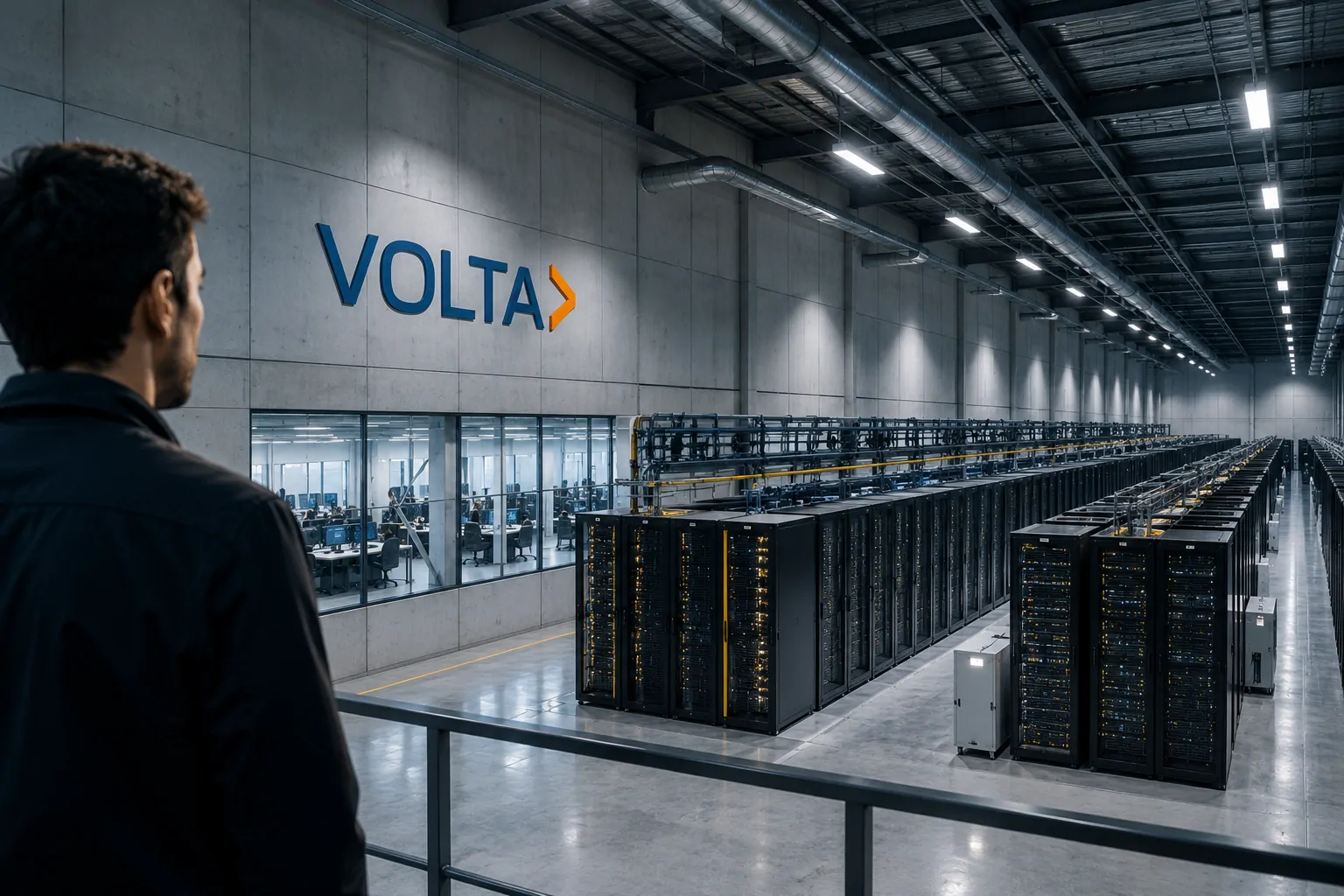
A new generation of companies is trying to secure a strategic position in the infrastructure powering the expansion of artificial intelligence.
Volta Infra has reached a $2.4 billion valuation just seven months after its creation. The startup also announced a roughly $10 billion deal to provide cloud computing services to an AI company in Europe, in partnership with Bitdeer Technologies.
The size of those numbers is striking, but the strategic significance lies elsewhere. Volta Infra is not trying to compete with OpenAI, Anthropic, Google or Meta to build the best AI model.
The startup is competing one layer earlier in the stack: the infrastructure required to train and run those models.
What Volta Infra Is Building
Volta Infra operates in the AI infrastructure market, an industry that brings together data centers, energy, hardware, networks and computing capacity.
In practice, an AI lab needs thousands of specialized processors to develop advanced models. Once a model is launched, it continues to consume computing resources whenever users submit prompts, companies automate processes or AI agents perform tasks.
That second stage is known as inference. It is the point at which a trained model receives a request and calculates a response. As the number of users and tasks increases, so does the need for computing capacity.
Why a $10 Billion Deal Does Not Mean $10 Billion in Immediate Revenue
The announced amount represents a long-term contract, not money that the startup has already received.
That distinction matters because building AI infrastructure requires enormous upfront investment before the capacity becomes fully operational. The company still has to secure power, equipment, facilities, networking and the systems required to operate them.
Even so, deals of this scale show that AI companies are willing to commit huge amounts of capital to secure future computing capacity.
The move helps explain how a company this young can achieve such a high valuation in a market where demand for computing continues to grow rapidly.
Why Computing Has Become AI’s New Bottleneck
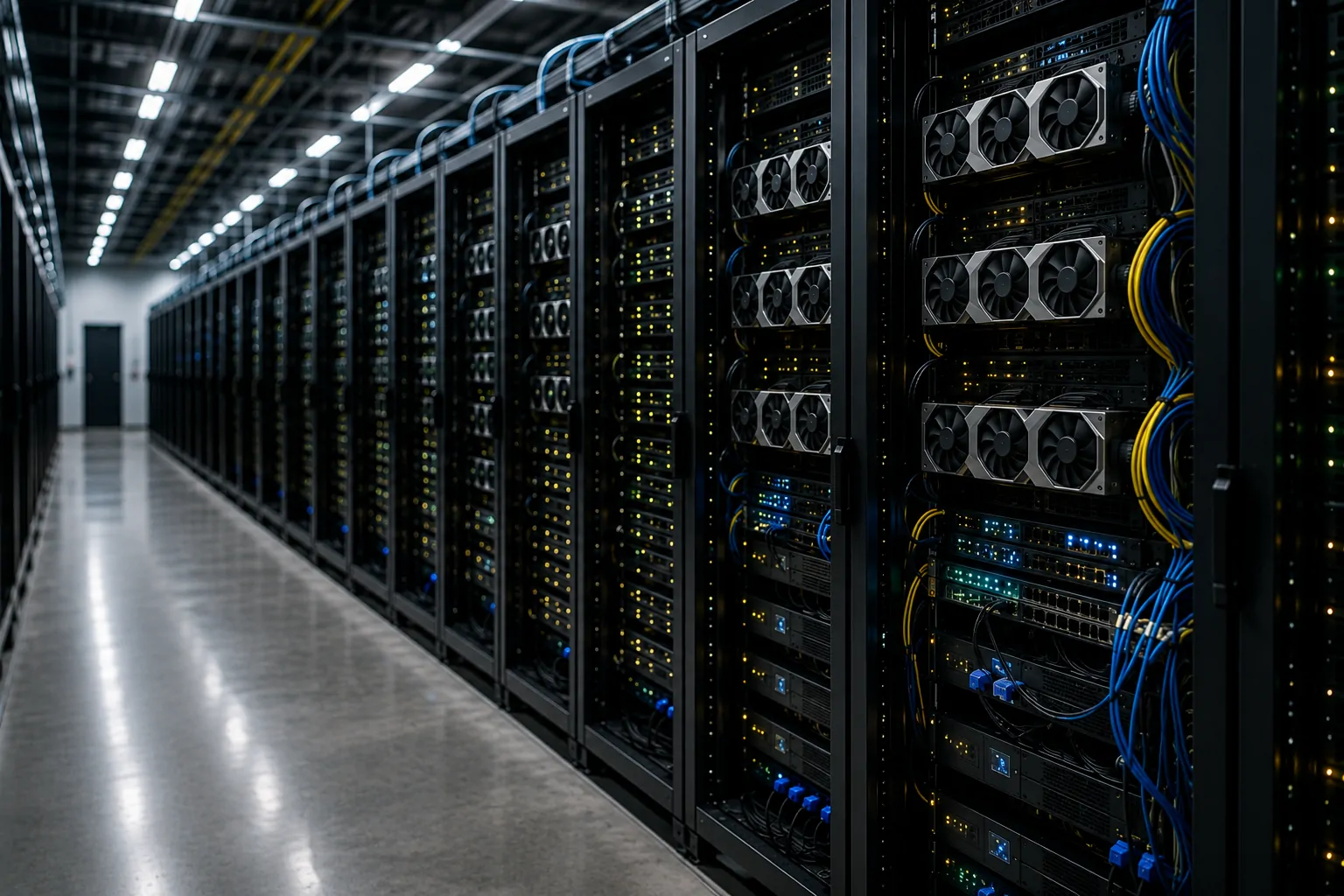
AI-focused data centers bring together the GPUs, energy and networking required to handle large-scale computing workloads.
Computing has become one of AI’s biggest bottlenecks because advanced models depend on enormous amounts of processing power, memory, energy and physical infrastructure.
GPUs Are No Longer Just Hardware Components
A GPU, or graphics processing unit, is a processor capable of performing many mathematical operations simultaneously. That characteristic has made GPUs particularly important for training and running artificial intelligence models.
The problem is that buying GPUs alone does not solve the infrastructure challenge.
The hardware must be installed in data centers capable of handling its electricity consumption and heat output. Thousands of processors must also be connected through extremely fast networks so they can operate as a coordinated system.
As a result, AI capacity now depends on a combination of chips, energy, physical space, cooling, networking and software.
This infrastructure expansion is already visible among major AI labs. Anthropic, for example, has announced a $35 billion expansion tied to AI infrastructure, showing how computing capacity has become part of the growth strategy for companies developing advanced models. Anthropic’s $35 Billion Expansion Shows Why Infrastructure Has Become a Strategic AI Issue.
The Real Strategic Asset May Be Beyond the Chip
The current race helps explain why a newly created company can achieve such a high valuation.
The strategic asset is not simply owning GPUs. It is bringing together all the elements required to turn those GPUs into computing capacity that customers can actually use.
That changes the economics of the market.
The AI conversation used to focus primarily on who had the best model. Now, an equally important question is: who can secure enough computing capacity to train and run those models at scale?
That creates a new layer of competition among AI labs, cloud providers and specialized infrastructure companies.
The Rise of Neoclouds Is Reshaping the Market
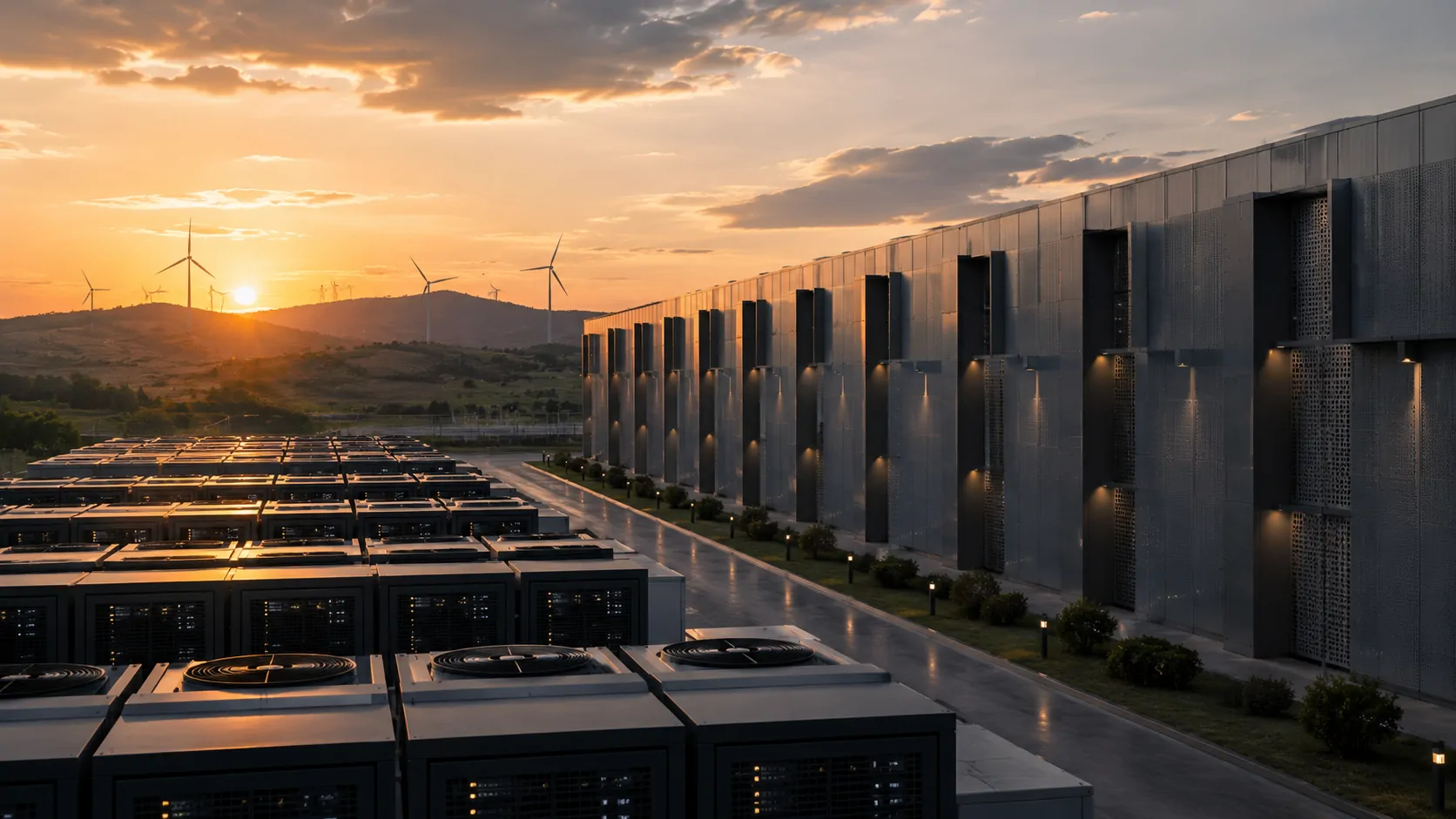
Neoclouds occupy a specialized layer of the market by offering dedicated computing capacity for artificial intelligence workloads.
Neoclouds are specialized companies that provide computing capacity for intensive artificial intelligence workloads.
They have emerged because major AI labs need additional capacity and do not always want to rely exclusively on AWS, Microsoft Azure or Google Cloud.
This movement is creating a new layer in the cloud market, particularly for customers that need massive amounts of processing power for training and inference.
Why AI Companies Are Looking for New Providers
Demand for computing has grown on two fronts.
The first is training, the process in which large amounts of data are used to adjust a model’s parameters.
The second is inference, when an already-trained model responds to user requests.
More capable models, task-performing AI agents and enterprise AI applications are increasing demand in both areas.
That creates a situation in which securing future capacity can be just as important as buying capacity today.
For an AI lab, running short of computing resources just as a product begins to scale could mean limiting users, delaying new models or increasing costs.
The Business Model Requires Massive Capital
The growth of neoclouds also reveals a fundamental problem: AI infrastructure is extremely capital-intensive.
A company has to invest upfront in facilities, energy, GPUs and networking. The return depends on securing contracts large and long enough to justify those investments.
That is why billion-dollar agreements matter so much in this market.
They give infrastructure providers greater revenue visibility while giving customers more confidence that capacity will be available when their AI workloads need to scale.
The risk, however, increases as well.
If technology changes rapidly or installed capacity exceeds demand, highly leveraged companies could face pressure on margins and returns.
That issue is particularly relevant because the market is already seeing other major moves involving infrastructure and energy. Notícia Tech has examined how the expansion of AI data centers is creating growing pressure on the energy sector in AI’s Energy Crisis Puts Data Centers at the Center of the Next Technology Battle.
The result is that the AI race is no longer simply a contest between models. It is increasingly a battle involving capital, energy, chips, data centers and computing capacity.
Comentários
Os comentários utilizam autenticação via GitHub para manter um ambiente mais qualificado, seguro e livre de spam.
Entrar ou criar conta no GitHub