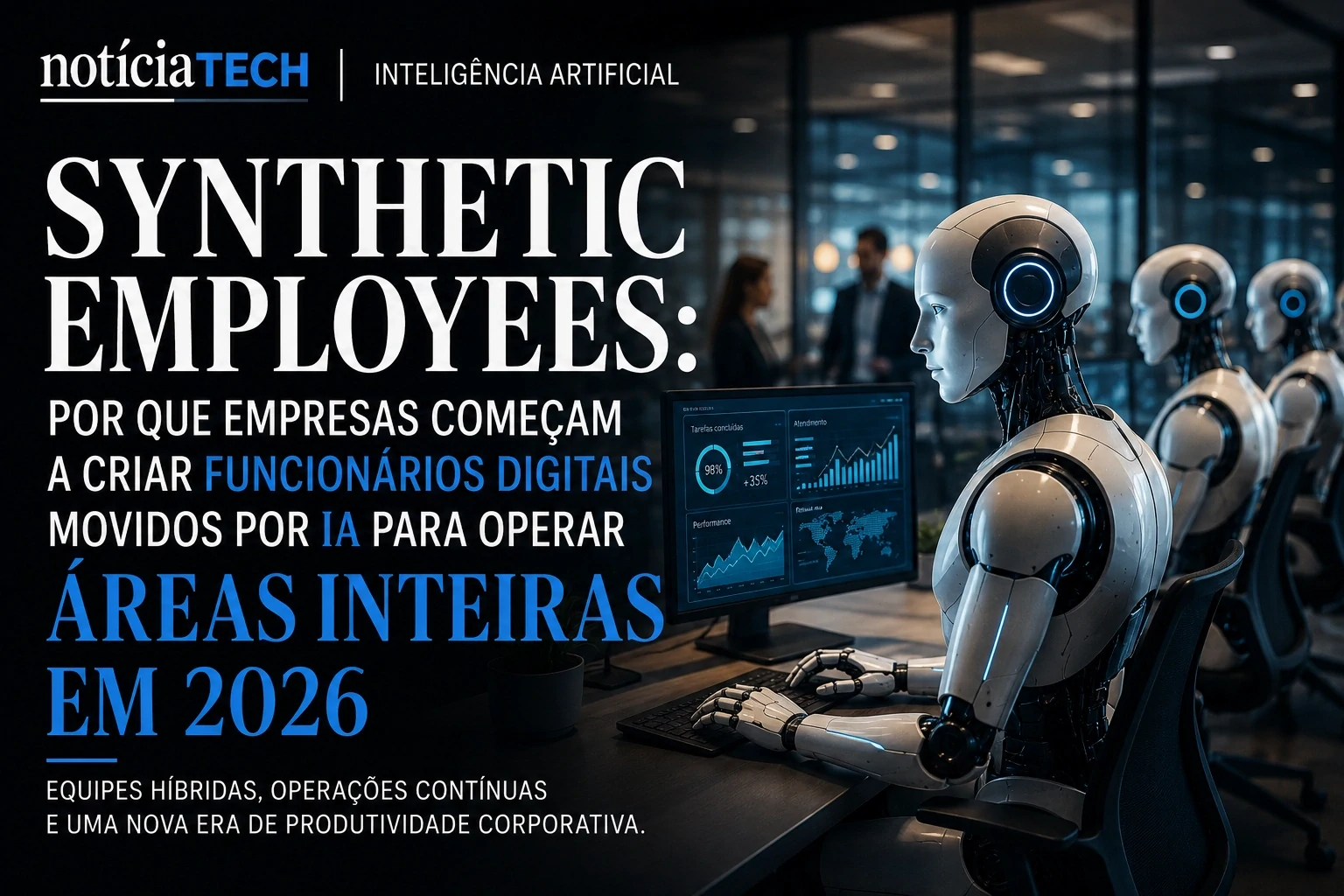
After the explosion of corporate copilots and autonomous agents, a new layer of business transformation begins to emerge silently in 2026: the so-called Synthetic Employees. Global companies are creating digital employees powered by artificial intelligence capable of performing operational tasks, analyzing data, responding to customers and operating corporate systems with almost no human intervention.
What are Synthetic Employees and why companies are starting to adopt them
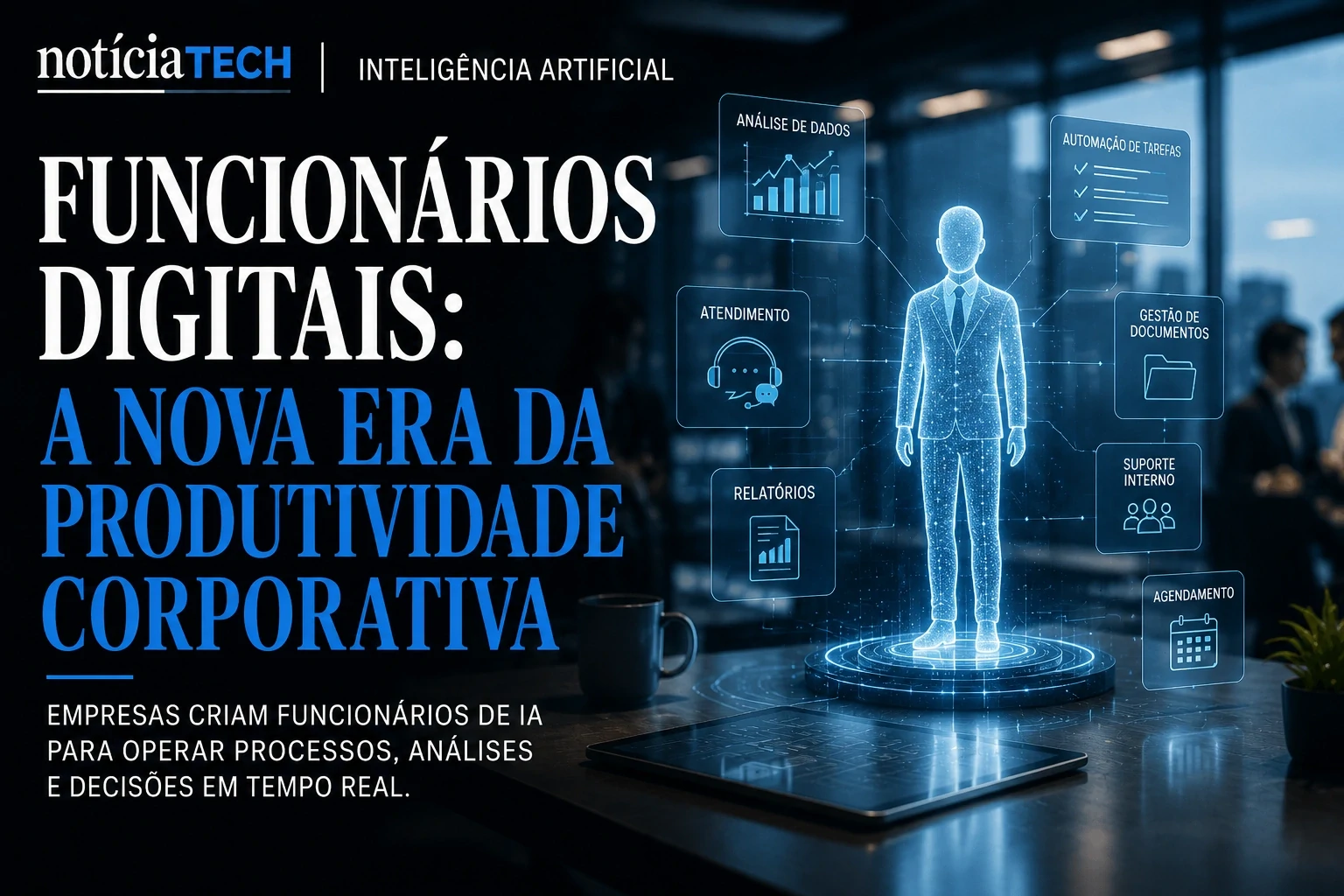
Synthetic Employees are digital employees based on artificial intelligence who perform specific tasks within companies in a continuous, contextual and integrated manner with corporate systems.
In practice, these intelligent agents can:
- respond to emails;
- update CRMs;
- analyze contracts;
- generate reports;
- operate internal systems;
- monitor indicators;
- perform operational support;
- interact with human teams.
The difference to traditional automations is in the contextual capacity.
These systems:
- understand natural language;
- make decisions based on corporate rules;
- learn operational standards;
- interact with multiple software simultaneously.
Companies are beginning to see these agents not just as tools, but as an effective part of daily operations.
Why the market began to accelerate this trend
The pressure for productivity, cost reduction and operational scalability has accelerated interest in hybrid teams made up of humans and AI.
At the same time:
- shortage of specialized labor;
- increase in operating costs;
- excessive fragmented systems;
- growth in data volume;
made companies look for new ways of operating.
This movement is strongly related to the growth of autonomous ecosystems already discussed by NOTÍCIA TECH in: The era of AI agents has begun: How Microsoft, OpenAI, and Google are turning companies into systems autonomous
How digital employees begin to operate entire areas within companies
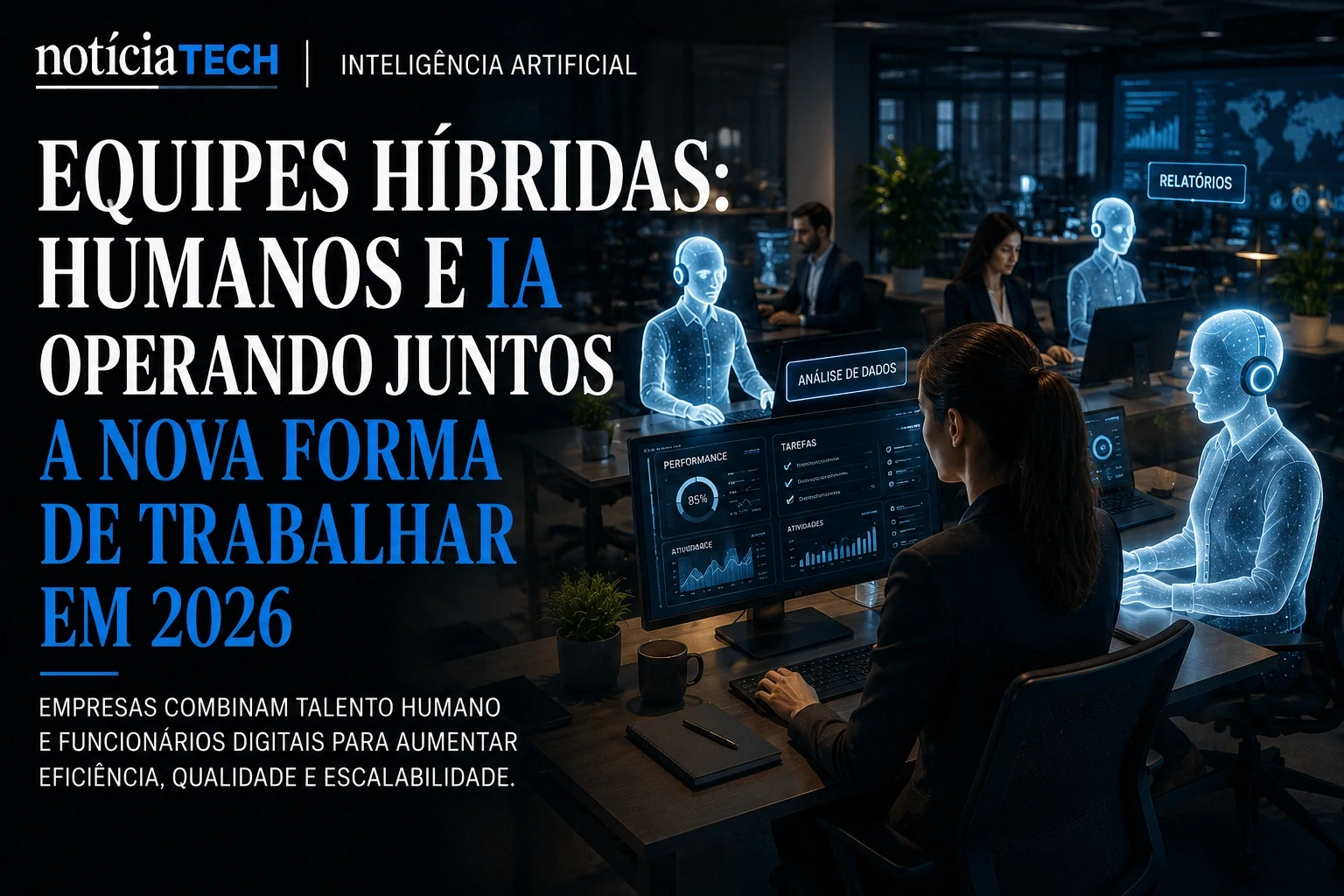
Large companies are already starting to structure operations where AI agents perform continuous functions in different departments.
Synthetic Employees can work in:
- service;
- financial;
- HR;
- sales;
- technical support;
- compliance;
- operational analysis;
- procurement;
- marketing.
In many cases, a single human employee begins supervising multiple intelligent agents simultaneously.
What changes in practice for companies
The traditional enterprise software model is beginning to change rapidly.
Before:
- humans operated software;
- dashboards required manual analysis;
- teams needed to perform repetitive tasks continuously.
Now:
- intelligent agents operate systems;
- simple decisions are automated;
- analyzes happen in real time;
- processes start to function continuously.
This transformation also accelerates the advancement of analytical copilots: Companies begin to replace dashboards with analytical copilots powered by generative AI
Synthetic Employees can completely transform the operational structure of companies
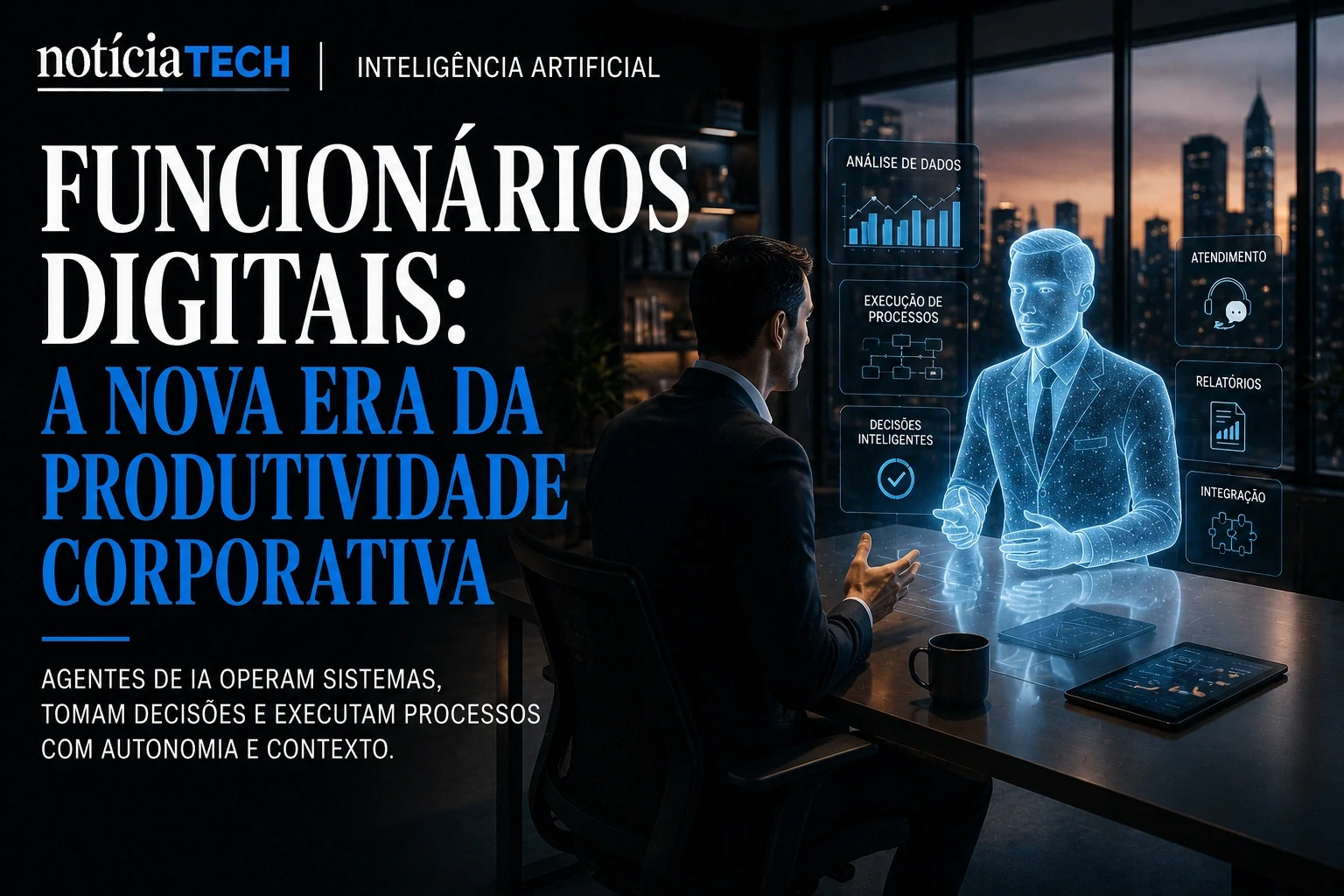
The most profound impact may not only be on productivity, but on the organizational architecture of companies themselves.
Organizations begin to create:
- hybrid teams;
- autonomous operations;
- continuous flows;
- self-executing systems;
- partially automated departments.
This could change:
- hiring;
- training;
- operational management;
- team structure;
- corporate productivity.
What changes for small businesses
Small businesses are perhaps some of the biggest beneficiaries.
With accessible SaaS platforms, smaller businesses can operate with:
- automated service;
- smart support;
- content generation;
- financial automation;
- operational analysis;
- Smart CRM.
This reduces historical barriers to scale.
Small operations begin to access capabilities previously only available to large corporations.
This scenario directly connects to the democratization of operational AI discussed by NOTÍCIA TECH in: AI tools for small businesses: how to automate service, content and sales without a technical team
The Growth of Digital Workers Could Redefine the Next Corporate Economy
The transformation brought about by Synthetic Employees could create one of the biggest organizational changes in the recent history of the corporate market.
Companies that can integrate:
- humans;
- intelligent agents;
- automation;
- data;
- Generative AI;
tend to operate with:
- greater efficiency;
- superior scalability;
- lower costs;
- higher operating speed.
At the same time, organizations stuck in fully manual models may face:
- low competitiveness;
- high operating costs;
- slow decision-making;
- difficulty climbing.
Artificial intelligence is no longer just a support tool.
She begins to assume ongoing operational roles within companies.
And as more autonomous agents evolve into contextualized digital employees, the more the market realizes that the next AI revolution may not just be technological — but structural, organizational and operational.
Comentários
Os comentários utilizam autenticação via GitHub para manter um ambiente mais qualificado, seguro e livre de spam.
Entrar ou criar conta no GitHub