The technology industry is entering a new competitive era. After the age of browsers, smartphones, and mobile applications, the world’s largest technology companies are now fighting for an even more strategic layer: the primary interface between people and digital systems. With the rise of artificial intelligence agents, Apple, OpenAI, Google, and Microsoft are betting that the future of computing will not be controlled by individual applications but by intelligent agents capable of understanding context, executing tasks, and coordinating multiple services on behalf of users.
The next computing interface will be powered by AI agents
AI agents are being developed to replace part of traditional app navigation and become the primary method of digital interaction.
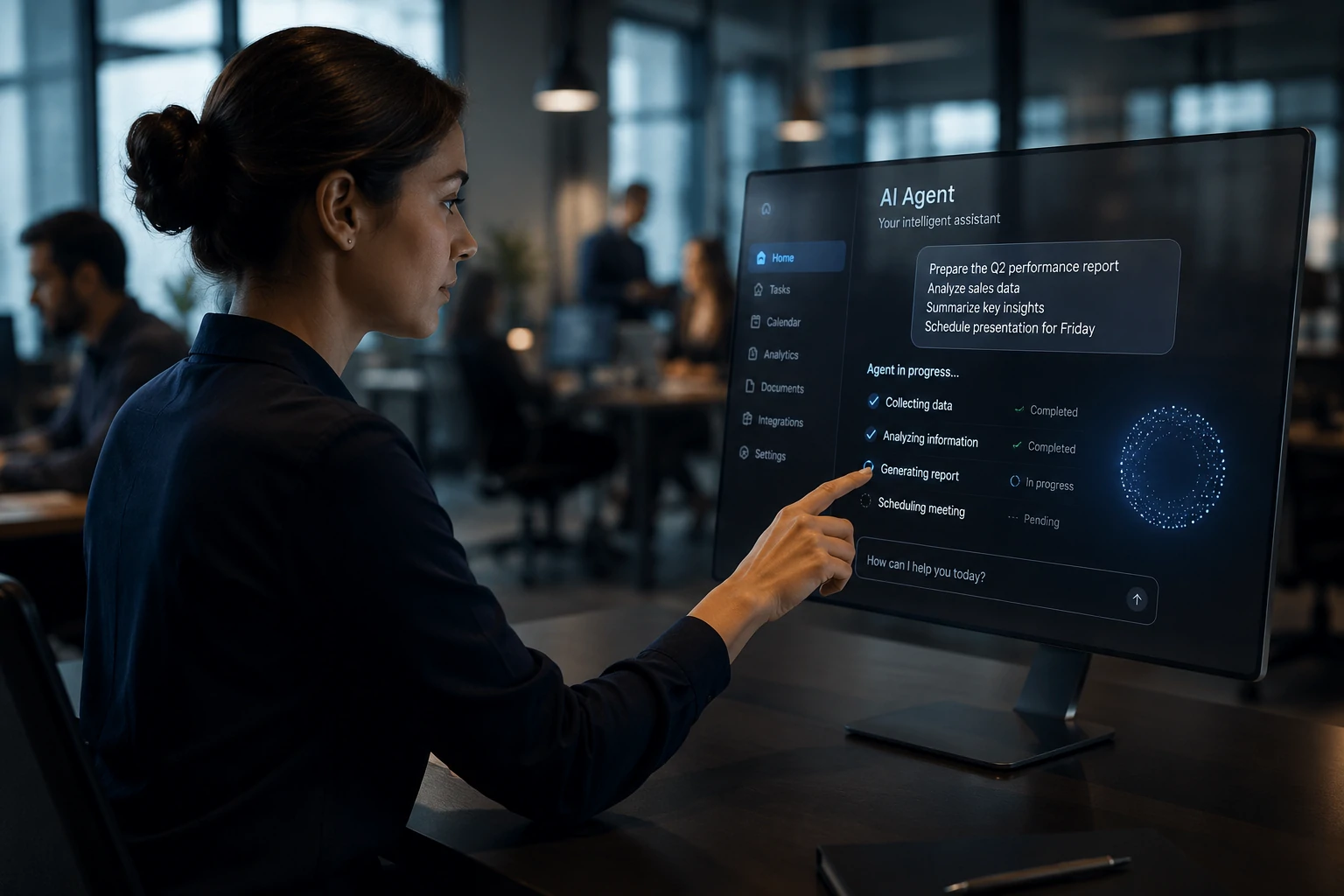
AI agents are being positioned as the next dominant interface in modern computing.
For decades, users had to open specific applications to complete tasks. Booking a trip, managing a calendar, or generating a report required navigating across multiple systems.
With AI agents, that logic begins to change. Users simply define an objective, and the artificial intelligence coordinates the necessary steps to complete it.
What makes AI agents different from traditional applications?
Applications perform specific functions.
Agents coordinate multiple functions simultaneously.
This shift reduces the need to understand individual tools and transforms digital interaction into a more conversational and contextual experience.
Why are companies investing billions in this technology?
The answer is simple: interface control.
Historically, whoever controls the primary interface also controls distribution, service discovery, user behavior, and revenue generation.
The same pattern shaped operating systems, web browsers, and smartphones. Now, the battle is moving toward intelligent agents.
Apple is using its ecosystem to transform Siri into an operational agent
Apple’s strategy is to leverage its integrated ecosystem to turn Siri into a permanent operational layer within users’ daily lives.
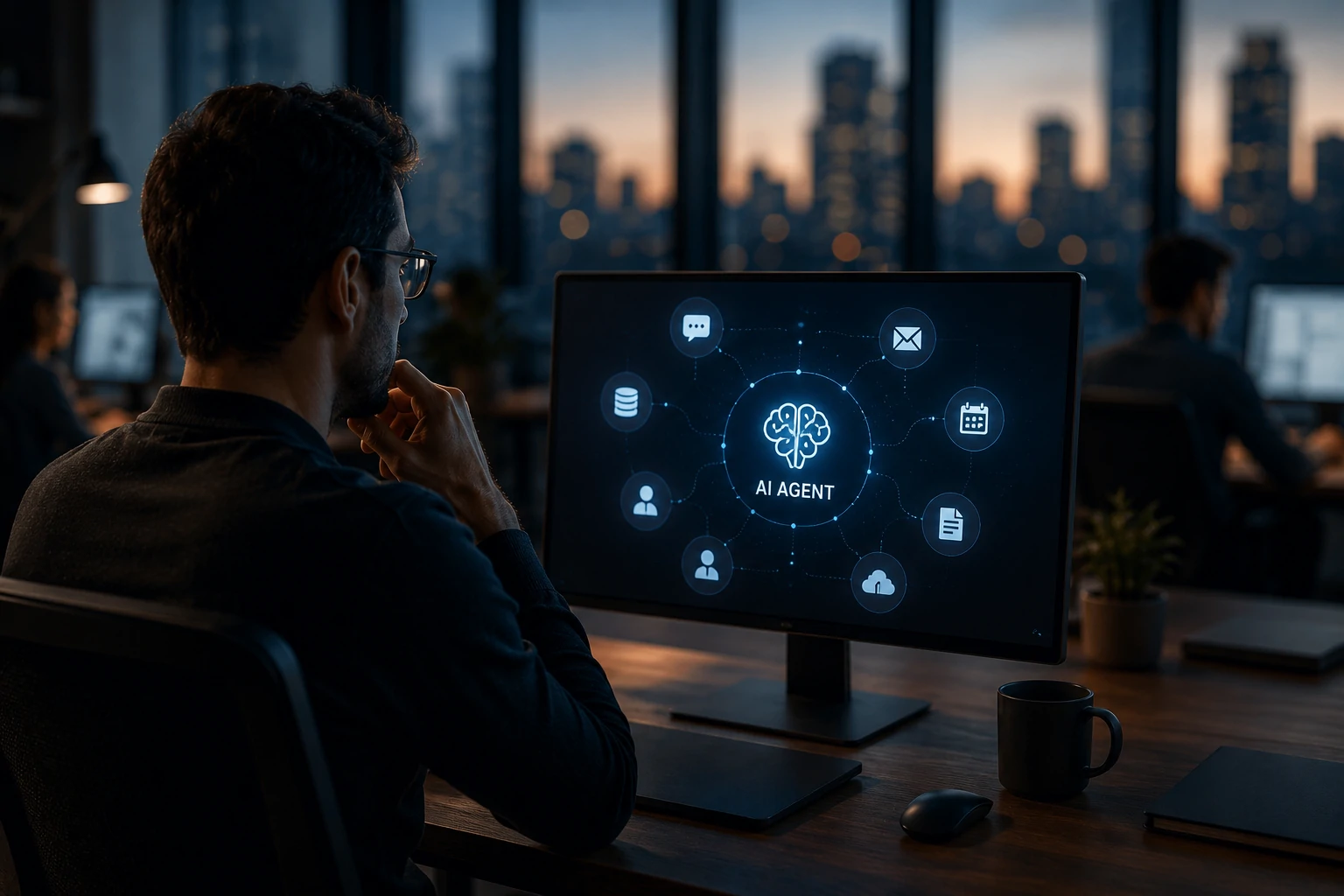
Apple’s competitive advantage lies in the integration of devices, applications, and user context.
The company has a unique advantage: billions of active devices distributed worldwide.
While competitors must persuade users to adopt new platforms, Apple already controls the environment where a large share of digital interactions takes place.
What changes with the next generation of Siri?
The assistant is evolving beyond voice commands.
Its objective is to execute tasks across applications, understand context, and anticipate user needs.
This approach brings Siri closer to the concept of an operational AI agent.
What is Apple’s biggest advantage?
Integration.
The combination of iPhone, iPad, Mac, native applications, and services creates a highly favorable environment for the adoption of intelligent agents.
This strategy also reinforces the vision explored in:
Apple enters the enterprise AI race with iPhone as an intelligent business agent
OpenAI Google and Microsoft want to become the operational layer of the internet
The battle for AI agents is not limited to devices. It is also unfolding within the digital infrastructure itself.

Google, Microsoft, and OpenAI view intelligent agents as a new operational layer for the internet.
OpenAI is working to expand the role of ChatGPT beyond conversations.
Google is integrating agents into Search, Android, and productivity tools.
Microsoft is using Copilot to embed artificial intelligence directly into enterprise workflows.
Is the goal to replace applications entirely?
Not necessarily.
The most likely scenario is that applications continue to exist while operating in the background.
Agents become the primary interaction layer.
What is really at stake?
Context, attention, and intent.
Whoever controls these three dimensions will gain a privileged position to distribute services, monetize digital experiences, and create new business models.
Microsoft’s strategy is also reflected in recent agent-first software initiatives:
Microsoft Project Solara bets on agent-first software for enterprises
Businesses may be the biggest beneficiaries of the AI agent era
The transformation driven by AI agents extends far beyond consumers.
The corporate impact may be even more significant.
Processes that currently require multiple systems could be executed through a single intelligent layer.
What changes for small and medium-sized businesses?
Smaller companies gain access to advanced automation capabilities without the need for specialized teams.
Key benefits include:
- operational automation;
- reduction of repetitive tasks;
- platform integration;
- productivity gains;
- improved data utilization.
What changes for large organizations?
Large enterprises can use agents to connect complex systems such as ERPs, CRMs, and analytics platforms.
This reduces operational friction and accelerates internal workflows.
In practice, AI agents become intelligent intermediaries between people, data, and business processes.
The interface wars could reshape the balance of power across the technology industry
The current battle has the potential to be as significant as the arrival of smartphones or cloud computing.
Every major technological shift has redefined who controls user access.
AI agents represent the next major opportunity for strategic repositioning among technology giants.
Which company is best positioned today?
There is no definitive answer.
Apple dominates distribution.
OpenAI leads model innovation.
Google controls one of the largest gateways to the internet.
Microsoft maintains a powerful position within enterprise software.
What should we watch over the coming years?
The most important metric will not simply be the advancement of language models.
The decisive factor will be the ability to transform artificial intelligence into an invisible, contextual, and permanent layer of the digital experience.
If this vision becomes reality, applications will continue to exist, but they will no longer occupy the center of the user experience. The spotlight will shift to agents capable of understanding intent, coordinating systems, and executing complete tasks. The company that controls this interface may hold one of the most valuable positions in the next generation of computing.
Comentários
Os comentários utilizam autenticação via GitHub para manter um ambiente mais qualificado, seguro e livre de spam.
Entrar ou criar conta no GitHub