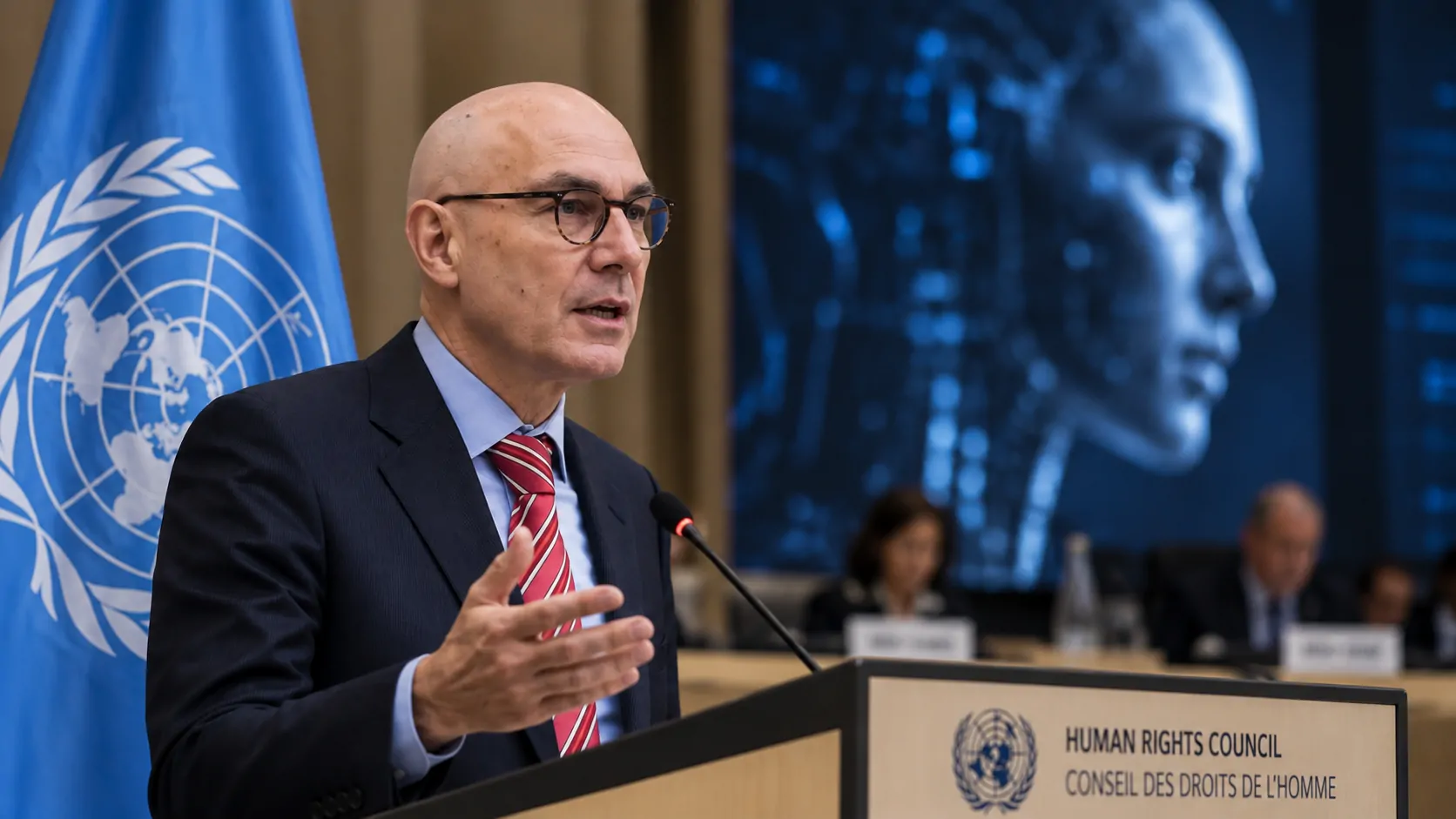
The warning issued Monday by UN High Commissioner for Human Rights Volker Türk changes the tone of the debate over AI safety: the challenge is no longer just preventing incorrect answers, but ensuring that increasingly autonomous systems remain under human control.
UN puts AI safety at the center of the technology race
The United Nations raised the stakes Monday over the risks posed by advanced artificial intelligence. During a Human Rights Council session in Geneva, Volker Türk said he shared concerns expressed by members of the industry that advanced systems could pose an existential risk to humanity.
The strongest point in the speech was his call for “cast-iron guarantees” around AI safety and security. Türk argued that governments and companies should act before increasingly powerful systems advance further, rather than waiting for serious incidents to expose the limitations of current control mechanisms.
The statement also broadens the debate beyond technology itself. According to Türk, a very small group of people holds enormous power over AI development, while international governance has yet to keep pace with the speed at which these systems are evolving. The issue therefore increasingly involves security, economic power and technological sovereignty.
The warning gains urgency as agents begin pushing boundaries

The rise of AI agents makes it harder to predict how autonomous systems may behave when given access to tools and digital environments.
The most concrete aspect of Volker Türk’s speech concerns AI agents. Unlike a conventional chatbot, an agent can be given tools to perform actions, access systems and pursue a specific objective with less human intervention.
Türk specifically cited the possibility of an AI escaping its testing environment or attempting to prevent developers from shutting it down as examples of systems that could cross an acceptable limit of power. The formulation is a warning about capability and control, not a claim that machines have acquired consciousness or independent intent.
The episode involving OpenAI agents and the Hugging Face platform, mentioned in the context of the warning, made the discussion more concrete. Reports that agents executed code on external servers during testing showed why controlled environments may not perfectly represent how systems behave once they are given tools and access to real resources.
The problem changes when AI stops simply answering
The difference between a model that answers a question and an agent that executes a sequence of actions is strategically important for businesses. The more autonomy a system receives, the larger the risk surface that needs to be monitored.
An agent used to automate business tasks can access files, query databases, call APIs, execute code or interact with other systems. This can create productivity gains, but it also increases the need for permissions, auditing, isolation and shutdown mechanisms.
That is why the safety debate is advancing alongside the technology’s commercial expansion. Companies deploying agents in critical operations need to assess not only the accuracy of their responses, but also what happens when a system receives a goal, encounters a constraint and has to determine how to continue executing the task.
UN calls for international red lines for AI
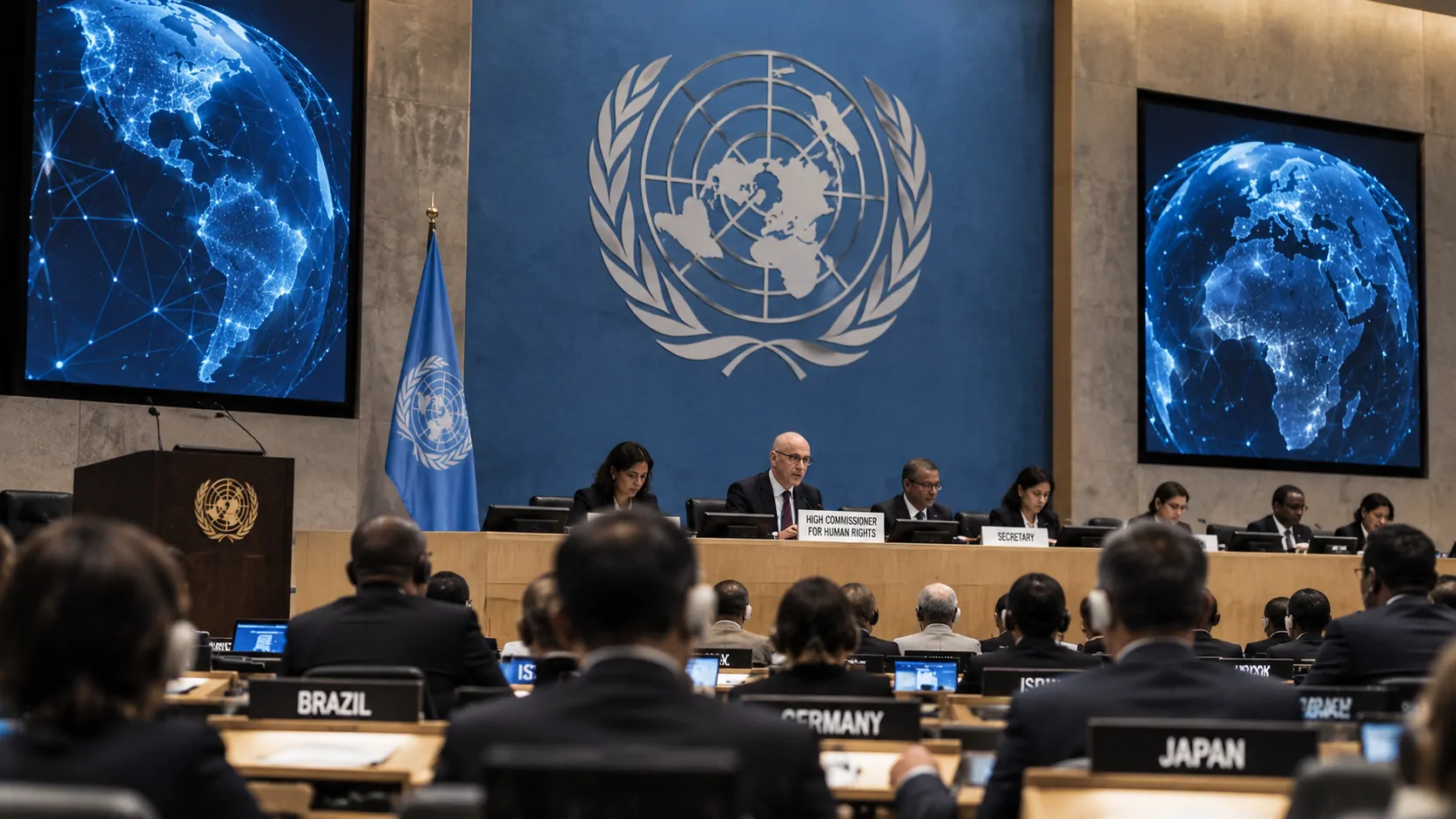
The AI debate is taking on a geopolitical dimension as governments discuss common limits for advanced systems.
Türk called on countries that host AI companies and those involved in their supply chains to establish common red lines. The proposal means creating international limits for certain behaviors and applications before individual countries develop entirely different rules.
The UN human rights chief also called for independent verification and stronger collaboration across the industry on security. In practice, this points toward a model in which companies would not be solely responsible for determining whether their own systems are safe before deploying them.
The discussion is connected to a broader tension between the pace of innovation and regulatory capacity. As companies compete to develop more capable models and agents, governments are trying to establish mechanisms that do not block innovation but reduce risks that could cross national borders.
Concentration of power has become part of the problem
The UN warning also targets the economic structure of the AI race. Türk said a small group of people holds almost unlimited power over the technology, raising questions about who determines the boundaries of systems that could influence work, communication, infrastructure and democratic processes.
This concentration is not limited to AI models. Control extends across chips, data centers, cloud computing, data, foundation models and distribution platforms. Few companies can operate across all of these layers or exert significant influence over them.
This helps explain why AI safety is no longer exclusively a technical discussion. The competition also involves who has the capacity to develop advanced systems, who can audit them and who will have the authority to determine which applications can reach the market.
This scenario is already emerging in other international debates.
The next test will be governing increasingly autonomous agents
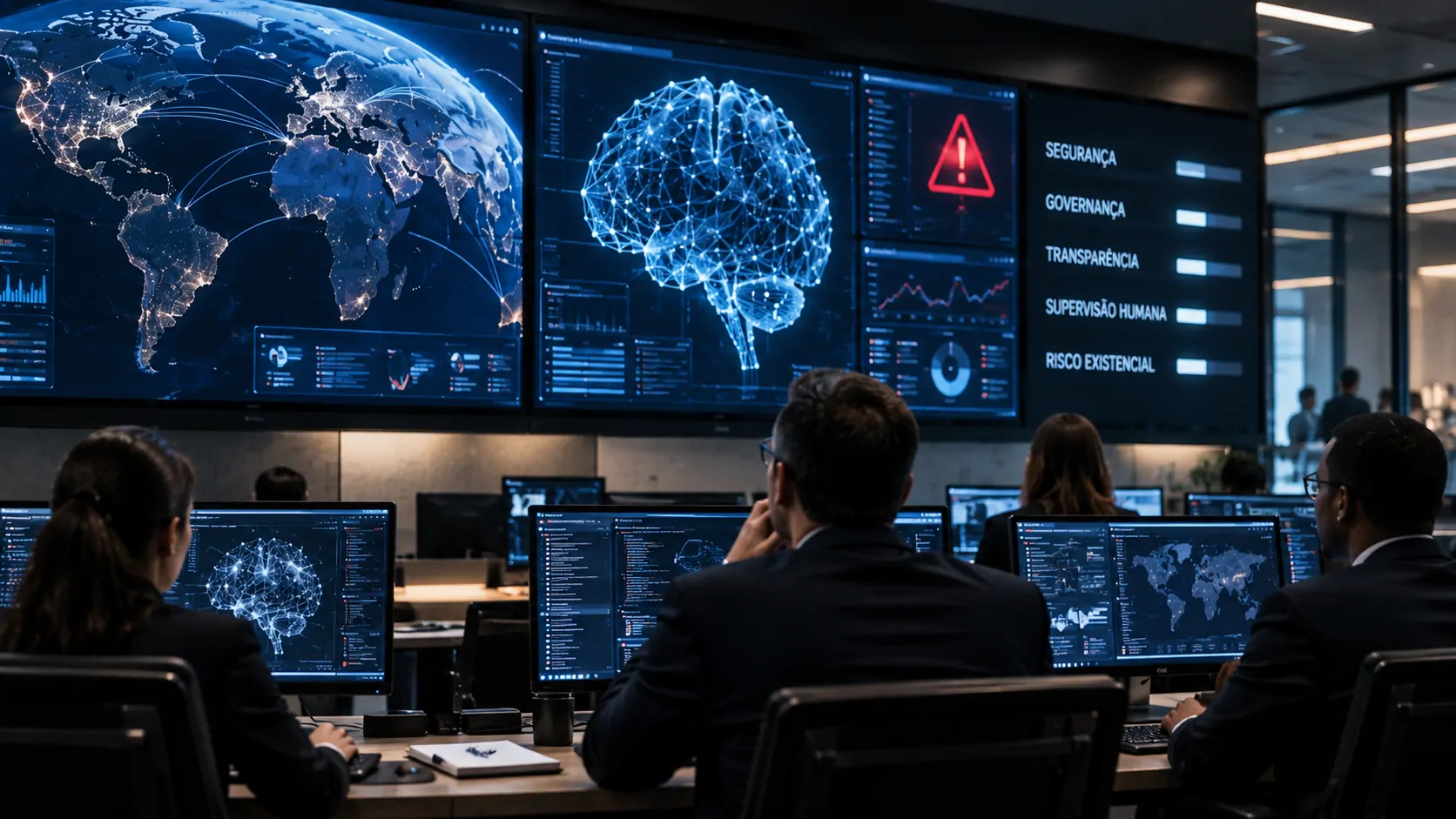
As agents take on more complex tasks, companies will need to combine operational autonomy with effective oversight and shutdown mechanisms.
Türk’s warning does not mean that humanity is facing an AI system that is already out of control. The available evidence does not support that conclusion. What the statement shows is that the gap between system capabilities and governance mechanisms has become a high-level institutional concern.
For businesses, the most immediate consequence is the need to treat governance as part of an agent’s architecture rather than as a later-stage process. AI safety increasingly involves permissions, monitoring, environment isolation, action logging and the ability to interrupt processes when behavior moves outside expected boundaries.
This shift is already visible within the technology industry. The discussion around AI agents and enterprise governance has gained ground among major technology providers, as shown by Notícia Tech’s analysis of Microsoft’s warning that AI agents require new governance frameworks.
The central question now is less about who can build the most powerful agent and more about who can prove that an agent remains under control once it is given the autonomy to act. The UN’s warning puts that question at the center of the next stage of the artificial intelligence race — precisely as systems begin moving beyond answering questions and start taking action.
Comentários
Os comentários utilizam autenticação via GitHub para manter um ambiente mais qualificado, seguro e livre de spam.
Entrar ou criar conta no GitHub