
The launch of ChatGPT Work represents far more than another product announcement from OpenAI. It highlights a structural shift in the artificial intelligence market, where leadership is no longer determined only by language models but by the ability to perform real work autonomously. For businesses, this transition could redefine productivity, automation and competitive advantage.
ChatGPT Work opens a new chapter in enterprise artificial intelligence
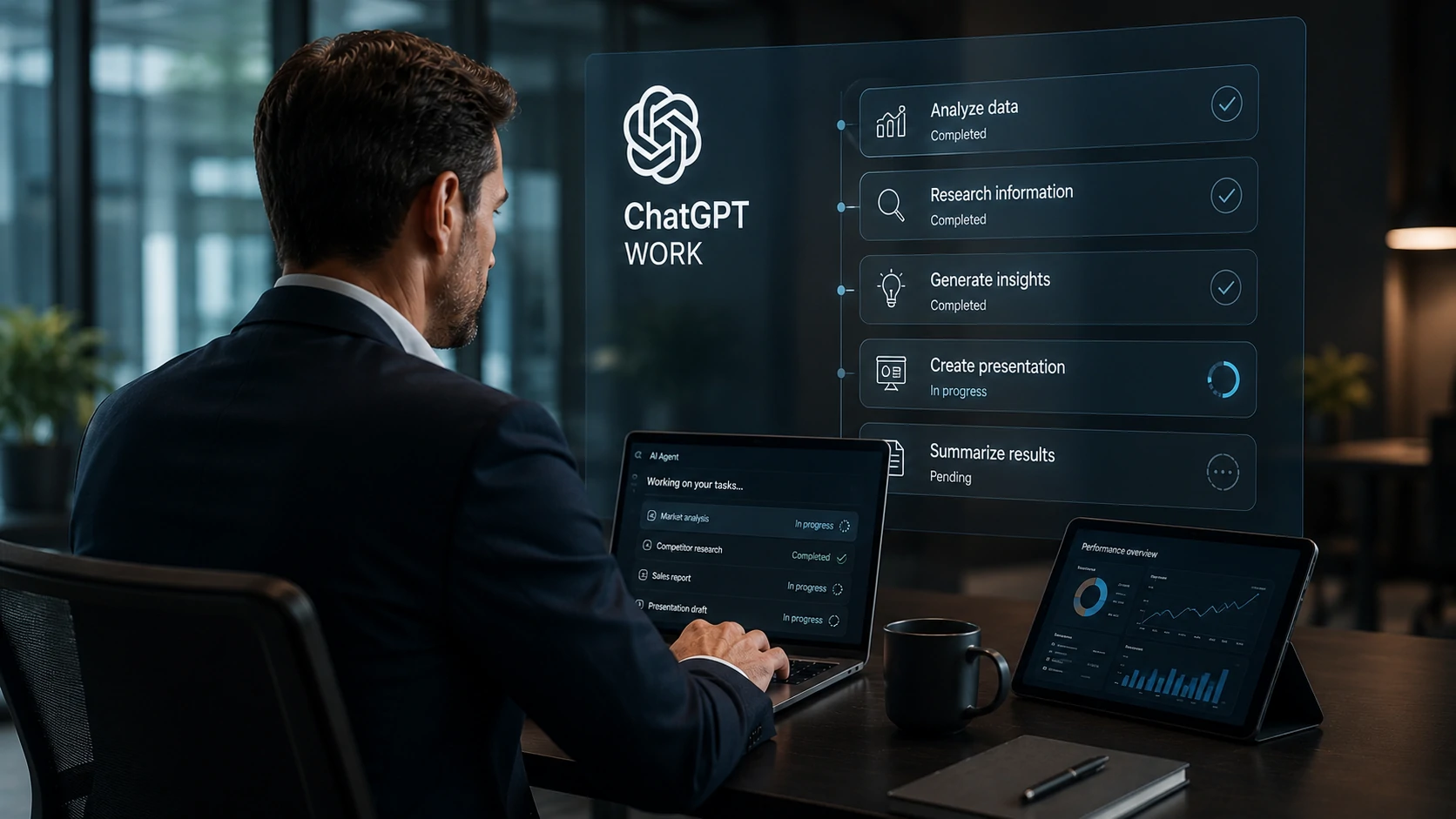
AI agents are evolving beyond answering questions to completing entire business workflows.
Over the past few years, competition between OpenAI, Google, Microsoft and Anthropic has largely focused on developing increasingly capable large language models.
With the introduction of ChatGPT Work, the focus shifts toward something much broader: turning artificial intelligence into a digital coworker capable of completing end-to-end business tasks.
Instead of generating isolated responses, the platform can prepare presentations, analyze spreadsheets, organize information, draft reports and perform activities that previously required multiple manual steps.
The transformation goes beyond technology
The significance of ChatGPT Work extends well beyond another upgrade to ChatGPT.
It fundamentally changes expectations regarding how artificial intelligence fits into daily enterprise operations.
While earlier AI assistants accelerated individual tasks, AI agents are beginning to automate complete business processes.
Productivity becomes the new competitive battlefield
The market is no longer asking which model writes the best response.
The new question is which platform can deliver more completed work with less human intervention.
That shift is expected to influence organizations of every size as companies pursue higher efficiency, lower operating costs and scalable automation.
Competition between OpenAI, Microsoft, Google and Anthropic enters a new phase

Leading AI companies are now competing to build agents capable of executing enterprise work autonomously.
The impact of ChatGPT Work extends far beyond OpenAI’s own product strategy.
Its arrival increases pressure on platforms such as Microsoft Copilot, Google Gemini and Claude, all of which are investing heavily in enterprise AI agents.
Each company enters this new phase with strategic advantages.
Microsoft dominates enterprise productivity through Microsoft 365.
Google controls Workspace and one of the world’s largest information ecosystems.
Anthropic continues strengthening its enterprise positioning through security, governance and responsible AI.
Businesses are no longer comparing models alone
Traditional benchmark comparisons are becoming less important.
Organizations increasingly evaluate which AI platform integrates most effectively into everyday business operations.
This evolution complements the rise of persistent AI memory, previously explored by Notícia Tech
The competitive focus shifts toward workflow execution
The next competitive advantage lies in completing entire workflows.
That includes researching information, interpreting data, generating business materials and delivering results that require minimal additional human effort.
Businesses must prepare for a new automation model
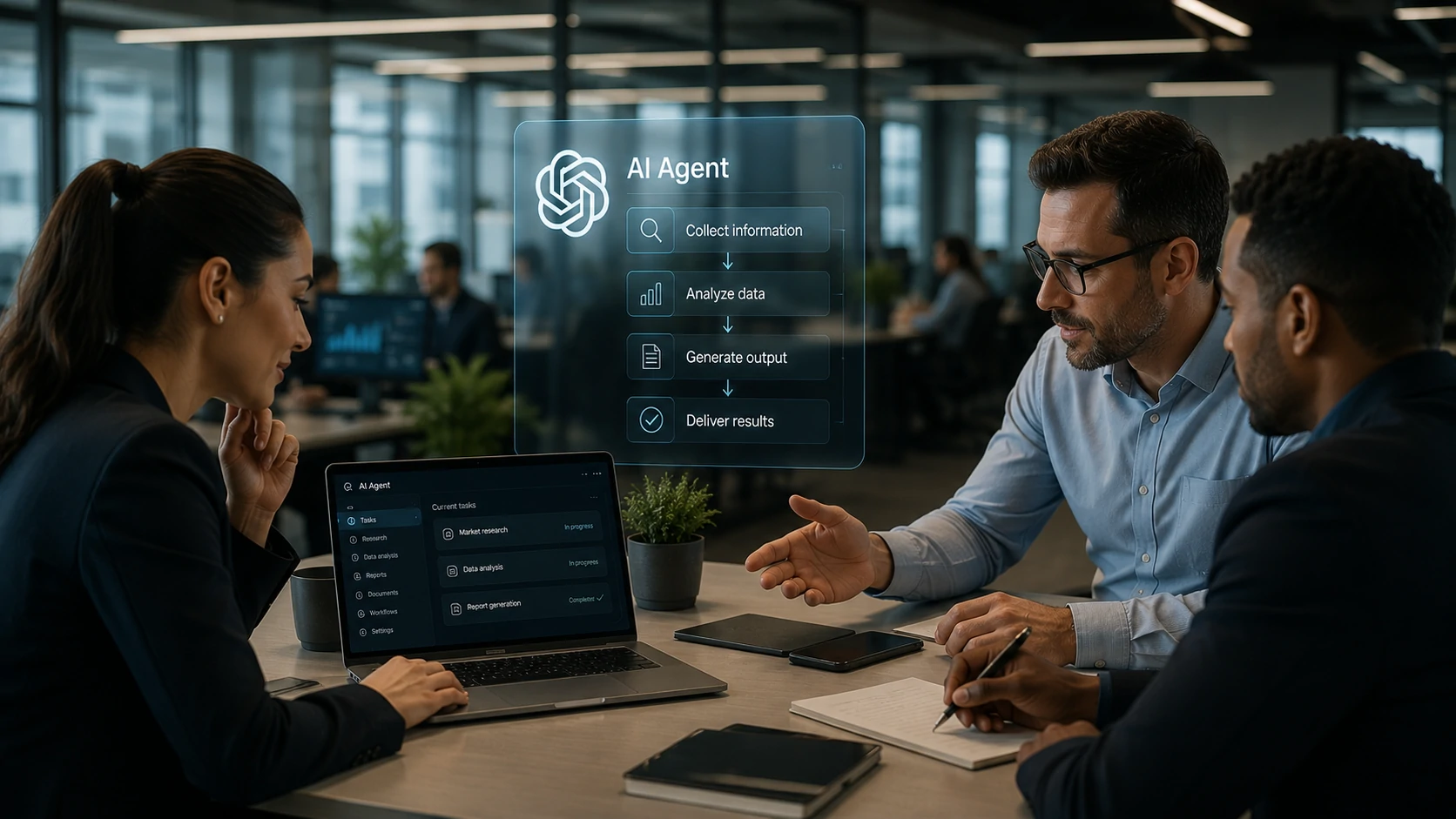
AI agents are expected to take over repetitive work while employees focus on strategic decision-making.
The adoption of AI agents represents a fundamental operational shift for organizations of every size.
Rather than automating isolated tasks, businesses are beginning to design complete workflows powered by artificial intelligence.
This evolution aligns with broader trends in AI-powered CRM, intelligent automation and orchestration of multiple AI agents.
Integration will matter more than the underlying model
Over the next few years, competitive advantage will no longer depend solely on having the most capable language model.
Instead, success will be determined by how effectively AI agents integrate with existing enterprise systems such as CRM, ERP, collaboration platforms and productivity software.
The role of professionals is also evolving
The rise of AI agents does not necessarily mean replacing human workers.
Instead, professionals are increasingly expected to supervise AI systems, validate results, define business strategies and make decisions that require human judgment.
The organizations that combine business expertise with artificial intelligence most effectively are likely to achieve the greatest productivity gains.
The real impact of ChatGPT Work will become clear over the coming months
ChatGPT Work may ultimately be remembered less as a product launch and more as the catalyst for a new phase of enterprise artificial intelligence.
From this point forward, competition between OpenAI, Microsoft, Google and Anthropic is shifting beyond language models toward platforms capable of executing real business work autonomously.
This transformation also strengthens the broader trend of AI Agents, intelligent automation and AI-powered digital workplaces, creating a new cycle of enterprise innovation.
Regardless of which company ultimately leads the market, the direction is becoming increasingly clear. AI agents are moving beyond experimental technology and becoming an essential component of everyday business operations. Organizations that begin adapting to this transition today are likely to build a significant competitive advantage as autonomous enterprise AI becomes mainstream.
Comentários
Os comentários utilizam autenticação via GitHub para manter um ambiente mais qualificado, seguro e livre de spam.
Entrar ou criar conta no GitHub