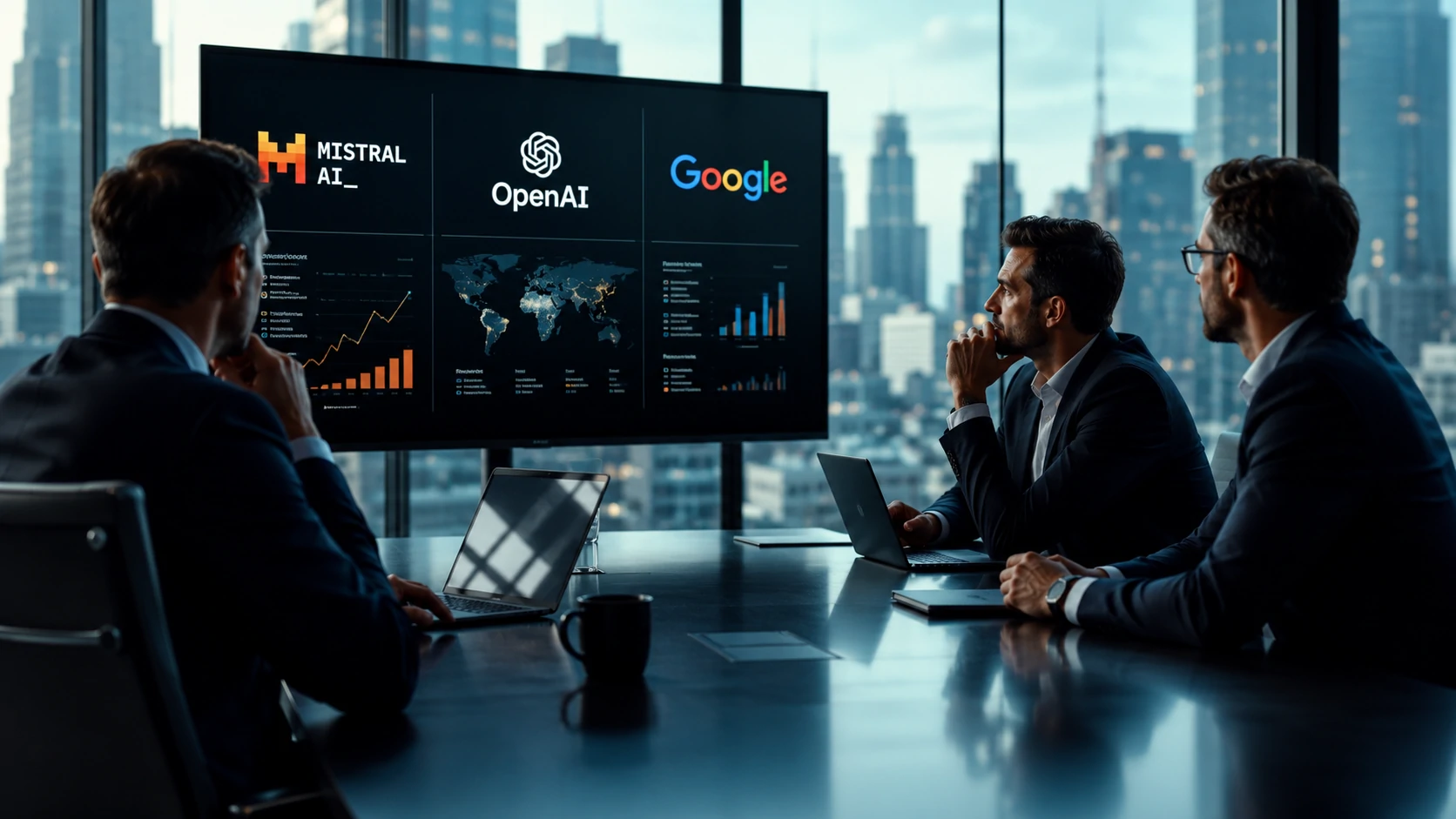
The artificial intelligence race is no longer just about building larger language models. Companies such as Mistral AI, OpenAI and Google are now competing through complete ecosystems, infrastructure, developer platforms and enterprise contracts. This marks a new stage of the market where business strategy may become just as important as technological capability.
Mistral AI Is No Longer Just a Promising Startup
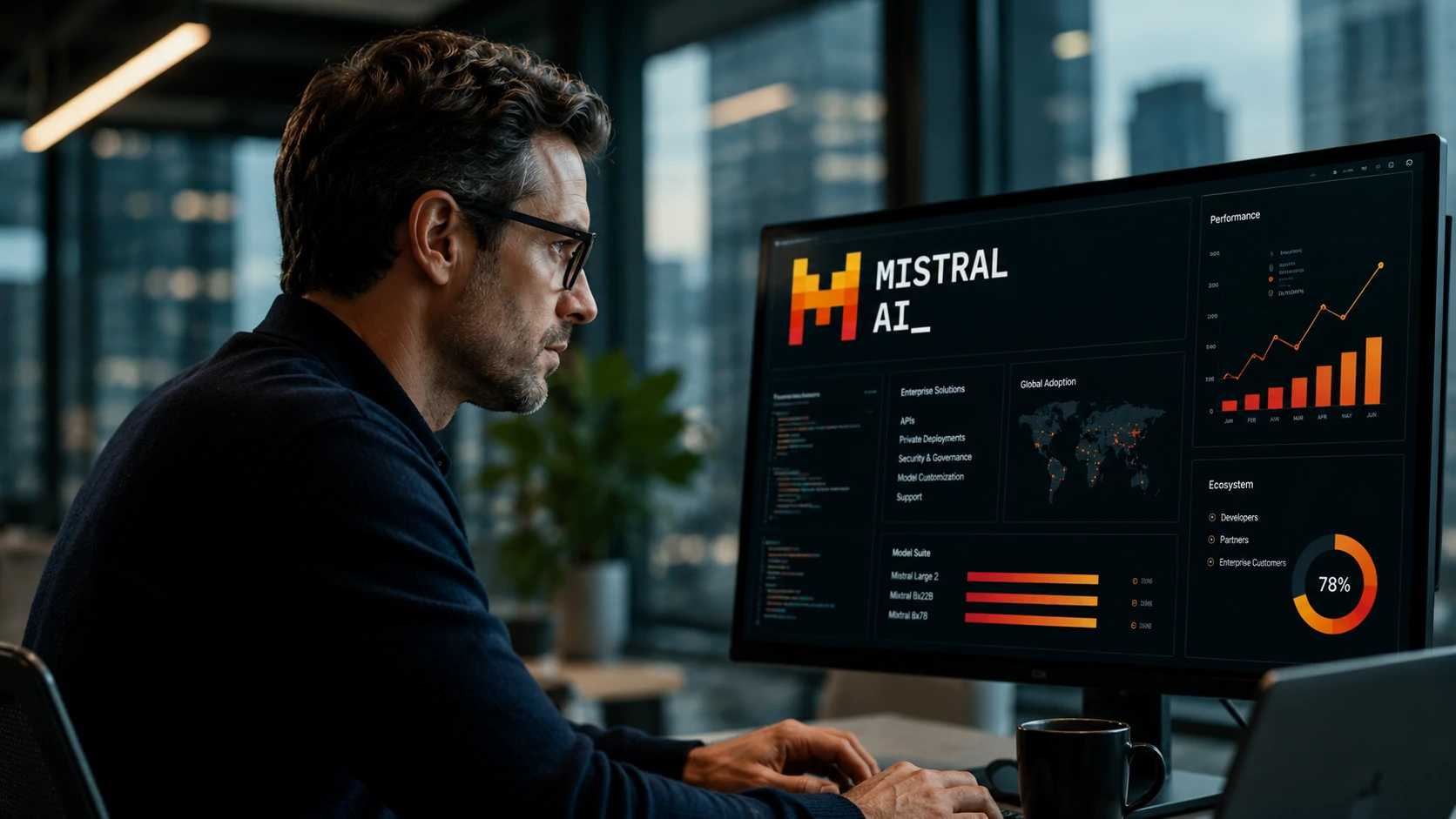
The expansion of Mistral AI strengthens competition in the enterprise artificial intelligence market.
For years, Mistral AI was viewed primarily as one of Europe’s most promising artificial intelligence startups. In 2026, however, that perception is rapidly changing.
The company continues to expand its language models, strengthen its international presence and pursue enterprise customers that traditionally evaluated only OpenAI and Google.
Rather than simply releasing new AI models, Mistral AI is building an ecosystem designed to meet the needs of organizations seeking flexibility, privacy and greater technological independence.
Competition Goes Beyond Language Models
Today’s AI competition extends far beyond benchmark scores.
Infrastructure, APIs, developer platforms and enterprise integration capabilities have become critical factors in determining which vendors win long-term business customers.
Organizations increasingly look for AI platforms that integrate seamlessly into business operations instead of simply offering another conversational assistant.
Enterprise Customers Become the Primary Target
Enterprise contracts are emerging as one of the industry’s largest growth opportunities.
This trend follows the rapid adoption of AI agents, intelligent automation and enterprise productivity solutions, as explored in the related Notícia Tech article:
How AI Agents Transform Business Process Automation Beyond ChatGPT Work
The Competition Between OpenAI, Google and Mistral Has Entered a New Phase
Competition is no longer defined exclusively by technical performance.
Today, success depends on attracting strategic partners, integrating with enterprise software ecosystems and building long-term trust among corporate customers.
Within this environment, Mistral AI is positioning itself differently from its larger American competitors.
Ecosystems Matter More Than Standalone Models
Organizations no longer choose AI providers solely because one model performs better on isolated benchmarks.
Decision-makers increasingly evaluate total cost of ownership, security, governance, integration capabilities and the long-term roadmap of each AI vendor.
Businesses Want to Reduce Vendor Lock-In
Another important trend is the growing adoption of multi-model AI strategies.
Instead of relying exclusively on a single provider, many organizations are combining multiple AI platforms according to business requirements, improving flexibility while reducing operational and strategic risks.
Mistral AI’s Strategy Could Accelerate Enterprise Digital Transformation
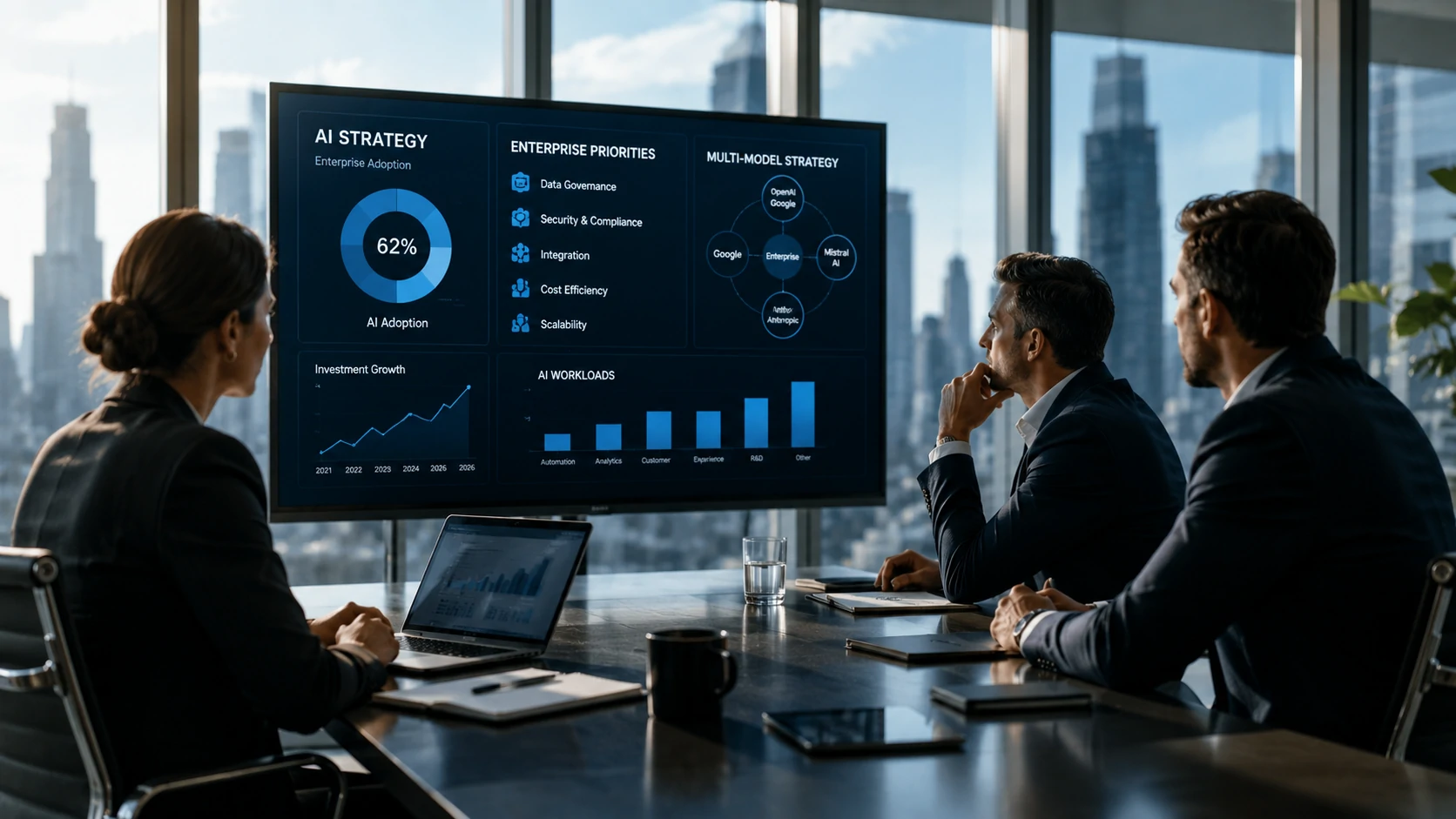
Businesses increasingly evaluate governance, integration and technological independence when selecting AI platforms.
The rise of Mistral AI also reflects a broader shift in how organizations choose artificial intelligence providers. While model quality was once the primary decision factor, businesses now evaluate data sovereignty, deployment flexibility, operational costs and interoperability before committing to an AI platform.
This evolution favors companies capable of delivering flexible solutions across different enterprise environments.
AI Governance Is Becoming a Purchasing Criterion
As AI projects become increasingly critical to business operations, organizations are placing greater emphasis on compliance, auditing and model oversight.
Companies that have already established governance frameworks are better positioned to adopt multiple AI providers without compromising security or regulatory compliance.
This trend aligns with the growing importance of AI Governance, a topic explored in detail by Notícia Tech:
What Is AI Governance and Why It Will Be Essential for Businesses in the Coming Years
The Market Is Moving Toward Hybrid AI Environments
Very few organizations are expected to rely on a single artificial intelligence model over the long term.
Instead, large enterprises are increasingly adopting hybrid environments that combine solutions from OpenAI, Google, Anthropic, Mistral AI and other providers according to specific operational needs.
This approach reduces dependency on a single vendor while increasing flexibility and long-term resilience.
Mistral AI’s Growth Is Increasing Competitive Pressure Across the Industry
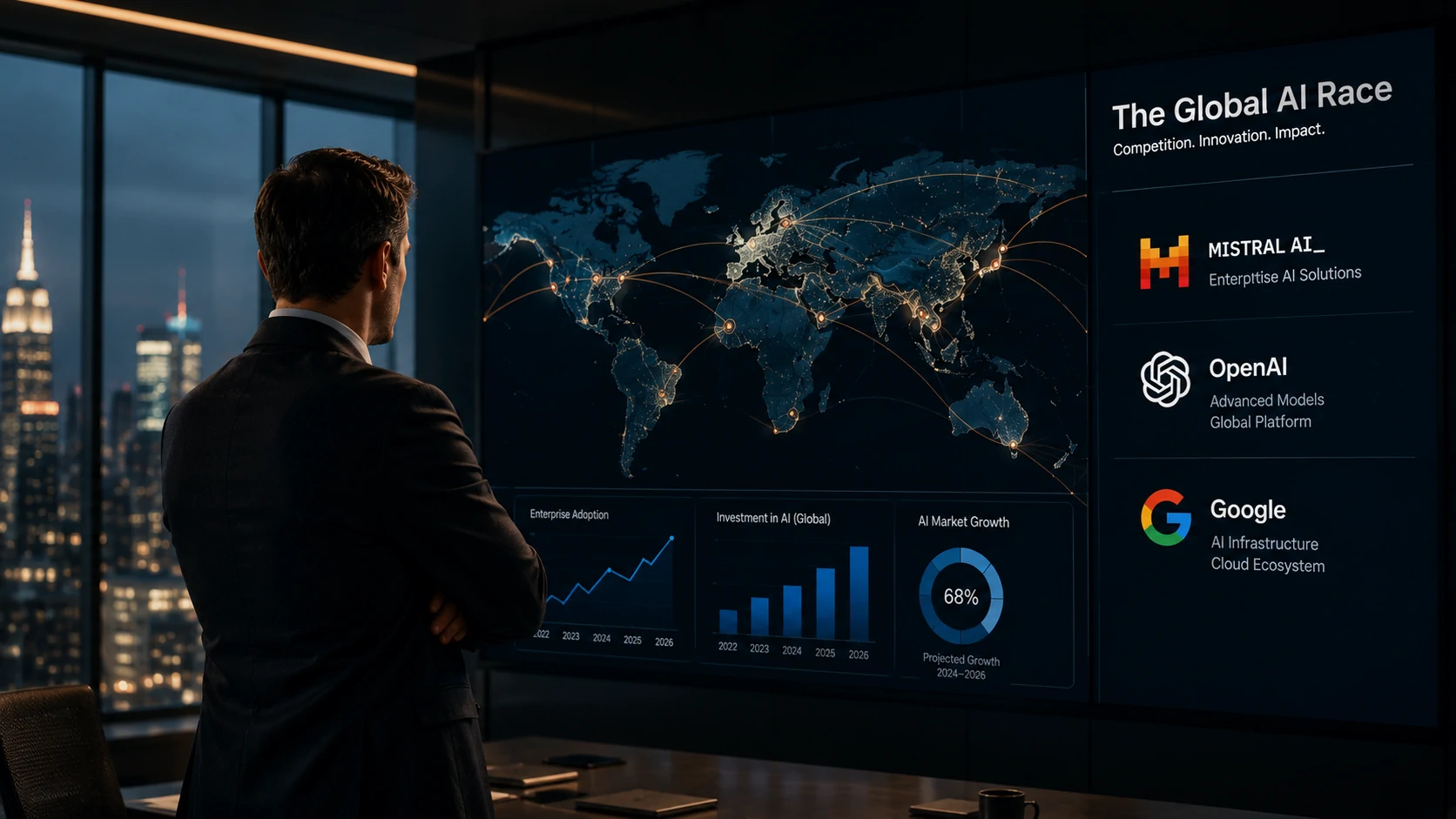
Growing competition drives innovation, lowers costs and creates new opportunities for organizations adopting artificial intelligence.
The rise of Mistral AI represents more than the expansion of another AI company. It strengthens competition within an industry worth billions of dollars and directly influences how organizations approach digital transformation.
As competition intensifies, innovation tends to accelerate across AI models, infrastructure and enterprise software ecosystems.
More Competition Benefits Enterprise Customers
For technology leaders and business executives, stronger competition generally translates into more vendor choices, greater negotiating power and broader access to specialized AI solutions.
Organizations that continuously evaluate the evolving AI landscape will be better prepared to identify platforms that align with their long-term business objectives.
The Next Battle Will Be Over Complete AI Platforms
The next phase of competition will likely extend far beyond the quality of language models.
Winning vendors will need to deliver complete enterprise platforms that combine AI agents, workflow automation, application development, security, governance and productivity into a unified ecosystem.
Within this environment, Mistral AI is working to evolve from being an alternative AI model provider into a strategic technology partner for enterprise organizations. If the company maintains its current pace of expansion, it could significantly influence how businesses select AI vendors in an increasingly competitive, ecosystem-driven market.
Comentários
Os comentários utilizam autenticação via GitHub para manter um ambiente mais qualificado, seguro e livre de spam.
Entrar ou criar conta no GitHub