
Over the past year, competition in artificial intelligence has evolved far beyond building larger language models. Today’s race is about delivering platforms capable of completing real work. OpenAI’s decision to retire the Atlas browser perfectly illustrates this strategic shift.
Atlas Marks a Major Strategic Shift for OpenAI
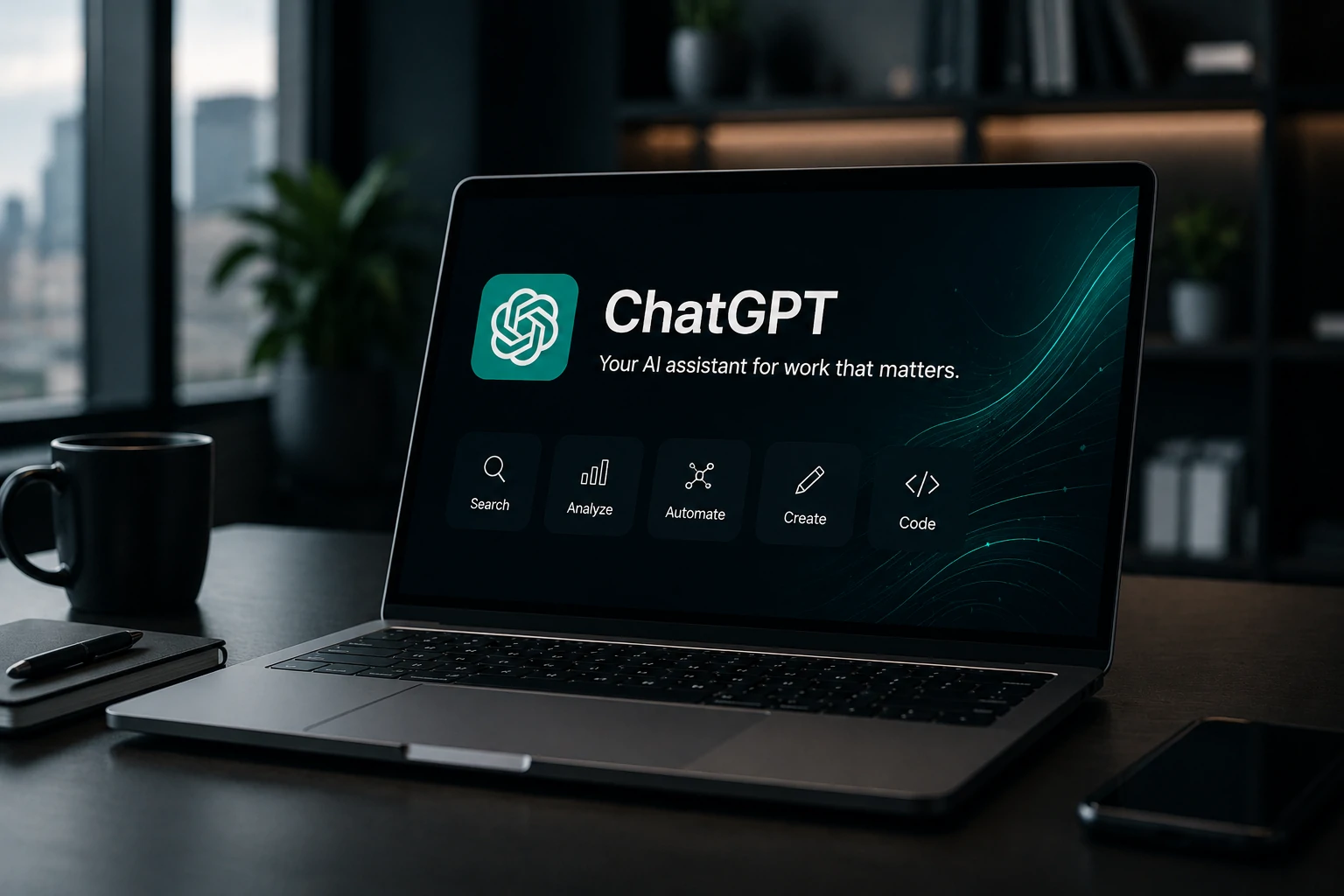
The retirement of Atlas reinforces OpenAI’s long-term vision of turning ChatGPT into the company’s primary AI-powered workspace.
OpenAI’s decision to discontinue development of the Atlas browser surprised many industry observers, but it becomes much clearer when viewed within the company’s broader strategic roadmap.
Instead of maintaining a standalone browser that competes with traditional web browsers, the company is concentrating nearly all of its efforts around ChatGPT, positioning it as the central platform for productivity, intelligent search and enterprise automation.
The move reinforces a trend that has been visible since the introduction of ChatGPT Work. Rather than offering only an advanced conversational assistant, OpenAI is building an AI environment capable of carrying out increasingly complex business tasks.
This strategy also aligns with the analysis presented in Notícia Tech’s previous article discussing Why ChatGPT Work Marks the Beginning of the AI Agent Era for Enterprise Productivity.
Why ChatGPT Work Marks the Beginning of the AI Agent Era for Enterprise Productivity
Browsers are no longer the primary battlefield
Over the last two years, several technology companies experimented with AI-powered browsers as the next evolution of web navigation.
However, maintaining a competitive browser requires continuous investment in rendering engines, security, compatibility and frequent updates.
For OpenAI, embedding these capabilities directly into ChatGPT offers a far more scalable and user-friendly approach.
The focus is now on AI agents
The company’s long-term vision clearly extends beyond conversational AI.
Instead, ChatGPT is evolving into an intelligent agent capable of browsing the web, researching information, organizing documents, completing workflows, writing code and interacting with external services without requiring users to constantly switch between applications.
Consolidating Around ChatGPT Strengthens the Platform Strategy
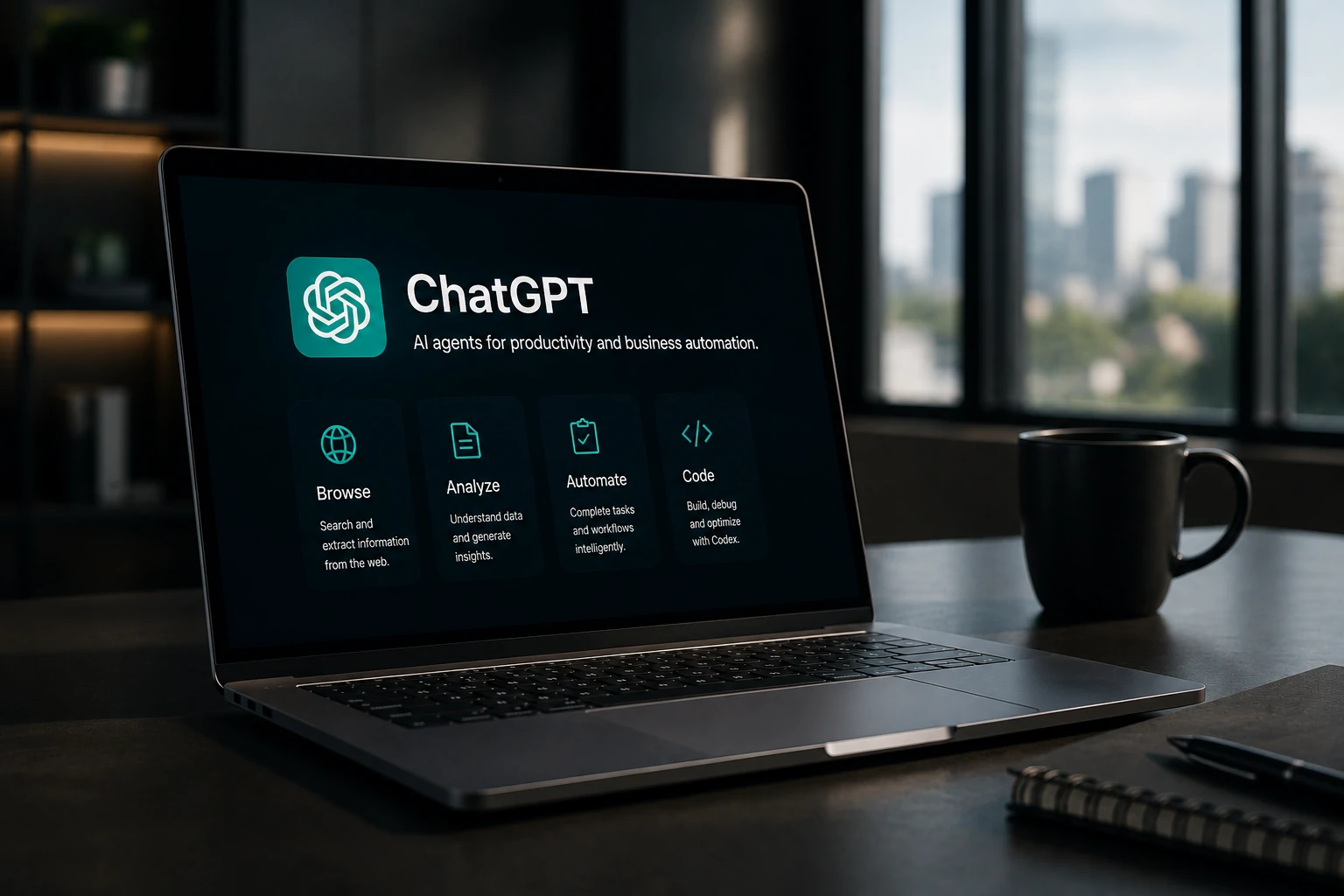
OpenAI is consolidating its AI ecosystem around ChatGPT, positioning it as a unified platform for enterprise productivity and intelligent automation.
While many competitors continue building standalone AI products, OpenAI is moving toward a fully integrated platform strategy.
Its objective is to bring together web browsing, research, task execution, Codex programming capabilities, document generation and intelligent automation within a single environment.
This approach simplifies the user experience while increasing the overall value of the company’s ecosystem.
For businesses, it also reduces dependence on multiple disconnected tools and creates a more efficient workflow powered by AI.
The race is no longer about bigger AI models
For several years, the artificial intelligence industry competed primarily by building increasingly powerful language models.
That competitive landscape is changing.
The next market leaders will be companies capable of delivering AI systems that perform real business tasks rather than simply generating responses.
Viewed through that lens, the Atlas browser became less important than a unified AI workspace.
Businesses want complete AI ecosystems
Organizations are no longer looking for chatbots alone.
They increasingly seek platforms capable of automating complete business processes across multiple departments.
This explains why AI agents have become one of the fastest-growing areas in enterprise technology.
Notícia Tech recently explored this trend in its analysis of how AI agents are reshaping business process automation.
How AI Agents Transform Business Process Automation Beyond ChatGPT Work
How Atlas Changes the Competitive Landscape for OpenAI, Google and Anthropic

The competitive landscape is shifting from individual AI models to comprehensive enterprise AI platforms.
OpenAI’s decision increases competitive pressure on companies such as Google, Anthropic, Microsoft and Perplexity.
Each of these organizations is gradually evolving from standalone AI products toward integrated enterprise ecosystems.
For Google, that vision is reflected in the growing integration between Gemini, Chrome and Google Workspace.
Anthropic continues expanding Claude with enterprise-focused capabilities designed for knowledge work and professional environments.
Meanwhile, Microsoft is positioning Copilot as the primary AI interface across the Microsoft 365 ecosystem.
The next competitive battle will be platform dominance
The future of artificial intelligence is unlikely to be decided solely by the most capable language model.
Instead, leadership will belong to the company that delivers the most complete and seamless AI platform.
Research, memory, automation, browsing, software development and task execution are increasingly becoming components of a single integrated ecosystem.
The retirement of Atlas clearly reflects this industry transition.
What This Decision Reveals About the Future of Artificial Intelligence
The end of the Atlas browser should not be interpreted as a strategic retreat by OpenAI.
Instead, it signals a sharper strategic focus.
Rather than distributing engineering resources across multiple independent products, the company is accelerating the transformation of ChatGPT into the center of its AI ecosystem.
This decision aligns with a broader industry trend in which unified AI platforms improve user retention, simplify enterprise adoption and unlock more sophisticated automation capabilities.
For business leaders and technology professionals, the announcement provides an important signal about where the market is heading.
Over the coming years, competition will likely move beyond browsers, applications or individual AI models.
The real battle will be between comprehensive AI platforms capable of combining research, reasoning, automation and task execution within a single environment, fundamentally changing how organizations and professionals interact with artificial intelligence.
Comentários
Os comentários utilizam autenticação via GitHub para manter um ambiente mais qualificado, seguro e livre de spam.
Entrar ou criar conta no GitHub