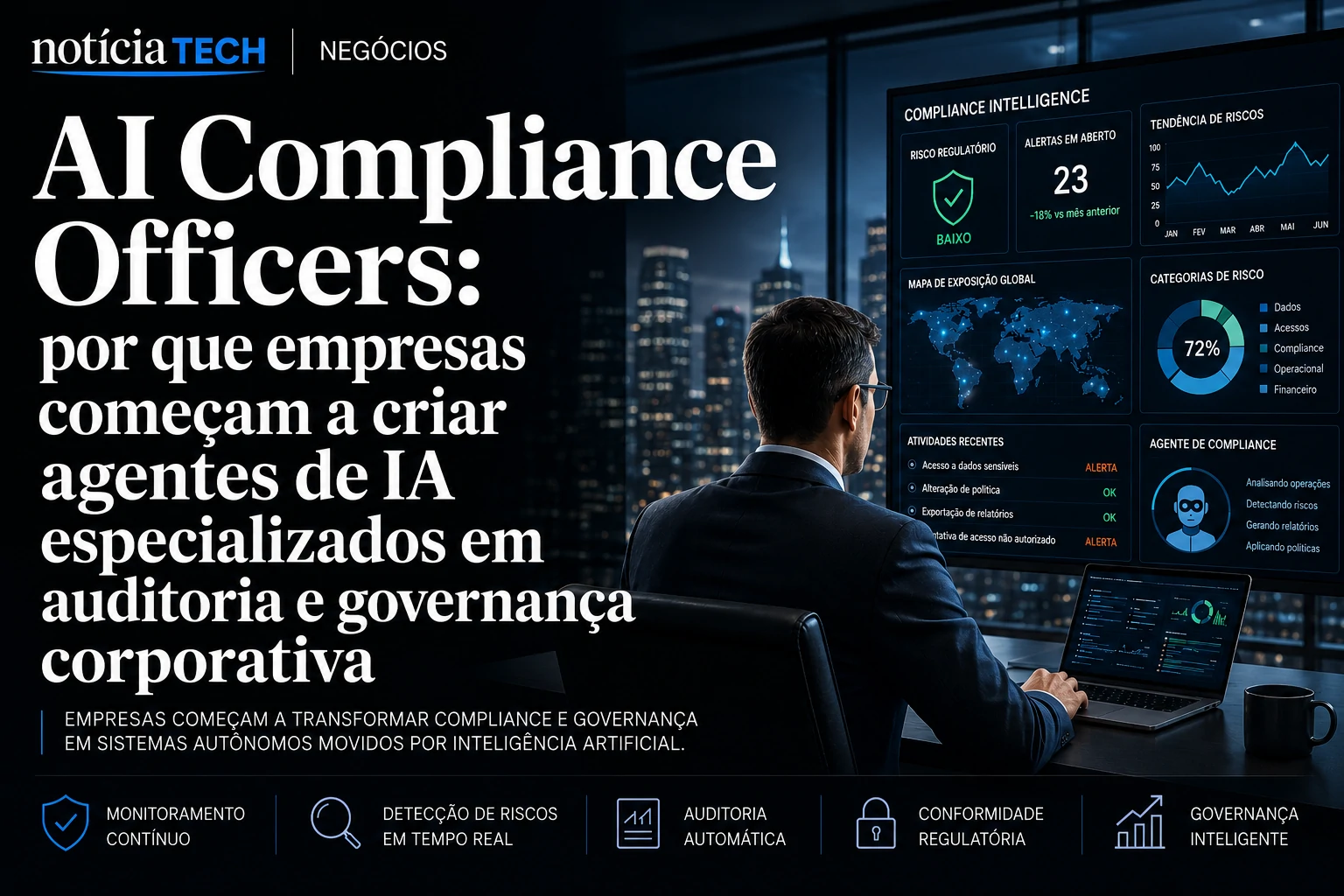
The advancement of artificial intelligence within companies is creating a new silent priority in the corporate market: controlling autonomous systems themselves before they create operational, legal and financial risks that are difficult to manage. In 2026, large companies began to realize that it is not enough to simply implement AI — they will need to govern, audit and supervise intelligent agents at scale.
Companies begin to create agents specialized in AI governance
Companies are developing autonomous agents focused exclusively on compliance, operational auditing and corporate governance to monitor risks created by artificial intelligence itself.
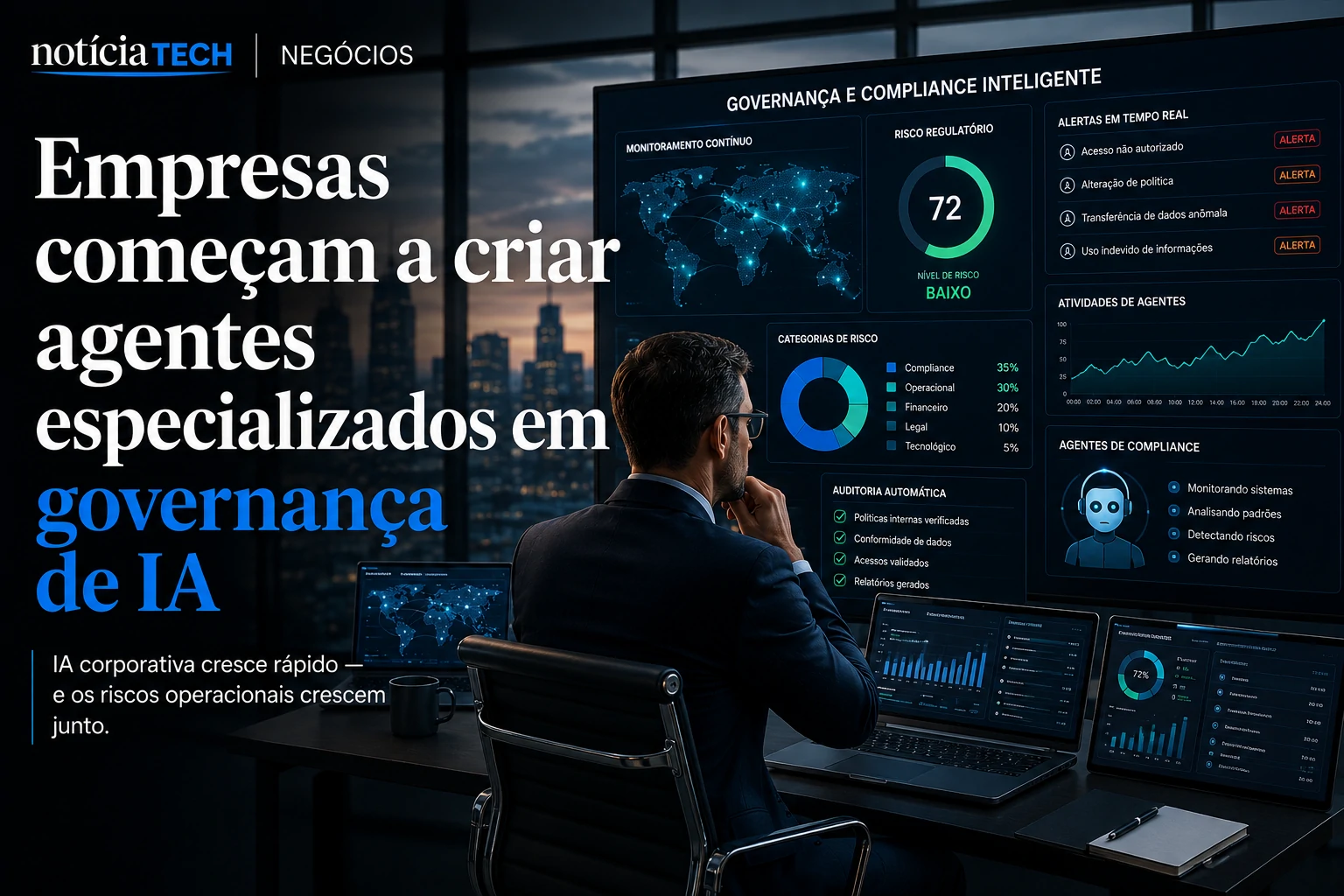
The accelerated growth of corporate AI has created a new problem within organizations: intelligent systems have begun to operate at speeds exceeding human supervisory capabilities.
In practice, this means that:
- AI agents negotiate contracts;
- copilots analyze financial data;
- automations process sensitive information;
- models access corporate databases;
- platforms automatically generate operational decisions.
The result is the emergence of a new layer of invisible risk.
Companies realized that the so-called Shadow AI — decentralized and unsupervised use of artificial intelligence — began to grow uncontrollably within organizations.
This movement directly connects to the advancement discussed in: Shadow AI: companies discover that the invisible use of artificial intelligence has already become an operational risk in 2026
Why does this concern big companies?
The main problem is that AI started to operate in multiple areas simultaneously.
Today, AI models already access:
- CRMs;
- ERPs;
- financial platforms;
- legal systems;
- HR tools;
- service environments;
- sensitive internal documents.
The greater the autonomy of agents, the greater the operational risk.
Companies are beginning to understand that the real challenge is not just implementing AI, but ensuring:
- traceability;
- audit;
- transparency;
- governance;
- regulatory security.
AI Compliance Officers can become a new strategic category in the corporate market
So-called AI Compliance Officers represent a new operational layer created to oversee intelligent systems within companies.
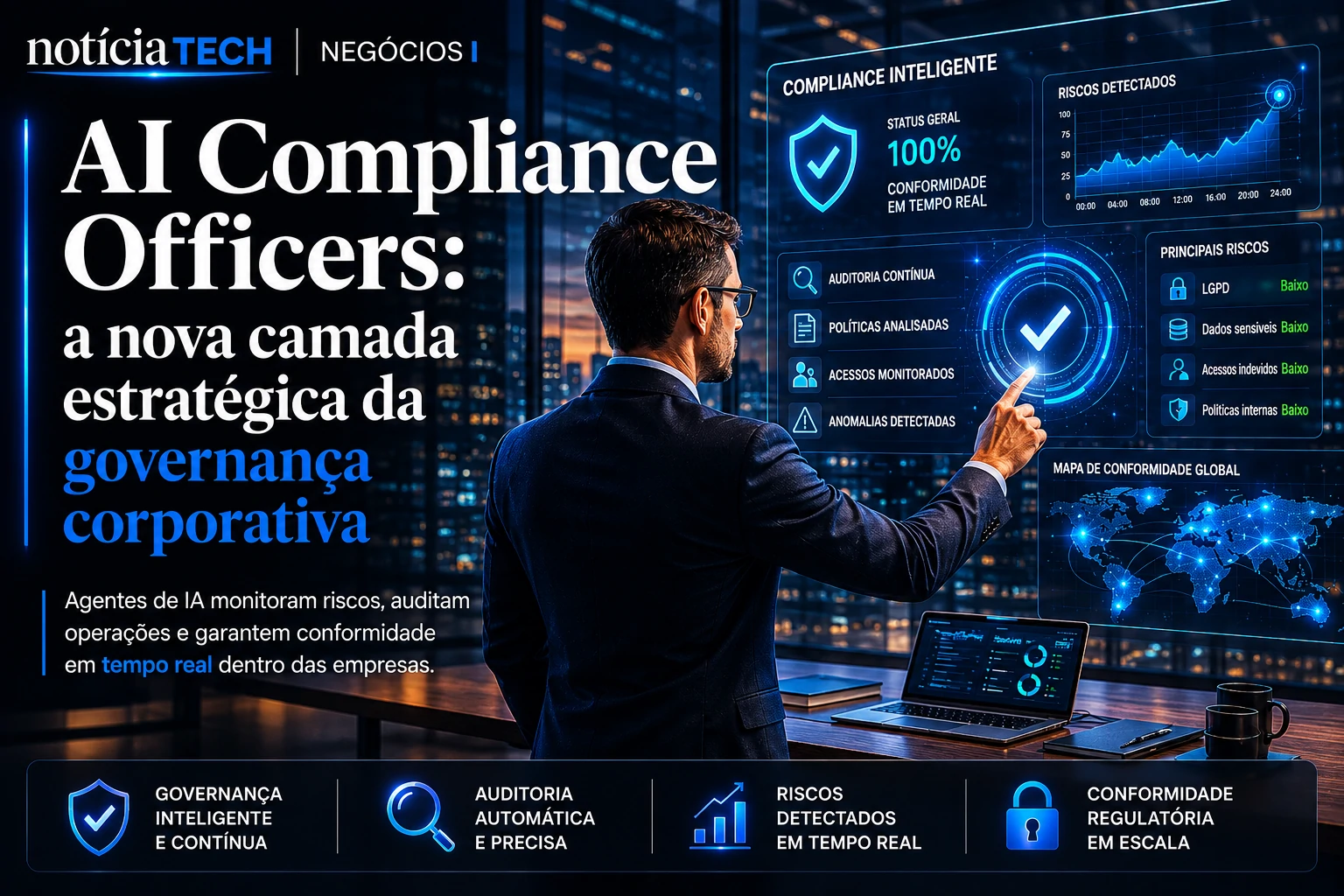
Unlike traditional chatbots, these agents function as automated corporate supervisors.
They can:
- analyze internal policies;
- monitor data flows;
- detect anomalous behavior;
- identify LGPD risks;
- track automated decisions;
- audit internal access;
- generate regulatory reports in real time.
How do these systems work in practice?
New agents use:
- Generative AI;
- machine learning;
- semantic analysis;
- process automation;
- integration with corporate databases.
The objective is to transform compliance into a continuous operation and not just periodic audits.
This movement begins to connect with the rise of so-called autonomous AI ecosystems discussed in: AI Operating Systems: why companies are starting to replace isolated software with autonomous AI ecosystems
What changes for legal departments and compliance?
The traditional corporate audit model is starting to become incompatible with real-time, AI-powered operations.
Instead of quarterly reviews or manual reviews, companies want:
- continuous supervision;
- automatic risk detection;
- monitoring at scale;
- predictive alerts;
- instant tracking.
In practice, compliance begins to migrate from a bureaucratic process to an operational layer integrated into the company’s technological infrastructure.
The new enterprise AI race could be about control, not just productivity
The market is beginning to realize that productivity without governance can create gigantic financial and reputational risks.
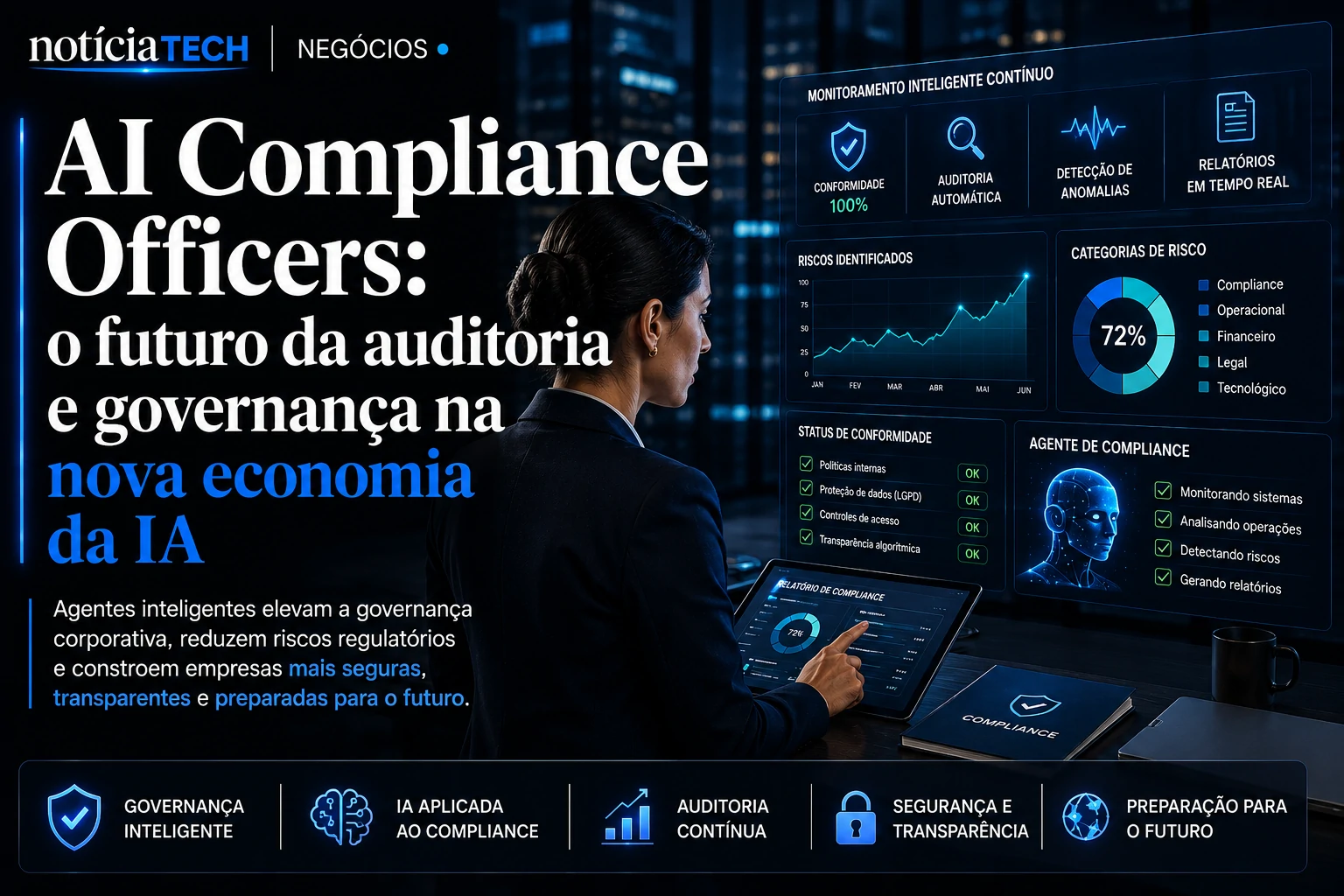
The first phase of enterprise AI was based on expansion.
The second begins to be based on control.
Large companies realized that:
- autonomous agents can make critical decisions;
- models can access sensitive data;
- automations can generate errors at scale;
- systems can create invisible vulnerabilities.
Why did governance become a strategic priority?
The combination between:
- Generative AI;
- autonomous agents;
- corporate integration;
- operational automation;
- decentralized decisions;
is creating a new business risk environment.
This movement already appears in the advance of: The era of AI agents has begun: How Microsoft, OpenAI, and Google are turning companies into systems autonomous
and also in: AI governance becomes a priority for companies
What could this generate in the coming years?
The market may enter a new corporate race:
- companies trying to control autonomous agents;
- platforms creating real-time audit layers;
- ERPs incorporating AI supervision;
- compliance systems being automated;
- new regulations requiring algorithmic traceability.
Analysts are beginning to see that the next big competitive differentiator may not just be having advanced AI, but being able to intelligently govern operations powered by artificial intelligence.
Comentários
Os comentários utilizam autenticação via GitHub para manter um ambiente mais qualificado, seguro e livre de spam.
Entrar ou criar conta no GitHub