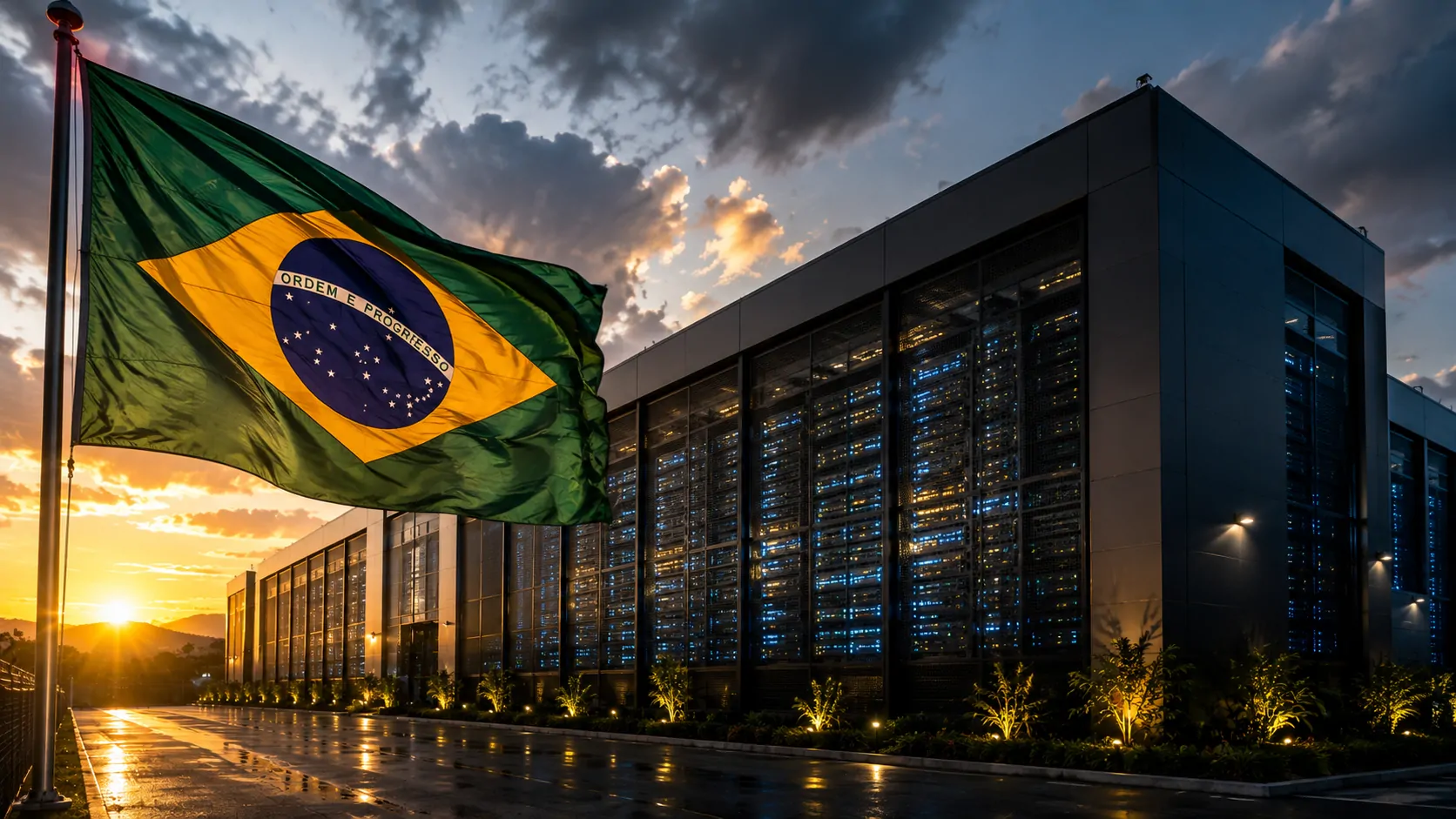
Brazil is treating computing capacity for artificial intelligence as strategic infrastructure. The R$2.3 billion investment in two supercomputing projects puts the country at a crossroads that goes beyond buying machines: building domestic capacity without becoming locked into a single technology path.
Brazil turns computing capacity into an AI priority
Brazil has announced approximately R$2.3 billion to expand its artificial intelligence infrastructure through two supercomputing projects. The strategy involves technology suppliers from the United States and China and is intended to increase Brazil’s ability to develop AI technologies.
More than half of the investment, approximately R$1.3 billion, will go toward a supercomputing infrastructure project in Rio de Janeiro in partnership with Huawei and iFlytek. The project is expected to support the development of general-purpose and sector-specific AI models.
Another R$1 billion will be allocated to a supercomputer in Rio Grande do Norte, which is expected to rank among the world’s ten most powerful systems for AI workloads. The system is expected to use technology from NVIDIA.
The decision to pursue two technology paths is the most strategic aspect of the announcement. Rather than concentrating the entire infrastructure effort around a single supplier, Brazil is seeking to increase its computing capacity while reducing the risks associated with technological dependence.
Two supercomputers serve different strategic goals
The two projects are not simply duplicate infrastructure. They are part of a broader strategy to increase Brazil’s processing capacity while diversifying the technology sources available to the country.
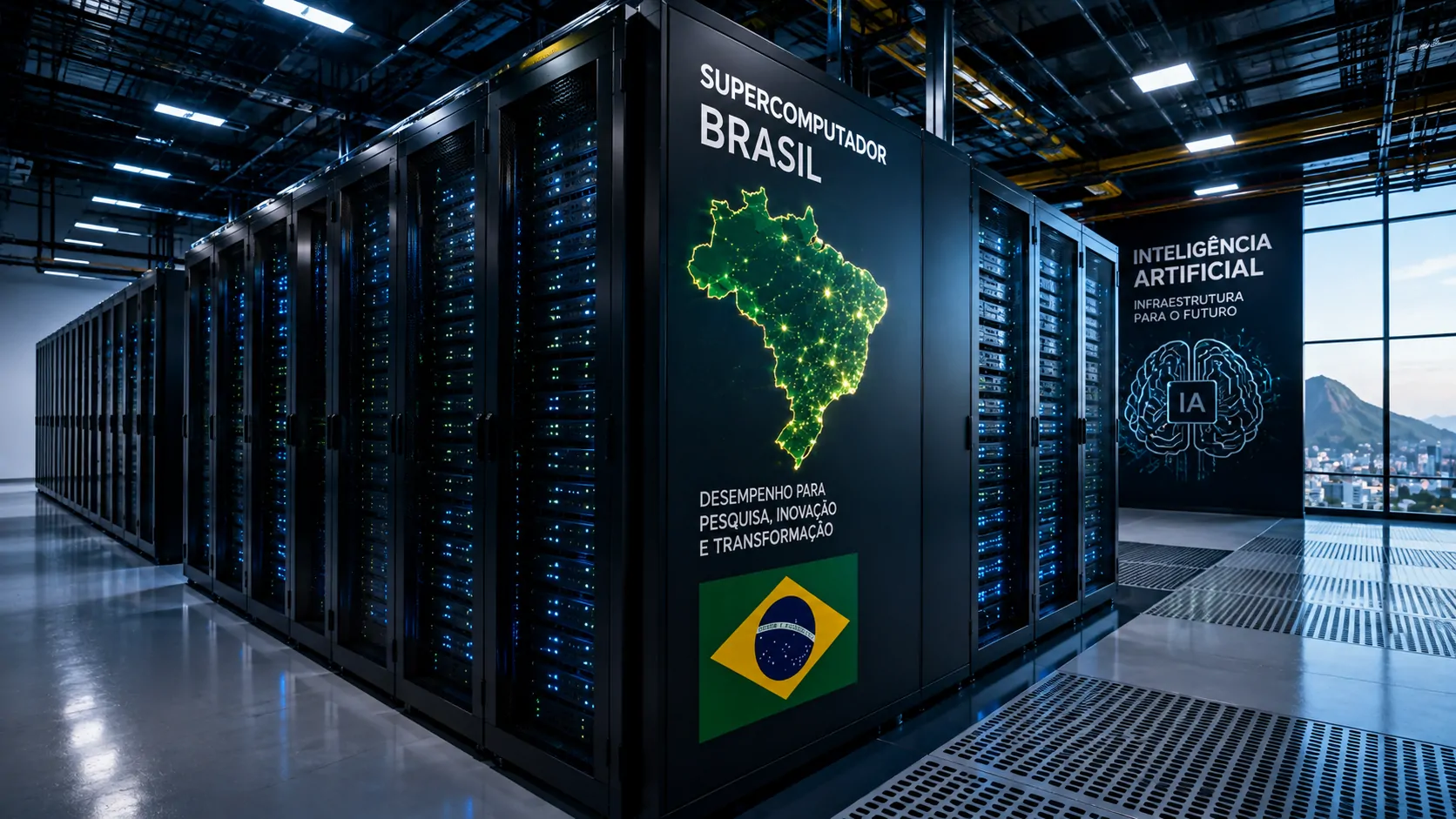
The new projects are expected to expand the computing resources available for artificial intelligence research and development in Brazil.
The NVIDIA technology path
The project planned for Rio Grande do Norte is expected to receive R$1 billion and use technology from NVIDIA, one of the world’s leading suppliers of accelerators used for artificial intelligence workloads.
Computing capacity matters because advanced AI models require large amounts of processing both during training and when applications are running. As models and workloads grow in scale, demand for specialized computing infrastructure also increases.
The Huawei and iFlytek partnership
In Rio de Janeiro, the approximately R$1.3 billion project will be developed in partnership with Huawei and iFlytek, Chinese companies with operations spanning infrastructure and artificial intelligence.
The initiative could expand Brazil’s ability to develop models and applications adapted to its own market while creating a second technology path for the country.
That diversification becomes more important as trade restrictions and geopolitical tensions can affect access to advanced chips, equipment and technology.
Why technology dependence has become a strategic issue
Brazil’s decision comes at a time when computing, chips, energy and data centers have become central elements of the global artificial intelligence race.
Infrastructure is not simply where an AI model runs. It determines how much processing capacity is available, which research projects can be pursued and which companies can experiment with AI applications at greater scale.
This trend is also visible outside Brazil. The expansion of AI infrastructure is creating competition for electricity, land, data centers, networks and specialized accelerators. The physical layer of AI has become one of the biggest challenges facing technology companies and governments.
The scale of this shift can be seen in Mistral AI’s strategy to expand its computing infrastructure in Europe to support the growth of its models and services. The issue is explored in greater detail in Mistral AI plans 1 GW AI infrastructure in Europe by 2030.
The development shows how competition is no longer focused solely on model quality. It increasingly involves who controls the computing capacity required to build and operate those models.
What changes for Brazilian businesses and researchers
The most immediate potential change is greater domestic access to high-performance computing for artificial intelligence.

Greater access to computing capacity could lower some of the barriers facing Brazilian AI research and development projects.
Businesses could gain another layer of infrastructure
Companies developing models, applications or specialized AI solutions need computing capacity for training, testing and deployment.
Larger domestic infrastructure could create opportunities for projects that currently depend on foreign cloud providers or have to compete for limited computing resources.
This does not mean Brazilian companies will stop using international cloud platforms. The more likely outcome is a broader range of infrastructure options for specific research, development and processing workloads.
Universities are also part of the strategy
The infrastructure could have a significant impact on universities and research centers, particularly for projects that require large-scale computing.
The strategic value lies less in having a powerful machine by itself and more in creating an ecosystem capable of turning computing capacity into knowledge, models, software and applications.
That is what could ultimately determine the return on the investment. Buying computing power alone does not guarantee the creation of a competitive domestic AI industry.
Infrastructure can reduce dependence but cannot eliminate risks
Diversifying across NVIDIA, Huawei and iFlytek reduces concentration around a single technology path, but it does not mean complete technological independence.
AI infrastructure depends on a global supply chain that includes chips, memory, networking, cooling systems, electricity, software and specialized equipment.

Supplier diversification can reduce certain risks, but artificial intelligence infrastructure remains deeply connected to a global technology supply chain.
Brazil’s decision illustrates that contradiction. The country wants greater autonomy but still relies on foreign companies for access to advanced computing technologies.
The expansion of this infrastructure also increases pressure on electricity supplies. Technology companies are already looking for new ways to secure power for AI-focused data centers, including Amazon’s plan for a 765 MW power plant associated with its AI infrastructure expansion. The development helps illustrate why energy has become part of the AI computing strategy and is examined in Amazon plans 765 MW power plant to support AI data centers.
For that reason, the most important component of Brazil’s projects may ultimately be knowledge and technology transfer, rather than raw computing capacity alone.
If the infrastructure supports workforce development, software creation, applied research and new businesses, the investment could create capabilities that remain in Brazil long after the supercomputers are deployed.
The real test will be turning computing power into technological capability
The R$2.3 billion investment puts Brazil in a more ambitious position in the global race for artificial intelligence infrastructure, but it is still too early to conclude that the country will achieve technological autonomy.
The projects are expected to become operational by the end of 2027. Until then, procurement, deployment, power availability, system integration and access policies will be critical factors in determining the strategy’s outcome.
For businesses and researchers, the key question will be whether the new computing capacity becomes genuinely accessible for developing domestic products, models and research.
Brazil already has initiatives focused on AI infrastructure and research. The new investment changes the scale of that ambition. The question now is whether this additional computing capacity can be converted into intellectual property, companies, AI models, specialized professionals and competitive applications.
The decision to pursue both American and Chinese technologies also reveals a balancing strategy. Rather than aligning entirely with one technology power, Brazil is attempting to create room for itself in infrastructure that has become essential to the AI economy.
Over the coming years, therefore, the most important measure will not simply be the processing power of Brazil’s new supercomputers, but what the country manages to build on top of them.
Comentários
Os comentários utilizam autenticação via GitHub para manter um ambiente mais qualificado, seguro e livre de spam.
Entrar ou criar conta no GitHub