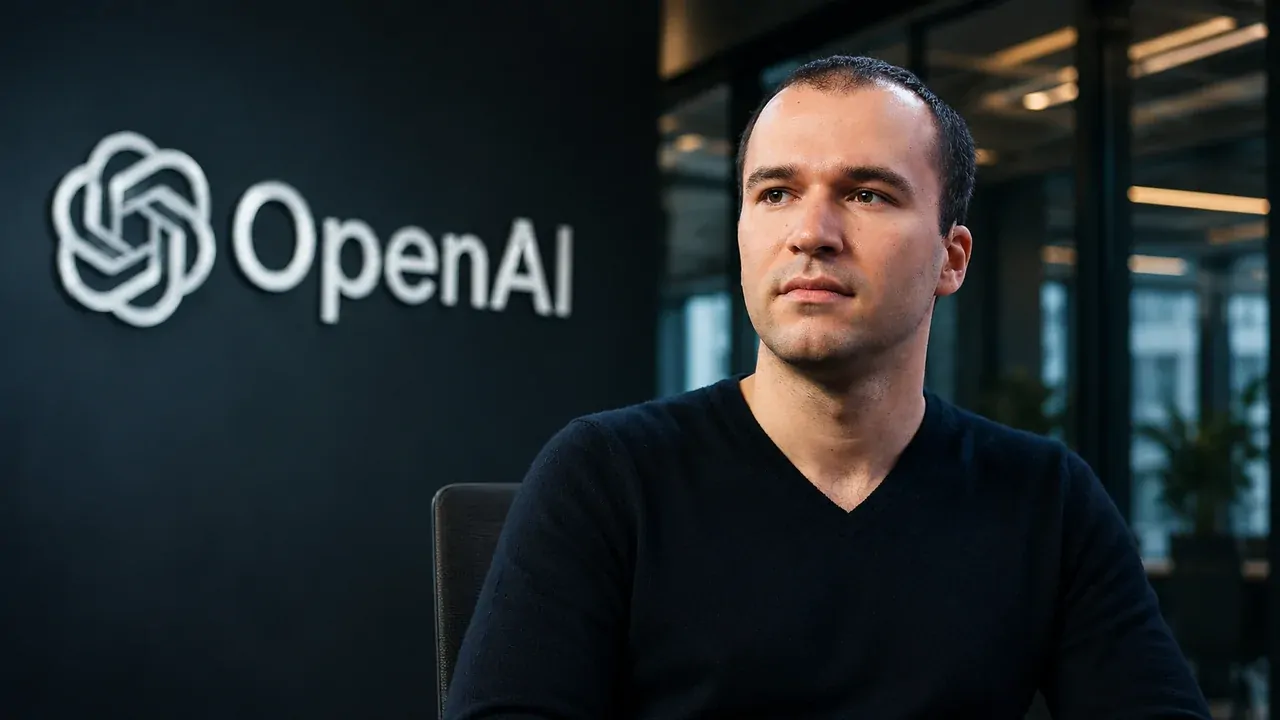
Greg Brockman has moved beyond a role primarily associated with engineering and is gaining greater influence over OpenAI’s core decisions. The shift comes as the company deals with executive departures, expands its commercial operations and seeks to turn its scale into a sustainable competitive advantage against rivals such as Anthropic and Google.
OpenAI is giving Brockman a larger role in key decisions
OpenAI is going through one of the biggest leadership reorganizations in its recent history. The company has lost senior executives across several areas while also redistributing strategic responsibilities within the organization.
Against that backdrop, Greg Brockman, the company’s co-founder and president, has gained influence. Recent reports indicate that he is becoming more directly involved in areas including product strategy, scaling and commercial operations.
The shift matters because Brockman’s profile has always differed from that of a traditional corporate executive. His background combines deep technical expertise with a long-standing role in shaping the company’s strategic direction.
The result is a greater concentration of decision-making around one of the people who has known OpenAI since its earliest days. For a company that has grown rapidly through ChatGPT, bringing engineering, product and strategy closer together could help accelerate execution.
Brockman’s role has changed as OpenAI has scaled
Greg Brockman is taking on broader influence across OpenAI’s strategic areas.
When OpenAI was still primarily a research organization, Brockman’s role was closely tied to engineering and the infrastructure required to develop advanced artificial intelligence systems.
The company’s current scale has changed that equation. ChatGPT has transformed OpenAI into a company with more than one billion weekly users and more than two million businesses using its products, according to the company.
That growth requires a different set of decisions from those made by a research laboratory. Product development, infrastructure, distribution, sales and enterprise relationships increasingly depend on coordinated execution.
Brockman also formally took on product strategy during an earlier reorganization, when OpenAI sought to bring efforts involving ChatGPT, Codex and its AI infrastructure closer together. The move helped connect technical development more directly with product strategy.
His broader influence now suggests that the company is trying to further reduce the distance between the teams building the technology and the people deciding how it will become a business.
Executive departures accelerated the reorganization
Brockman’s expanded role comes alongside a series of changes among OpenAI’s senior leadership. Executives responsible for areas such as operations, revenue and other strategic functions have left the company during a period of rapid transformation.
The company, however, is not simply replacing individual executives. Some of the changes point to an effort to redesign the organization for a business that has grown far beyond its original research-lab model.
The appointment of Dali Rajic as chief revenue officer is one example. OpenAI said he would be responsible for building a commercial organization capable of supporting the company’s next stage of expansion.
That helps explain why Brockman’s role has become more significant. OpenAI needs to connect technology development, products and revenue generation with less organizational fragmentation.
Competitive pressure is also increasing
The restructuring is taking place as Anthropic gains ground in the enterprise market and other companies compete across different parts of the artificial intelligence value chain.
The competition is no longer determined solely by which company has the most capable model. Companies also need to turn computing power into products, services and long-term enterprise contracts.
In that environment, a leader with deep technical expertise can help OpenAI determine which products should receive resources and which initiatives need to be reduced, integrated or redirected.
Product strategy has become more important to OpenAI
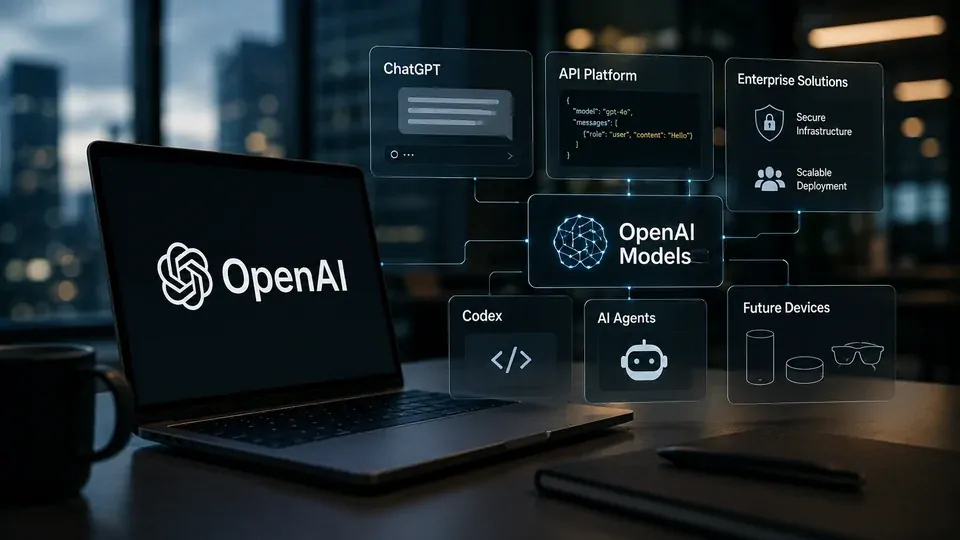
OpenAI is working to integrate its products and infrastructure as competition shifts toward execution.
The AI race is increasingly becoming a broader question: which companies can turn advanced models into platforms that people and businesses use every day?
For OpenAI, that means integrating different parts of its ecosystem. ChatGPT, Codex, APIs, AI agents and future devices need to fit into a strategy that can increase usage without creating an overly fragmented organization.
That also helps put OpenAI’s move into hardware into context. Notícia Tech has already analyzed how the company entered the hardware race and is preparing a new generation of ChatGPT devices.
The central issue is that hardware, software and AI services could increasingly become part of a single user experience. Making that work requires fast product decisions and a consistent technology strategy.
This is where Brockman’s influence becomes particularly important. His technical background could help connect infrastructure, engineering and product development as OpenAI attempts to turn that integration into a competitive advantage.
What changes for OpenAI with more centralized power
The concentration of responsibilities could provide an immediate advantage: faster decision-making.
At a rapidly growing company, highly fragmented structures can create internal competition for resources, conflicting priorities between teams and delays in turning strategic decisions into products.
By bringing more areas under centralized leadership, OpenAI could reduce some of that friction. This matters even more as the company decides where to allocate enormous amounts of computing capacity and technical talent.
But there is a trade-off.
The more decisions become concentrated, the more dependent the organization becomes on a small number of leaders. A company the size of OpenAI needs to preserve speed without creating a management bottleneck.
The next phase will be more enterprise-focused
The transformation also reveals a broader change in the nature of OpenAI itself.
The company is no longer focused only on developing increasingly capable AI systems. It must also prove that it can turn those systems into sustainable products, win enterprise customers and build a commercial operation that matches its scale.
That shift is taking place alongside preparations for a potential public offering. As a result, decisions about organizational structure, leadership and operational efficiency carry far more weight than they did when OpenAI functioned primarily as a research laboratory.
Brockman could play a decisive role in OpenAI’s next phase
Brockman’s growing influence puts his ability to execute at the center of OpenAI’s next stage.
Greg Brockman’s rise does not mean that Sam Altman is no longer OpenAI’s leading executive. Altman remains CEO and continues to oversee the company’s overall direction.
What has changed is the distribution of responsibilities. Brockman now occupies a more central position in executing a strategy that requires closer integration between technology, products and business.
For OpenAI, that combination could matter because the next stage of the AI race will not be won by new models alone. The company needs to turn its technology into a platform that becomes increasingly embedded in the daily operations of consumers and organizations.
The market will be watching to see whether the new structure can deliver three outcomes: faster execution, greater product integration and sustainable growth in the enterprise business.
The answer will determine whether concentrating more responsibilities around Brockman is simply a response to the company’s current period of turbulence or a permanent change in how OpenAI is managed.
Meanwhile, the company continues to expand its presence in the enterprise market and refine its strategy for a competition spanning models, infrastructure, AI agents, software and hardware. Notícia Tech has already followed this broader shift in its analysis of OpenAI’s strategy to expand its enterprise focus ahead of a potential IPO.
Brockman’s next test will be turning his expanded influence into consistent execution. For a company the size of OpenAI, gaining speed may be important, but making that speed work at scale will be the real challenge.
Comentários
Os comentários utilizam autenticação via GitHub para manter um ambiente mais qualificado, seguro e livre de spam.
Entrar ou criar conta no GitHub