
The advancement of artificial intelligence is silently changing the logic of corporate digital discovery. While companies are still trying to understand the impact of GEO, AI Overviews and generative search, a parallel transformation is beginning to accelerate within LinkedIn itself. The platform that for years was seen solely as a space for resumes and professional networking is now entering a new phase: becoming a B2B distribution infrastructure based on algorithmic authority, specialized content and corporate influence.
LinkedIn begins to compete for space with Google, newsletters and specialized media

For a long time, LinkedIn was treated by companies as an extension of corporate recruitment. Institutional publications, job vacancies and internal advertisements dominated the platform’s logic.
But the dynamic has changed.
With the rise of generative artificial intelligence and context-based search, the market has begun to realize that B2B brand discovery is quickly migrating to environments where:
- there is professional authority;
- there is semantic context;
- there is corporate behavior;
- there is qualified human signaling.
In this scenario, LinkedIn gains an important strategic advantage.
The platform started to function as a corporate discovery mechanism
The LinkedIn algorithm started to prioritize:
- depth of content;
- reading retention;
- qualified interactions;
- professional expertise;
- niche authority signals.
In practice, this brings the platform closer to the logic of new AI-driven search engines.
Companies that previously depended solely on:
- Google;
- paid media;
- Traditional SEO;
- commercial outbound;
are now starting to use LinkedIn as infrastructure for:
- demand generation;
- building authority;
- acquisition of leads;
- distribution of knowledge;
- strengthening the executive brand.
This movement speaks directly to the transformation already observed in content about GEO and algorithmic discovery previously published by Notícia Tech:
- GEO is replacing SEO: how AI search can change internet traffic
- Google integrates AI directly into the search engine and changes the way companies appear online
The Growth of Executive Content Is Changing B2B Marketing
One of the most relevant changes is the growth in the figure of:
- creator executive;
- founder creator;
- creator specialist;
- media company.
The traditional logic of corporate marketing begins to lose efficiency in the face of advertising saturation and the drop in trust in conventional advertisements.
At the same time, content produced by:
- CEOs;
- founders;
- experts;
- market operators;
they start to generate more organic reach, more retention and more decision-making influence.
This happens because AI algorithms value:
- context;
- depth;
- specialization;
- real experience;
- human signals.
The growth of premium newsletters itself reinforces this structural change in the corporate internet:
Artificial intelligence is turning LinkedIn into a professional recommendation system
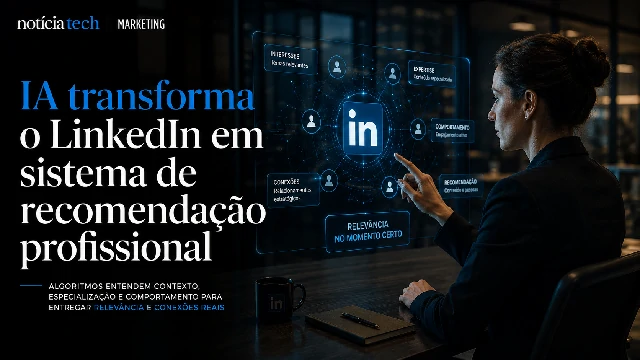
LinkedIn’s transformation doesn’t just happen in the feed.
It is linked to the evolution of AI applied to contextual recommendation.
The platform’s algorithm now comprises:
- themes;
- specializations;
- reading behavior;
- semantic density;
- professional relevance.
This creates an environment that is extremely aligned with the new AI-driven digital discovery model.
The feed stops being chronological and becomes contextual
The main change is structural.
LinkedIn no longer just functions as a professional social network.
It starts operating as:
- relevance engine;
- digital reputation system;
- expertise recommender;
- distributor of corporate influence.
Publications begin to circulate not only through direct connections, but through:
- thematic affinity;
- market signals;
- contextual authority;
- professional consumer behavior.
This logic brings LinkedIn closer to platforms driven by contextual intelligence.
Companies are beginning to realize that paid reach is no longer enough
The cost of digital acquisition continues to rise.
At the same time:
- ads face fatigue;
- tracking loses efficiency;
- cookies disappear;
- traditional organic traffic becomes more competitive.
In this scenario, companies are beginning to see LinkedIn as a hybrid channel between:
- media;
- branding;
- distribution;
- authority;
- demand generation.
This helps explain why so many companies have started to invest in:
- social selling;
- executive branding;
- thought leadership;
- corporate editorial production;
- internal creators.
The transformation is also connected to the advancement of the B2A concept — businesses oriented towards artificial intelligence and contextual mechanisms:
LinkedIn could become the leading enterprise digital authority infrastructure of the next decade
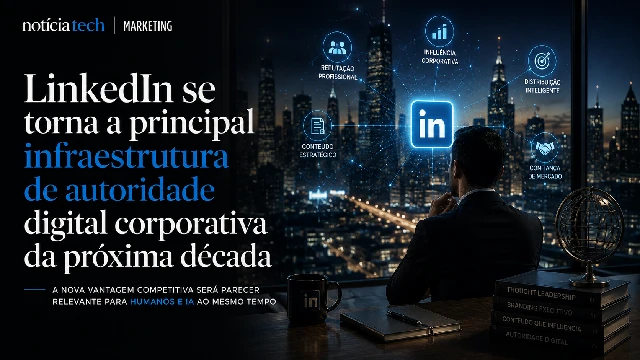
The fight for digital attention is entering a new phase.
For years, companies have competed primarily by:
- keywords;
- traffic;
- paid media;
- positioning in search engines.
Now, the dispute begins to migrate to:
- contextual authority;
- algorithmic presence;
- semantic recognition;
- continuous professional relevance.
And this completely changes the logic of B2B marketing.
The next competitive advantage will be appearing relevant to humans and AI at the same time
With the expansion of generative systems, companies are beginning to realize that they need to be understood by:
- users;
- algorithms;
- AI assistants;
- recommendation mechanisms;
- contextual platforms.
In this scenario, LinkedIn gains strength because it combines:
- professional identity;
- specialized content;
- human signals;
- corporate behavior;
- business context.
This creates an extremely valuable environment for:
- organic distribution;
- business discovery;
- digital reputation;
- building trust.
The future of corporate marketing may be less advertising and more editorial
The movement points to a greater transformation.
Companies begin to act less like advertisers and more like:
- media producers;
- knowledge distributors;
- expertise hubs;
- editorial ecosystems.
Content starts to function as a long-term strategic asset.
And LinkedIn, silently, begins to occupy a space that previously belonged only to:
- to Google;
- specialized portals;
- premium newsletters;
- to traditional B2B acquisition mechanisms.
The change still seems initial.
But for many companies, LinkedIn has already stopped being just a professional network — and has started to transform into one of the main corporate influence infrastructures in the artificial intelligence-driven economy.
Comentários
Os comentários utilizam autenticação via GitHub para manter um ambiente mais qualificado, seguro e livre de spam.
Entrar ou criar conta no GitHub