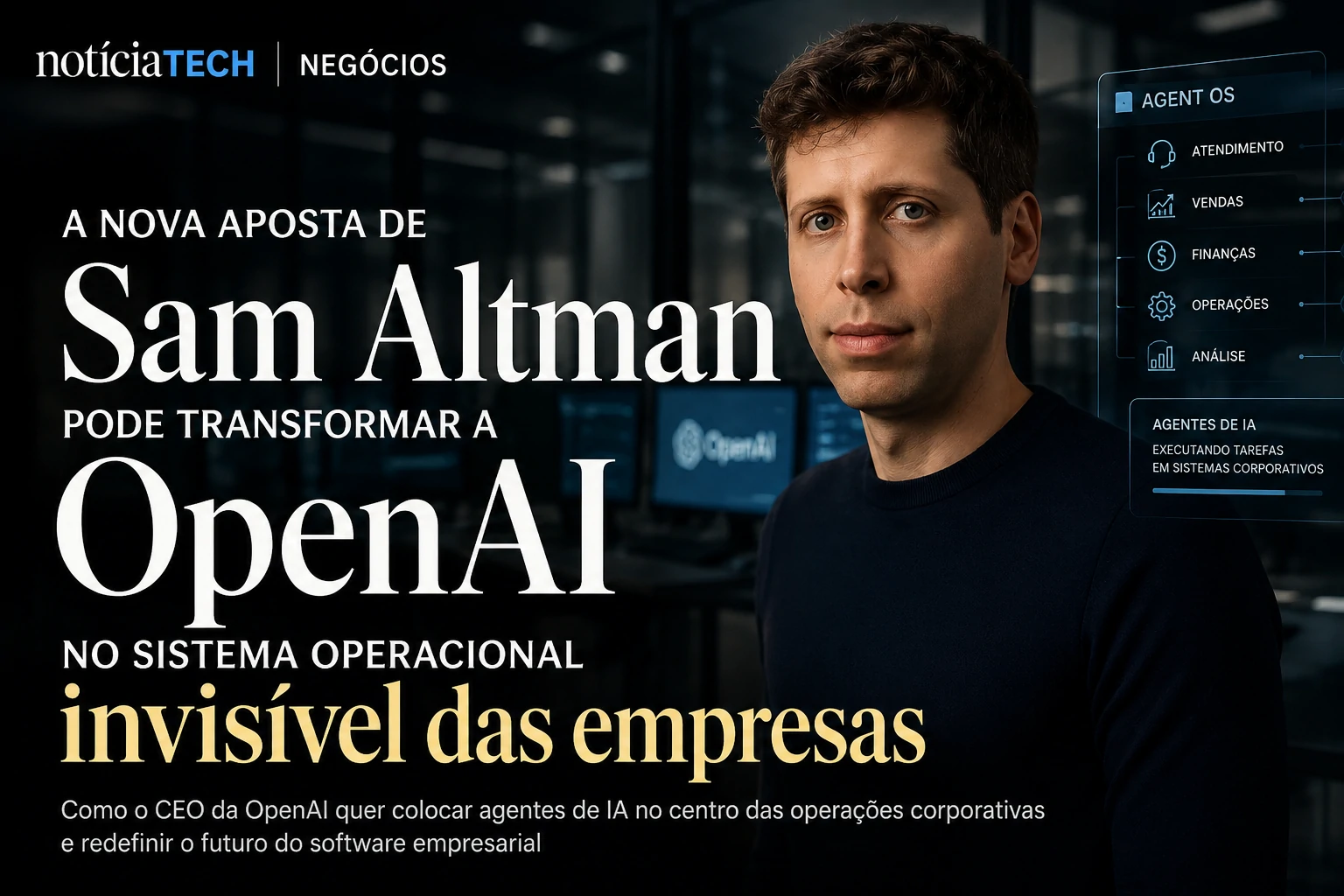
The corporate artificial intelligence market is entering a new phase. After the initial race for chatbots and copilots, technology giants are now competing for something much bigger: transforming AI into companies’ operational infrastructure. At the center of this movement is Sam Altman, CEO of OpenAI, who has been accelerating a strategy capable of redefining how enterprise software works, how employees work and how business decisions will be made in the coming years.
Sam Altman wants to transform AI agents into new digital operators for companies
OpenAI’s new strategy is clear: transform autonomous agents into an operational layer capable of performing business tasks in a continuous, integrated and contextual way.
In practice, this means that AI stops functioning just as a consultation tool and starts operating real processes within companies.
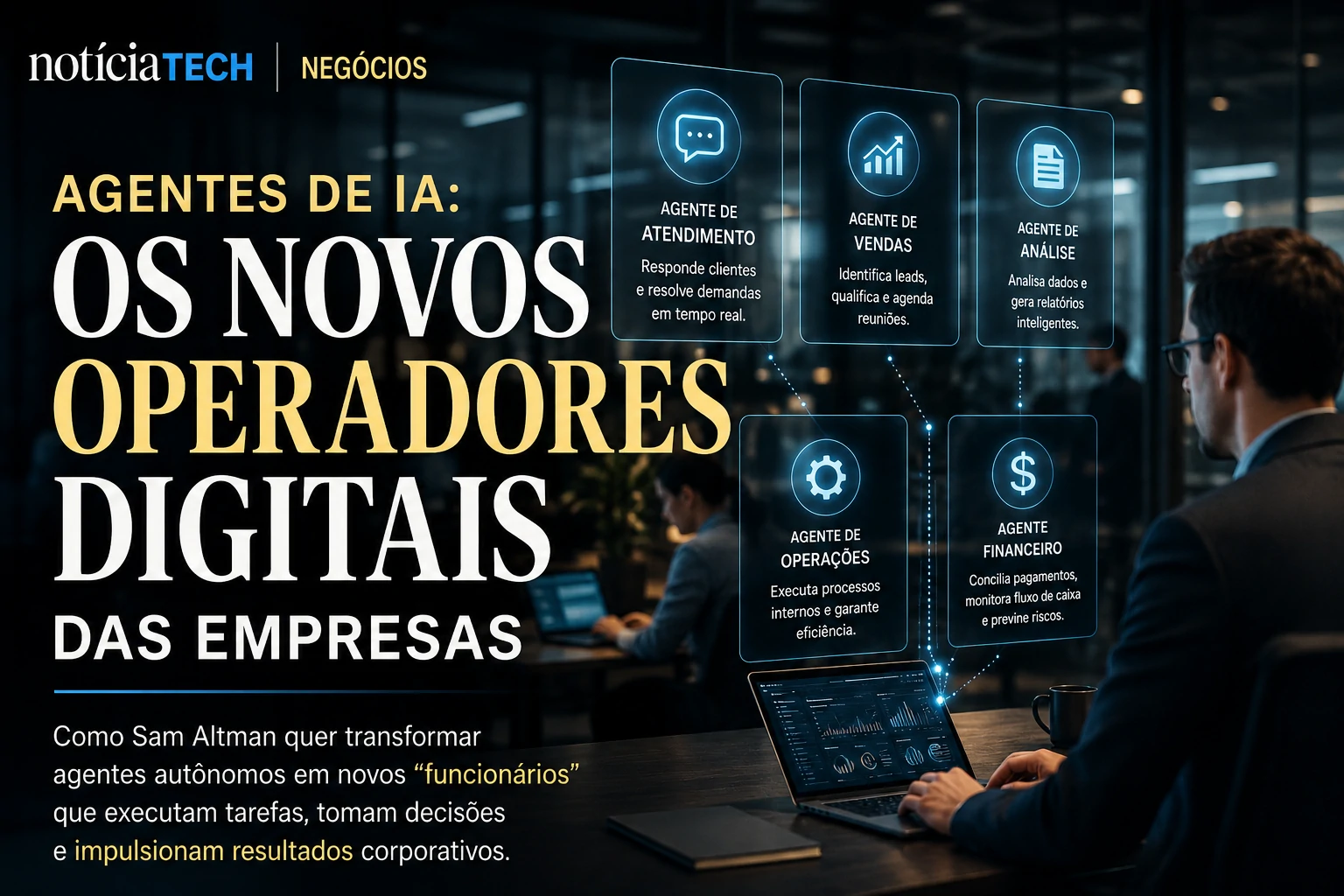
So-called AI agents can:
- analyze documents;
- respond to customers;
- organize internal flows;
- perform administrative tasks;
- generate reports;
- interpret corporate data;
- operate multiple software simultaneously.
The vision defended by Sam Altman is that companies will start using hybrid teams made up of humans and intelligent agents working together in real time.
This movement is already starting to have an impact:
- corporate service;
- B2B sales;
- technical support;
- marketing;
- financial analysis;
- internal operations.
The market realizes that the current dispute is not just about smarter language models. The real war started at the corporate operational layer.
This transformation directly connects to the advancement of autonomous agents described in: “The era of AI agents has begun”
What changes with corporate agents?
AI agents begin to reduce dependence on traditional interfaces.
Instead of:
- open systems;
- navigate menus;
- fill in screens manually;
the professional can simply delegate tasks to the AI to perform.
This completely changes the logic of traditional enterprise software.
Why does this matter to the B2B market?
The B2B market sees three immediate advantages:
- increase in productivity;
- reduction of operating costs;
- acceleration of internal processes.
According to projections from global consultancies, companies are expected to invest hundreds of billions of dollars in AI-based automation by the end of the decade.
The reason is simple: operational AI begins to have direct financial impact.
OpenAI could become a silent threat to the traditional enterprise software market
OpenAI’s ambition goes far beyond competing with other chatbots.
The movement led by Sam Altman suggests that the company wants to position itself as a new universal layer of interaction between humans and corporate software.
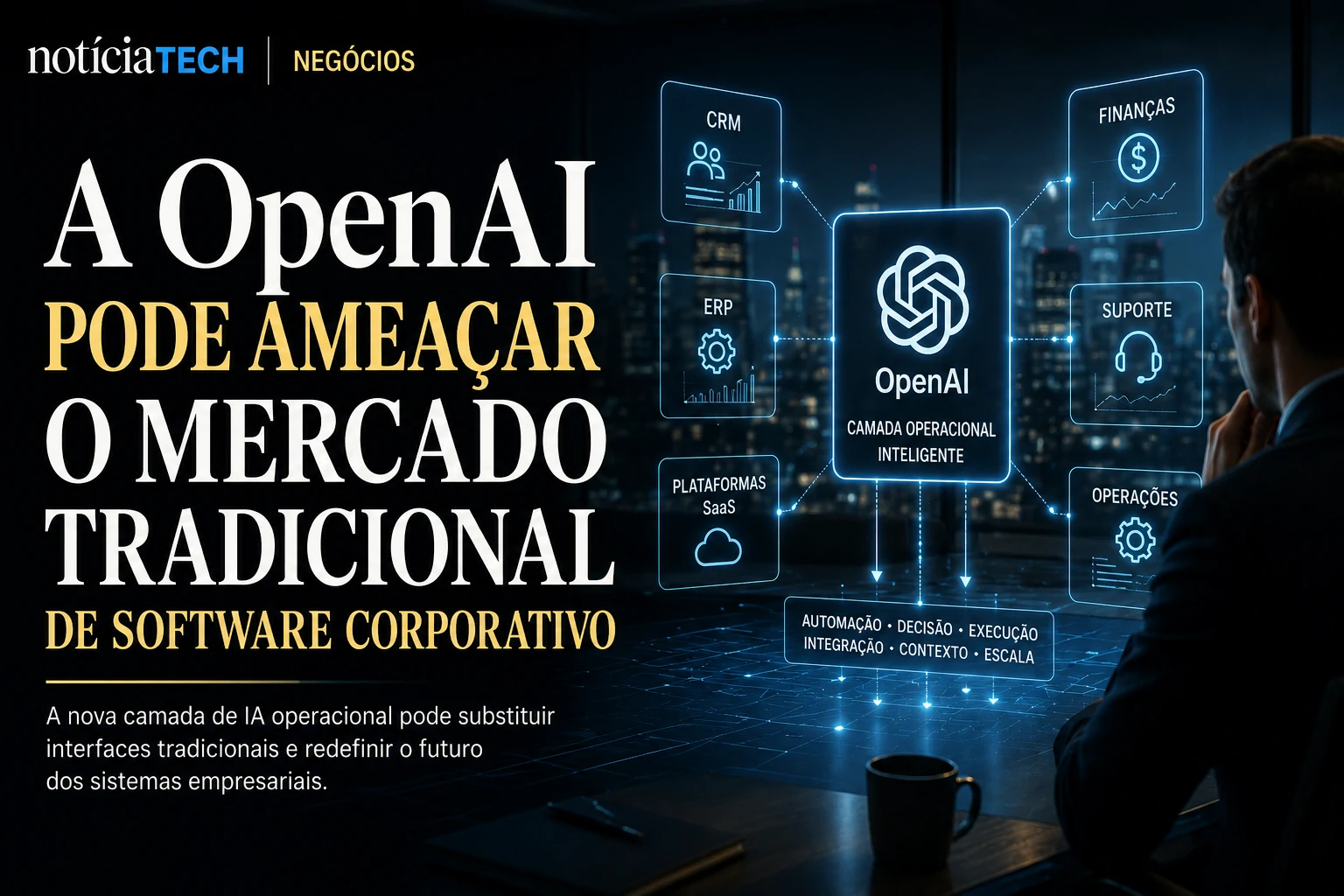
In practice, this means that AI could begin to replace some of the traditional navigation within:
- CRMs;
- ERPs;
- SaaS platforms;
- productivity software;
- internal business systems.
Instead of learning dozens of platforms, employees will be able to use just one conversational interface connected to multiple systems.
This creates pressure on giants like:
- Salesforce;
- SAP;
- Oracle;
- Microsoft;
- Google;
- ServiceNow.
The transformation also reinforces the concept of “AI Operating Systems”, previously discussed by Notícia Tech: “AI Operating Systems: why companies are starting to replace isolated software with autonomous AI ecosystems”
The new dispute is no longer just about AI
The market realizes that the dispute now involves:
- control of operational flow;
- data integration;
- corporate productivity;
- large-scale automation;
- business technological dependence.
Whoever masters this operational layer will be able to control a significant part of the next generation of corporate software.
Why does Microsoft remain central to this dispute?
Despite OpenAI’s aggressive expansion, the partnership with Microsoft remains strategic.
The ecosystem formed by:
- Azure;
- Copilot;
- Windows;
- Microsoft 365;
still offers huge corporate advantage.
Therefore, the market closely follows movements between the two companies: “Microsoft and OpenAI change partnership and warn companies about the risk of depending on a single AI”
Brazilian companies are beginning to realize that operational AI can redefine competitiveness in the coming years
The adoption of corporate AI in Brazil is beginning to accelerate, especially among companies seeking productivity and cost reduction.
The problem is that many organizations still treat AI only as an experimental tool.
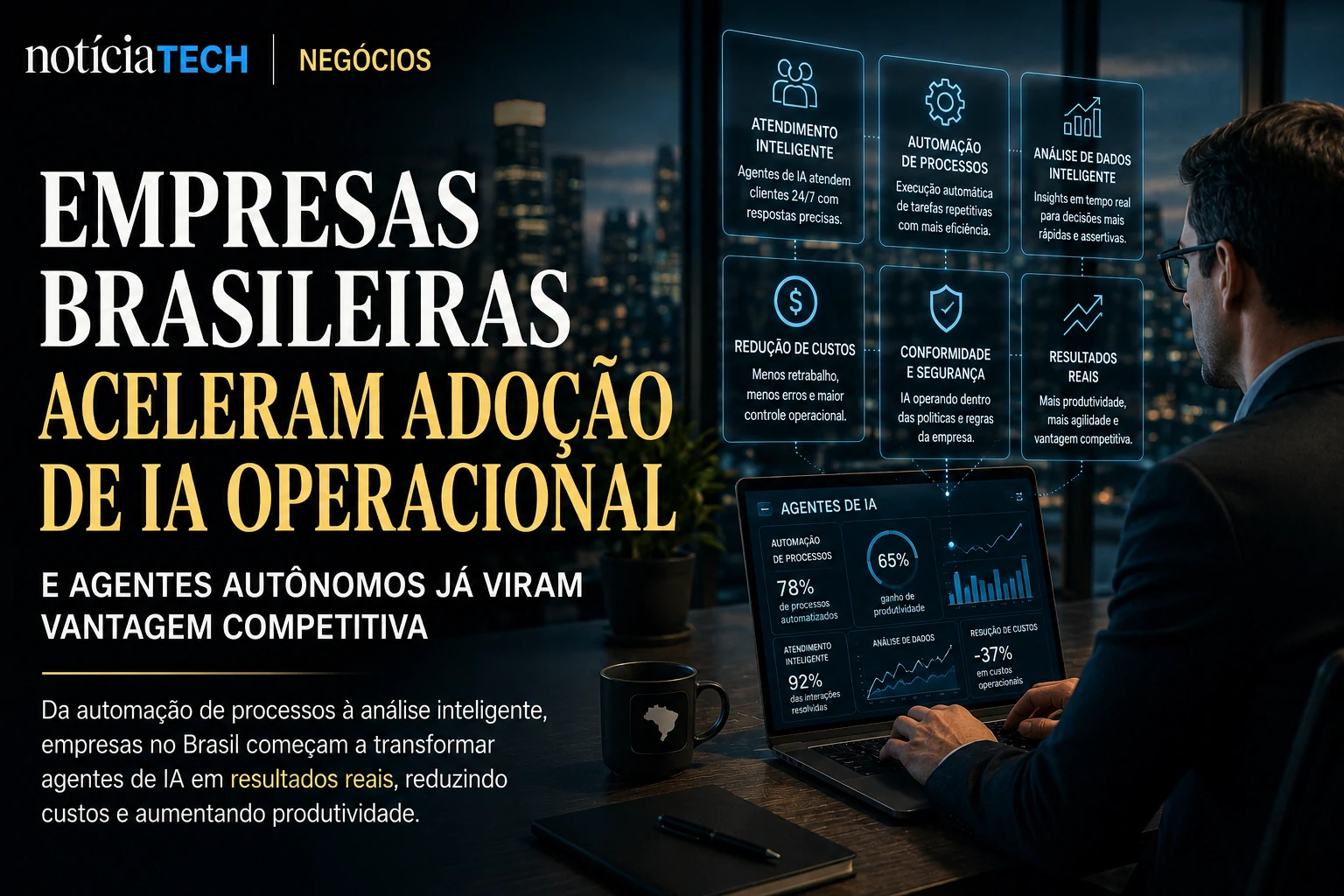
Meanwhile, more advanced companies are starting to:
- integrate internal agents;
- automate flows;
- create AI Operations structures;
- connect AI to corporate systems.
This movement has already led companies to create new positions focused exclusively on managing independent agents: “Companies begin to create AI Operations positions to control autonomous agents”
What changes for small and medium-sized companies?
Small businesses can access capabilities that previously only belonged to large corporations.
Operational AI enables:
- automate service;
- generate content;
- organize sales;
- analyze data;
- accelerate support;
- reduce operational teams.
This reduces competitive barriers and accelerates digital transformation.
The impact is also already appearing in the B2B software market: “AI agents begin negotiating corporate contracts and could transform the B2B software market”
The next big fight will be invisible to most companies
A large part of the market still sees AI as a productivity tool.
But the vision defended by Sam Altman points to something much bigger: an intelligent operational infrastructure running silently within companies.
This can transform:
- software;
- processes;
- productivity;
- management;
- service;
- decision making.
The corporate AI race stops being just technological and becomes structural.
In the coming years, companies will not just compete for who has the most data or the best systems. The dispute will be about who will be able to build entire operations supported by intelligent agents capable of learning, executing and continually evolving within the corporate environment.
Comentários
Os comentários utilizam autenticação via GitHub para manter um ambiente mais qualificado, seguro e livre de spam.
Entrar ou criar conta no GitHub