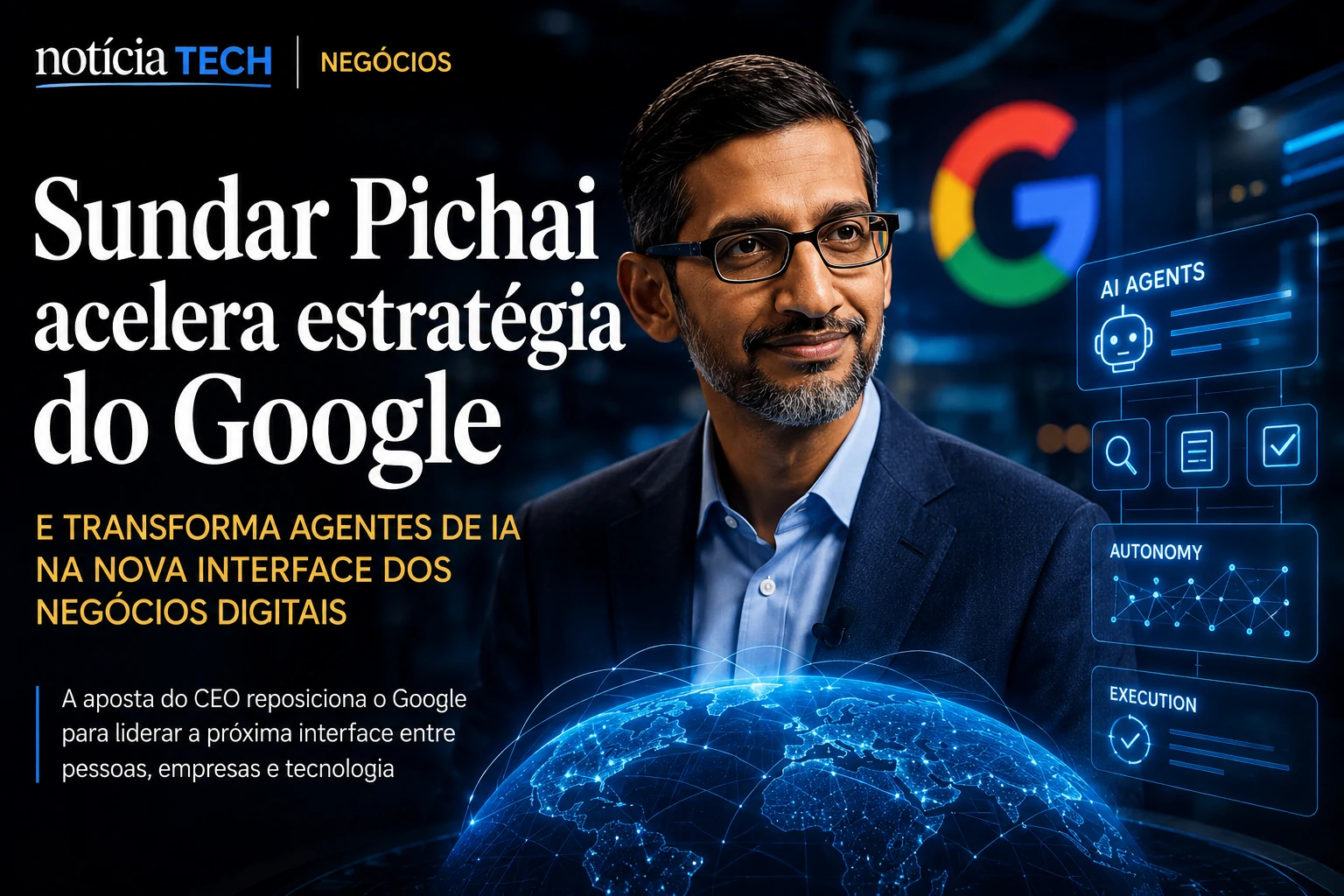
The advancement of artificial intelligence is no longer just a race for more powerful models. Now, the dispute involves who will control the next interface between people, companies and technology. In this scenario, Sundar Pichai has been positioning Google for a transformation that could profoundly change the way businesses operate, sell and relate to customers in the digital economy.
Sundar Pichai’s strategy goes beyond AI models

Sundar Pichai’s strategy is not just focused on creating more advanced models. The objective is to transform artificial intelligence into an operational layer present throughout the Google ecosystem.
During the company’s recent announcement cycles, it became clear that tools such as Gemini, intelligent search, corporate productivity and automation began to function as parts of the same system.
From search to execution
For decades, search engines have helped users find information.
Now, intelligent agents begin to perform complete tasks, reducing steps between intention and result.
This change could transform the internet into an environment driven by actions and not just clicks.
Google’s new positioning
The movement led by Sundar Pichai suggests that Google intends to occupy a central position in the infrastructure of corporate agents.
Instead of competing only with traditional search engines, the company competes for space with platforms capable of automating work, service, productivity and decision making.
AI agents can become the main interface of business
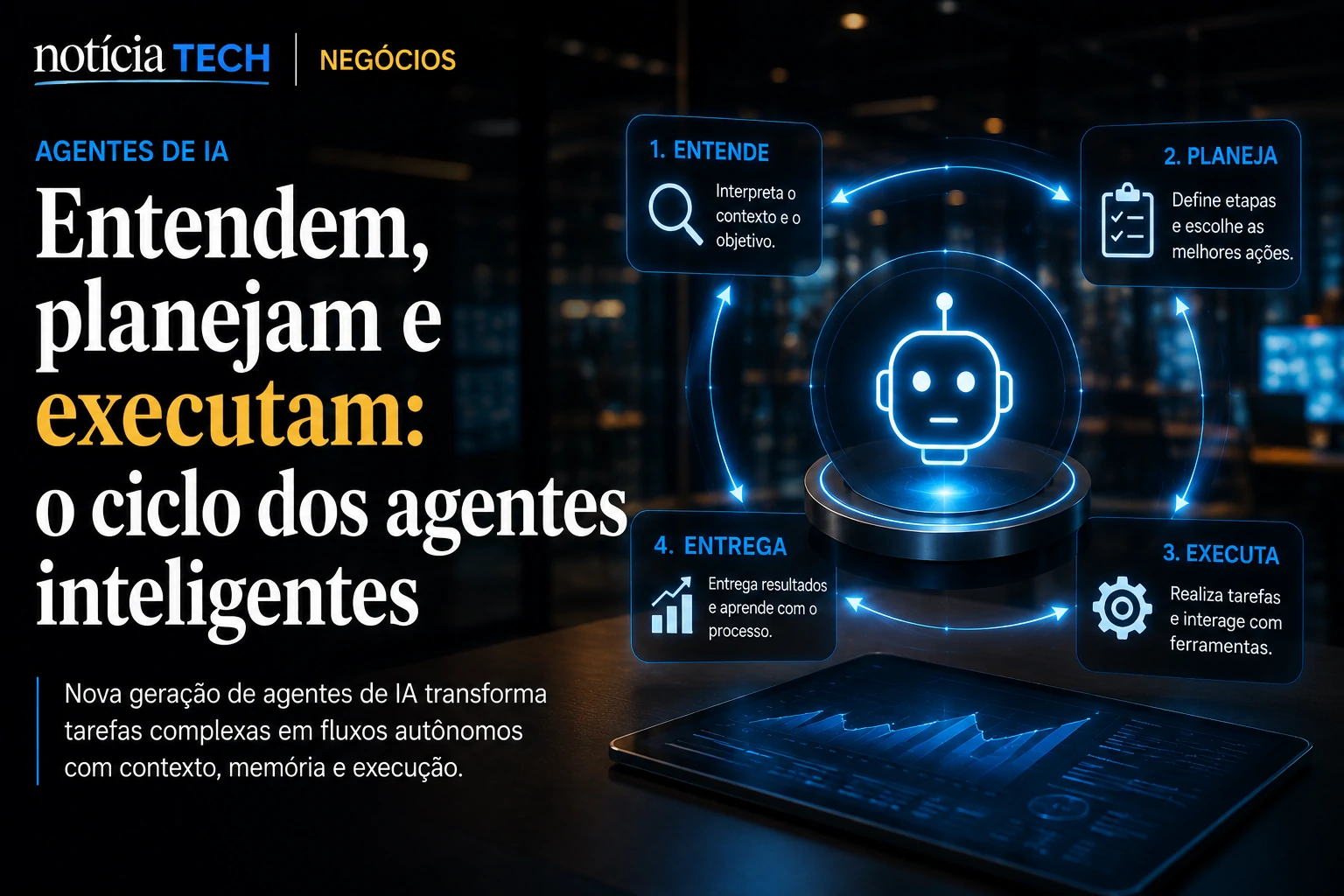
AI agents are evolving to become the middle layer between users and enterprise systems.
This transformation can change the way companies sell products, distribute content and offer services.
The end of traditional digital journeys
Historically, consumers accessed websites, apps and marketplaces to complete tasks.
With intelligent agents, some of these interactions may occur without direct navigation.
The user simply describes a goal and the AI takes steps on their behalf.
This scenario directly connects to the changes discussed in AI Search Engines begin to replace traditional websites and create a new silent crisis for digital publishers.
Companies will need to be understood by AI
The new dispute does not just involve visibility for people.
Businesses will need to be understood by intelligent systems capable of recommending products, suppliers and services.
This phenomenon reinforces concepts already observed in B2A: the new frontier of business where companies need to be understood by artificial intelligence.
The impact of Pichai’s vision on the corporate market
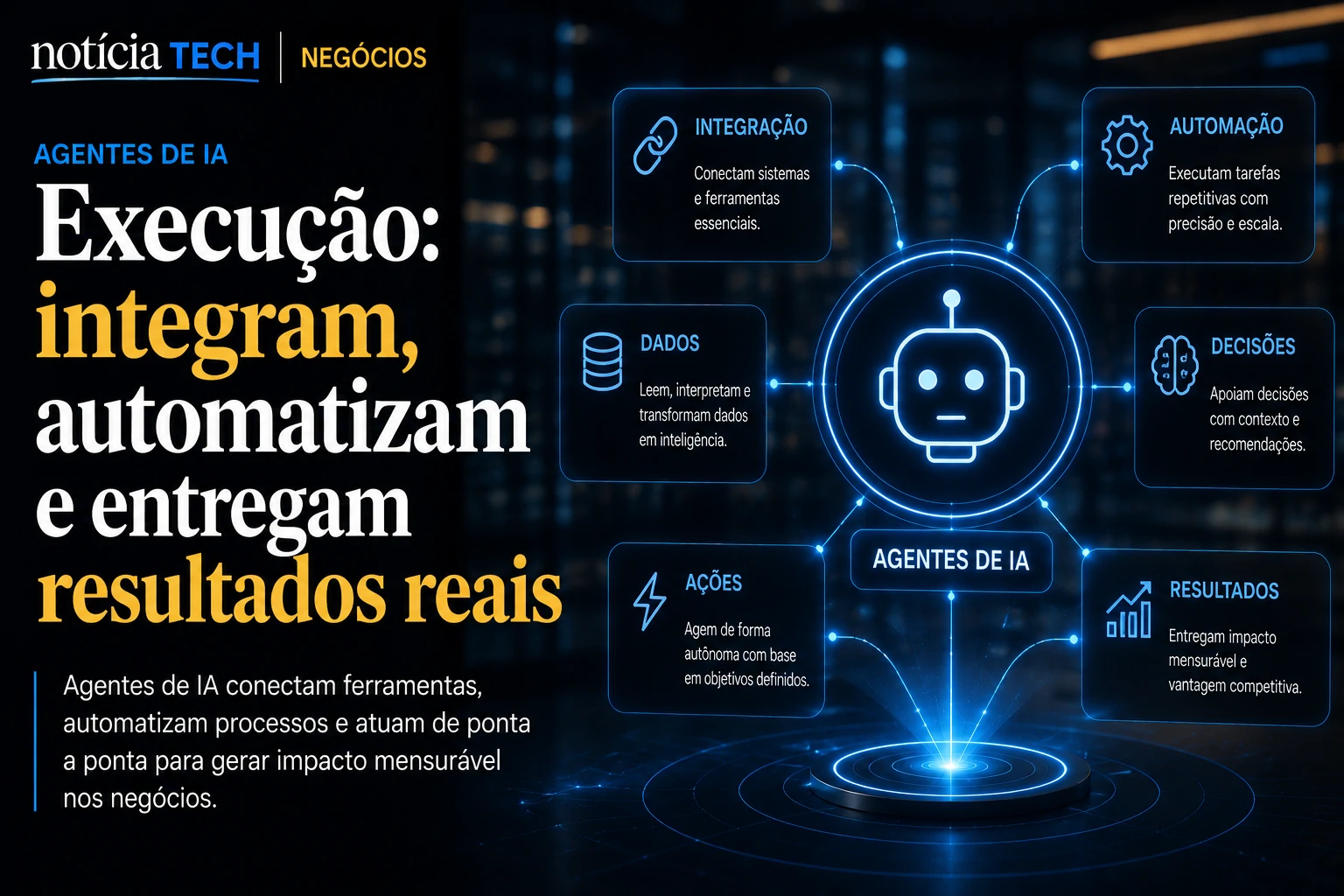
Sundar Pichai’s vision has implications that go far beyond the end consumer.
Companies are beginning to realize that AI will be a strategic infrastructure similar to the role played by the cloud in recent years.
Productivity becomes automated
Enterprise tools are being integrated with models capable of interpreting context, retrieving information and executing workflows.
The consequence is an increasing reduction in repetitive operational tasks.
This movement is close to the evolution observed in The era of AI agents has begun: how Microsoft, OpenAI and Google are transforming companies into systems autonomous.
Data becomes worth more
The smarter agents become, the more important the quality of corporate data becomes.
Companies with disorganized processes may struggle to extract real value from AI.
Organizations that structure internal knowledge, governance and operational context tend to capture greater competitive advantages.
What Sundar Pichai’s bet reveals about the future of business
The main message of Sundar Pichai’s strategy is that the next phase of digital transformation will be driven by intelligent agents.
The market is migrating from isolated software to ecosystems capable of understanding context, taking actions and collaborating with users.
The dispute is no longer about applications
For years, companies have competed for attention within apps and platforms.
In the next cycles, the dispute may occur within the AI interfaces themselves.
This changes marketing, sales, service, productivity and product discovery.
A new economic infrastructure
Just as cloud computing has redefined enterprise technology, intelligent agents can redefine how organizations operate.
The speed at which Google, Microsoft, OpenAI and other major players are advancing indicates that change is already underway.
For business leaders, the question is no longer whether AI agents will have a relevant impact, but what position their organization will occupy when these interfaces become the main point of contact between people, systems and markets.
Comentários
Os comentários utilizam autenticação via GitHub para manter um ambiente mais qualificado, seguro e livre de spam.
Entrar ou criar conta no GitHub