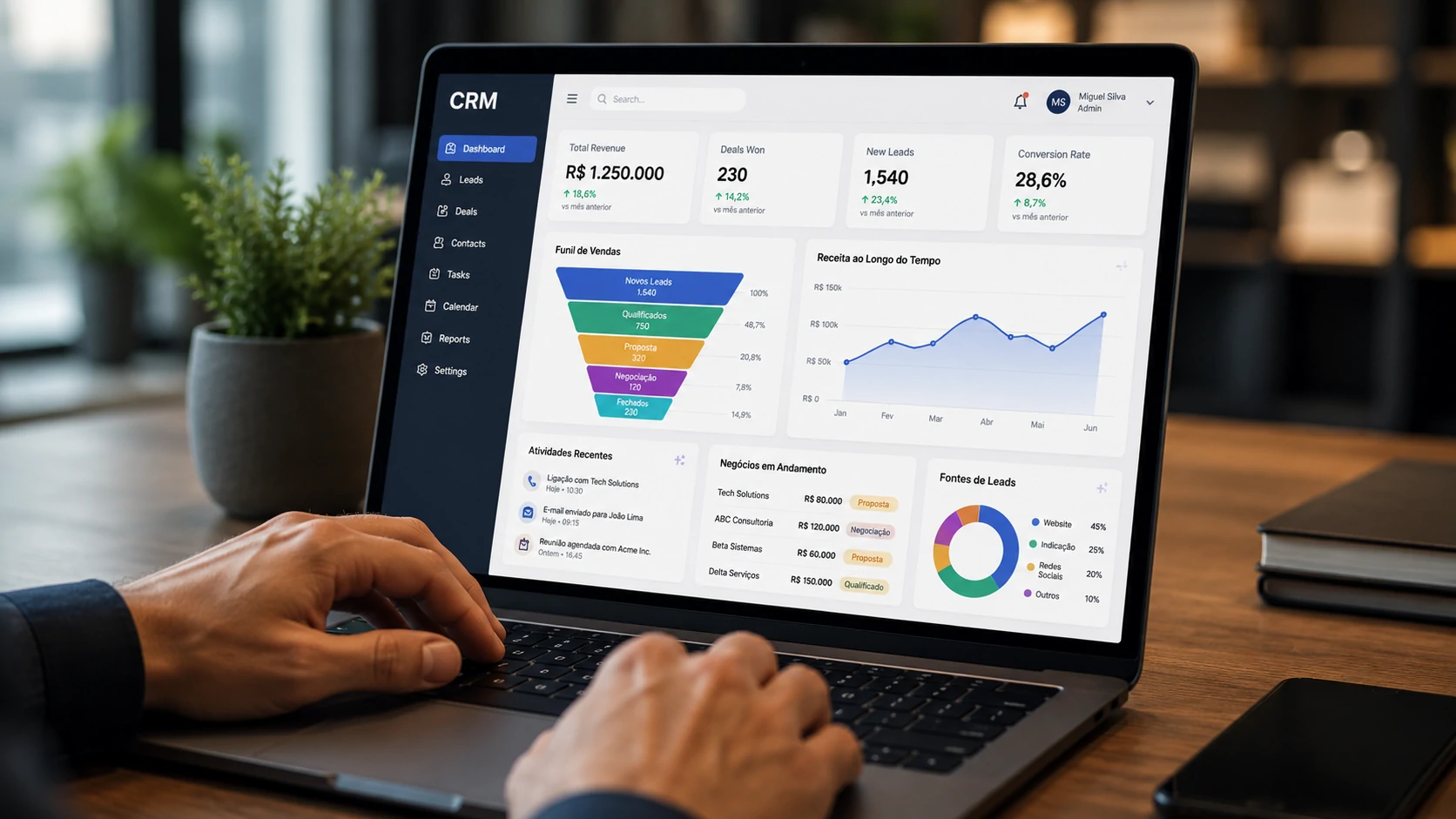
Using an AI-powered CRM has evolved from a competitive advantage into a business necessity. Organizations of every size are adopting platforms that leverage artificial intelligence to automate repetitive work, improve sales forecasting, and deliver more personalized customer experiences. In an increasingly data-driven economy, selecting the right CRM can become a significant strategic advantage.
How an AI CRM transforms sales management
Businesses use AI-powered CRM platforms to centralize customer information, automate commercial workflows, and convert operational data into faster, smarter decisions.
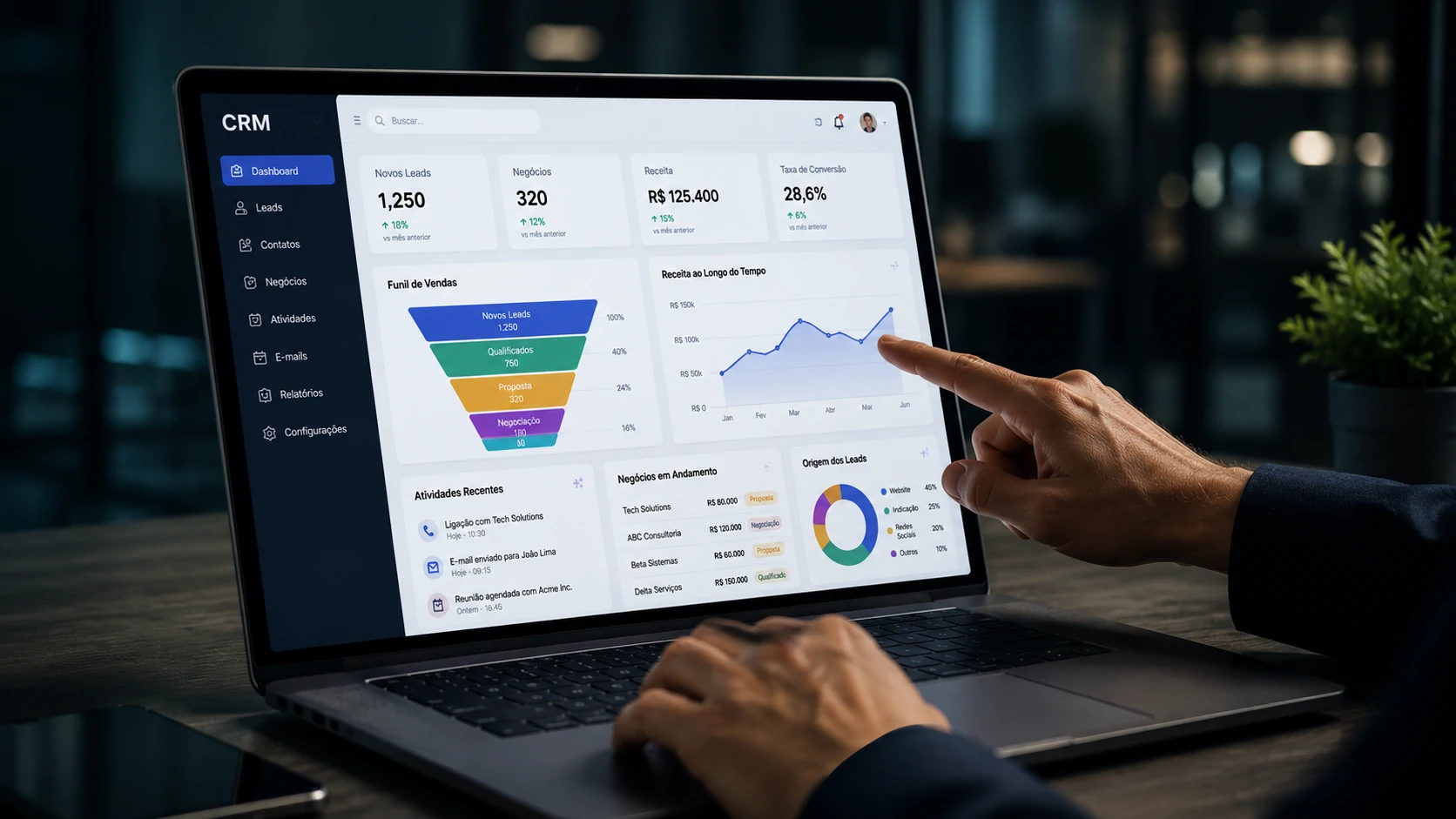
Modern CRM platforms use artificial intelligence to automate sales, customer engagement, and relationship management.
Unlike traditional CRM systems, an AI CRM continuously learns from customer interactions, historical sales data, and behavioral patterns. This allows sales teams to identify opportunities long before they become obvious through conventional analysis.
Beyond customer data storage
Modern CRM platforms have evolved far beyond digital contact databases.
Today they can:
- automatically summarize meetings;
- generate email drafts;
- identify high-conversion prospects;
- forecast future revenue;
- recommend the next best sales action.
This evolution reflects the growing importance of AI-assisted productivity, closely aligned with the concept of AI Fluency, previously explored by Notícia Tech.
Benefits for businesses
Organizations adopting AI-powered CRM platforms typically experience:
- less repetitive manual work;
- higher team productivity;
- more accurate revenue forecasting;
- better visibility across the sales pipeline;
- increasingly personalized customer interactions.
Comparing the leading AI CRM platforms in 2026
The best AI CRM solutions address different business priorities. Choosing the right platform depends on company size, available budget, operational complexity, and long-term digital strategy.
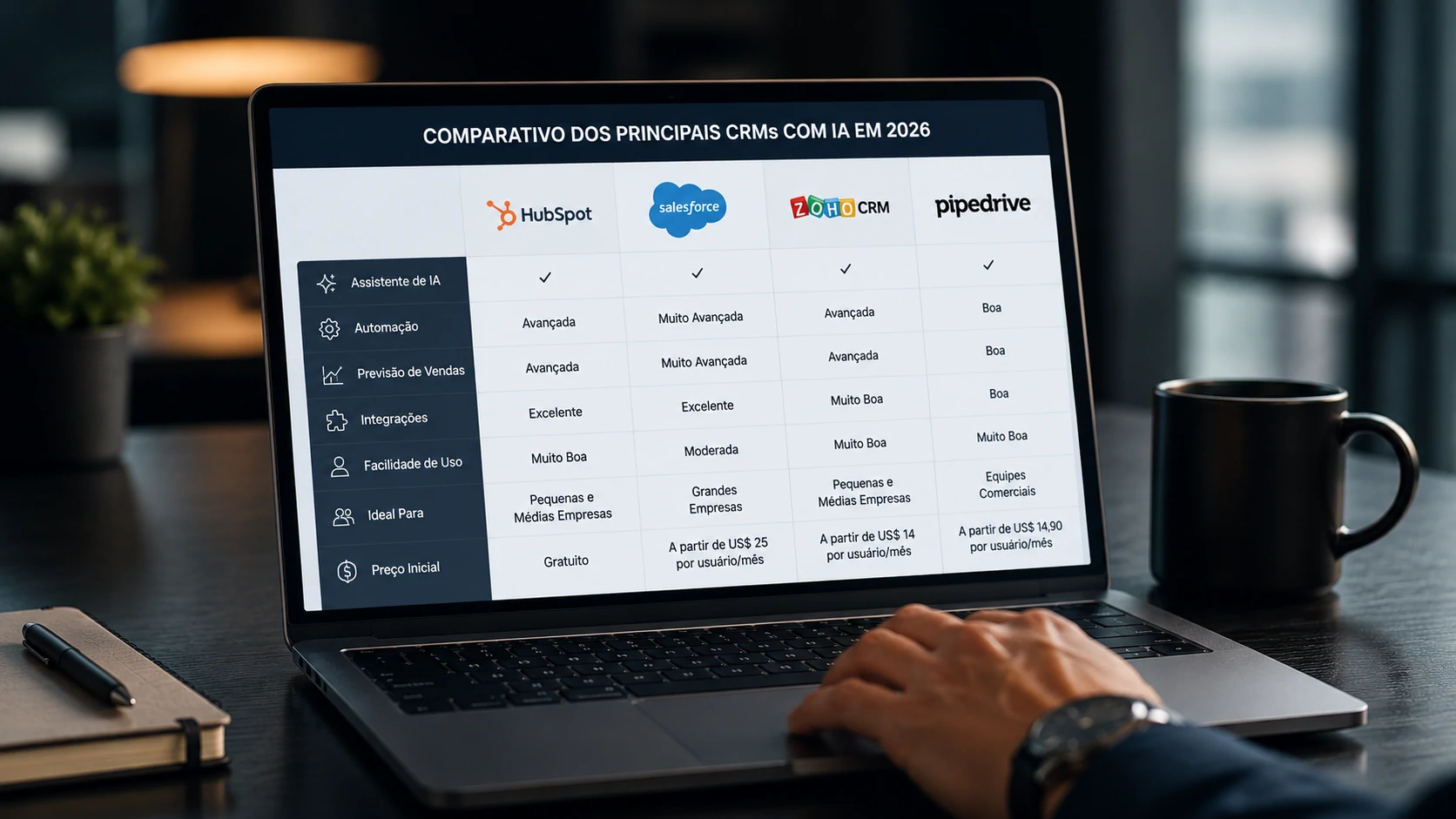
Each CRM platform offers different strengths depending on a company’s growth stage and operational needs.
HubSpot
HubSpot CRM remains one of the market’s leading platforms.
Key AI capabilities include:
- AI assistant;
- email generation;
- content creation;
- advanced workflow automation;
- seamless marketing integration.
It is particularly well suited for businesses looking to scale using a unified customer platform.
Salesforce
Salesforce continues to dominate the enterprise CRM market.
Its ecosystem provides:
- predictive AI;
- advanced workflow automation;
- sophisticated analytics;
- extensive customization capabilities.
However, implementation generally requires a larger investment and a more structured deployment strategy.
Zoho CRM
Zoho CRM continues to stand out for its strong cost-benefit ratio.
Its AI-powered features include:
- intelligent assistant;
- sales forecasting;
- workflow automation;
- performance analytics.
It represents a compelling option for small and medium-sized businesses.
Pipedrive
Pipedrive remains focused on simplicity and productivity.
Its primary advantage is ease of implementation, making it an excellent choice for sales teams seeking a modern CRM without a steep learning curve.
How to choose the best AI CRM for your business
Choosing the right AI-powered CRM depends on your business goals, customer volume, and the maturity of your sales operations. Instead of focusing only on pricing, companies should evaluate how well each platform fits their long-term growth strategy.
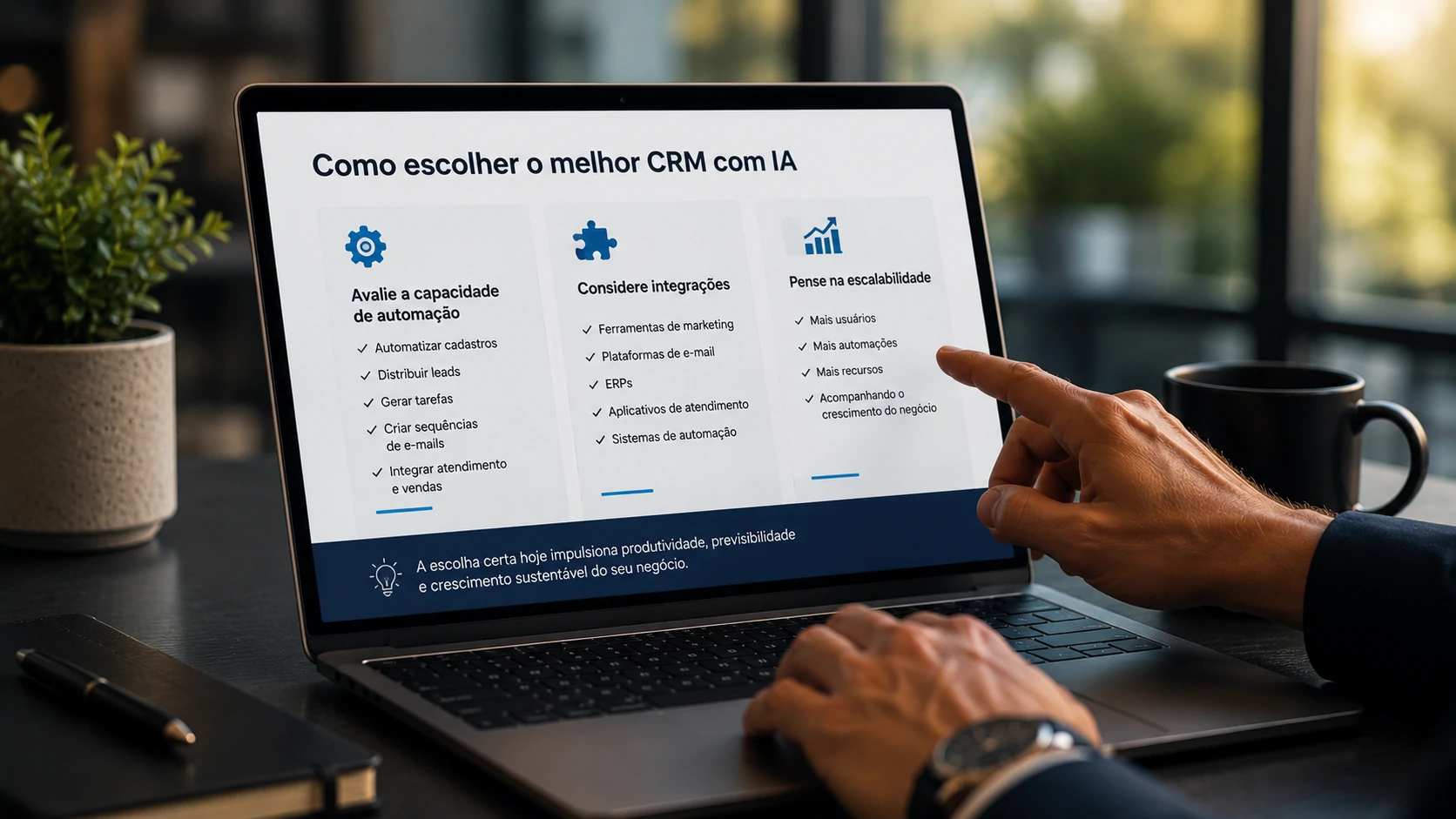
Selecting the right CRM requires balancing automation, integrations, scalability, and business objectives.
Evaluate automation capabilities
Automation is one of the biggest advantages of modern CRM platforms.
Look for solutions that can:
- automate contact creation;
- assign leads automatically;
- generate sales tasks;
- build email sequences;
- integrate sales and customer support workflows.
The fewer repetitive manual tasks your team performs, the greater the potential return on investment.
Consider integrations
A CRM rarely operates in isolation.
The best platforms integrate seamlessly with:
- marketing automation tools;
- email platforms;
- ERP systems;
- customer support software;
- workflow automation platforms.
These integrations reduce duplicate work while improving the quality of the data used by artificial intelligence.
Think about long-term scalability
Small businesses often grow faster than expected.
Selecting a CRM capable of supporting additional users, advanced automation, and expanding business processes can prevent expensive platform migrations in the future.
The future of AI CRM belongs to autonomous AI agents
The next generation of AI-powered CRM platforms will move beyond simply recommending actions and begin executing them autonomously.
Future AI agents will be capable of monitoring sales opportunities, responding to customers, preparing proposals, updating CRM records, and identifying risks before they impact revenue.
This evolution closely aligns with the broader expansion of AI Agents, a topic previously covered by Notícia Tech in articles such as:
In practice, CRM platforms are evolving from customer databases into intelligent digital assistants that actively support entire sales organizations.
Companies that begin adopting AI-powered CRM technologies today are likely to build a lasting competitive advantage, particularly in industries where response speed, personalization, and data-driven decision-making directly influence business performance.
In 2026, the most important question is no longer whether businesses should adopt an AI CRM, but which platform provides the best combination of automation, intelligence, integrations, and scalability to support long-term growth.
Comentários
Os comentários utilizam autenticação via GitHub para manter um ambiente mais qualificado, seguro e livre de spam.
Entrar ou criar conta no GitHub